The ticking clock can be a cruel trickster. Minutes stretch into eternities during a tedious lecture, yet entire years can vanish in the blink of an eye when looking back at a life well-lived. This subjective distortion of time, particularly how remembered events can feel longer than their objective duration, is a fascinating phenomenon rooted deeply in the intricate workings of human memory and perception. It’s not simply a matter of boredom or excitement; rather, it’s a complex interplay of cognitive processes that shape our experience of time’s passage, both in the moment and in retrospect.
The Paradox of Time Perception
The human experience of time is notoriously fluid and subjective. While a stopwatch can objectively measure the duration of an event, our internal clock often tells a different story. This discrepancy becomes particularly pronounced when we recall past experiences. A vacation that felt fleetingly brief while happening might, in hindsight, seem like an expansive period filled with a multitude of distinct moments. Conversely, a routine workday, even if it spanned eight hours, might be recalled as a blur, a monotonous stretch with little to differentiate one hour from the next. This phenomenon, where more vividly recalled or information-rich events seem to have lasted longer, is a testament to the way our brains construct and retrieve temporal information. It challenges the intuitive notion that time is a constant, linear flow, revealing instead a malleable construct influenced by our attention, emotions, and the very nature of the memories we form. The question then arises: what are the psychological mechanisms that contribute to this apparent expansion of remembered time?
Attention: The Gatekeeper of Temporal Experience
At the heart of how we perceive time, both presently and in memory, lies the role of attention. When our attention is intensely focused on an event, particularly one that is novel, engaging, or emotionally charged, we are more likely to encode detailed information about it. This increased encoding, in turn, can lead to a richer and more complex memory trace. In the moment, this intense focus might make time seem to slow down, as each detail is meticulously processed. In retrospect, this wealth of detail allows for a more granular reconstruction of the event, making it feel as though it encompassed a longer duration.
Novelty and Information Density
The principle of novelty plays a crucial role in this temporal expansion. New experiences, by their very nature, require more cognitive resources to process and understand. We are more likely to pay attention to novel stimuli, to actively seek information, and to form new associations. This increased cognitive effort translates into a richer memory. When recalling a novel event, our minds have more distinct “markers” or “anchors” to grasp onto. Think of the first time visiting a foreign city: every sight, sound, and smell is new, demanding your full attention. This rich tapestry of sensory input and cognitive processing creates a more detailed and memorable experience, which, upon reflection, can feel as though it stretched over a longer period. The brain, in essence, has more “data points” to recall, leading to the perception of greater duration. This is contrasted with routine activities, where the lack of novelty means less information is encoded, and consequently, the memory of the event is less detailed and feels shorter in retrospect.
Emotional Salience and Memory Consolidation
Emotions are powerful modulators of memory. Events that evoke strong emotions, whether positive or negative, are often remembered with greater vividness and detail. This heightened emotional salience can lead to more robust memory consolidation. The amygdala, a key brain structure involved in processing emotions, interacts with the hippocampus, which is critical for memory formation. This interplay can strengthen the encoding and retrieval of emotionally charged memories. When recalling an event that elicited strong emotions, we are accessing a more deeply ingrained and richly detailed memory. This depth and richness can contribute to the perception that the event occupied a larger temporal space in our past. A joyful celebration or a traumatic incident, for instance, will often be recalled with a clarity and detail that makes it feel more significant and therefore, in retrospect, longer than a mundane occurrence.
Research suggests that the perception of time can be influenced by the number of memorable events we experience. When we encounter significant moments, such as milestones or emotional experiences, our brains tend to encode these memories more vividly, making the time period feel longer in retrospect. For a deeper understanding of this phenomenon, you can explore the article on this topic at My Cosmic Ventures.
The Architecture of Memory and Temporal Distortion
Our understanding of how events feel longer in memory requires delving into the very architecture of our memory systems. It’s not a single, monolithic entity but a complex interplay of different systems that store and retrieve information. The way we encode, consolidate, and recall experiences, particularly their temporal aspects, is crucial to this perceptual distortion.
Episodic Memory: The Narrative of Our Lives
Episodic memory, our ability to recall specific personal experiences, is central to this discussion. These are the autobiographical memories that form the narrative of our lives, complete with their temporal and spatial context. When we recall a past event, we are essentially replaying a mental movie, drawing upon the sensory details, emotions, and contextual information stored within our episodic memories. The richness and detail of these episodic memories directly influence our perception of their duration. A more detailed and multifaceted episodic memory, with a greater number of distinct events or sub-events within the larger experience, will naturally feel longer in retrospect. The brain doesn’t just store a single timestamp for an event; it stores a constellation of sensory, emotional, and contextual data points. The more of these data points that are accessible and vivid, the more the event appears to have unfolded over time.
Semantic Memory: The Framework of Knowledge
While episodic memory deals with personal experiences, semantic memory stores general knowledge and facts about the world. This distinction is important because semantic memories, being more abstract and less tied to specific personal experiences, generally do not contribute to the feeling of an event being longer. For example, recalling the definition of a historical event (semantic memory) will not make it feel longer than recalling your personal experience of learning about it (episodic memory). The “longer” feeling is primarily associated with the recall of rich, detailed, and personally experienced events, which are the domain of episodic memory.
The Role of Retrieval Cues
The process of memory retrieval itself can influence our perception of duration. When we recall an event, the cues that trigger that memory play a significant role. Vivid and plentiful retrieval cues can lead to a more complete and detailed reconstruction of the past. For instance, looking at a photograph from a trip might bring back a flood of memories, each contributing to a richer and seemingly longer recollection of the trip. Conversely, vague or limited cues might result in a more fragmented and therefore shorter-feeling memory. The ease and richness of retrieval are therefore directly linked to the perceived duration of the remembered event.
The Cognitive Load of Rich Experiences
The very act of experiencing something rich and complex places a greater cognitive load on our brains. This increased cognitive demand, while present in the moment, also leaves a more profound imprint on our memory, contributing to the sense of extended duration in retrospect. When an event is packed with information, novelty, and emotional engagement, our brains work harder to process and integrate this input. This intense processing, while potentially making the present moment feel slower or more drawn out, also results in a more robust and detailed memory trace.
Encoding Complexity and Neural Engagement
The more complex and information-rich an experience, the more neural pathways are engaged during its encoding. This heightened neural activity can lead to stronger and more enduring memory traces. Imagine learning a new skill, like playing a musical instrument. The initial stages involve intense focus, a high degree of sensory input (visual, auditory, kinesthetic), and a significant cognitive load as you process new information and motor commands. This complex encoding process creates a rich memory. When you later recall learning that skill, the sheer volume of encoded information, the intricate neural connections formed, contribute to the perception that the learning process itself was lengthy and involved many distinct stages.
The “Holiday Paradox” and Memory Formation
The “holiday paradox” is a well-known illustration of this principle. While on vacation, days might seem to fly by because we are often engaged in relaxing, enjoyable activities that don’t require intense cognitive effort. However, upon returning and reflecting on the holiday, it often feels like it lasted much longer. This is because vacations are typically filled with novel experiences, new environments, and a wealth of sensory information. The brain is actively creating new memories, exploring new places, and processing new stimuli. This high density of memory formation, even if not consciously perceived as time-consuming in the moment, results in a rich and detailed retrospective account that feels expansive. The brain, in essence, has laid down a more detailed “map” of the experience, making it appear to have covered more temporal ground.
The Role of Introspection and Reflection
The act of introspection and reflection on past events also plays a part. When we actively recall and re-examine a memory, we are re-engaging with the encoded information. If the memory is rich and detailed, this act of rumination can further solidify the memory and enhance the perception of its duration. The more we revisit and “replay” a memory, the more it feels like a substantial chunk of our past. This is particularly true for significant life events or periods that we frequently reflect upon. The cognitive effort involved in this reflective process can, paradoxically, contribute to the feeling that the original event was longer.
When Time Feels Compressed: The Impact of Routine and Habit
In stark contrast to the temporal expansion of rich experiences, routine and habitual activities tend to compress our perception of time. The lack of novelty, the reduced cognitive load, and the automaticity of our actions lead to less detailed memory encoding, resulting in a sense of time having slipped away unnoticed. Our brains are efficient, and when tasks become familiar, they are processed with less conscious effort. This efficiency, while beneficial for daily functioning, has a direct impact on our subjective experience of time.
Habituation and Reduced Cognitive Engagement
When we perform tasks that have become habitual, our brains enter a state of reduced cognitive engagement. We are less likely to pay close attention to the details, and our actions often become automatic. This lack of conscious attention means that fewer new memories are formed. Consequently, when we look back on a period dominated by routine, it can feel like a blur, a monotonous stretch of time with little to distinguish one day from the next. The lack of distinct memory markers makes it difficult to mentally “segment” the time, leading to a compressed perception.
The “Blank Spaces” in Memory
The absence of novel or emotionally significant events in routine periods creates “blank spaces” in our memory. When we try to recall these times, we find little to hold onto. This scarcity of recallable information makes the duration feel shorter. It’s akin to looking at a sparse timeline; there are few points of reference to measure the passage of time. The brain, in its efficiency, prioritizes the encoding of new and significant information, often treating familiar routines as background noise. This can lead to periods of time feeling “lost” or compressed.
The Difference Between Experiencing and Recalling
It’s crucial to distinguish between the experience of time in the moment and the recollection of time. While a tedious, routine day might feel incredibly long and drawn out while living through it, the memory of that day, lacking distinguishing features, will likely be brief and compressed. This highlights the dual nature of time perception: immediate and retrospective. The mechanisms that make time feel slow in the moment (e.g., intense boredom, waiting) are different from those that make remembered events feel longer (e.g., novelty, emotional richness). The compression of time in routine memories is a consequence of efficient, low-effort encoding, where the brain essentially “skips” detailed recording of mundane events.
Research suggests that the perception of time can be influenced by the number of memories we create during significant events. When we experience more memorable moments, those events can feel longer in retrospect. This phenomenon is explored in detail in a related article that discusses how our brains process memories and the impact of novelty on our perception of time. For more insights, you can read the article here.
Leveraging the Psychology of Memory for Enhanced Temporal Awareness
| Factor | Description | Impact on Perceived Duration | Example Metric |
|---|---|---|---|
| Number of Memories | More distinct memories formed during an event | Increases perceived length of the event | 10 memories vs. 3 memories in a 1-hour event |
| Memory Density | Amount of information encoded per unit time | Higher density leads to longer subjective duration | 5 bits/min vs. 2 bits/min |
| Emotional Intensity | Emotional arousal during the event | Enhances memory encoding and lengthens perceived time | High arousal event rated 8/10 vs. low arousal 3/10 |
| Novelty | New or unusual experiences | More novel events feel longer due to increased attention | Novel event perceived 30% longer than routine event |
| Attention Focus | Degree of focused attention during the event | Focused attention increases memory formation and duration perception | Focused attention leads to 25% longer perceived duration |
| Retrospective Time Estimation | Judging duration after the event based on memory content | More remembered details cause overestimation of time | Overestimation by 20-40% in retrospective tasks |
Understanding why remembered events feel longer opens up avenues for actively enhancing our temporal awareness and enriching our lives. By consciously creating more memorable experiences, we can not only make our lives more fulfilling in the present but also cultivate a richer and more expansive sense of our past. This is not about artificially inflating the perceived duration of events, but rather about maximizing the meaningfulness and memorability of our experiences.
Cultivating Novelty and Mindfulness
The most direct way to create more expansive memories is to actively seek out novelty. Stepping outside of our comfort zones, trying new activities, visiting new places, and engaging with different people all contribute to richer memory encoding. Practicing mindfulness, paying close attention to the present moment and actively noticing the details of our experiences, can also enhance memory formation. By being more present and attentive, we are more likely to encode the sensory details, emotions, and contextual information that contribute to a richer and seemingly longer recalled event. This involves intentionally engaging our senses and cognitive faculties, rather than passively letting experiences wash over us.
Prioritizing Meaningful Experiences
Focusing on experiences that hold personal meaning and evoke emotions is another powerful strategy. Investing time and energy in activities that are intrinsically rewarding and emotionally resonant will naturally lead to more vivid and lasting memories. Whether it’s spending quality time with loved ones, pursuing a passion, or overcoming a challenge, these are the moments that tend to be etched most deeply into our consciousness and contribute to a felt sense of temporal richness in retrospect. These are not just events; they are chapters in our personal stories, imbued with significance.
The Art of Reflection and Storytelling
The act of reflection and storytelling is a powerful tool for appreciating the temporal landscape of our lives. Regularly revisiting our memories, either through journaling, conversation, or simply quiet contemplation, can help us to appreciate the depth and breadth of our experiences. By consciously reconstructing and articulating our past, we reinforce the memories and enhance our perception of their duration. Sharing stories with others also serves to solidify and enrich our own memories, and in doing so, can contribute to the feeling that our lives have been filled with a vast and varied expanse of time. This process of narrative construction allows us to connect the dots, to see the interconnectedness of events, and to appreciate the journey.
In conclusion, the subjective experience of time, particularly the phenomenon of remembered events feeling longer, is a captivating window into the workings of the human mind. It underscores that our perception of time is not a passive reception of an external constant, but an active construction shaped by attention, emotion, novelty, and the very way our memories are formed and retrieved. By understanding these psychological principles, we can not only appreciate the intricacies of our own temporal experiences but also consciously cultivate lives that are not only lived fully in the moment but also remembered with a richness and depth that makes time itself feel like an expansive and rewarding journey.
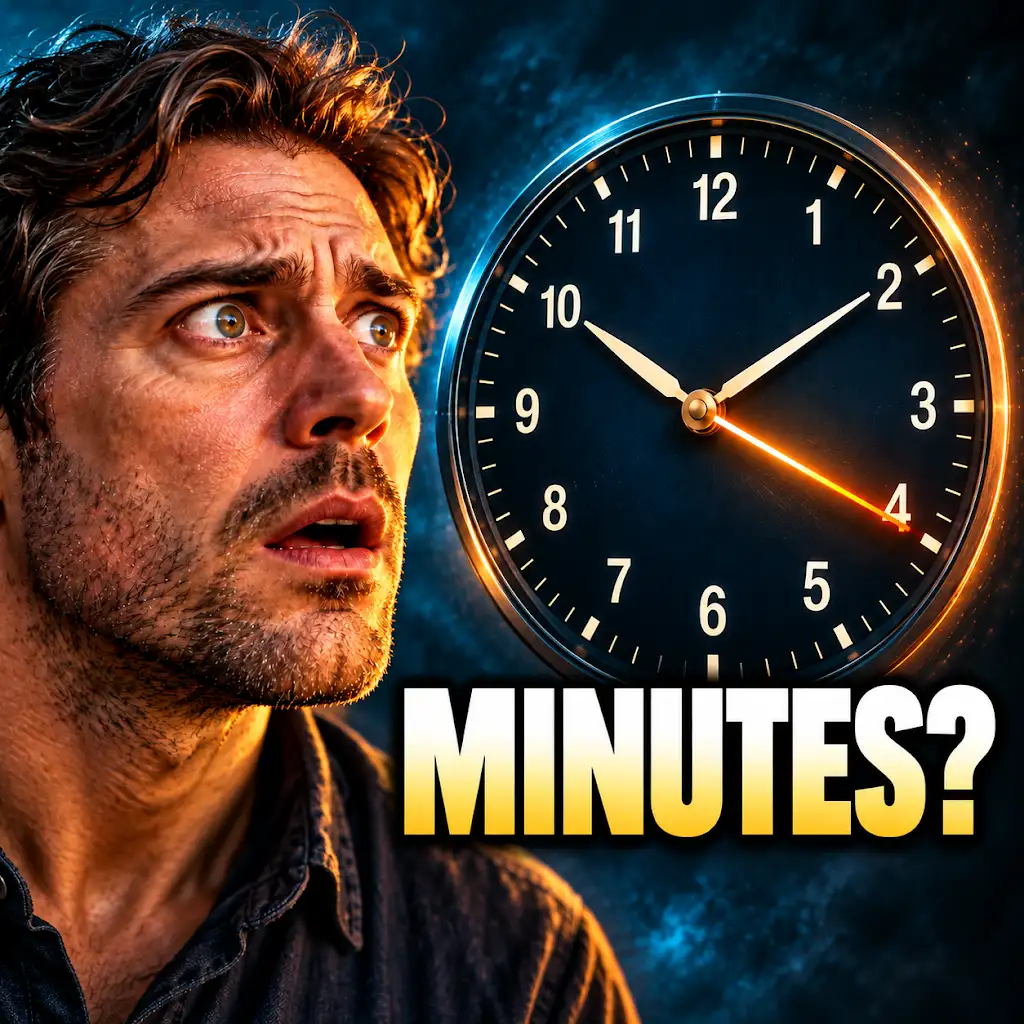
Why a Few Minutes Can Feel Much Longer Near Death
FAQs
What is the phenomenon of more remembered events feeling longer?
The phenomenon of more remembered events feeling longer is known as the “reminiscence bump.” It refers to the tendency for people to recall more events from their late teens and early twenties, making this period of life seem subjectively longer.
Why do more remembered events make time feel longer?
When more events are remembered from a particular period of time, the brain perceives that period as being longer. This is because the brain uses the number of memories formed during a specific time frame as a way to gauge the passage of time.
What factors contribute to the formation of more memories during certain periods of life?
Several factors contribute to the formation of more memories during certain periods of life, including the novelty of experiences, emotional intensity, and life transitions. These factors can lead to more vivid and memorable events being stored in memory.
Does the reminiscence bump occur for everyone?
While the reminiscence bump is a common phenomenon, it may not occur for everyone in the same way. Individual differences in memory encoding and retrieval processes, as well as personal experiences, can influence the formation of memories and the perception of time.
How can understanding the reminiscence bump impact our perception of time?
Understanding the reminiscence bump can provide insights into how memory influences our perception of time. By recognizing that the number of memories formed during a specific period can affect how long that period feels, we can gain a better understanding of how our memories shape our perception of the passage of time.