
The Unseen Barrage: Understanding the Webb Observatory’s Micrometeoroid Challenge
The James Webb Space Telescope (JWST), a marvel of modern engineering, operates in an environment teeming with the invisible. While the vastness of space conjures images of serene emptiness, it is, in fact, a dynamic arena where even the smallest particles can pose significant threats. Among these threats, micrometeoroids – tiny, fast-moving grains of rock and dust – represent a persistent challenge for sensitive astronomical instruments like Webb. Understanding and predicting this micrometeoroid environment is not merely an academic exercise; it is fundamental to ensuring the longevity and scientific productivity of this groundbreaking observatory. The Webb Observatory Micrometeoroid Environment Model (WOMEM) has been instrumental in this endeavor, providing critical insights and analyses that inform operational strategies and hardware design. This article delves into the intricacies of the WOMEM, exploring its genesis, its methodologies, the data it utilizes, and the profound implications of its findings for the Webb mission.
The James Webb Space Telescope (JWST) has been a groundbreaking advancement in our understanding of the universe, but it is also essential to consider the micrometeoroid environment that it operates within. A related article that delves into the intricacies of the JWST micrometeoroid environment model can be found at this link: Micrometeoroid Environment and Its Impact on JWST. This article provides valuable insights into how micrometeoroids can affect the telescope’s performance and the measures taken to mitigate potential damage.
Genesis of the Micrometeoroid Model: From Concept to Calculation
The necessity for a sophisticated micrometeoroid model for the Webb telescope arose from the inherent vulnerability of its large, delicate primary mirror and other sensitive optical components. Unlike missions operating in Low Earth Orbit, where Earth’s atmosphere offers some degree of protection, Webb resides at the second Sun-Earth Lagrange point (L2), a location offering unparalleled thermal stability and unobstructed views of the universe, but also exposing it to the full onslaught of the interplanetary dust environment. Early conceptualizations of Webb’s mission immediately highlighted the potential impact of these particles. The sheer size of the primary mirror, composed of 18 hexagonal beryllium segments, made it a substantially larger target than previous space telescopes. Furthermore, the extremely low operating temperatures required for Webb’s infrared instruments meant that even minute surface damage from micrometeoroid impacts could lead to significant degradation of optical performance.
Early Warning Signs and Pre-Mission Analysis
Even before Webb’s launch, engineers and scientists recognized the critical need to quantify the risks associated with micrometeoroid impacts. This wasn’t a problem without precedent. Decades of space exploration, from early satellites to the Hubble Space Telescope, had provided valuable data on the flux and velocity of micrometeoroids. However, Webb’s specific orbital environment at L2, its unprecedented size, and its highly sensitive instruments demanded a more tailored and precise model. This led to the development of specialized simulation tools and the collation of available data from various sources. These early analyses focused on understanding the general characteristics of the micrometeoroid population at L2, including expected impact rates, particle sizes, and velocity distributions. The goal was to establish a baseline understanding of the threat and to begin developing mitigation strategies.
The Need for a Dedicated Framework: WOMEM’s Foundation
The accumulation of this early data and the increasing complexity of Webb’s design necessitated the creation of a dedicated framework: the Webb Observatory Micrometeoroid Environment Model (WOMEM). This model was designed to be a dynamic tool, capable of integrating various datasets and sophisticated physics-based simulations to provide a comprehensive assessment of the micrometeoroid threat. The WOMEM’s foundation lies in its ability to translate raw environmental data into actionable predictions about impact events, the resulting damage, and the potential consequences for the telescope’s performance. It moved beyond simply acknowledging the existence of micrometeoroids to quantifying their specific impact on Webb throughout its operational life.
Methodologies Employed: Simulating the Cosmic Rain
The WOMEM is not a static database but a sophisticated computational engine that leverages a combination of observational data, theoretical models, and advanced simulation techniques. Its methodologies are designed to capture the multifaceted nature of the micrometeoroid environment and its interaction with the Webb telescope. The process begins with understanding the flux – the number of particles passing through a given area per unit of time – and their associated properties.
Integrating Observational Datasets
A cornerstone of the WOMEM is the integration of various observational datasets. These include:
- Interplanetary Dust Cloud Models: These models, based on observations from spacecraft like Ulysses, Pioneer, and Galileo, describe the general distribution of dust in the solar system. They provide information on the density and velocity of dust particles at different heliocentric distances, allowing scientists to extrapolate to Webb’s L2 location.
- Ground-Based Radar and Optical Surveys: While direct observation of micrometeoroids in Webb’s operational orbit is challenging, ground-based surveys can detect larger debris or meteoroids in Earth’s vicinity, providing some insights into the broader population dynamics.
- In-Situ Measurements: Data from previous space missions that have traversed similar orbital regimes are invaluable. These measurements offer direct counts and velocity distributions of micrometeoroids, helping to calibrate and validate the theoretical models.
- Webb’s Own Impact Data: A critical feedback loop is established through Webb’s onboard instrumentation. Sensors designed to detect hypervelocity impacts, along with changes in optical performance, provide real-time data that is fed back into WOMEM to refine its predictions and improve its accuracy over time. This continuous learning process is essential for adapting to the dynamic nature of the space environment.
Computational Modeling and Simulation
Beyond raw data, the WOMEM employs sophisticated computational modeling and simulation techniques to predict impact events and their consequences. This involves:
- Monte Carlo Simulations: These probabilistic techniques are used to simulate a vast number of potential impact scenarios. By randomly sampling particle properties (size, velocity, direction) from known distributions, these simulations can estimate the probability of impacts on different parts of the telescope and the expected frequency of events of varying severity.
- Projectile-Target Interaction Models: When a micrometeoroid strikes a surface, it creates a complex interaction. Physics-based models are used to simulate the energy transfer, crater formation, and ejecta generation resulting from these hypervelocity impacts. This helps to understand the physical damage inflicted on the mirror and other components.
- Optical Performance Degradation Models: The WOMEM incorporates models that translate physical damage (e.g., crater depth and diameter) into quantifiable effects on Webb’s optical performance. This includes assessing the impact on wavefront error, light scattering, and overall image quality.
The WOMEM’s strength lies in its ability to synthesize these diverse methodologies, creating a holistic picture of the micrometeoroid threat and its potential impact on the Webb telescope.
Key Findings and Insights: What the Model Reveals
The application of the WOMEM has yielded crucial insights into the micrometeoroid environment encountered by the Webb telescope and the specific risks it poses. These findings have directly influenced mission operations and hardware design, demonstrating the practical value of the model.
Impact Flux and Distribution
One of the primary outputs of the WOMEM is a detailed understanding of the impact flux at Webb’s L2 orbit. The model predicts a continuous barrage of micrometeoroids, with the vast majority being sub-millimeter in size. While these small particles may not cause catastrophic damage individually, their sheer number means that cumulative effects are a significant concern. The WOMEM has also characterized the distribution of these impacts across Webb’s various components, identifying the primary mirror as the most vulnerable element due to its large surface area and critical role in light collection. The distribution of particle velocities is also a key factor, with higher velocities leading to more energetic impacts and potentially greater damage.
Vulnerability of the Primary Mirror
The WOMEM has placed a particular emphasis on the vulnerability of Webb’s primary mirror. The large, segmented design, while enabling unprecedented light-gathering capability, also presents a substantial target. The model has analyzed the potential effects of micrometeoroid impacts on individual mirror segments, assessing how even microscopic pits or surface roughening can degrade the reflective properties of the mirror. Furthermore, the model considers the potential for ejecta from an impact on one segment to affect adjacent segments or other sensitive optical surfaces. This detailed analysis has informed decisions regarding the spacing and shielding of mirror segments, as well as the development of post-impact assessment strategies.
Cumulative Damage and Long-Term Performance Degradation
A critical aspect of the WOMEM’s analysis is the assessment of cumulative damage. While a single, small micrometeoroid impact might have a negligible effect, the accumulation of thousands or millions of such impacts over the telescope’s operational lifetime can lead to a measurable degradation in performance. The WOMEM models this cumulative effect, predicting how the overall reflectivity of the mirror might decrease and how the wavefront error might increase over time. This understanding is crucial for setting realistic expectations for Webb’s scientific productivity and for planning future maintenance or observation strategies. The model helps to define the point at which performance degradation might begin to impact specific scientific objectives.
The James Webb Space Telescope (JWST) has been making headlines for its groundbreaking discoveries, but understanding the micrometeoroid environment is crucial for its longevity and performance. A related article discusses the intricacies of the micrometeoroid environment model developed for the Webb observatory, shedding light on how these tiny particles can impact the telescope’s optics and instruments. For more insights on this topic, you can read the full article here. This research not only enhances our understanding of the challenges faced by space observatories but also informs future designs to mitigate potential risks.
Mitigation Strategies and Operational Adjustments: Responding to the Threat
| Parameter | Description | Value / Range | Unit | Notes |
|---|---|---|---|---|
| Micrometeoroid Flux | Number of micrometeoroids impacting per square meter per year | 1 x 10⁴ to 1 x 10⁶ | particles/m²/year | Depends on particle size and orbit altitude |
| Particle Size Distribution | Range of micrometeoroid particle diameters considered | 0.1 to 100 | micrometers (µm) | Size affects impact energy and damage potential |
| Impact Velocity | Typical relative velocity of micrometeoroids impacting Webb | 10 to 70 | km/s | Velocity influences kinetic energy of impacts |
| Shielding Effectiveness | Estimated protection level of Webb’s sunshield and structure | Up to 99% | Percent | Varies by shield layer and particle size |
| Damage Probability | Likelihood of critical damage from micrometeoroid impacts over mission life | Less than 1% | Probability | Based on model simulations and testing |
| Mission Duration | Time period over which micrometeoroid environment is modeled | 10 | years | Nominal mission lifetime for Webb |
The insights gleaned from the WOMEM have directly informed the development and implementation of mitigation strategies and operational adjustments designed to minimize the impact of micrometeoroids on the Webb telescope. These strategies are multifaceted, encompassing both passive and active measures.
Hardware Design and Protection
From the earliest stages of design, the WOMEM’s predictions guided the selection of materials and the implementation of protective measures for Webb’s sensitive components.
- Mirror Coatings: The protective coatings applied to the primary mirror segments were chosen for their resilience to micrometeoroid impacts, balancing the need for high reflectivity in infrared wavelengths with durability.
- Shielding: While direct shielding of the entire primary mirror is not feasible due to optical constraints, strategic shielding has been employed for other sensitive components, such as the sunshield, which protects the telescope from solar radiation and helps maintain its cryogenic temperatures. The WOMEM has informed the design of these shields to deflect or absorb incoming particles.
- Component Redundancy: For certain non-optical components, redundancy has been built into the system, ensuring that the failure of a single element due to micrometeoroid impact does not compromise the overall mission.
Operational Maneuvers and Scheduling
The WOMEM’s predictions also play a crucial role in guiding Webb’s operational maneuvers and observation scheduling.
- “Downtime” for Calibration: In some instances, particularly after periods of known increased dust activity in the solar system (e.g., during meteor showers, though less relevant at L2, or when passing through denser dust streams), the telescope may undergo periods of reduced scientific operations. During these times, the telescope might perform diagnostic checks or recalibrate its instruments.
- Orientation Adjustments: While Webb is designed to be relatively robust, there may be specific operational scenarios or periods where a slight adjustment of the telescope’s orientation could theoretically reduce the probability of impact on its most sensitive surfaces. However, due to the nature of L2 and the continuous flow of micrometeoroids, these are generally minor adjustments.
- Data Prioritization: The WOMEM helps scientists prioritize observations by understanding which scientific goals are most vulnerable to micrometeoroid-induced degradation. This allows for the allocation of observing time to ensure critical science is captured before any significant performance decline.
Post-Impact Monitoring and Response
A key aspect of Webb’s operation is its ability to monitor for and respond to micrometeoroid impacts.
- Impact Detection Systems: Webb is equipped with sensors that can detect hypervelocity impacts. This data is used to pinpoint the location of an impact on the mirror and to assess its immediate severity.
- Optical Performance Analysis: Regular analysis of the scientific data returned by Webb allows for the detection of subtle changes in image quality or wavefront error that might be attributable to micrometeoroid impacts. This enables a continuous assessment of the telescope’s health.
- Contingency Planning: The WOMEM, in conjunction with post-impact monitoring data, contributes to contingency planning. Should a significant impact occur, the WOMEM can help predict the potential cascading effects and inform decisions about operational adjustments or potential mitigation measures.
The Future of Micrometeoroid Modeling: Evolving with Webb
The Webb Observatory Micrometeoroid Environment Model is not a static entity; it is a living tool that will continue to evolve alongside the Webb telescope itself. As Webb continues its scientific mission, it will generate an unprecedented amount of in-situ data about the micrometeoroid environment at L2, providing invaluable opportunities for refining and improving the WOMEM.
Refining Predictions with Real-World Data
The most significant future development for the WOMEM lies in the continuous integration of real-world impact data from Webb. Every micrometeoroid that strikes the telescope is a data point, providing direct empirical evidence to validate and refine the model’s predictions. This feedback loop will allow scientists to:
- Improve Flux Estimates: By counting actual impacts and comparing them to model predictions, the WOMEM can refine its estimates of micrometeoroid flux at L2, identifying any deviations from expected values.
- Characterize Particle Properties: Analyzing the damage caused by impacts can provide clues about the size, density, and composition of the impacting particles, further enhancing the model’s realism.
- Validate Damage Models: The observed degradation of optical performance can be directly compared to the predictions of damage models, allowing for their calibration and improvement.
Adapting to Long-Term Environmental Changes
The space environment is not entirely static. Over long periods, changes in solar activity, the gravitational influence of planets, and the dynamics of the interplanetary dust cloud can subtly alter the micrometeoroid flux and distribution. The WOMEM, by incorporating long-term monitoring data from Webb, will be able to adapt to these gradual changes, ensuring its continued relevance for the telescope’s multi-decade mission. This might involve updating parameters related to solar wind interactions or accounting for potential shifts in dust stream trajectories.
Expanding Beyond Webb: Lessons for Future Missions
The development and application of the WOMEM for the Webb telescope represent a significant leap forward in our understanding of micrometeoroid environments and our ability to model them. The methodologies, data integration techniques, and simulation tools developed for WOMEM will serve as a blueprint for future space missions, particularly those operating in deep space or at Lagrange points. Lessons learned from Webb’s micrometeoroid challenges will inform the design, protection strategies, and operational planning for subsequent observatories and probes. The WOMEM is, therefore, not just a tool for Webb but a legacy for the future of space exploration, ensuring that the unseen barrage of the cosmos can be better understood and managed for generations to come.
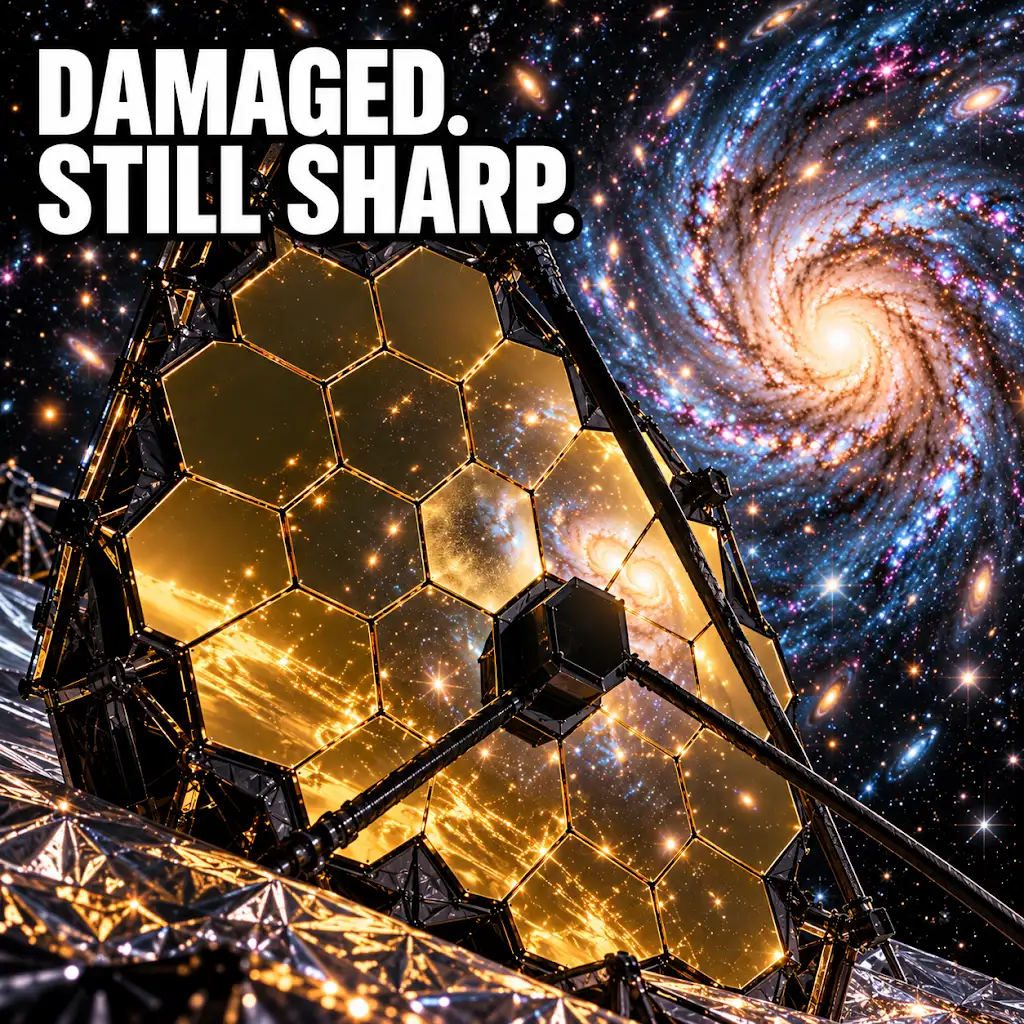
A Micrometeoroid Permanently Marked Webb’s Mirror. Why Did It Keep Working?
FAQs
What is the purpose of the Webb observatory micrometeoroid environment model?
The purpose of the Webb observatory micrometeoroid environment model is to predict and analyze the impact of micrometeoroids on the James Webb Space Telescope during its mission in space.
How does the model help in protecting the Webb observatory from micrometeoroid impacts?
The model helps in protecting the Webb observatory by providing valuable data on the size, velocity, and frequency of micrometeoroids in the telescope’s orbital path, allowing engineers to design appropriate shielding and mitigation strategies.
What factors are considered in the Webb observatory micrometeoroid environment model?
The model considers factors such as the density of micrometeoroids in space, their impact velocity, the angle of impact, and the material composition of the telescope’s outer layers to accurately simulate potential collisions.
How accurate is the Webb observatory micrometeoroid environment model?
The Webb observatory micrometeoroid environment model is highly accurate, as it is based on extensive data collected from previous space missions, ground-based observations, and computer simulations that have been validated through testing.
Can the model be used for other space missions besides the Webb observatory?
Yes, the Webb observatory micrometeoroid environment model can be adapted and utilized for other space missions to assess the risk of micrometeoroid impacts and implement necessary precautions to safeguard spacecraft and satellites in orbit.