
Theoretical physics, often perceived as a labyrinth of intricate equations and abstract concepts, underpins humanity’s quest to comprehend the fundamental nature of existence. Its practitioners, akin to decipherers of a cosmic code, strive to formulate models and theories that explain observed phenomena and predict new ones, thereby expanding the boundaries of human knowledge regarding the universe. This field is distinct from experimental physics, which focuses on empirical observations and experimentation, yet the two are inextricably linked, each informing and validating the other.
The roots of theoretical physics can be traced back to antiquity, with philosophers and thinkers like Democritus pondering the nature of matter and the universe. However, its modern form began to solidify with the scientific revolution.
Classical Mechanics and the Newtonian Paradigm
Sir Isaac Newton, a colossal figure in the history of science, laid the groundwork for classical mechanics in the 17th century. His Philosophiæ Naturalis Principia Mathematica introduced universal gravitation and his three laws of motion, providing a framework that accurately described the motion of objects on Earth and in the heavens.
- Universal Gravitation: Newton’s law of universal gravitation posits that every particle of matter in the universe attracts every other particle with a force directly proportional to the product of their masses and inversely proportional to the square of the distance between their centers. This elegant formulation explained planetary orbits and the falling of an apple with equal efficacy.
- Laws of Motion: Newton’s three laws – inertia, force equals mass times acceleration, and action-reaction – became the bedrock for understanding motion and forces in the macroscopic world. These laws, while seemingly intuitive today, represented a monumental leap in scientific thought.
- Determinism: The Newtonian paradigm fostered a deterministic view of the universe, suggesting that if one knew the initial conditions of all particles, their future states could be precisely predicted. This perspective profoundly influenced philosophical thought for centuries.
Electromagnetism and Maxwell’s Synthesis
In the 19th century, a new force, electromagnetism, began to reveal its intricacies. Scientists such as Coulomb, Ampère, and Faraday made significant breakthroughs in understanding electrical and magnetic phenomena.
- Unification of Forces: James Clerk Maxwell, in one of the most remarkable syntheses in physics, unified electricity and magnetism into a single theoretical framework. His set of four partial differential equations, now known as Maxwell’s equations, described how electric and magnetic fields are generated and interact.
- Prediction of Electromagnetic Waves: A groundbreaking prediction emerging from Maxwell’s equations was the existence of electromagnetic waves, which travel at a constant speed, now known to be the speed of light. This astonishing insight demonstrated that light itself is an electromagnetic wave, unifying optics with electromagnetism.
- The Ether Hypothesis: Despite Maxwell’s triumph, the prevailing scientific view required a medium for these waves to propagate, leading to the hypothetical “luminiferous aether.” The failure to detect this aether in experiments like the Michelson-Morley experiment would later pave the way for a revolutionary re-evaluation of space and time.
In the fascinating realm of theoretical physics, many groundbreaking discoveries continue to emerge, shedding light on the universe’s most profound mysteries. A related article that delves deeper into these revelations is available at this link: Theoretical Physics Secrets Revealed. This piece explores the latest advancements in string theory and quantum mechanics, providing readers with a comprehensive understanding of how these concepts intertwine to shape our perception of reality.
The Quantum Revolution and Relativistic Concepts
The turn of the 20th century witnessed a cataclysmic shift in the understanding of the physical world, driven by phenomena that classical physics could not explain.
Quantum Mechanics: A New Reality
The early 20th century saw the birth of quantum mechanics, a theory that fundamentally altered humanity’s perception of reality at the atomic and subatomic scales.
- Black-Body Radiation and Planck’s Hypothesis: Max Planck, struggling to explain the spectrum of radiation emitted by a “black body,” reluctantly proposed that energy is not continuous but emitted and absorbed in discrete packets, or “quanta.” This radical idea marked the beginning of quantum theory.
- The Photoelectric Effect and Einstein’s Light Quanta: Albert Einstein, building on Planck’s work, explained the photoelectric effect by positing that light itself consists of discrete packets of energy, which he called “light quanta” (later termed photons). This solidified the concept of wave-particle duality.
- Bohr Model and Atomic Structure: Niels Bohr’s model of the atom, while superseded, provided a crucial stepping stone by proposing that electrons orbit the nucleus in specific quantized energy levels, explaining the stability of atoms and their characteristic spectral lines.
- Schrödinger Equation and Wave Functions: Erwin Schrödinger developed a groundbreaking equation that describes how the quantum state of a physical system evolves over time. The solutions to this equation, known as wave functions, describe the probability of finding a particle in a particular location, introducing an inherent probabilistic nature to quantum mechanics.
- Heisenberg’s Uncertainty Principle: Werner Heisenberg formulated the uncertainty principle, stating that certain pairs of physical properties, such as a particle’s position and momentum, cannot both be known to arbitrary precision simultaneously. This principle underscores the fundamental limitations on measurements in the quantum realm.
- Quantum Entanglement: This phenomenon describes a situation where two or more particles become linked in such a way that the quantum state of each particle cannot be described independently of the others, even when they are separated by large distances. Measuring the state of one entangled particle instantaneously influences the state of the other, a concept Einstein famously called “spooky action at a distance.”
Special and General Relativity: Reshaping Space and Time
Concurrently with quantum mechanics, Albert Einstein unveiled his theories of relativity, completely transforming the understanding of space, time, gravity, and the universe.
- Special Relativity (1905): This theory is based on two postulates: the laws of physics are the same for all observers in uniform motion (inertial frames of reference), and the speed of light in a vacuum is the same for all inertial observers, regardless of the motion of the light source.
- Time Dilation: A consequence of special relativity is that time passes slower for an object in motion relative to a stationary observer.
- Length Contraction: The length of an object moving relative to an observer appears to be shorter in the direction of motion.
- Mass-Energy Equivalence ($E=mc^2$): This iconic equation expresses that mass and energy are interchangeable and equivalent, with the speed of light squared as the conversion factor.
- General Relativity (1915): This revolutionary theory extended special relativity to include gravity. Instead of gravity being a force, Einstein proposed that it is a manifestation of the curvature of spacetime caused by the presence of mass and energy.
- Spacetime Curvature: Imagine spacetime as a stretched rubber sheet. Placing a heavy ball (a massive object) on it causes a depression, and smaller balls (other objects) rolling near it will curve their paths, simulating the effect of gravity.
- Gravitational Lensing: The bending of light around massive objects, such as galaxies or galaxy clusters, provides compelling evidence for general relativity.
- Black Holes: General relativity predicts the existence of black holes, regions of spacetime where gravity is so strong that nothing, not even light, can escape.
- Gravitational Waves: Ripples in spacetime generated by accelerating massive objects, like merging black holes or neutron stars, were predicted by general relativity and directly detected by the LIGO experiment in 2015.
The Standard Model of Particle Physics

The past half-century has seen the consolidation of quantum mechanics and special relativity into the Standard Model of particle physics, a remarkably successful theory describing the elementary particles and fundamental forces of nature.
Elementary Particles and Fundamental Forces
The Standard Model classifies all known elementary particles and describes three of the four fundamental forces: the strong nuclear force, the weak nuclear force, and electromagnetism. Gravity, however, remains outside its purview.
- Fermions: These are the matter particles, the building blocks of the universe. They are divided into two categories:
- Quarks: These come in six “flavors” (up, down, charm, strange, top, bottom) and combine to form protons and neutrons. They also carry a property called “color charge,” subject to the strong nuclear force.
- Leptons: These include the electron, muon, tau, and their corresponding neutrinos. Electrons are responsible for chemical bonds and electrical currents.
- Bosons: These are the force-carrying particles, mediating interactions between fermions.
- Photons: Mediate the electromagnetic force, responsible for light, electricity, and magnetism.
- Gluons: Mediate the strong force, binding quarks together within protons and neutrons.
- W and Z Bosons: Mediate the weak force, responsible for radioactive decay.
- Higgs Boson: Discovered in 2012, the Higgs boson is responsible for giving mass to elementary particles via the Higgs field. Particles gain mass by interacting with this pervasive field, much like an object moving through molasses experiences resistance.
Successes and Limitations of the Standard Model
The Standard Model has been incredibly successful in explaining and predicting experimental results with unprecedented accuracy.
- Precision Predictions: It has made precise predictions for particle properties and interaction rates, which have been confirmed by numerous experiments, most notably at particle accelerators like the Large Hadron Collider (LHC).
- Unexplained Phenomena: Despite its successes, the Standard Model is incomplete. It does not incorporate gravity, nor does it explain several observed phenomena:
- Dark Matter and Dark Energy: Astronomical observations indicate that visible matter accounts for only about 5% of the universe’s mass-energy content. The remaining 95% is attributed to mysterious dark matter and dark energy, for which the Standard Model offers no explanation.
- Neutrino Mass: The Standard Model predicts that neutrinos are massless, but experiments have shown that they possess a tiny, non-zero mass.
- Matter-Antimatter Asymmetry: The Big Bang should have produced equal amounts of matter and antimatter, yet the universe is overwhelmingly dominated by matter. The Standard Model cannot fully account for this asymmetry.
Unifying the Forces: Grand Challenges
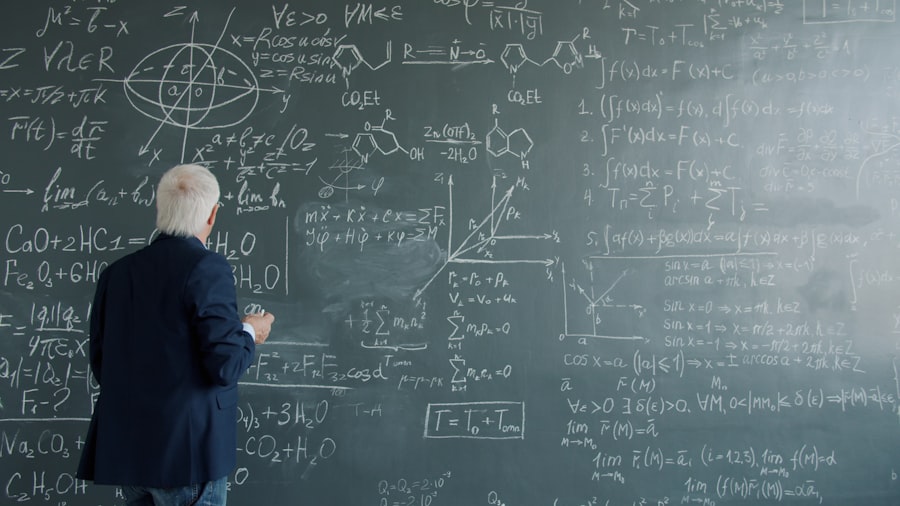
One of the ultimate goals of theoretical physics is to develop a “theory of everything” that unifies all fundamental forces, including gravity, into a single, cohesive framework.
Quantum Gravity: The Holy Grail
The quest for a quantum theory of gravity is arguably the most significant outstanding problem in theoretical physics. General relativity describes gravity in the macroscopic world, while quantum mechanics governs the microscopic. They use fundamentally different mathematical frameworks, and attempts to reconcile them lead to intractable infinities.
- String Theory: This ambitious theoretical framework proposes that elementary particles are not point-like but rather one-dimensional vibrating strings. The different vibration modes of these strings correspond to different particles, including the graviton, the hypothetical quantum of gravity.
- Extra Dimensions: String theory often requires the existence of additional spatial dimensions, typically 10 or 11, which are theorized to be “compactified” or curled up at extremely small scales, inaccessible to current experiments.
- Supersymmetry: Many versions of string theory incorporate supersymmetry, a symmetry that posits every known particle has a heavier “superpartner.” While no such superpartners have been observed yet, their discovery would lend significant support to string theory.
- Loop Quantum Gravity (LQG): This alternative approach to quantum gravity attempts to quantize spacetime itself, suggesting that spacetime is not a smooth continuum but rather composed of discrete “loops” or “atoms” of space. LQG is a background-independent theory, meaning it does not assume that spacetime is a fixed stage upon which physics unfolds.
Beyond the Standard Model: New Frontiers
The limitations of the Standard Model have spurred intense research into extensions and alternative theories.
- Supersymmetry (SUSY): Beyond its role in string theory, SUSY is an independent theoretical framework that proposes a symmetry between fermions and bosons. If true, it could explain dark matter (if the lightest superparticle is stable) and help unify the fundamental forces at high energies.
- Extra Dimensions (Kaluza-Klein Theory): The idea of extra spatial dimensions, beyond the three we perceive, is not exclusive to string theory. Kaluza and Klein, in the 1920s, attempted to unify gravity and electromagnetism by introducing a fifth dimension. While their specific model was unsuccessful, the concept of extra dimensions remains a fertile area of research.
- Grand Unified Theories (GUTs): These theories aim to unify the strong, weak, and electromagnetic forces into a single force at extremely high energies, such as those that existed in the early universe. While no definitive GUT has been experimentally confirmed, they offer promising avenues for understanding the fundamental unification of nature.
In the fascinating realm of theoretical physics, many secrets have been unveiled that challenge our understanding of the universe. For those eager to delve deeper into these revelations, an insightful article titled “The Hidden Dimensions of Reality” offers a comprehensive exploration of the latest discoveries and theories. You can read more about it by visiting this link, where you will find a wealth of information that expands on the concepts discussed in the context of theoretical physics.
The Future Landscape of Theoretical Physics
| Secret | Description | Key Metric | Implication |
|---|---|---|---|
| Quantum Entanglement | Particles remain connected over distance, affecting each other’s states instantly. | Correlation coefficient ≈ 1 | Enables quantum computing and secure communication. |
| Higgs Boson Discovery | Confirms mechanism giving particles mass via Higgs field interaction. | Mass ≈ 125 GeV/c² | Validates Standard Model of particle physics. |
| Dark Matter Composition | Unseen matter influencing galaxy rotation and structure formation. | Approximately 27% of universe’s mass-energy | Essential for understanding cosmic evolution. |
| String Theory Dimensions | Proposes extra spatial dimensions beyond the familiar three. | 10 or 11 total dimensions | Potential unification of gravity with quantum mechanics. |
| Black Hole Information Paradox | Debate on whether information is lost in black holes. | Entropy proportional to event horizon area | Challenges fundamental physics laws. |
The pursuit of theoretical physics is an ongoing odyssey, with each discovery opening new vistas and posing new questions. The challenges are immense, demanding creativity, mathematical rigor, and an unwavering commitment to unraveling the universe’s deepest secrets.
The Role of Experimentation and Observation
While theoretical physics is fundamentally about conceptual frameworks and mathematical models, it is inextricably linked to empirical evidence. Experimental results either validate existing theories or necessitate their refinement or abandonment.
- Particle Accelerators: Facilities like the LHC continue to probe the fundamental constituents of matter and the forces governing their interactions, potentially revealing new particles that extend or challenge the Standard Model.
- Astrophysical Observations: Telescopes, both ground-based and space-based, provide crucial data on the large-scale structure of the universe, the distribution of dark matter, the expansion of dark energy, and the characteristics of extreme cosmic phenomena like black holes and neutron stars. This observational data is vital for testing theories of cosmology and quantum gravity.
- Gravitational Wave Detectors: The nascent field of gravitational wave astronomy, spearheaded by detectors like LIGO and Virgo, offers a completely new window into the universe, allowing direct observation of powerful cosmic events that shake the fabric of spacetime itself.
Philosophical Implications and the Nature of Reality
Theoretical physics, in its deepest inquiries, often treads into philosophical territory, prompting profound questions about the nature of reality, causality, and human understanding.
- Interpretation of Quantum Mechanics: The probabilistic and observer-dependent aspects of quantum mechanics have led to various philosophical interpretations, such as the Copenhagen interpretation, the many-worlds interpretation, and objective collapse theories, each offering a different perspective on what the theory tells us about reality.
- The Multiverse Concept: Theories like inflationary cosmology and string theory sometimes suggest the existence of a multiverse, an ensemble of multiple universes with potentially different physical laws or initial conditions. This concept challenges traditional notions of a singular universe.
- The Unification Dream: The relentless pursuit of a “theory of everything” reflects a profound human desire for intellectual coherence and a complete understanding of the cosmos, hinting at an underlying simplicity and elegance that might govern all phenomena.
As you, the reader, navigate the intricate pathways of theoretical physics, remember that these models are not just abstract constructs. They are humanity’s most powerful tools for understanding the universe, from the fleeting existence of subatomic particles to the grand sweep of cosmic evolution. The journey is far from over; many secrets remain veiled, perpetually inviting the intrepid theoretical physicist to venture deeper into the mathematical tapestry that describes existence.
FAQs
What is theoretical physics?
Theoretical physics is a branch of physics that uses mathematical models and abstractions to explain and predict natural phenomena. It aims to understand the fundamental laws governing the universe.
What are some key concepts revealed in theoretical physics?
Key concepts include quantum mechanics, relativity, string theory, and the unification of forces. These ideas help explain the behavior of particles, the nature of space-time, and the fundamental interactions in the universe.
How does theoretical physics differ from experimental physics?
Theoretical physics focuses on developing mathematical frameworks and theories, while experimental physics involves conducting experiments to test these theories and observe physical phenomena.
Why are secrets or new discoveries in theoretical physics important?
New insights in theoretical physics can lead to a deeper understanding of the universe, potentially resulting in technological advancements, improved models of reality, and answers to fundamental questions about existence.
Can theoretical physics be applied in everyday technology?
Yes, many technologies such as semiconductors, lasers, and MRI machines are based on principles derived from theoretical physics, particularly quantum mechanics and electromagnetism.