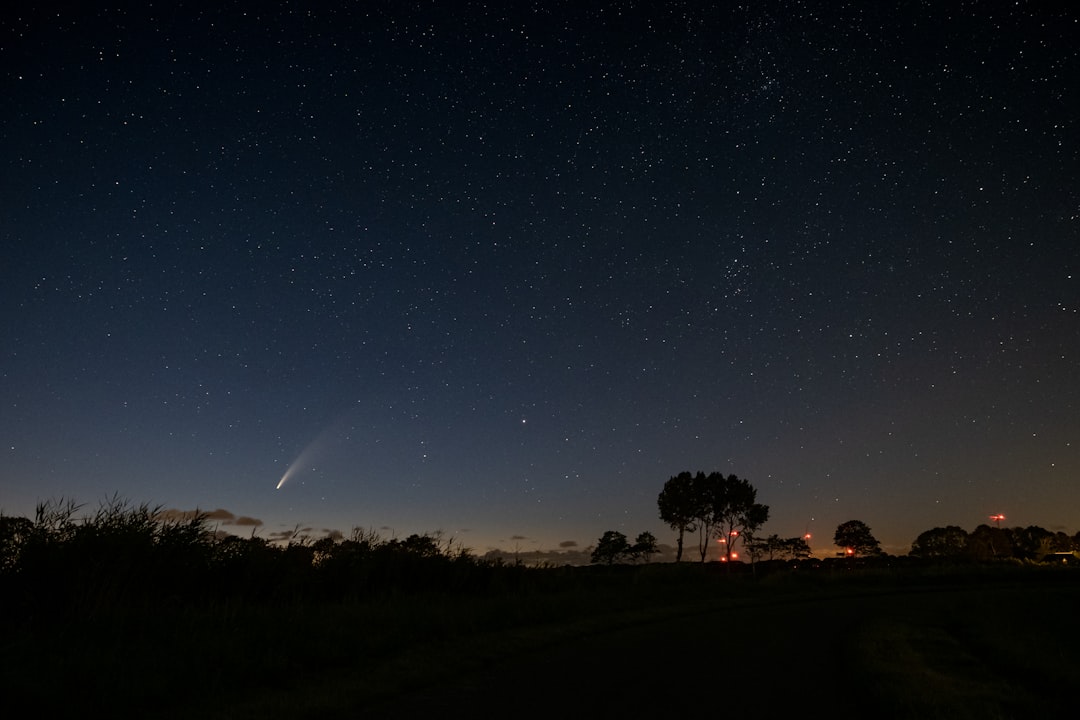
The cosmos, an immense tapestry woven with celestial phenomena, constantly presents astronomers with enigmatic threads. Among these, the concept of “dark comets” stands as a particularly intriguing, albeit debated, subject within the broader study of cometary science. These hypothetical objects, envisioned as remnants of cometary activity long past, offer a potential window into the early solar system and the processes that shape planetary bodies. While direct observation remains elusive, the theoretical framework surrounding dark comets, often dubbed “extinct” or “dormant” comets, has significant implications for understanding the distribution and evolution of icy bodies beyond the traditional cometary spectacle.
Defining the Elusive: What are Dark Comets?
To comprehend dark comets, one must first grasp the essence of their brighter, more active counterparts. A typical comet is a cosmic snowball, a conglomerate of ice, dust, and rock, that, upon approaching the Sun, warms up, causing its volatile components to sublimate directly from solid to gas. This process creates the characteristic coma, a nebulous envelope of gas and dust, and often a spectacular tail, illuminated by solar radiation. Dark comets, in stark contrast, are theorized to have lost most, if not all, of their volatile materials, leaving behind a rocky, non-sublimating core.
The Lifecycle of a Comet
The journey of a comet typically begins in the outer reaches of the solar system, specifically the Kuiper Belt or the Oort Cloud. These primordial reservoirs contain countless icy bodies, relics from the solar system’s formation. Gravitational perturbations, perhaps from passing stars or giant planets, can dislodge a comet from its distant abode, sending it on an elliptical trajectory towards the inner solar system.
Upon these repeated perihelion passages, the comet gradually sheds its volatile icy layers. Each close encounter with the Sun acts as a cosmic furnace, slowly baking away the frozen gases. Over millennia, a comet’s icy heart diminishes, leading to a decrease in its activity. This gradual desiccation lays the groundwork for the transformation into a dark comet.
Characteristics of a “Dark” Body
A dark comet, therefore, is not merely a comet that is far from the Sun and inactive. It is a body that has undergone a fundamental internal change, transitioning from a volatile-rich object to a more inert, rocky entity. Its surface, once a pristine canvas of ice, would be covered by a thick, insulating layer of dust and non-volatile material, effectively sealing off any remaining ice from solar radiation. This “dust mantle” plays a crucial role in preventing further sublimation, rendering the comet “dark” in the observational sense, as its activity ceases.
The Pathways to Dormancy and Extinction
The transformation from an active comet to a dark comet is not a singular event but rather a spectrum of processes driven by various factors. Understanding these pathways is essential for appreciating the diversity of these elusive objects.
Dormant Comets: A Temporary Slumber
Dormant comets represent an intermediate state in the life of a comet. These objects still retain some internal volatiles, but their surface has become largely inactive. A thick layer of dust has accumulated, effectively insulating the interior ice from direct solar heating. This can occur after numerous passages near the Sun, where the initial “easy-to-sublimate” volatiles have been depleted, and the remaining ice is buried deeper.
A dormant comet might occasionally exhibit bursts of activity if a geological event, such as a localized impact or a sudden collapse of the dust mantle, exposes fresh ice to solar radiation. Such events could lead to brief, unexpected cometary displays, offering tantalizing glimpses of their hidden volatile reservoirs. These sporadic outbursts give rise to the notion of “resurrection” events for dormant comets.
Extinct Comets: The Final Transformation
Extinct comets represent the end-stage of cometary evolution. These bodies have lost virtually all of their volatile materials, leaving behind a rocky, asteroid-like core. The transformation is extensive and irreversible under normal circumstances. The original icy nucleus has been entirely depleted, and the object’s composition is dominated by silicate materials and refractory organics.
Distinguishing an extinct comet from an asteroid can be a significant challenge. Both are rocky bodies in space. However, their origins differ fundamentally. Extinct comets are believed to have originated in the outer solar system, while most asteroids formed closer to the Sun. Their compositional differences, particularly the presence of dark, carbonaceous material on extinct comets, can sometimes offer clues to their lineage. This distinction is not merely academic; it informs our understanding of the distribution of material in the early solar system.
Factors Influencing Cometary Evolution
Several critical factors influence the rate at which a comet progresses towards dormancy or extinction. The most paramount is the comet’s orbit. Comets with tighter, more frequent orbits around the Sun experience more intense heating and thus deplete their volatiles more rapidly. Conversely, comets with wider, less frequent orbits can retain their activity for much longer periods.
The initial size and composition of the comet also play significant roles. Larger comets, with proportionally more ice, can sustain activity for extended durations. Comets with a higher proportion of easily sublimating volatiles will also tend to “burn out” faster than those rich in less volatile materials. Furthermore, the presence of a robust, cohesive dust mantle can significantly retard the sublimation process, effectively extending a comet’s active lifespan by acting as a protective shield.
The Search for Dark Comets: Observational Challenges
Identifying dark comets presents significant observational hurdles. Since they lack the defining characteristics of active comets—the coma and tail—they blend seamlessly with the vast population of asteroids. This makes direct identification based on visual characteristics exceedingly difficult.
Asteroids vs. Extinct Comets: A Cosmic Conundrum
The primary challenge lies in differentiating dark comets from dynamically similar asteroids. Both populations can occupy similar orbital spaces, particularly in the asteroid belt. However, tantalizing clues sometimes emerge.
For example, some asteroids exhibit orbits that are more typical of comets, prompting astronomers to consider them as potential extinct comets. These “cometary asteroids” often show subtle signs of past or intermittent activity, such as faint dust trails or occasional outbursts, rekindling the internal debate about their true nature. The asteroid (3200) Phaethon, the parent body of the Geminid meteor shower, is a prime example. While classified as an asteroid, its comet-like orbit and occasional brightenings strongly suggest a cometary origin.
Indirect Evidence and Detection Methods
Given the difficulty of direct observation, researchers rely on indirect evidence and sophisticated detection methods to infer the presence of dark comets.
One promising avenue involves studying meteor showers. Meteor showers are the earthly manifestations of cometary debris. When the Earth passes through the dust trail left behind by a comet, these particles enter our atmosphere and burn up, creating streaks of light. The presence of meteor showers with no currently active parent comet is a strong indicator of an extinct comet. The Geminid meteor shower, for instance, mentioned earlier, points to Phaethon as its source, a body thought to be an extinct comet.
Furthermore, spectroscopic analysis of certain asteroids can provide clues. If an asteroid exhibits spectral signatures consistent with cometary material—such as darkened, carbonaceous surfaces often associated with processed organic molecules—it could suggest a cometary origin. The D-type asteroids, a prominent group in the outer asteroid belt and among the Jupiter Trojans, are considered strong candidates for extinct comets due to their exceptionally dark, reddish surfaces and compositions. These dark surfaces are thought to be the remnants of the refractory material left behind after the volatiles have sublimated away.
Gravitational perturbations on other celestial bodies can also offer indirect evidence, although this is generally less precise for individual dark comets. However, the study of orbital dynamics of families of objects can help to group potential extinct comets with their established active counterparts, shedding light on their shared lineage.
Implications for Solar System Formation and Evolution
The existence of dark comets, whether dormant or extinct, carries profound implications for our understanding of the solar system’s formation and the subsequent evolution of its components.
Primordial Building Blocks
Comets are often referred to as “fossils of the early solar system.” They represent pristine, untouched remnants of the protoplanetary disc from which the Sun and planets coalesced. Studying the composition of these icy bodies—even their depleted, dark forms—offers invaluable insights into the chemical and physical conditions that prevailed billions of years ago.
Dark comets, therefore, act as time capsules, albeit ones that have undergone significant environmental changes. Their non-volatile remnants can still provide clues about the types of dust grains, refractory organics, and silicate materials that were present in the outer solar nebula. By analyzing the surfaces of these objects, astronomers can infer the conditions that led to their formation and evolution, complementing data obtained from active comets.
Water Delivery to Earth and Other Planets
One of the most profound implications of comets, and by extension, dark comets, concerns the origin of water on Earth and other inner solar system bodies. It is widely theorized that comets, through early bombardment, contributed significantly to the Earth’s oceans. If a substantial population of dark comets exists, it implies an even larger reservoir of volatile-rich bodies in the early solar system than previously estimated.
The study of dark comets, even as rocky husks, can help constrain the initial distribution and abundance of these water-bearing bodies. Understanding their prevalence and orbital dynamics can refine models of early solar system bombardment and the delivery mechanisms of vital resources to the nascent planets. The long-term stability of water within these bodies, even in a “dormant” state, speaks to the resilience of these cosmic delivery vehicles.
The Asteroid Belt’s Peculiar Residents
The discovery of main-belt comets—objects within the asteroid belt that periodically display cometary activity—further blurs the lines between asteroids and dark comets. These objects, initially classified as asteroids, occasionally develop comae and tails, indicating the presence of subsurface ice. Their very existence suggests that the asteroid belt, traditionally considered a dry, rocky domain, may harbor a population of ice-rich bodies that are essentially dormant comets.
The presence of these main-belt comets strengthens the argument for a significant population of extinct comets within the asteroid belt. These objects offer a tangible link between the inner and outer solar system populations, suggesting a dynamic history of migration and evolution. They challenge the simplistic dichotomy between “comets” and “asteroids” and instead paint a more nuanced picture of a solar system populated by a continuum of icy and rocky bodies.
Future Research and Ongoing Missions
The enigmatic nature of dark comets continues to drive scientific inquiry, with future research focusing on both theoretical modeling and observational campaigns. Ongoing and planned missions hold the promise of shedding further light on these elusive objects.
Theoretical Models and Simulations
Advancements in computational power allow for increasingly sophisticated theoretical models and simulations of cometary evolution. These models aim to predict the lifespan of comets, the rate at which they lose volatiles, and the conditions under which they transition to dormancy or extinction. By simulating various orbital parameters, initial compositions, and solar radiation environments, researchers can better understand the pathways to becoming a dark comet.
Such simulations can help to identify specific signatures that might differentiate an extinct comet from an asteroid, even in the absence of direct activity. For example, specific internal structures or surface compositions, though difficult to detect remotely, could be predicted by these models, guiding future observational strategies.
Observational Campaigns and Advanced Telescopes
Future observational campaigns will leverage advanced telescopes and instrumentation to search for subtle clues indicative of dark comets. Improved spectral resolution will enable more precise analysis of surface compositions, potentially revealing the tell-tale signs of original cometary material.
Surveys specifically designed to look for faint, transient activity from dormant comets are also underway. These “all-sky” surveys, employing wide-field cameras and sophisticated image processing techniques, aim to detect unexpected outbursts or faint dust trails that could betray the presence of a sporadically active, dormant body.
The upcoming Vera C. Rubin Observatory (formerly LSST), with its unprecedented survey capabilities, is expected to identify a vast number of previously undetected solar system objects. Among these, astronomers hope to uncover a significant population of dormant and potentially extinct comets, enriching the current inventory and providing a larger sample size for statistical analysis.
Space Missions: A Closer Look
Ultimately, the most definitive way to unveil the mysteries of dark comets will be through dedicated space missions. Missions designed to encounter and study specific asteroid-like objects suspected of being extinct or dormant comets would provide invaluable in-situ data.
Such missions could involve close-up imaging to reveal surface features indicative of past activity, such as sublimation pits or altered surface textures. Sample return missions, though highly challenging, would allow for direct analysis of the material composition, providing irrefutable evidence of a cometary origin. By returning samples, scientists could directly evaluate the remaining volatile content, the nature of the dust mantle, and the chemical alterations that have occurred over eons of solar exposure.
The concept of “dark comets” beckons us to look beyond the immediate spectacle of celestial fireworks. These silent cosmic wanderers, the ghostly remnants of active comets, hold the keys to unlocking fundamental questions about the solar system’s origins, the distribution of water, and the intricate dance of matter across cosmic timescales. While their veiled nature presents formidable challenges, the relentless pursuit of scientific truth promises to illuminate these shadowy figures, pushing the boundaries of our understanding of the universe we inhabit. The quest for dark comets is a testament to humanity’s enduring curiosity, a perennial search for answers hidden in plain sight, or in this case, in plain darkness.
FAQs
What are dark comets?
Dark comets are celestial objects that resemble comets but have very low reflectivity, making them difficult to detect with traditional telescopes. They often have surfaces covered with dark, carbon-rich materials that absorb most of the sunlight.
How do dark comets differ from regular comets?
Unlike regular comets, which typically have bright, icy comas and tails visible when near the Sun, dark comets have much less visible activity and appear faint due to their dark surfaces. This makes them harder to observe and study.
Where do dark comets originate?
Dark comets are believed to originate from the outer regions of the solar system, such as the Kuiper Belt or the Oort Cloud. They may be composed of primitive materials that have undergone space weathering, leading to their dark appearance.
Why are dark comets important to study?
Studying dark comets helps scientists understand the composition and evolution of small bodies in the solar system. They provide clues about the early solar system’s conditions and the processes that affect cometary surfaces over time.
How are dark comets detected if they are so faint?
Dark comets are detected using sensitive instruments that can observe in infrared or other wavelengths less affected by their low reflectivity. Space-based telescopes and specialized surveys also help identify these elusive objects.