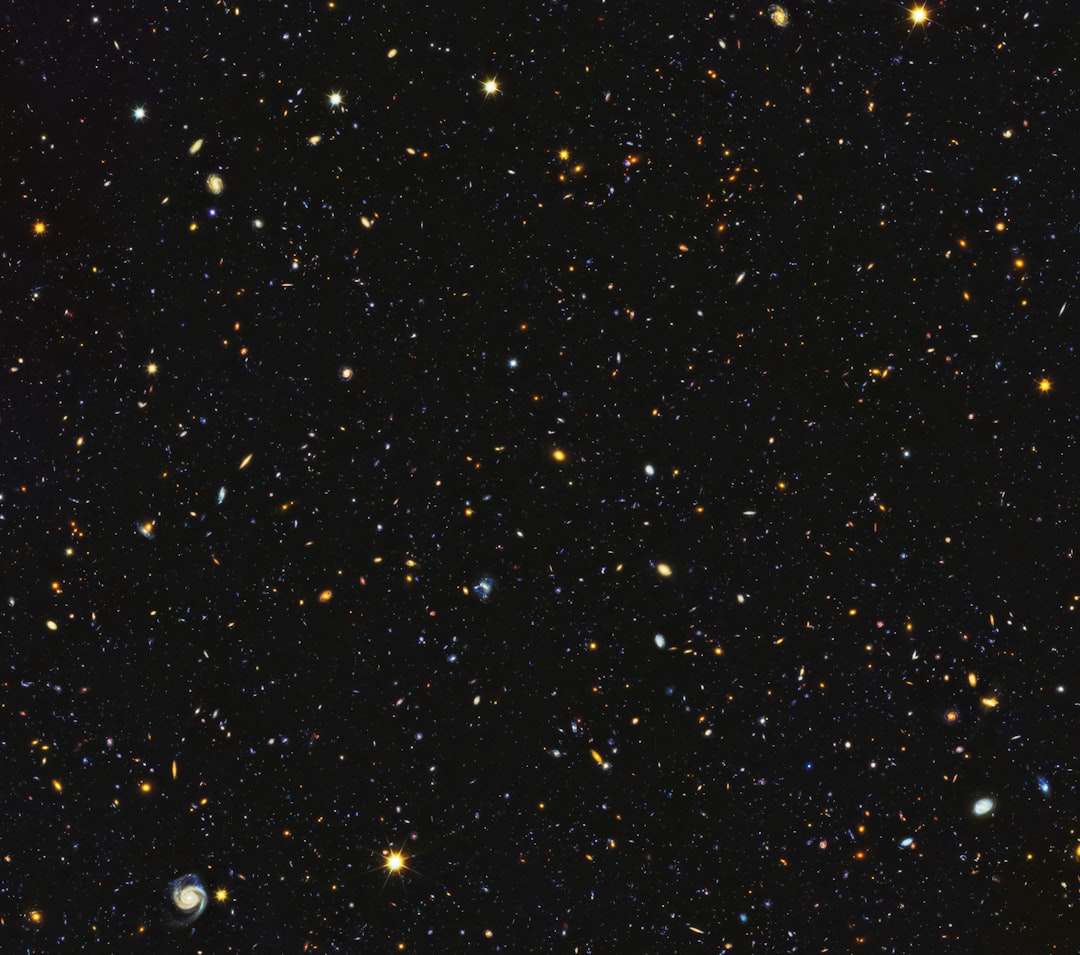
The cosmos, a boundless expanse of stars, galaxies, and uncharted territories, has captivated humanity for millennia. From ancient observatories charting the movements of celestial bodies to modern telescopes probing the most distant frontiers, the quest to comprehend the universe remains a cornerstone of scientific endeavor. This article delves into the cosmological perspective, examining the current understanding of the cosmos, its origins, evolution, and the enduring questions that continue to drive scientific inquiry.
The prevailing cosmological model, the Big Bang theory, posits that the universe originated from an extremely hot, dense state approximately 13.8 billion years ago. This monumental event, often misunderstood as an explosion into space, was rather an expansion of space itself.
The Expanding Universe
Edwin Hubble’s observations in the 1920s provided crucial evidence for the Big Bang. He discovered that distant galaxies are receding from Earth, and the further away they are, the faster they are moving. This phenomenon, known as Hubble’s Law, is analogous to dots on an expanding balloon – as the balloon inflates, the dots move further apart, even though they aren’t moving across the surface of the balloon. This expansion continues today, shaping the large-scale structure of the universe.
Cosmic Microwave Background Radiation (CMB)
A cornerstone of the Big Bang model is the Cosmic Microwave Background (CMB) radiation. Discovered serendipitously by Arno Penzias and Robert Wilson in 1964, the CMB is a faint glow of microwave radiation permeating the entire universe. It represents the residual heat from the early universe, a fossilized imprint of a time when the universe was hot and dense enough to be opaque. As the universe expanded and cooled, it became transparent, allowing this radiation to travel freely, much like the afterglow of a furnace cooling down. The CMB offers a direct glimpse into the universe’s infancy, providing remarkable confirmation of the Big Bang’s predictions.
Nucleosynthesis and Elemental Abundance
The Big Bang model also accurately predicts the cosmic abundances of light elements like hydrogen, helium, and lithium. During the first few minutes after the Big Bang, the universe was hot and dense enough for nuclear fusion to occur, forming these elements. The observed ratios of these elements in the universe align remarkably well with theoretical predictions from Big Bang nucleosynthesis, further bolstering the model’s credibility.
In the study of cosmology, understanding preferred frames of reference is crucial for interpreting the dynamics of the universe. A related article that delves deeper into this topic can be found at My Cosmic Ventures, where it explores how different frames of reference can influence our observations and theories about cosmic phenomena. This resource provides valuable insights into the implications of preferred frames in the context of general relativity and the expansion of the universe.
The Architecture of the Cosmos: Galaxies and Large-Scale Structures
The universe is not a homogeneous expanse; it is structured in a hierarchical manner, from individual stars to vast galaxy clusters.
Galaxies: Islands of Stars
Galaxies are gravitationally bound systems of stars, stellar remnants, interstellar gas, dust, and dark matter. They vary immensely in size, shape, and composition. The Milky Way, Earth’s home galaxy, is a spiral galaxy, a majestic pinwheel of billions of stars. Other common types include elliptical galaxies, which are more spherical or oval, and irregular galaxies, which lack a distinct shape. The formation and evolution of galaxies are complex processes influenced by gravity, dark matter, and mergers with other galaxies.
Clusters and Superclusters: Cosmic Filaments
Galaxies are not distributed randomly throughout space; they coalesce into larger structures. Galaxy clusters are collections of hundreds to thousands of galaxies bound together by gravity. These clusters, in turn, are part of even grander structures called superclusters, which can span hundreds of millions of light-years. These colossal structures are interconnected by filaments, vast wall-like structures of galaxies, creating a cosmic web that surrounds immense, mostly empty voids. This intricate pattern, often described as resembling a sponge or a neural network, highlights the universe’s large-scale organization.
The Role of Gravity in Cosmic Structure Formation
Gravity is the predominant force shaping the universe’s large-scale structure. From the initial tiny fluctuations in the early universe, gravity gradually pulled matter together, forming stars, galaxies, and ultimately the cosmic web we observe today. The subtle differences in density in the early universe, amplified over billions of years by gravity, acted as seeds for the formation of these structures. This process is analogous to water flowing into the depressions of a landscape, eventually forming rivers and lakes.
Dark Matter and Dark Energy: The Universe’s Enigmas
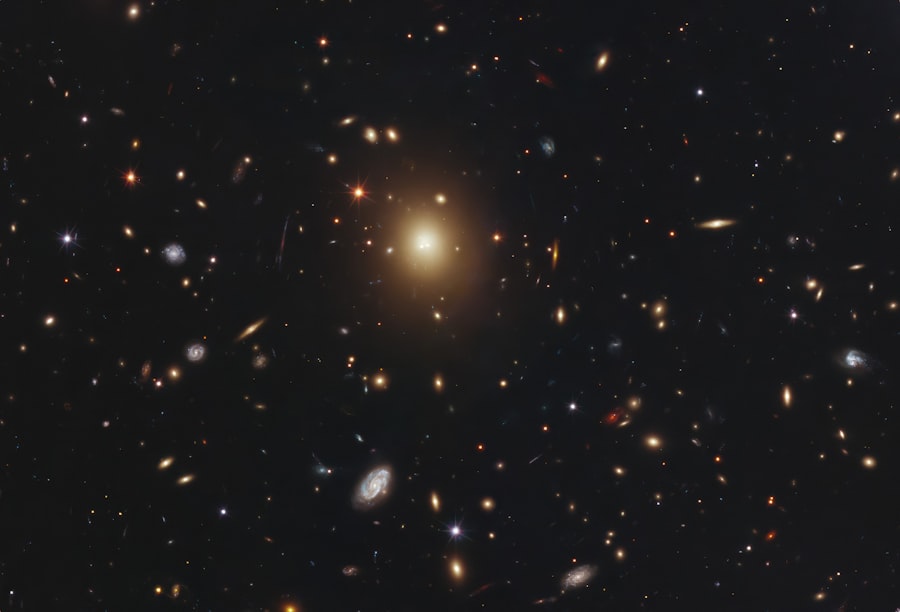
Despite significant advancements, a substantial portion of the universe remains mysterious, comprised of components that do not interact with light and are detectable only through their gravitational effects.
The Evidence for Dark Matter
Observations since the 1930s have indicated that galaxies and galaxy clusters contain far more mass than can be accounted for by their visible matter (stars, gas, and dust). This unseen mass, termed dark matter, exerts a gravitational pull that holds galaxies together and influences the dynamics of galaxy clusters. For instance, the rotation curves of galaxies, which plot the orbital speed of stars versus their distance from the galactic center, show that stars at the outer edges of galaxies orbit faster than expected if only visible matter were present. This discrepancy strongly suggests the presence of an unseen gravitational component. Dark matter is believed to comprise about 27% of the universe’s mass-energy content.
The Nature of Dark Matter
The precise nature of dark matter remains one of the most significant unsolved puzzles in cosmology. Unlike ordinary baryonic matter (protons, neutrons, electrons), dark matter does not absorb, reflect, or emit light, making it exceedingly difficult to detect directly. Leading candidates for dark matter particles include Weakly Interacting Massive Particles (WIMPs), hypothetical particles that interact very rarely with ordinary matter. Numerous experiments are underway worldwide, attempting to directly detect dark matter particles or observe their decay products.
The Enigma of Dark Energy
Even more elusive than dark matter is dark energy, a mysterious force responsible for the accelerating expansion of the universe. In the late 1990s, observations of distant supernovae revealed that the universe’s expansion is not slowing down due to gravity, as previously assumed, but is actually speeding up. This astonishing discovery, awarded the Nobel Prize in Physics in 2011, implies the existence of a repulsive force counteracting gravity.
Explaining the Accelerating Expansion
Dark energy is thought to comprise approximately 68% of the universe’s total mass-energy density, making it the dominant component. Its nature is poorly understood. One leading hypothesis is that dark energy is the “cosmological constant,” a concept reintroduced by Albert Einstein. This constant represents an intrinsic energy density of empty space itself. As space expands, this energy density remains constant, leading to an ever-increasing repulsive force. Other theories propose that dark energy is a dynamic field, similar to the Higgs field, which could vary in strength over time. The implications of dark energy are profound, shaping the ultimate fate of the universe.
The Future of the Universe: End Scenarios

The interplay between dark matter, dark energy, and gravity will ultimately determine the universe’s long-term destiny. Cosmologists have proposed several possible end scenarios.
The Big Freeze (Heat Death)
The prevailing view, given the accelerating expansion driven by dark energy, is the “Big Freeze,” also known as heat death. In this scenario, the universe continues to expand indefinitely, causing galaxies to drift further and further apart. Stars will eventually exhaust their fuel, black holes will evaporate through Hawking radiation, and the universe will become an increasingly dilute, cold, and empty expanse, approaching a state of maximum entropy. This might be thought of as a cosmic whimper, where all energy is evenly distributed and no further work can be done.
The Big Rip
A more dramatic, though less favored, scenario is the “Big Rip.” If dark energy’s repulsive force were to increase over time, it could eventually become strong enough to overcome all other fundamental forces. In this extreme scenario, galaxies, stars, planets, and even atoms themselves would be torn apart as the expansion accelerates relentlessly, leading to a complete disintegration of all matter.
The Big Crunch (Less Likely)
The “Big Crunch,” a scenario where the universe’s expansion eventually reverses and collapses back upon itself due to gravity, is now considered highly unlikely given the observed accelerating expansion. For this to occur, the total mass-energy density of the universe would need to be significantly higher than currently estimated, overriding the influence of dark energy.
In the study of cosmology, understanding preferred frames of reference is crucial for interpreting various cosmic phenomena. A fascinating article that delves deeper into this topic can be found at My Cosmic Ventures, where it explores how different frames can influence our perception of the universe’s structure and dynamics. This exploration not only enhances our comprehension of cosmic events but also raises intriguing questions about the nature of space and time itself.
Cosmological Puzzles and the Search for Answers
| Frame of Reference | Description | Key Metric | Typical Use in Cosmology | Example |
|---|---|---|---|---|
| Comoving Frame | Frame moving with the Hubble flow, where galaxies are at rest relative to the expanding universe | Redshift (z), Scale factor (a) | Used to describe large-scale structure and cosmic expansion | Galaxy at fixed comoving coordinates |
| Proper Frame | Local inertial frame where measurements are made at a specific point in spacetime | Proper time (τ), Proper distance | Used for local observations and measurements | Observer’s rest frame |
| CMB Rest Frame | Frame in which the Cosmic Microwave Background radiation is isotropic | CMB dipole anisotropy magnitude (~3.355 mK) | Used to define a universal rest frame and measure peculiar velocities | Earth’s velocity relative to CMB ~370 km/s |
| Inertial Frame | Non-accelerating frame where Newton’s laws hold locally | Velocity relative to other frames | Used in local physics and special relativity approximations | Freely falling observer in gravitational field |
| Fiducial Frame | Reference frame chosen for convenience in calculations or simulations | Depends on context (e.g., rest frame of a galaxy cluster) | Used in numerical cosmology and data analysis | Rest frame of a galaxy cluster in simulations |
Despite the remarkable progress in understanding the universe, numerous profound questions persist, driving ongoing research and theoretical exploration.
The Multiverse Hypothesis
One intriguing concept is the multiverse hypothesis, which suggests that our universe is just one of many universes, possibly infinite in number, each with its own laws of physics or initial conditions. This idea arises from various theoretical frameworks, including inflationary cosmology and string theory. While currently unobservable and highly speculative, the multiverse offers potential explanations for the fine-tuning of universal constants that allow for the existence of life.
The Origin of Inflation
The Big Bang model, while successful, faces certain challenges, such as the flatness problem and the horizon problem. Inflationary cosmology, a theoretical extension of the Big Bang, proposes a period of extremely rapid, exponential expansion in the universe’s earliest moments. This brief but intense burst of growth could have smoothed out the universe and extended regions that were causally connected, resolving these problems. However, the precise mechanism driving inflation and its ultimate nature remain active areas of research.
The Nature of Quantum Gravity
At the heart of many cosmological puzzles lies the fundamental challenge of unifying general relativity, which describes gravity on large scales, with quantum mechanics, which governs the universe at microscopic levels. A theory of quantum gravity is crucial for understanding the earliest moments of the Big Bang, where both gravity and quantum effects were paramount. String theory and loop quantum gravity are leading contenders in the quest for such a unified theory.
The Anthropic Principle and Fine-Tuning
The finely tuned values of fundamental physical constants, which allow for the emergence of stars, galaxies, and life itself, pose a profound philosophical and scientific question. The Anthropic Principle suggests that the universe’s properties are as they are because if they were different, observers like us would not exist to measure them. While some consider it a tautology, others view it as a hint towards a deeper underlying principle or the existence of a multiverse where a vast range of possible universes exist.
The Beginning Before the Big Bang
Perhaps the ultimate question in cosmology is what, if anything, existed “before” the Big Bang. While general relativity breaks down at the singularity of the Big Bang, leaving the question unanswered, various theoretical models attempt to address this, including cyclic universe models, where the universe undergoes endless cycles of expansion and contraction, or scenarios where our universe arose from a pre-existing “parent” universe.
In essence, the cosmological journey is an ongoing narrative, a continuous refinement of our understanding of the universe. Each new discovery unlocks a deeper layer of complexity and wonder, reinforcing both the vastness of our ignorance and the immense power of human inquiry. As readers, you are participants in this grand cosmic exploration, beneficiaries of centuries of scientific dedicated to unveiling the universe’s profound and enduring mysteries.

STOP Trusting Physics: The Speed Of Light Is A Lie
FAQs
What is a preferred frame of reference in cosmology?
A preferred frame of reference in cosmology is a specific frame in which the large-scale properties of the universe appear simplest or most uniform. It often refers to a frame where the cosmic microwave background radiation looks isotropic, meaning it has no directional dependence.
Why is the concept of a preferred frame important in cosmology?
The concept is important because it helps cosmologists understand the large-scale structure and evolution of the universe. Identifying a preferred frame allows scientists to measure cosmic expansion and motion relative to the universe’s overall rest frame.
Does the existence of a preferred frame violate the principle of relativity?
No, the existence of a preferred frame in cosmology does not violate the principle of relativity. While special relativity states that the laws of physics are the same in all inertial frames, cosmology deals with the universe’s large-scale structure, where a preferred frame can be defined by the cosmic microwave background without contradicting relativity.
How is the preferred frame of reference identified observationally?
The preferred frame is identified by measuring the cosmic microwave background (CMB) radiation. Observers moving relative to this frame see a dipole anisotropy in the CMB temperature. The frame in which the CMB appears isotropic (uniform in all directions) is considered the preferred cosmological frame.
What role does the preferred frame play in understanding cosmic expansion?
The preferred frame provides a baseline for measuring the expansion of the universe. By observing galaxies’ redshifts relative to this frame, cosmologists can determine the rate of expansion (Hubble’s law) and study the universe’s dynamics and history more accurately.