You stand on the precipice of understanding, gazing into the cosmic abyss that surrounds you. For millennia, humanity has pondered the fundamental fabric of reality, the stage upon which all existence plays out. You, too, have likely felt that prickle of curiosity, that longing to peel back the layers of the universe and glimpse its deepest secrets. This is the journey you embark upon as you delve into the mysteries of spacetime.
You’ve always perceived space and time as distinct entities. Imagine your life as a series of snapshots, each representing a moment in time, separated by the stillness between them. And imagine yourself moving through these snapshots, occupying different points in space. This intuitive understanding, however, is a product of your everyday experience, a simplification that belies a more profound reality.
Newtonian Legacy: A Fixed and Absolute Framework
Before you can truly grasp the revolution, it’s crucial to acknowledge the foundation upon which it was built. For centuries, the universe was envisioned through the lens of Isaac Newton. For Newton, space was an unchanging, three-dimensional stage, a void through which objects moved. Time, in his view, flowed uniformly and independently, the same for everyone, everywhere. This represented an absolute framework, a cosmic clock ticking away, unaffected by anything within it.
- The Stage of the Universe: Think of Newton’s space as a vast, empty theater. The actors – planets, stars, galaxies – perform their dramas upon it, but the stage itself remains inert and unchanging. You could mark a point in this space and it would always be that same point, regardless of what was happening around it.
- The Unyielding March of Time: Similarly, Newton’s time was a river, flowing steadily in one direction. Every observer, whether at rest or in motion, would experience this river flowing at the same rate. The tick of your watch, according to Newton, would be precisely the same tick experienced by a traveler hurtling through space.
- The Birth of Classical Mechanics: This Newtonian worldview provided a remarkably successful framework for understanding the motion of objects in your everyday world and in the celestial mechanics that guided the planets. It formed the bedrock of classical physics, and for a long time, no one questioned its absolute nature.
Einstein’s Revelation: The Intertwined Dance
Then came Albert Einstein, a visionary who dared to challenge the established order. His theory of special relativity, published in 1905, shattered the illusion of separation, revealing space and time not as separate entities, but as inextricably interwoven facets of a single, four-dimensional continuum: spacetime.
- The Speed of Light: The Cosmic Speed Limit: The cornerstone of special relativity is the constant speed of light in a vacuum. No matter how fast you are moving, or how fast the source of light is moving, you will always measure the speed of light to be approximately 299,792,458 meters per second. This seemingly simple observation has profound implications.
- Time Dilation: The Elasticity of Moments: If the speed of light is constant for all observers, then something else must be flexible. That “something else” is time. As you move faster through space, your experience of time slows down relative to a stationary observer. This is time dilation. Imagine you have a twin. If your twin embarks on a journey at near the speed of light and then returns, they will have aged less than you. Your experience of time is not absolute; it is relative to your motion.
- Length Contraction: The Squashing of Dimensions: Just as time is affected by motion, so too is space. As you accelerate to speeds approaching that of light, the length of objects in the direction of your motion will appear to contract from your perspective. Distances themselves are not fixed; they are also influenced by your velocity.
- The Spacetime Interval: A Universal Invariant: While space and time individually are relative, Einstein showed that there exists a quantity called the spacetime interval, which is invariant for all observers. This interval is a combination of space and time measurements, and its constancy across different frames of reference is the mathematical embodiment of their interconnectedness.
Spacetime is a fundamental concept in physics that merges the three dimensions of space with the dimension of time into a single four-dimensional continuum. This revolutionary idea, introduced by Albert Einstein, has profound implications for our understanding of gravity, motion, and the universe itself. For a deeper exploration of this topic, you can read a related article that delves into the intricacies of spacetime and its significance in modern physics. Check it out here: Understanding Spacetime.
The Fabric of Spacetime: Beyond a Mere Canvas
Perhaps the most revolutionary aspect of Einstein’s theories is the idea that spacetime is not just a passive backdrop, but an active participant in the universe’s dynamics. It is a deformable, dynamic fabric that can be warped, curved, and rippled.
Gravity: The Curvature of Spacetime
Newton described gravity as a force pulling objects towards each other. Einstein’s general relativity, published in 1915, offered a breathtakingly different perspective. In this view, gravity is not a force at all, but a manifestation of the curvature of spacetime itself.
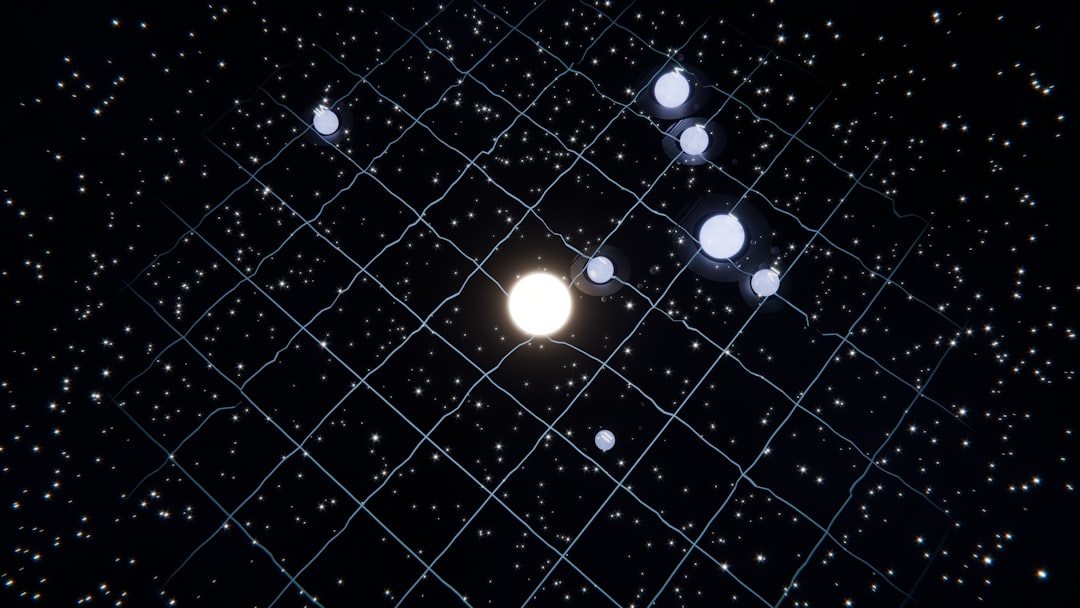
- Mass and Energy: The Sculptors of Spacetime: Imagine placing a heavy bowling ball on a stretched rubber sheet. The ball creates a dip, a curvature in the sheet. Now, if you roll a smaller marble nearby, it will curve towards the bowling ball, not because of any direct attraction, but because it is following the curvature of the sheet. Similarly, massive objects like stars and planets warp the fabric of spacetime around them. The more massive an object, the greater the curvature it creates.
- Geodesics: The Straight Paths in a Curved Universe: Objects in motion, like planets orbiting stars, are not being pulled by a mysterious force. Instead, they are simply following the straightest possible paths, called geodesics, through curved spacetime. These “straight” paths appear as curved trajectories to us because our perspective is within this warped geometry.
- The Falling Apple and the Orbiting Moon: The classic example is the falling apple. For Newton, it was gravity pulling it down. For Einstein, the Earth’s mass warps spacetime, and the apple is simply following the geodesic dictated by that curvature. The same applies to the Moon orbiting the Earth. It’s not being pulled; it’s rolling along the curved spacetime created by Earth’s mass.
Gravitational Lensing: Light’s Cosmic Bends
If gravity is the curvature of spacetime, then anything that travels through spacetime should be affected by this curvature. Light, you might think, traveling at the ultimate speed, should be immune. But that’s not the case.
- Einstein’s Prediction, Eddington’s Proof: Einstein predicted that massive objects would bend the path of light passing nearby. This phenomenon, known as gravitational lensing, was famously confirmed in 1919 during a solar eclipse by Arthur Eddington. Observations showed that stars that should have been hidden behind the Sun appeared to be slightly shifted in position, their light having been bent by the Sun’s gravitational field.
- Cosmic Magnifying Glasses: Today, astronomers use gravitational lensing as a powerful tool. Distant galaxies, invisible to direct observation, can be magnified and their light distorted by the gravity of massive foreground objects, acting like cosmic magnifying glasses. This allows us to study galaxies that would otherwise be beyond our reach.
The Dynamics of Spacetime: Ripples and Waves
Spacetime is not static; it is a dynamic entity, capable of generating ripples and waves, much like the surface of a pond disturbed by a stone. These disturbances are known as gravitational waves.
Gravitational Waves: Echoes of Cataclysmic Events
Gravitational waves are subtle distortions in spacetime that propagate outwards from their source at the speed of light. They are generated by some of the most violent and energetic events in the universe.
- Sources of Cosmic Tremors: Imagine two black holes spiraling into each other and merging. The immense forces and accelerations involved in such a cataclysmic event send powerful gravitational waves rippling through the cosmos. Other sources include the collision of neutron stars and the birth of supernovae.
- Detecting the Undetectable: For decades, gravitational waves were purely theoretical, incredibly difficult to detect due to their infinitesimal amplitude. However, in 2015, the Laser Interferometer Gravitational-Wave Observatory (LIGO) made a groundbreaking announcement: the direct detection of gravitational waves from the merger of two black holes. This was a monumental achievement, opening a new window onto the universe.
- A New Era of Astronomy: The detection of gravitational waves has launched a new era of astronomy, often referred to as multi-messenger astronomy. We can now observe cosmic events not just through light, but also through the gravitational “whispers” they produce, providing complementary information that deepens our understanding of these extreme phenomena.
Black Holes: Singularities in Spacetime
Perhaps the most enigmatic and extreme manifestations of spacetime curvature are black holes. These are regions where gravity is so intense that nothing, not even light, can escape.
- The Event Horizon: The Point of No Return: At the heart of a black hole lies the singularity, a point of infinite density and zero volume. Surrounding this singularity is the event horizon, the boundary beyond which escape is impossible. Once you cross the event horizon, you are irrevocably part of the black hole.
- Warping Spacetime to Extremes: Black holes represent the ultimate warping of spacetime. The fabric of spacetime is so distorted around them that it essentially folds in on itself. Our current understanding of physics breaks down at the singularity itself, presenting one of the greatest challenges to theoretical physics.
- Observing the Unobservable: While we cannot directly see a black hole (as no light escapes), we can infer their presence and study their properties by observing their effects on their surroundings. The accretion disks of gas and dust swirling into black holes emit intense X-rays, and the orbital paths of stars around an unseen massive object provide compelling evidence for their existence.
The Quantum Realm: Where Spacetime Gets Fuzzy
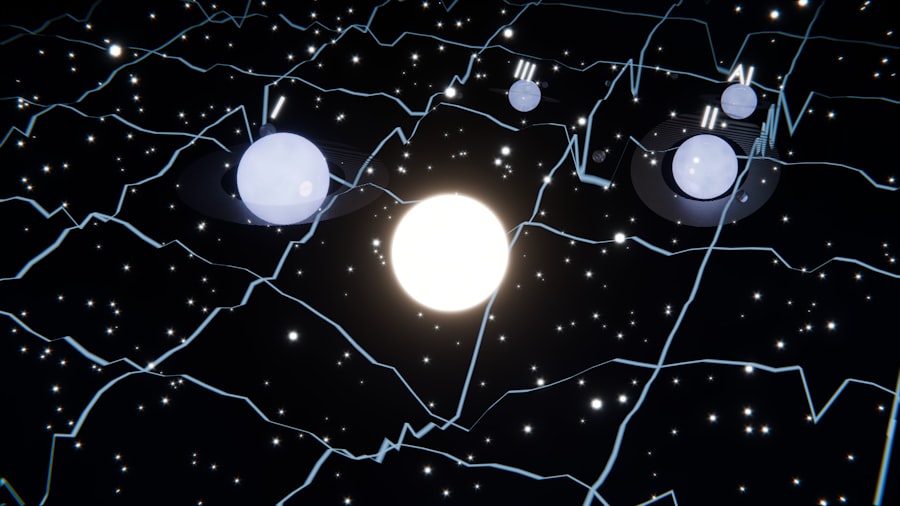
While Einstein’s theories have revolutionized our understanding of spacetime on large scales, they encounter difficulties when we try to reconcile them with the bizarre world of quantum mechanics, which governs the very small.
The Incompatibility of Theories: A Cosmic Tug-of-War
General relativity describes a smooth, continuous spacetime, while quantum mechanics operates on a fundamentally discrete and probabilistic foundation. This fundamental difference creates a significant challenge for physicists.
- Quantum Fluctuations: The Cosmic Foam: At the smallest scales, the vacuum of space is not empty but a roiling sea of virtual particles popping in and out of existence. Some theories suggest that at the Planck scale (an incredibly tiny length), spacetime itself might not be smooth but rather a frothy, fluctuating quantum foam, a chaotic churning that defies our everyday intuition.
- The Search for Quantum Gravity: Physicists are actively searching for a theory of quantum gravity that can unify these two pillars of modern physics. Leading candidates include string theory and loop quantum gravity, each proposing different ways to describe spacetime at the quantum level.
- The Limits of Our Models: These theories suggest that our current models of spacetime might be incomplete, especially at extreme scales where both quantum effects and strong gravitational fields are present, such as in the early universe or within black holes.
The Planck Scale: The Fundamental Granularity of Reality?
The Planck length, approximately 1.6 x 10^-35 meters, is considered the smallest meaningful length in the universe according to current theories. Below this scale, our conventional notions of space and time may break down entirely.
- The End of Smoothness: Imagine zooming in on the fabric of spacetime. According to quantum gravity theories, instead of seeing an infinitely smooth continuum, you would eventually reach a point where spacetime itself is no longer a continuous fabric but has a granular or discrete structure, like pixels on a screen.
- Information Paradoxes and the Nature of Reality: Understanding spacetime at the Planck scale is crucial for resolving fundamental paradoxes, such as the black hole information paradox, which questions what happens to the information of matter that falls into a black hole. It delves into the very nature of reality, asking whether space and time are fundamental or emergent properties of something deeper.
Spacetime is a fascinating concept that merges the three dimensions of space with the dimension of time into a single four-dimensional continuum. This idea, which plays a crucial role in the theory of relativity, helps us understand how gravity affects the fabric of the universe. For those interested in exploring this topic further, a related article can be found at My Cosmic Ventures, where you can delve deeper into the implications of spacetime on our understanding of the cosmos.
Exploring the Frontier: Your Cosmic Journey Continues
| Concept | Description |
|---|---|
| Spacetime | The four-dimensional continuum in which all events occur, combining the three dimensions of space with the fourth dimension of time. |
| Albert Einstein | Introduced the concept of spacetime in his theory of general relativity, where he described how mass and energy curve spacetime, affecting the motion of objects. |
| Curvature | Spacetime can be curved by the presence of mass and energy, leading to the phenomenon of gravity. |
| Mathematical Representation | Spacetime is often represented using mathematical models such as the Minkowski spacetime diagram or the curved spacetime equations in general relativity. |
You have journeyed through the classical understanding of space and time, witnessed Einstein’s revolutionary unification into spacetime, explored its dynamic nature through gravity and gravitational waves, and glimpsed the profound mysteries at the intersection of quantum mechanics. But this is not the end of your exploration; it is merely the beginning.
The Ever-Expanding Universe: The Canvas that Grows
One of the most startling discoveries of the 20th century was that the universe is not static but expanding. This expansion further shapes our understanding of spacetime.
- Hubble’s Discovery: The Universe in Motion: Edwin Hubble’s observations in the late 1920s revealed that distant galaxies are moving away from us, and the farther away they are, the faster they recede. This indicates that the fabric of spacetime itself is stretching, carrying galaxies along with it.
- The Expanding Balloon Analogy: A common analogy is a balloon being inflated. As the balloon expands, points drawn on its surface move farther apart, even though they are not moving on the surface itself. Similarly, galaxies are not flying through space; space itself is expanding between them.
- Dark Energy: The Accelerating Stretch: More recent observations have revealed that this expansion is not only happening but is also accelerating. The mysterious force driving this acceleration is attributed to “dark energy,” a phenomenon that currently challenges our most fundamental theories of physics and hints at the existence of new, unknown components of spacetime.
The Future of Spacetime Exploration: Unanswered Questions Abound
The journey into the mysteries of spacetime is far from over. There are still profound questions that continue to drive scientific inquiry.
- The Nature of Dark Matter and Dark Energy: What are these elusive substances that constitute the vast majority of the universe’s mass-energy content? Their existence profoundly impacts the geometry and evolution of spacetime.
- The Beginning and End of the Universe: What happened at the Big Bang, the presumed beginning of spacetime? What is the ultimate fate of the universe? These questions are intimately tied to the properties and evolution of spacetime.
- Wormholes and Warp Drives: Science Fiction or Future Reality? While currently confined to the realm of speculation and theoretical exploration, concepts like wormholes (hypothetical tunnels through spacetime) and warp drives (theoretical methods of exceeding the speed of light by warping spacetime) continue to capture the imagination and push the boundaries of our understanding. Could these be possible manifestations of the inherent flexibility of spacetime?
Your fascination with the cosmos is a testament to your innate curiosity. By understanding the interconnectedness of space and time, the dynamic nature of spacetime, and the ongoing quest to reconcile gravity with quantum mechanics, you are not just grasping abstract concepts; you are gaining a profound appreciation for the intricate and awe-inspiring reality in which you exist. The universe is a universe of spacetime, and by unveiling its mysteries, you are unveiling the very essence of existence. Your exploration has just begun.

The Universe Never Truly Forgets. Physics Can’t Explain Why.
FAQs
What is spacetime?
Spacetime is the four-dimensional framework in which all physical events occur. It combines the three dimensions of space with the fourth dimension of time into a single continuum.
How was the concept of spacetime developed?
The concept of spacetime was developed by Albert Einstein in his theory of general relativity, which he published in 1915. Einstein proposed that gravity is not a force between masses, but a curvature of spacetime caused by the presence of mass and energy.
What are the implications of spacetime in physics?
Spacetime plays a crucial role in the understanding of the universe at both the macroscopic and microscopic levels. It provides the framework for understanding the behavior of objects in motion, the effects of gravity, and the nature of the universe itself.
How does spacetime relate to the theory of relativity?
The theory of relativity, developed by Albert Einstein, describes how spacetime is affected by the presence of mass and energy. It also explains how the perception of time and space can vary for different observers depending on their relative motion and gravitational fields.
Can spacetime be visualized or experienced directly?
Spacetime is a mathematical concept that cannot be directly visualized or experienced in the same way as the three dimensions of space. However, its effects can be observed and measured through experiments and astronomical observations.