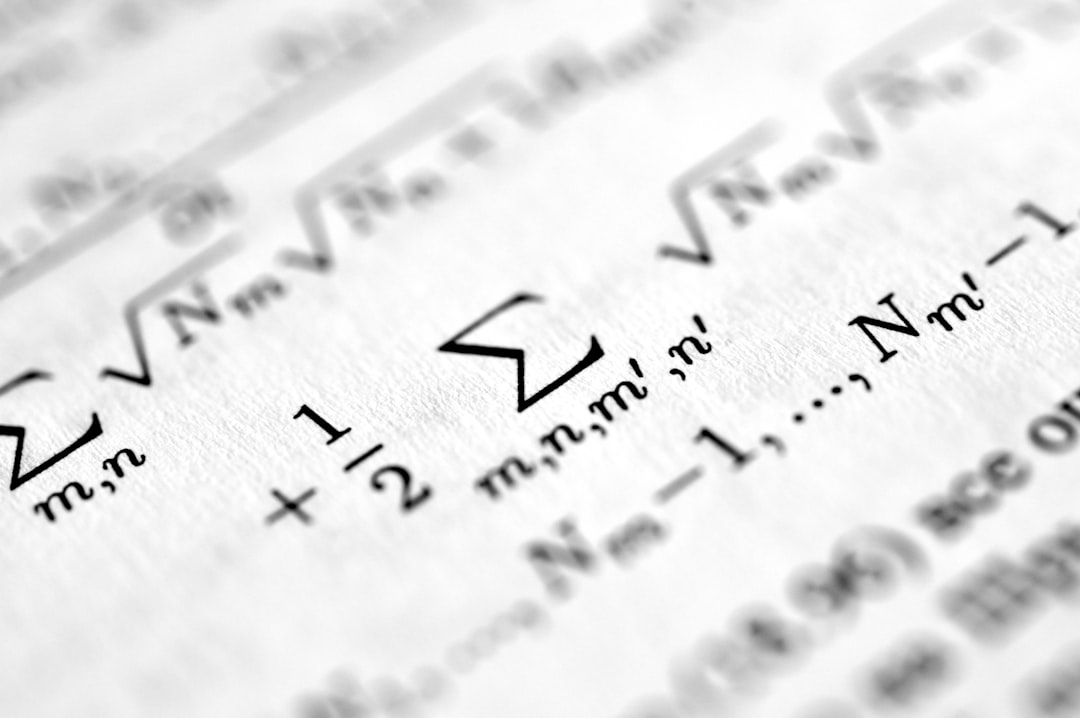
Quantum mechanics, a revolutionary theory that emerged in the early 20th century, has fundamentally altered our understanding of the universe at its most fundamental level. It paints a picture of reality that is vastly different from our everyday intuition, a realm governed by probabilities, uncertainties, and bizarre phenomena that defy classical reasoning. To unveil the mysteries of quantum mechanics is to embark on a journey into the heart of existence, exploring the building blocks of matter and energy and the peculiar rules that dictate their behavior.
The Dawn of the Quantum Age: Cracks in the Classical Edifice
The late 19th and early 20th centuries witnessed a period of immense scientific progress, but beneath the veneer of classical physics, cracks began to appear. Several experimental observations and theoretical paradoxes could not be explained by the established laws of Newtonian mechanics and Maxwell’s electromagnetism. These anomalies, seemingly disconnected at first, would ultimately lead to a paradigm shift, ushering in the quantum age.
Blackbody Radiation and Planck’s Bold Hypothesis
One of the earliest and most significant challenges to classical physics came from the study of blackbody radiation. A blackbody is an idealized object that absorbs all incident electromagnetic radiation and emits radiation based solely on its temperature. Classical physics predicted that as the frequency of emitted radiation increased, the intensity would also increase indefinitely, leading to the “ultraviolet catastrophe” – a scenario where a blackbody would emit an infinite amount of energy in the ultraviolet range. This clearly contradicted experimental results, which showed a peak in intensity at a specific frequency and a decrease at higher frequencies.
In 1900, Max Planck, in a desperate attempt to reconcile theory with experiment, proposed a radical idea: energy is not emitted or absorbed continuously, but in discrete packets, or quanta. He postulated that the energy of each quantum is directly proportional to the frequency of the radiation, a relationship expressed by the famous equation E = hf, where E is energy, f is frequency, and h is Planck’s constant. This seemingly small adjustment, the introduction of a fundamental constant of nature, was the first tremor of the quantum revolution. Planck himself initially viewed this as a mathematical trick rather than a physical reality, but its implications would soon prove profound.
For those interested in delving deeper into the intricacies of quantum mechanics, a related article that provides a comprehensive overview is available at this link: Science Explained: Quantum Mechanics. This article breaks down complex concepts into more digestible explanations, making it easier for readers to grasp the fundamental principles that govern the quantum world. Whether you’re a beginner or someone looking to refresh your knowledge, this resource is an excellent starting point.
The Photoelectric Effect and Einstein’s Light Quanta
Another compelling piece of evidence for the quantization of energy came from the photoelectric effect, observed by Heinrich Hertz and later investigated by Philipp Lenard. This phenomenon involves the emission of electrons from a material when light shines on it. Classical wave theory predicted that the energy of the emitted electrons should depend on the intensity of the light, and that any frequency of light, if intense enough, should be able to eject electrons. However, experiments revealed that the energy of the emitted electrons depended on the frequency of the light, not its intensity, and that there was a minimum frequency (a threshold frequency) below which no electrons were emitted, regardless of the intensity.
In 1905, Albert Einstein, building upon Planck’s work, boldly proposed that light itself is composed of discrete packets of energy, which he called “light quanta” or “photons.” He suggested that each photon carries an energy of hf, and that for an electron to be ejected from the material, it must absorb a single photon with sufficient energy to overcome the binding forces within the material. This explanation perfectly accounted for the observed threshold frequency and the dependence of electron energy on light frequency, earning Einstein the Nobel Prize in Physics. The concept of photons transformed light from a purely wave phenomenon into something with particle-like properties, introducing the wave-particle duality that would become a cornerstone of quantum mechanics.
Atomic Spectra and the Bohr Model
The stability of atoms and the discrete nature of their emitted and absorbed light, known as atomic spectra, also posed a significant challenge to classical physics. According to classical electrodynamics, an electron orbiting the nucleus of an atom should continuously radiate energy and spiral into the nucleus, causing the atom to collapse. This, of course, did not happen; atoms are remarkably stable. Furthermore, when atoms are heated or excited, they emit light only at specific, discrete wavelengths, forming characteristic spectral lines.
In 1913, Niels Bohr proposed a model of the hydrogen atom that incorporated quantum ideas. He postulated that electrons orbit the nucleus only in specific, quantized energy levels or orbits. Electrons could jump between these orbits by absorbing or emitting photons with energy equal to the difference in energy between the orbits. This model successfully explained the hydrogen atom’s spectrum, predicting the wavelengths of its spectral lines with remarkable accuracy. While the Bohr model was a crucial step forward, it was ultimately an incomplete picture, applicable only to hydrogen and similar one-electron systems. However, it laid the groundwork for a more comprehensive quantum theory of atomic structure.
The Birth of Quantum Mechanics: Probability and Uncertainty Take Center Stage
The initial sparks of quantum theory, while revolutionary, were largely ad hoc explanations for specific phenomena. The true edifice of quantum mechanics began to take shape in the mid-1920s with the development of two seemingly different but ultimately equivalent mathematical frameworks: wave mechanics and matrix mechanics. These theories, born from the insights of de Broglie, Schrödinger, Heisenberg, Born, and others, introduced a radically new conception of reality, one where probabilities reign supreme and certainty is an elusive concept.
Wave-Particle Duality: The Fundamental Ambiguity
One of the most counterintuitive aspects of quantum mechanics is wave-particle duality. This principle states that all quantum entities, including particles like electrons and even macroscopic objects, exhibit both wave-like and particle-like properties. Louis de Broglie, in his 1924 doctoral thesis, proposed that if light can behave as both a wave and a particle, perhaps matter can do the same. He suggested that every particle has an associated wavelength, given by the equation λ = h/p, where λ is the wavelength, h is Planck’s constant, and p is the momentum of the particle.
This idea was experimentally verified in the scattering of electrons by crystals, which produced diffraction patterns characteristic of waves. This duality means that in some experiments, a quantum entity will behave as a discrete particle, while in others, it will behave as a spread-out wave. The specific behavior observed depends on the experimental setup. This is not to say that the entity is somehow both a wave and a particle simultaneously in the classical sense. Rather, it possesses properties that are described by both wave and particle characteristics, and the manifestation of these properties is context-dependent.
For those interested in a deeper understanding of the fascinating world of quantum mechanics, a related article can be found on My Cosmic Ventures. This resource provides an engaging exploration of the principles that govern the behavior of particles at the quantum level, shedding light on concepts that can often seem perplexing. To delve into this intriguing subject, you can read more about it in the article here.
Schrödinger’s Wave Equation: The Language of Quantum Systems
Erwin Schrödinger, inspired by de Broglie’s proposal, formulated a mathematical equation in 1926 that describes the behavior of quantum systems in terms of their wave properties. The Schrödinger equation is a fundamental equation in quantum mechanics, analogous to Newton’s second law in classical mechanics. It allows physicists to calculate the probability of finding a particle in a certain location or in a particular state.
The solutions to the Schrödinger equation are called wave functions (often denoted by the Greek letter psi, ψ). The wave function itself does not have a direct physical interpretation, but its square, |ψ|², represents the probability density of finding the particle at a particular point in space. This is a profound departure from classical physics, where the position and momentum of a particle can be known with certainty. In quantum mechanics, we can only speak of probabilities. For example, an electron in an atom doesn’t have a definite orbit; instead, its wave function describes a probability cloud, indicating where it is most likely to be found.
Heisenberg’s Uncertainty Principle: The Limits of Knowledge
Werner Heisenberg, in 1927, formulated one of the most famous and profound principles of quantum mechanics: the uncertainty principle. This principle states that there are fundamental limits to how precisely certain pairs of physical properties of a particle, such as its position and momentum, can be known simultaneously. Mathematically, it is expressed as Δx Δp ≥ ħ/2, where Δx is the uncertainty in position, Δp is the uncertainty in momentum, and ħ (h-bar) is Planck’s constant divided by 2π.
This principle is not a limitation of our measuring instruments, but an intrinsic property of nature. The more precisely one knows the position of a quantum particle, the less precisely one can know its momentum, and vice versa. This inherent uncertainty has profound implications for our understanding of causality and determinism in the quantum realm. It means that even with perfect knowledge of the initial state of a quantum system, its future evolution can only be predicted probabilistically, not deterministically.
The Probabilistic Nature of Reality: Born’s Interpretation
Max Born, in 1926, provided a crucial interpretation of the wave function, linking the abstract mathematical formalism to observable physical phenomena. He proposed that the square of the magnitude of the wave function, |ψ|², represents the probability density of finding the particle at a particular point in space and time. This probabilistic interpretation is central to quantum mechanics. Before a measurement is made, a quantum system can exist in a superposition of multiple possible states. Upon measurement, the wave function “collapses” into a single, definite state, but which state it collapses into is governed by probabilities. This idea of probability, rather than predictability, as the fundamental descriptor of reality at the quantum level, was a radical departure from classical physics.
The Bizarre World of Quantum Phenomena: Entanglement and Superposition
Beyond the fundamental principles, quantum mechanics gives rise to a host of phenomena that defy common sense and have captivated scientists and the public alike. These “spooky” occurrences, as Einstein famously called them, highlight the profoundly non-classical nature of the quantum world.
Superposition: Being in Multiple States Simultaneously
Superposition is a phenomenon where a quantum system can exist in a combination of multiple states at the same time. Imagine a coin spinning in the air; before it lands, it is neither heads nor tails but in a probabilistic state of both. In quantum mechanics, this is far more concrete. An electron, for example, can be in a superposition of spin-up and spin-down states simultaneously. Only when a measurement is performed does the system “collapse” into one of the definite states.
The famous Schrödinger’s cat thought experiment vividly illustrates this concept. A cat is placed in a box with a radioactive atom, a Geiger counter, a hammer, and a vial of poison. If the atom decays, the Geiger counter triggers the hammer, which breaks the vial, killing the cat. According to quantum mechanics, until the box is opened and the system is observed, the atom is in a superposition of decayed and undecayed states. Consequently, the cat is simultaneously alive and dead. This thought experiment, while extreme, highlights the bizarre implications of superposition for macroscopic objects if quantum principles were to somehow scale up.
Quantum Entanglement: Spooky Action at a Distance
Another deeply counterintuitive quantum phenomenon is entanglement. When two or more quantum particles become entangled, their fates become inextricably linked, regardless of the distance separating them. If their properties are measured, the outcome of one measurement instantaneously influences the outcome of the other, even if they are light-years apart.
Consider two entangled electrons, each with a spin property that can be either up or down. If these electrons are entangled in a specific way, measuring the spin of one electron to be ‘up’ will instantaneously determine that the spin of the other electron must be ‘down,’ and vice versa. This “spooky action at a distance,” as Einstein described it, appears to violate the principle that information cannot travel faster than the speed of light. However, entanglement does not allow for faster-than-light communication. While the correlation is instantaneous, meaningful information cannot be transmitted in this way. Entanglement is a fundamental resource for emerging quantum technologies like quantum computing and quantum communication.
Quantum Tunneling: Passing Through Barriers
Quantum tunneling is a phenomenon where a quantum particle can pass through a potential energy barrier, even if it does not have enough classical energy to overcome it. Imagine trying to push a ball over a hill; if the ball doesn’t have enough momentum, it will roll back. However, in the quantum world, there is a non-zero probability that the particle will “tunnel” through the barrier and appear on the other side.
This effect is a direct consequence of the wave-like nature of particles. The wave function of a particle does not abruptly drop to zero at the edge of a barrier; it decays exponentially into the barrier. If the barrier is thin enough, there is a non-negligible probability that the wave function will extend to the other side, allowing the particle to appear there. Quantum tunneling plays a crucial role in many physical processes, including nuclear fusion in stars, the operation of scanning tunneling microscopes, and the functioning of semiconductor devices.
Applications and the Future of Quantum Mechanics
The profound insights of quantum mechanics, initially viewed as abstract and esoteric, have led to revolutionary technological advancements and continue to shape our future. From the transistors that power our electronics to the lasers used in everything from barcode scanners to surgical procedures, quantum mechanics is deeply embedded in modern society. The ongoing exploration of its more advanced phenomena promises even more transformative applications.
Quantum Computing: Harnessing the Power of Qubits
Quantum computing represents a paradigm shift in computation, leveraging the principles of quantum mechanics to perform calculations that are intractable for even the most powerful classical computers. Unlike classical bits that represent either a 0 or a 1, quantum bits, or qubits, can exist in superposition, representing 0, 1, or a combination of both. This allows quantum computers to explore a vast number of possibilities simultaneously.
Entangled qubits can further enhance the computational power. By manipulating these qubits through quantum gates, quantum computers can solve specific types of problems exponentially faster than classical computers. These include factoring large numbers (with implications for cryptography), simulating complex molecular systems (for drug discovery and materials science), and optimizing intricate problems in fields like finance and logistics. While still in its nascent stages, quantum computing holds the promise of revolutionizing scientific research and technological innovation.
Quantum Communication and Cryptography: Unbreakable Security
Quantum mechanics offers the potential for fundamentally secure communication channels. Quantum key distribution (QKD) protocols utilize the principles of quantum mechanics, such as the uncertainty principle and entanglement, to generate and distribute cryptographic keys. In QKD, information is encoded in the quantum states of photons. Any attempt by an eavesdropper to intercept or measure these photons will inevitably disturb their quantum state, alerting the legitimate users to the presence of an intrusion.
This inherent security, based on the fundamental laws of physics rather than the computational difficulty of breaking an algorithm, promises to usher in an era of truly unbreakable encryption, safeguarding sensitive information in an increasingly interconnected world.
Advances in Materials Science and Medicine
The ability of quantum mechanics to describe the behavior of matter at the atomic and subatomic level has propelled advancements in materials science. Understanding the quantum interactions within materials allows scientists to design and synthesize novel materials with tailored properties, such as superconductors, novel catalysts, and more efficient solar cells.
In medicine, quantum phenomena are being explored for diagnostic and therapeutic purposes. High-resolution medical imaging techniques, like Magnetic Resonance Imaging (MRI), rely on quantum mechanical principles concerning nuclear spins. Furthermore, quantum mechanics is fundamental to understanding biological processes at the molecular level, paving the way for new drug development and targeted therapies.
Conclusion: The Enduring Enigma
Quantum mechanics, with its probabilistic nature, wave-particle duality, superposition, and entanglement, continues to be a source of wonder and intellectual challenge. It has reshaped our understanding of the universe, revealing a reality far stranger and more intricate than our everyday experiences suggest. While the mathematical framework is well-established and its predictions have been rigorously verified by countless experiments, the philosophical implications and the ultimate “what it means” of quantum mechanics are still debated and explored.
The quest to unveil the mysteries of quantum mechanics is an ongoing journey, pushing the boundaries of human knowledge and leading to technologies that were once considered the stuff of science fiction. As we delve deeper into this fascinating realm, we not only gain a profound understanding of the fundamental workings of the cosmos but also unlock the potential for unprecedented innovation and a more profound appreciation for the enigmatic beauty of reality itself. The quantum world, though often counterintuitive, is the bedrock upon which our universe is built, and its mysteries continue to inspire awe and drive the relentless pursuit of scientific understanding.

Reality Doesn’t Exist the Way You Think
FAQs
What is quantum mechanics?
Quantum mechanics is a fundamental theory in physics that describes the behavior of matter and energy at the atomic and subatomic levels. It provides a mathematical framework for understanding the wave-particle duality of particles, as well as the probabilistic nature of their behavior.
What are the key principles of quantum mechanics?
Some key principles of quantum mechanics include superposition, where particles can exist in multiple states simultaneously; wave-particle duality, which states that particles can exhibit both wave-like and particle-like behavior; and the uncertainty principle, which states that certain pairs of physical properties, such as position and momentum, cannot be simultaneously known to arbitrary precision.
How does quantum mechanics differ from classical mechanics?
Quantum mechanics differs from classical mechanics in that it allows for the probabilistic nature of particle behavior, as well as the existence of superposition and entanglement. Classical mechanics, on the other hand, is based on deterministic laws and does not account for the behavior of particles at the quantum level.
What are some practical applications of quantum mechanics?
Quantum mechanics has led to the development of technologies such as lasers, transistors, and MRI machines. It also underpins the field of quantum computing, which has the potential to revolutionize computing power and data processing.
What are some current areas of research in quantum mechanics?
Current areas of research in quantum mechanics include quantum entanglement, quantum teleportation, and the development of quantum algorithms for use in quantum computing. Researchers are also exploring the potential applications of quantum mechanics in fields such as cryptography and communication.