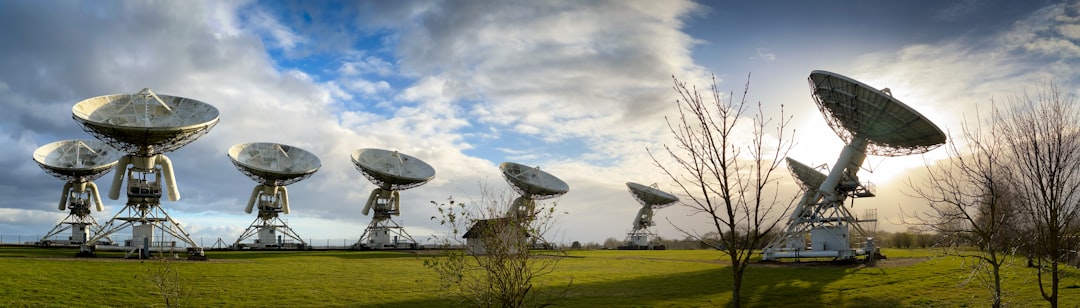
The universe, a canvas stretching beyond human comprehension, holds secrets that have long captivated our minds. Among these profound mysteries is the very moment of creation, the Big Bang, and the subtle ripples it sent across spacetime – gravitational waves. For decades, these cosmic tremors were theoretical whispers. Today, with advancements in scientific instrumentation, humanity is beginning to hear the universe’s ancient song, offering an unprecedented window into its earliest moments.
Imagine spacetime not as empty void, but as a vast, invisible trampoline. This trampoline, permeated by everything that exists, is capable of being warped and distorted. Mass and energy, like bowling balls and marbles placed on this trampoline, create dips and curves. Gravitational waves are the ripples that emanate from this cosmic trampoline when massive objects, such as colliding black holes or neutron stars, undergo cataclysmic events. These ripples propagate outwards at the speed of light, carrying information about their origins.
Einstein’s Prediction: The Birth of a Revolutionary Idea
In 1915, Albert Einstein’s revolutionary theory of general relativity described gravity not as a force, but as a geometric property of spacetime. He proposed that massive objects warp the fabric of spacetime around them, and that the movement of these objects would generate disturbances – gravitational waves. For nearly a century, these waves remained elusive, a testament to their incredibly subtle nature. Their detection posed an enormous experimental challenge, akin to trying to detect the tremor of a single falling snowflake on a continent-sized drum.
The Scale of Gravitational Waves: An Unfathomable Subtlety
The distortions caused by gravitational waves are infinitesimally small. Even from the most violent cosmic events, the stretching and squeezing of spacetime as a wave passes by typically affects distances by a fraction of the diameter of an atomic nucleus. Detecting such minuscule changes requires instruments of extraordinary precision, pushing the boundaries of technological innovation.
Gravitational waves have opened new avenues for understanding the universe, particularly in relation to the beginning of time. A fascinating article that delves deeper into this topic is available at My Cosmic Ventures, where the implications of gravitational waves on our comprehension of cosmic events and the origins of the universe are explored. This resource provides insights into how these ripples in spacetime can help scientists piece together the early moments of the cosmos, shedding light on fundamental questions about existence and the nature of time itself.
The Dawn of Detection: Listening to the Universe’s Echoes
The quest to detect gravitational waves was a long and arduous journey, marked by perseverance and groundbreaking engineering. The development of sophisticated observatories was crucial in finally bringing these cosmic whispers into audible range.
LIGO and Virgo: The Sentinels of Spacetime
The Laser Interferometer Gravitational-Wave Observatory (LIGO) in the United States and the Virgo interferometer in Italy are the pioneering instruments that have revolutionized our understanding of gravitational waves. These observatories employ a technique called laser interferometry. Twin laser beams are sent down long, perpendicular arms, reflecting off mirrors and recombining.
The Interferometric Dance: Unveiling Tiny Distortions
When a gravitational wave passes through an interferometer, it subtly stretches one arm while compressing the other, and vice versa. This minuscule change in arm length causes a slight phase shift between the two laser beams. The detectors are designed to register this incredibly delicate interference pattern, effectively “hearing” the gravitational wave. The arms of these observatories are several kilometers long, a necessary scale to amplify the tiny distortions into a measurable signal.
Noise Reduction: Isolating the Cosmic Whisper
The greatest challenge in detecting gravitational waves is distinguishing them from terrestrial noise. Seismic activity, passing trucks, and even the thermal vibrations of the mirrors can mimic gravitational wave signals. Extensive engineering efforts were dedicated to isolating the interferometers from these disturbances, essentially building “silent rooms” for spacetime to ring. Advanced vibration isolation systems, vacuum chambers, and sophisticated data analysis techniques are employed to filter out this noise.
The First Nobel Prize-Winning Chirp: GW150914
The historic moment arrived on September 14, 2015, when LIGO detected the first unambiguous gravitational wave signal. This event, designated GW150914, originated from the merger of two black holes, each about 30 times the mass of our Sun, located over a billion light-years away. The signal, a characteristic “chirp” that increases in frequency and amplitude as the black holes spiral closer, provided direct evidence for Einstein’s prediction and opened a new era of astronomy.
Black Hole Mergers: Cosmic Collisions of Immense Power
The merger of black holes represents some of the most energetic events in the universe. These events release vast amounts of energy in the form of gravitational waves, making them prime targets for detection. The characteristics of the emitted waves encode information about the masses, spins, and even the precise path of the merging black holes.
Neutron Star Collisions: Illuminating the Cosmic Forge
Another pivotal discovery was the detection of gravitational waves from the merger of two neutron stars, GW170817, in August 2017. This event was particularly significant because it was also observed by electromagnetic telescopes across the spectrum, from gamma rays to radio waves. This “multi-messenger astronomy” allowed scientists to connect the gravitational wave signal with a visible cosmic event, providing insights into the origin of heavy elements like gold and platinum, forged in these cataclysmic stellar collisions.
Gravitational Waves and the Birth of the Universe: A Glimpse into the Primordial Soup
While current detectors are primarily sensitive to gravitational waves from stellar-mass objects, the ultimate goal is to detect waves originating from the very earliest moments of the universe – the inflationary epoch following the Big Bang.
The Infancy of the Cosmos: A Violent and Rapid Expansion
The Big Bang theory describes the universe originating from an extremely hot and dense state. In the fraction of a second after the Big Bang, the universe is thought to have undergone a period of rapid expansion known as inflation. This process, driven by a hypothetical scalar field, would have smoothed out the initial universe and stretched quantum fluctuations to cosmic scales.
Inflationary Gravitational Waves: The Fossil Record of Creation
The inflationary epoch is predicted to have generated a background of gravitational waves, often referred to as primordial gravitational waves. These waves would be stretched by the expansion of the universe to very long wavelengths. Their detection would provide a direct probe of the physics of inflation, a period about which our understanding is currently limited.
The Cosmic Microwave Background: A Faint Echo of the Early Universe
The Cosmic Microwave Background (CMB) radiation is a snapshot of the universe about 380,000 years after the Big Bang, when it cooled enough for neutral atoms to form. While the CMB provides valuable information about the early universe, it largely originated from a time after inflation. Primordial gravitational waves, on the other hand, could potentially provide information from much earlier, during the inflationary epoch itself.
Detecting the Primordial Hum: A Future Frontier
Detecting these primordial gravitational waves presents an even greater challenge than detecting those from stellar mergers. These waves would be far weaker and have much longer wavelengths. Scientists are exploring new types of detectors and observational strategies.
Pulsar Timing Arrays: Listening to the Gravitational Symphony
Pulsar Timing Arrays (PTAs) are a network of precisely timed millisecond pulsars – rapidly rotating neutron stars that emit beams of radio waves. These pulsars act as extremely stable cosmic clocks. Gravitational waves passing through the galaxy can subtly alter the arrival times of the pulses from these pulsars. By observing subtle correlations in these timing variations across an array of pulsars, scientists hope to detect the nanohertz gravitational wave background, potentially from supermassive black hole mergers in the early universe.
Space-Based Interferometers: Reaching for the Long Wavelengths
Future space-based observatories, such as the planned Laser Interferometer Space Antenna (LISA), will be designed to detect gravitational waves with much longer wavelengths than ground-based detectors. LISA will consist of three spacecraft in a triangular formation, separated by millions of kilometers. This configuration will allow it to be sensitive to gravitational waves from events like the mergers of supermassive black holes at the centers of galaxies, and potentially even primordial gravitational waves.
Unlocking Cosmic Secrets: The Transformative Potential
The detection and study of gravitational waves are not merely academic pursuits; they represent a fundamental shift in our ability to understand the cosmos. By directly sensing the ripples of spacetime, we are gaining access to phenomena that were previously invisible and inaccessible.
A New Sense for Astronomy: Beyond Light
For millennia, humanity’s understanding of the universe has been primarily based on observing electromagnetic radiation – visible light, radio waves, X-rays, etc. This “sight” has revealed a vast and complex universe. However, certain cosmic events, such as the direct collapse of matter into black holes or the very earliest moments of the universe, do not emit significant amounts of light. Gravitational waves offer us a new “sense” – a way to perceive these otherwise hidden phenomena.
Probing the Unseen: The Dark Side of the Universe
Gravitational waves are particularly powerful tools for studying dark matter and dark energy, which constitute the vast majority of the universe’s mass-energy. While we cannot directly “see” these components, their gravitational influence can be indirectly observed through their effects on the spacetime fabric, which in turn generates gravitational waves.
Testing Fundamental Physics: The Ultimate Laboratory
The extreme conditions under which gravitational waves are produced offer a unique opportunity to test the fundamental laws of physics. By observing their behavior and properties, scientists can rigorously test Einstein’s theory of general relativity and search for deviations that might point to new physics beyond our current understanding. For example, observing the polarization of gravitational waves can reveal details about the nature of gravity itself.
The Birth of New Fields of Inquiry
The advent of gravitational wave astronomy has already spurred the development of new subfields within astrophysics and cosmology. Researchers are developing sophisticated theoretical models to interpret the complex signals detected, and advancing computational techniques to simulate these extreme cosmic events.
Computational Cosmology: Simulating the Universe’s Evolution
The interpretation of gravitational wave signals, especially those from the early universe, relies heavily on advanced computer simulations. These simulations model the physical processes that generate gravitational waves, allowing scientists to compare theoretical predictions with observational data. This iterative process of observation and simulation is crucial for extracting meaningful information from the subtle ripples.
Multi-Messenger Astronomy: A Collaborative Universe
The detection of GW170817, the gravitational wave event accompanied by electromagnetic radiation, heralded the era of multi-messenger astronomy. This collaborative approach, combining observations from gravitational wave detectors, telescopes across the electromagnetic spectrum, and neutrino observatories, offers a more complete picture of cosmic events and their underlying physics.
Gravitational waves have opened up new avenues for understanding the universe, particularly in relation to the beginning of time. These ripples in spacetime provide crucial insights into cosmic events, and their study has been a focal point for physicists and astronomers alike. For those interested in exploring this fascinating topic further, an insightful article can be found at My Cosmic Ventures, which delves into the implications of gravitational waves on our understanding of the universe’s origins.
The Future of Gravitational Wave Astronomy: Listening to the Unheard
| Metric | Value | Unit | Description |
|---|---|---|---|
| Frequency Range | 10^-18 to 10^3 | Hz | Range of gravitational wave frequencies from primordial to astrophysical sources |
| Amplitude (Strain) | ~10^-21 | Dimensionless | Typical strain amplitude detected from gravitational waves |
| Time Since Big Bang | ~10^-36 | Seconds | Epoch when primordial gravitational waves are believed to have been generated |
| Energy Density (Ω_gw) | Dimensionless | Upper limit on the energy density of primordial gravitational waves relative to critical density | |
| Detection Instruments | LIGO, Virgo, LISA, CMB Experiments | N/A | Current and planned detectors for gravitational waves and primordial signals |
| Redshift of Origin | z > 10^10 | Dimensionless | Estimated redshift corresponding to the earliest gravitational waves from the inflationary epoch |
The journey of gravitational wave astronomy has just begun. The current generation of detectors is already revolutionizing our understanding of the universe, and the next generation promises even more profound discoveries.
Next-Generation Detectors: Enhanced Sensitivity and Reach
Future ground-based observatories, such as the Einstein Telescope and Cosmic Explorer, are being designed with significantly enhanced sensitivity, allowing them to detect weaker signals from more distant events. These next-generation instruments are expected to significantly increase the rate of detections and expand the range of observable phenomena.
Expanding the Cosmic Census: More Black Holes, More Neutron Stars
With increased sensitivity, astronomers anticipate detecting many more black hole and neutron star mergers, building a more comprehensive census of these objects in the universe. This will allow for detailed studies of their population characteristics, formation mechanisms, and evolutionary pathways.
The Hunt for Exotic Objects: Unveiling the Unknown
Beyond known objects like black holes and neutron stars, gravitational wave detectors may also open the door to the discovery of entirely new and exotic astrophysical objects, such as cosmic strings or primordial black holes. The universe continues to hold surprises, and gravitational waves may be the key to unlocking them.
Probing the Extremes of Physics: The Ultimate Test
The ultimate quest in gravitational wave astronomy is to detect the gravitational wave background from the very early universe. Such a detection would provide an unprecedented test of our cosmological models and potentially reveal physics operating at energy scales far beyond what can be achieved in terrestrial particle accelerators.
The Inflationary Signature: A Direct Line to the Big Bang
The detection of a specific pattern in the polarization of the cosmic microwave background radiation, known as B-modes, is a key target in the search for inflationary gravitational waves. Observing these B-modes would be a monumental discovery, providing direct evidence for the inflationary epoch and the physics that drove it.
Beyond General Relativity: Seeking New Theories
If gravitational wave observations reveal subtle deviations from the predictions of general relativity, it could signal the need for new theories of gravity. This would be a groundbreaking development, fundamentally altering our understanding of the forces that govern the universe.
The universe, with its vastness and intricate workings, continues to present us with profound questions. Gravitational waves, once mere theoretical whispers, have become a powerful new tool in our quest for knowledge. As we continue to refine our instruments and expand our observational capabilities, we are not just listening to the echoes of cosmic events; we are beginning to decipher the very language of spacetime, unlocking the deepest secrets of the universe, from the dramatic finales of stellar lives to the infinitesimally subtle tremors of creation itself. The journey has only just begun, and the cosmic symphony, now within our reach, promises to reveal wonders we can scarcely imagine.
FAQs
What are gravitational waves?
Gravitational waves are ripples in the fabric of spacetime caused by some of the most violent and energetic processes in the universe, such as merging black holes or neutron stars. They were predicted by Albert Einstein’s theory of general relativity in 1916 and were first directly detected in 2015.
How do gravitational waves help us understand the beginning of time?
Gravitational waves carry information about the early universe that is not accessible through electromagnetic radiation (light). By studying these waves, scientists can gain insights into conditions just fractions of a second after the Big Bang, potentially revealing details about the universe’s origin and its initial expansion.
How are gravitational waves detected?
Gravitational waves are detected using highly sensitive instruments called interferometers, such as LIGO (Laser Interferometer Gravitational-Wave Observatory) and Virgo. These detectors measure tiny changes in distance caused by passing gravitational waves, often smaller than a fraction of the diameter of a proton.
What is the significance of detecting primordial gravitational waves?
Detecting primordial gravitational waves, which originated from the earliest moments of the universe, would provide direct evidence for theories like cosmic inflation. This would help confirm our understanding of the universe’s rapid expansion immediately after the Big Bang and offer clues about fundamental physics at extremely high energies.
Can gravitational waves affect everyday life on Earth?
No, gravitational waves have an extremely weak effect by the time they reach Earth and do not impact daily life. Their detection requires highly specialized equipment and does not pose any danger or noticeable influence on people or the environment.