
The Cosmic Microwave Background (CMB) radiation represents a pivotal observational cornerstone in our understanding of the universe. It is a diffuse electromagnetic radiation that permeates all of space, a relic from a very early epoch of cosmic history. Its discovery and subsequent detailed study have not only confirmed fundamental cosmological models but have also opened avenues for probing the universe’s initial conditions and evolution with unprecedented precision. This pervasive glow, when analyzed, carries within it a wealth of information, acting as a snapshot of the universe when it was merely a few hundred thousand years old.
The concept of a remnant radiation from the early universe was first theorized long before its actual detection. In the mid-20th century, cosmologists grappled with the implications of an expanding universe, as observed by Edwin Hubble. If the universe is expanding, then in the distant past, it must have been denser and hotter. This line of reasoning led to the prediction of a residual heat signature left over from this primordial hot, dense state.
Early Theoretical Predictions
The Big Bang theory, emerging from the work of Georges Lemaître and developed by many others, posits that the universe originated from an extremely hot and dense singularity. As the universe expanded and cooled, fundamental forces separated, and particles began to form. However, for the first few hundred thousand years, the universe was a plasma: a hot, ionized gas of protons, electrons, and photons. Photons were in constant interaction with charged particles, meaning light could not travel freely. This opaque fog dominated the universe.
The Role of Photon Scattering
In this plasma state, photons were continuously scattered by free electrons through processes like Compton scattering. This kept the universe optically thick, preventing the free propagation of light. Any attempt to emit light would result in its immediate absorption or scattering. Thus, the universe, though immensely hot, was effectively dark from the perspective of free photons.
The Era of Recombination and Decoupling
A critical transition occurred approximately 380,000 years after the Big Bang. As the universe continued to expand and cool, reaching a critical temperature of about 3000 Kelvin, electrons and protons began to combine to form neutral hydrogen atoms. This process is known as recombination.
The Formation of Neutral Atoms
The formation of neutral atoms had profound consequences for the behavior of photons. With most electrons now bound to atomic nuclei, the number of free charged particles available to scatter photons drastically decreased. This transition marked the end of the opaque plasma phase.
The Significance of Decoupling
When recombination occurred, photons were “decoupled” from matter. That is, they were no longer interacting significantly with charged particles and were thus free to travel unimpeded across the cosmos. This moment of decoupling represents the point from which the light we now observe as the CMB originated. This ancient light has been traveling through the expanding universe ever since.
Hawking points, which are theoretical anomalies in the cosmic microwave background radiation, have garnered significant interest in the field of cosmology. These points may provide insights into the early universe and the nature of black holes. For a deeper understanding of this fascinating topic, you can explore a related article that discusses the implications of Hawking points and their potential impact on our understanding of cosmic evolution. To read more, visit this article.
The Accidental Discovery and its Immediate Impact
The detection of the CMB was not the result of a targeted, dedicated experiment but rather an unexpected finding during research on radio astronomy. This serendipitous discovery provided the first concrete, observational evidence for the Big Bang theory, solidifying its position as the leading cosmological model.
Penzias and Wilson’s Observation in 1964
In 1964, Arno Penzias and Robert Wilson, engineers at Bell Laboratories, were working on a new type of microwave receiver for communications satellites. They were trying to eliminate all sources of extraneous radio noise from their sensitive equipment. Despite their diligent efforts to shield the antenna and eliminate known interference, they consistently detected a persistent, uniform background hiss that seemed to come from every direction in the sky.
The Unidentified “Excess Antenna Temperature”
Initially, Penzias and Wilson attributed the noise to various terrestrial sources or even to pigeon droppings within the antenna. They meticulously checked and rechecked their equipment and procedures, but the persistent signal remained. This “excess antenna temperature” defied explanation by any known astronomical or terrestrial phenomenon at the time.
The Collaboration with the Princeton Group
Unbeknownst to Penzias and Wilson, a group of physicists at Princeton University, led by Robert Dicke, was contemporaneously theoretical work on the implications of the Big Bang. They were actively designing experiments to search for the predicted relic radiation. When Dicke and his colleagues heard about Penzias and Wilson’s persistent noise, they immediately recognized its potential significance. The Princeton group had predicted a blackbody spectrum at a temperature of around 5 Kelvin. Penzias and Wilson’s measurement of an antenna temperature of 3.5 Kelvin, after accounting for various instrumental effects, was remarkably close.
Confirmation of the Big Bang Theory
The discovery was formally announced in 1965, with the Penzias and Wilson paper published alongside the theoretical explanation from the Princeton group. This marked a paradigm shift in cosmology. Previously, rival theories like the Steady State model proposed a universe that was eternal and unchanging. The CMB’s existence and its properties posed a significant challenge to such models, as they could not readily explain a uniform, hot, residual radiation pervading all of space.
The Blackbody Spectrum
Crucially, the CMB exhibits a near-perfect blackbody spectrum. A blackbody is an idealized object that absorbs all incident electromagnetic radiation and emits radiation based solely on its temperature. The CMB’s spectrum closely matches the theoretical blackbody curve for a temperature of approximately 2.725 Kelvin. This specific spectral signature is a strong indicator of its origin from a hot, dense, equilibrium state.
Anisotropic Variations: The Seeds of Structure
While the CMB is remarkably uniform, early observations revealed tiny temperature fluctuations, on the order of parts per hundred thousand. These anisotropies, though minute, were of immense cosmological importance. They represented slight density variations in the early universe.
Probing the CMB: From Ground-Based Telescopes to Space Missions
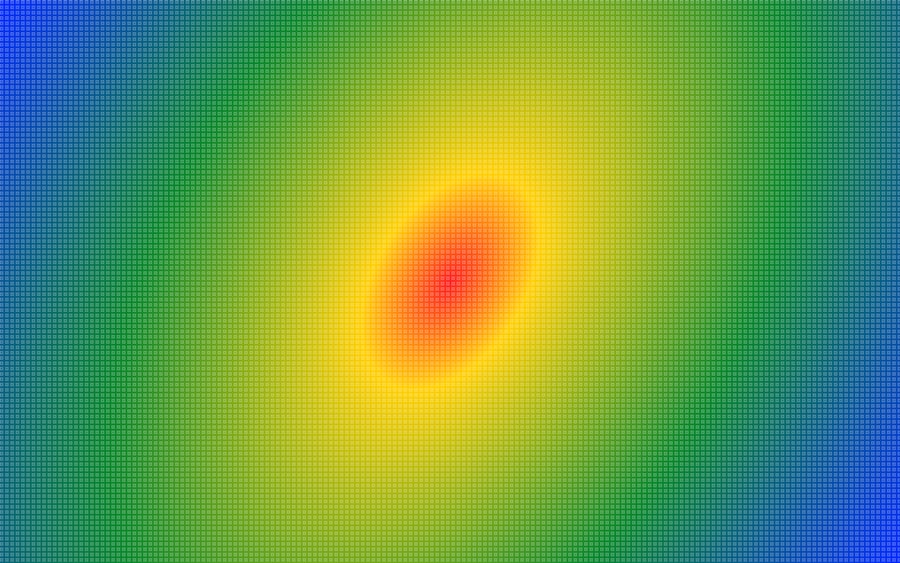
The initial discovery of the CMB was a crucial first step, but to truly unlock its secrets, scientists needed instruments capable of more precise measurements and observations across a wider range of frequencies. This led to a progression of increasingly sophisticated observational platforms.
Early Ground-Based and Balloon Experiments
Following the initial discovery, efforts were made to confirm the blackbody spectrum and search for variations in the CMB’s intensity across the sky. Early experiments were conducted from high-altitude balloons to minimize interference from Earth’s atmosphere, which absorbs microwave radiation.
COBE: Revolutionizing CMB Anisotropy Studies
The Cosmic Background Explorer (COBE) satellite, launched in 1989, was a landmark mission in CMB research. COBE carried three key instruments, including the Differential Microwave Radiometer (DMR), which was specifically designed to map the anisotropy of the CMB across the entire celestial sphere.
The COBE DMR Results and the Nobel Prize
The COBE DMR provided the first definitive detection of these temperature anisotropies. The statistical properties of these fluctuations, as measured by COBE, were in excellent agreement with theoretical predictions for a nearly homogeneous and isotropic universe with small initial density variations. The analysis of the COBE data by John C. Mather and George F. Smoot earned them the Nobel Prize in Physics in 2006.
The Era of Precision Cosmology: WMAP and Planck
The success of COBE paved the way for even more sensitive and precise measurements of the CMB. The Wilkinson Microwave Anisotropy Probe (WMAP), launched in 2001, and the Planck satellite, launched in 2009, represented the next generation of CMB observatories.
WMAP: Sharpening the Picture of the Early Universe
WMAP was designed to provide higher resolution maps of the CMB than COBE. Its observations allowed scientists to significantly improve estimates for key cosmological parameters, such as the age of the universe, its composition (the relative amounts of dark matter, dark energy, and ordinary matter), and the rate of its expansion.
Planck: Unveiling Subtleties in the CMB Sky
The Planck mission, operated by the European Space Agency, achieved even greater sensitivity and resolution than WMAP. Planck’s detailed maps of the CMB revealed subtler features in the temperature fluctuations and polarization patterns. This allowed for more precise constraints on cosmological models and the investigation of phenomena such as gravitational lensing effects on the CMB.
Decoding the Information Encoded in CMB Anisotropies
The nearly uniform glow of the CMB is fascinating, but it is the infinitesimally small variations in its temperature and polarization that hold the key to understanding the universe’s fundamental properties and history. These anisotropies are a direct imprint of the conditions in the early universe.
The Angular Power Spectrum: A Cosmic Fingerprint
The statistical analysis of the CMB anisotropies is typically done by examining their angular power spectrum. This spectrum describes the distribution of temperature fluctuations as a function of angular separation on the sky. Different scales of fluctuations are sensitive to different physical processes in the early universe.
Acoustic Oscillations: Sound Waves in the Primordial Plasma
One of the most prominent features in the CMB’s angular power spectrum is a series of peaks and troughs. These are interpreted as the signature of acoustic oscillations – essentially sound waves – that propagated through the primordial plasma before decoupling. The characteristic scale of these oscillations is imprinted on the CMB sky.
The First Peak and the Geometry of the Universe
The position and height of the first acoustic peak in the power spectrum are particularly sensitive to the geometry of the universe. Observations of this peak have provided strong evidence that the universe is remarkably flat, meaning its overall curvature is close to zero.
Polarization of the CMB: A Window into Inflation
The CMB is also polarized, meaning its photons have a preferred direction of oscillation. Studying the polarization patterns of the CMB, particularly specific types called B-modes, offers a potential way to probe the very earliest moments of the universe, during a hypothetical period of rapid expansion known as cosmic inflation.
Primordial Gravitational Waves and Inflation
Inflationary theory predicts the generation of primordial gravitational waves. These waves would leave a characteristic imprint on the polarization of the CMB. Detecting these B-mode polarization signals is a major goal of current and future CMB experiments, as it would provide direct evidence for inflation and offer insights into the physics at extremely high energy scales.
Insights into Neutrinos and Dark Matter
The detailed structure of the CMB power spectrum also provides constraints on the properties of fundamental particles, including the mass of neutrinos and the nature of dark matter. Subtle features in the spectrum can reveal the contribution of these elusive components to the cosmic energy budget.
Hawking points, which are theorized to be remnants of primordial black holes, have garnered significant attention in the study of cosmic microwave background radiation. These points could provide crucial insights into the early universe and the formation of structures within it. For a deeper understanding of how these phenomena are interconnected, you can explore a related article that discusses the implications of Hawking points on cosmic evolution. This resource can be found here.
Cosmological Parameters: Constraining the Standard Model
| Parameter | Value |
|---|---|
| Temperature fluctuations | 1 part in 100,000 |
| Angular power spectrum | Peaks at l ≈ 200 |
| Statistical isotropy | Confirmed by WMAP and Planck |
| Polarization | Detection of B-mode polarization |
The meticulous study of the CMB has enabled scientists to determine a suite of fundamental cosmological parameters with unprecedented accuracy. These parameters define our current understanding of the universe, often referred to as the Lambda-CDM model.
Age and Expansion Rate of the Universe
The CMB provides direct measurements of the age of the universe. By analyzing the cooling rate of the CMB over cosmic time and assuming a particular cosmological model, scientists can reliably estimate how long ago the Big Bang occurred. Similarly, the CMB data are crucial for determining the Hubble constant, a measure of the current rate at which the universe is expanding.
Composition of the Universe: The Cosmic Pie Chart
Perhaps one of the most significant contributions of CMB observations is the precise determination of the universe’s composition. The relative heights of the acoustic peaks in the CMB power spectrum are sensitive to the proportions of different constituents. These observations have revealed that the universe is composed of approximately:
Ordinary Matter (Baryons)
These are the atoms and particles that make up stars, planets, and everything we can directly observe. They constitute only about 4-5% of the total mass-energy of the universe.
Dark Matter
This invisible, non-luminous form of matter interacts gravitationally but does not emit, absorb, or reflect light. It makes up roughly 27% of the universe’s mass-energy content and plays a crucial role in the formation of cosmic structures like galaxies and galaxy clusters.
Dark Energy
This mysterious component is responsible for the observed accelerated expansion of the universe. It constitutes the largest portion of the universe’s energy, approximately 68%. Its nature remains one of the most profound mysteries in modern physics.
The Flatness Problem and the Horizon Problem
The remarkable uniformity of the CMB across the entire sky, despite regions being causally disconnected in the early universe, highlighted what are known as the horizon and flatness problems in cosmology.
Addressing the Horizon Problem
The horizon problem refers to the fact that regions of the sky that are widely separated appear to have almost the same temperature, even though light would not have had enough time to travel between them since the Big Bang. Inflationary theory offers a compelling solution by proposing that the universe underwent a period of extremely rapid expansion in its infancy, connecting these regions before their separation.
Resolving the Flatness Problem
The flatness problem relates to the observation that the universe is so close to being geometrically flat. For the universe to be so flat today, its initial curvature would have had to be incredibly finely tuned. Inflation also provides a solution by stretching any initial curvature to near-flatness.
Future Prospects and Unanswered Questions
Despite the immense success of CMB research, several fundamental questions about the universe remain unanswered, and future observations and theoretical advancements will continue to push the boundaries of our knowledge.
The Nature of Dark Energy and Dark Matter
While CMB observations have precisely quantified the amounts of dark energy and dark matter, their fundamental nature remains elusive. Future experiments, some of which may include more advanced CMB observations, alongside other cosmological surveys and particle physics experiments, aim to shed light on what these enigmatic components truly are.
The Search for Primordial Gravitational Waves
The detection of B-mode polarization in the CMB would be a monumental discovery, providing direct evidence for cosmic inflation and offering insights into the physics of the very early universe. Ongoing and planned experiments are pushing the sensitivity limits to detect these faint signals.
Testing Inflationary Models and Beyond
The precise measurement of CMB anisotropies allows for stringent testing of different inflationary models. Deviations from predictions could point towards new physics beyond the standard inflationary paradigm. Future observations might also reveal subtle features in the CMB that challenge the Lambda-CDM model, necessitating revisions or entirely new cosmological frameworks.
The Origin of Matter-Antimatter Asymmetry
The universe is predominantly composed of matter, with very little antimatter observed. The CMB itself is a product of a matter-dominated universe, but its anisotropies do not directly explain the initial asymmetry between matter and antimatter. Understanding the mechanisms that led to this imbalance is a key challenge in cosmology and particle physics.
The Search for Non-Gaussianities
While the CMB anisotropies are largely Gaussian (meaning they follow a bell-curve distribution), theoretical models suggest that certain deviations from Gaussianity could arise from specific early universe processes. Detecting these “non-Gaussianities” could provide clues about the physics of inflation and other exotic phenomena.
The Enduring Mystery of the Initial Conditions
Ultimately, the CMB serves as a snapshot of the universe at a very young age. While it has provided us with extraordinary detail about its initial conditions and evolution, the ultimate origin of the universe and the fundamental laws governing it remain subjects of intense scientific inquiry. The CMB, however, will undoubtedly continue to be a critical probe as we strive to unravel these enduring mysteries.
FAQs
What are hawking points in the cosmic microwave background radiation?
Hawking points are hypothetical features in the cosmic microwave background radiation that could provide evidence for the existence of primordial black holes.
How are hawking points detected?
Hawking points are detected through their unique signature in the cosmic microwave background radiation, which would appear as small, localized hot or cold spots.
What do hawking points indicate about the early universe?
The presence of hawking points in the cosmic microwave background radiation could indicate the formation and subsequent evaporation of primordial black holes in the early universe.
What implications do hawking points have for our understanding of black holes?
The existence of hawking points would provide evidence for the existence of primordial black holes, which could have significant implications for our understanding of the formation and evolution of black holes.
What are the current theories and research surrounding hawking points?
Current theories and research surrounding hawking points focus on developing methods to detect and analyze potential hawking points in the cosmic microwave background radiation, as well as exploring the implications for our understanding of the early universe and black hole formation.