You stand at the precipice of understanding, peering into the abyss of the unknown. Your world, the one you perceive with your senses, is a remarkably intricate tapestry, but physics whispers that it’s merely a single thread in an infinitely larger, far more mysterious fabric. You might think you know what’s real – the solid ground beneath your feet, the predictable arc of a thrown ball, the light that illuminates your surroundings. Yet, delve into the realm of physics, and you’ll discover that your everyday intuition, honed by millennia of interaction with the macroscopic world, often fails to grasp the fundamental truths of existence. This is a journey into the hidden nature of reality, a quest where exploration and discovery are not just encouraged, but are the very essence of the endeavor.
You are accustomed to a world of cause and effect, of predictable outcomes. Toss a coin, and you expect a heads or a tails, with a 50/50 probability. But step into the quantum realm, and these comforting certainties begin to unravel. Here, the very building blocks of matter and energy behave in ways that defy your ingrained logic.
The Dance of Uncertainty
You might imagine an electron to be like a tiny planet orbiting a nucleus, a discrete point with a defined path. Quantum mechanics, however, paints a radically different picture. Werner Heisenberg’s famous Uncertainty Principle states that you cannot simultaneously know both the precise position and the precise momentum of a quantum particle.
The Implication of Complementarity
This isn’t a limitation of your measuring instruments; it’s a fundamental property of reality itself. If you pinpoint an electron’s location with extreme accuracy, its momentum becomes inherently fuzzy, and vice versa. This concept, known as complementarity, suggests that certain properties of quantum systems are mutually exclusive. They cannot be observed or measured at the same time, forcing you to choose which aspect of reality you wish to investigate, at the expense of knowing the other. Imagine trying to describe a photograph that is simultaneously in focus and completely blurred – you can’t. The quantum world insists you make a choice.
The Enigma of Superposition and Measurement
You’ve likely encountered the thought experiment of Schrödinger’s cat, a bizarre scenario designed to highlight the absurdity of applying quantum principles to macroscopic objects. In the quantum world, however, a particle can exist in multiple states simultaneously. This is known as superposition.
The Collapse of the Wave Function
Until you make a measurement, an electron might be in a superposition of being in several places at once. The act of observation, the very interaction you perform to learn about its state, forces the quantum system to “choose” a single, definite state. This dramatic shift is often referred to as the collapse of the wave function. For you, this is mind-bending. It suggests that your consciousness, or at least your act of interacting with the system, plays a role in shaping reality at its most fundamental level. Is the universe waiting for you to look before it decides what state it’s in? The implications are profound and continue to be debated.
Quantum Entanglement: The Spooky Connection
Perhaps the most perplexing phenomenon in quantum mechanics is entanglement. Imagine you have two quantum particles that have interacted in a specific way. Now, separate them, even by vast distances, and they remain interconnected.
Action at a Distance? Einstein’s Discomfort
If you measure a property of one entangled particle, say its spin, you instantly know the corresponding property of the other particle, no matter how far apart they are. This instantaneous correlation, which Einstein famously dubbed “spooky action at a distance,” appears to violate the speed of light, the universal speed limit for information transfer.
Bell’s Theorem and Experimental Verification
While initially a source of philosophical debate, John Stewart Bell’s theorem and subsequent experiments have convincingly demonstrated that entanglement is a real and verifiable phenomenon. This suggests that reality is not composed of independent, localized entities as you might assume, but rather interconnected elements that share a deeper, nonlocal bond. Your perception of discrete objects breaks down here, replaced by a more holistic and interconnected view of the universe.
The exploration of the hidden nature of reality in physics has captivated scientists and philosophers alike, leading to groundbreaking theories and intriguing discussions. A related article that delves deeper into this fascinating topic can be found at My Cosmic Ventures, where various perspectives on the fundamental aspects of reality are examined. This resource provides valuable insights into how our understanding of the universe continues to evolve, challenging conventional notions and inviting readers to ponder the mysteries that lie beneath the surface of observable phenomena.
The Fabric of Spacetime: Gravity and Its Warped Reality
You experience gravity as a force that pulls objects towards each other. It’s what keeps you grounded and what dictates the orbits of planets. But Albert Einstein’s theory of General Relativity reveals that gravity is not a force in the traditional sense, but a manifestation of the very curvature of spacetime.
Spacetime as a Dynamic Entity
You might envision space and time as a fixed, unchanging backdrop against which events unfold. Einstein’s profound insight was that spacetime is not merely a stage; it’s an active participant. Massive objects, like stars and planets, warp and distort this fabric around them.
The Analogy of the Trampoline
Imagine a stretched rubber sheet, like a trampoline. Placing a bowling ball in the center causes a significant dip. If you then roll a marble across the sheet, it doesn’t travel in a straight line; it curves towards the bowling ball, its path dictated by the indentation. Similarly, celestial bodies create “dents” in spacetime, and other objects, including light, follow these curved paths. This curvature is what you perceive as gravity.
Gravitational Waves: Ripples in Reality
Just as dropping a pebble into a pond creates ripples that spread across the surface, accelerating massive objects in spacetime generate gravitational waves – disturbances that propagate outward at the speed of light.
The Detection of Cosmic Cataclysms
For decades, these waves were purely theoretical, a prediction of Einstein’s equations. However, the LIGO and Virgo observatories have now made direct detections of gravitational waves originating from cataclysmic cosmic events, such as the merging of black holes and neutron stars.
Illuminating the Dark Universe
These detections are not just confirmations of theory; they are revolutionary. They provide a new way to “hear” the universe, allowing you to observe phenomena that are invisible to traditional telescopes. You are beginning to glean insights into the most violent and energetic events in the cosmos, unlocking secrets about black holes, neutron stars, and the very earliest moments of the universe.
Beyond the Known: Dark Matter and Dark Energy

You see the stars, you feel the pull of gravity, you interact with the familiar matter and energy that constitute your observable universe. Yet, physics suggests that what you can see and understand is merely a fraction of what truly exists.
The Unseen Hand of Dark Matter
When astronomers observe galaxies and galaxy clusters, they notice that they rotate much faster than they should based on the visible matter they contain. The gravitational pull of the stars and gas you can detect isn’t enough to hold these structures together; they should fly apart.
The Mystery of the Missing Mass
The prevailing explanation is the existence of dark matter – an invisible substance that exerts gravitational influence but does not interact with light, making it undetectable by electromagnetic means. It’s like a cosmic scaffolding, providing the necessary gravitational glue to keep the large-scale structure of the universe intact. You can’t see it, you can’t touch it, but its gravitational effects are undeniable.
The Search for the Elusive Particle
Scientists are engaged in a vigorous search for the particles that make up dark matter, employing sophisticated detectors deep underground and other experimental approaches. The identity of dark matter remains one of the most significant puzzles in modern physics, a testament to the vastness of the unknown that surrounds you.
The Accelerating Expansion: Dark Energy’s Dominance
Further observations of distant supernovae, the exploding cores of dying stars, revealed another astonishing fact: the expansion of the universe is not slowing down, as one might expect due to gravity; it is accelerating. Something is actively pushing the universe apart.
The Force Behind the Expansion
This mysterious phenomenon is attributed to dark energy, a pervasive and poorly understood form of energy that seems to permeate all of space. It acts as a cosmic antigravity, counteracting the gravitational pull of matter and driving the accelerated expansion.
The Fate of the Cosmos
Dark energy constitutes about 70% of the total energy density of the universe, making it the dominant component of reality. Understanding its nature is crucial to comprehending the ultimate fate of the cosmos. Will it continue to push galaxies apart indefinitely, leading to a cold, empty future, or will its behavior change over time? These are questions that push the boundaries of your current knowledge.
The Quest for a Unified Theory: Stitching Together the Threads
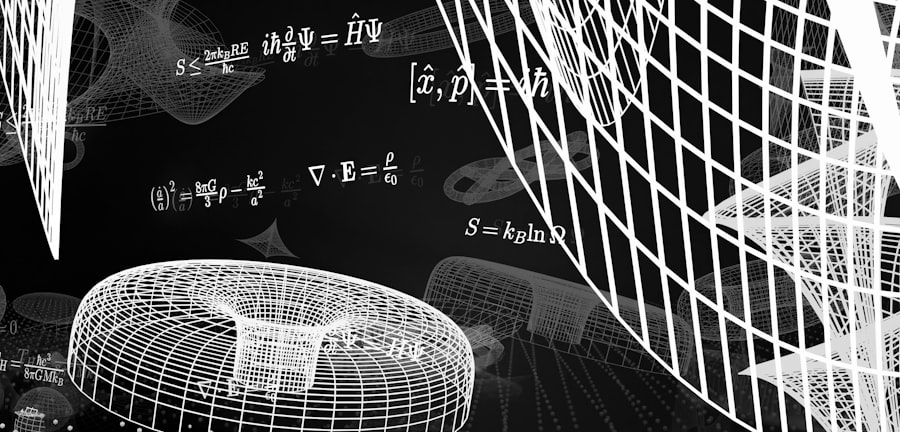
Physicists have developed two incredibly successful, yet seemingly incompatible, frameworks for describing reality: quantum mechanics, which governs the subatomic world, and general relativity, which describes gravity and the cosmos. The ultimate goal is to find a single, overarching theory that can reconcile these two pillars of modern physics.
The Disconnect Between the Small and the Large
Quantum mechanics describes events at the smallest scales with exquisite precision, while general relativity explains the universe at its grandest scales. However, when you try to apply both theories to extreme environments, such as the core of a black hole or the very beginning of the universe (the Big Bang), they break down, producing nonsensical results.
The Unfriendly Embrace of Gravity and Quantum Mechanics
You can’t describe the gravity of a single electron using general relativity, and you can’t accurately describe the behavior of a black hole using quantum mechanics without encountering infinities and paradoxes. This indicates a fundamental gap in your understanding of how these two forces interact at their most extreme limits.
The Promise of String Theory and Beyond
Among the most ambitious attempts to bridge this gap is string theory, which proposes that the fundamental constituents of the universe are not point-like particles, but tiny, vibrating strings. Different vibration patterns of these strings correspond to different particles and forces, including gravity.
Extra Dimensions and Vibrating Strings
String theory requires the existence of more than the four dimensions you perceive (three spatial and one temporal). These extra dimensions are thought to be curled up and undetectable at your everyday scale.
The Ongoing Search for Experimental Evidence
While string theory offers an elegant mathematical framework, it remains largely theoretical, with a lack of direct experimental verification. Scientists are constantly exploring ways to find subtle evidence that could support or refute its predictions. Other approaches, such as loop quantum gravity, also aim to unify these disparate theories, each offering a unique perspective on the fundamental nature of reality. Your persistent inquiry is what drives this exploration, pushing the boundaries of your cognitive and observational capabilities.
The exploration of the hidden nature of reality in physics has captivated scientists and philosophers alike, prompting discussions about the fundamental structure of the universe. A compelling article that delves into these intriguing concepts can be found on My Cosmic Ventures, where it examines the implications of quantum mechanics and the mysteries that lie beyond our perception. For those interested in this fascinating topic, you can read more about it in the article on My Cosmic Ventures.
The Philosophical Echoes: What is Real?
| Aspect | Metrics |
|---|---|
| Quantum Mechanics | Wave-particle duality, superposition, entanglement |
| String Theory | Extra dimensions, vibrating strings, unified theory |
| Quantum Entanglement | Non-locality, instantaneous communication |
| Quantum Gravity | Unification of general relativity and quantum mechanics |
As you delve deeper into the mysteries of quantum mechanics, dark matter, and the quest for a unified theory, you are inevitably drawn into profound philosophical questions about the nature of reality itself.
The Subjectivity of Experience
Does the universe exist independently of your observation? The implications of quantum measurement suggest that, at some fundamental level, your act of observing might play a role in shaping what you perceive as real. This blurs the lines between the objective and the subjective, posing a significant challenge to your ingrained assumptions about an independently existing world.
The Observer Effect and its Interpretations
The observer effect in quantum mechanics doesn’t necessarily imply consciousness is a direct cause. It refers to any interaction that alters the state of a quantum system. However, the philosophical implications of this interaction are vast, prompting you to consider whether the universe is inherently participatory.
The Limits of Human Comprehension
Are there aspects of reality that are fundamentally beyond your ability to grasp? Our brains and our sensory apparatus have evolved to navigate the macroscopic world. The abstract concepts of quantum mechanics, extra dimensions, and the vastness of dark energy and dark matter might represent realms that challenge the very limits of human intuition and comprehension.
The Ever-Expanding Frontier of Knowledge
This shouldn’t be a source of despair, but rather an invitation to continued exploration. The history of science is a testament to humanity’s capacity to expand its understanding, to develop new tools and conceptual frameworks to comprehend previously unimaginable phenomena. The unknown is not an endpoint, but a perpetual horizon.
You stand on the cusp of an era of unprecedented discovery. The hidden nature of reality is slowly but surely being unveiled, not through pronouncements of certainty, but through a relentless process of questioning, experimenting, and daring to imagine what lies beyond the familiar. The universe, you are beginning to understand, is far stranger, far more beautiful, and far more mysterious than you could have ever conceived. And your journey of exploration has just begun.

Physicists Think Reality Might Be 2D
FAQs
What is the hidden nature of reality in physics?
The hidden nature of reality in physics refers to the underlying principles and phenomena that govern the behavior of the universe at a fundamental level, beyond what is directly observable.
What are some examples of hidden realities in physics?
Examples of hidden realities in physics include quantum entanglement, dark matter, and the wave-particle duality of light. These phenomena challenge our traditional understanding of reality and require new theoretical frameworks to explain.
How does the hidden nature of reality impact our understanding of the universe?
The hidden nature of reality in physics challenges our intuitive understanding of the world around us and forces us to reconsider our fundamental assumptions about the nature of reality. It also drives scientific progress by inspiring new theories and experiments.
What are some current theories and research related to the hidden nature of reality in physics?
Current theories and research related to the hidden nature of reality in physics include quantum mechanics, string theory, and the search for dark matter. Scientists are also exploring the concept of multiple universes and the nature of consciousness in relation to reality.
How does the study of the hidden nature of reality in physics impact everyday life?
While the study of the hidden nature of reality in physics may seem abstract, it has practical implications in fields such as technology, medicine, and energy. For example, quantum mechanics has led to the development of technologies like MRI machines and quantum computing, which have real-world applications.