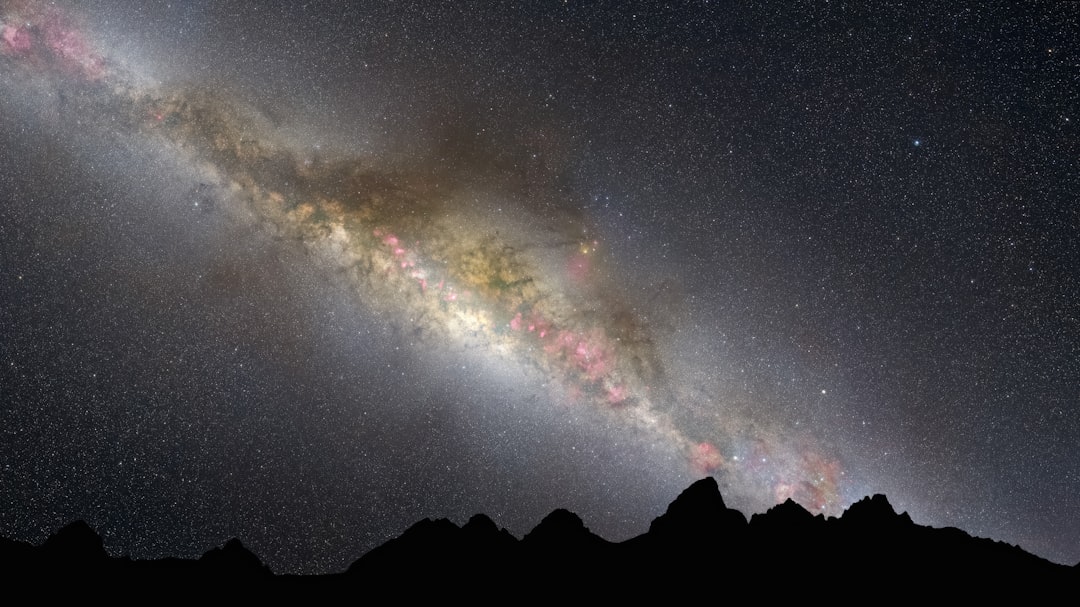
The universe, in its unfathomable vastness, is a constant announcer, broadcasting information across spacetime. This cosmic data stream, invisible to the naked eye, is the subject of intense scientific scrutiny, a silent symphony of electromagnetic radiation, gravitational waves, and high-energy particles, each carrying fragments of the universe’s history and its ongoing evolution. Understanding this stream is akin to deciphering a language spoken by stars, galaxies, and the very fabric of reality itself.
Light, the most familiar constituent of the cosmic data stream, serves as humanity’s primary window into the universe. From the faint glow of distant galaxies to the precise wavelengths emitted by specific elements, electromagnetic radiation paints a detailed portrait of cosmic phenomena.
Visible Light: The Familiar Messenger
The visible light spectrum, the narrow band perceptible to human vision, has historically been the initial medium through which we observed celestial objects. Telescopes, from Galileo’s rudimentary instruments to the sophisticated mirrors of the Hubble Space Telescope and the James Webb Space Telescope, have captured countless images of stars, nebulae, and galaxies, revealing their shapes, colors, and relative positions. These observations have allowed astronomers to map the cosmos, understand stellar lifecycles, and identify the structures that populate our universe. The light from ancient stars, traveling for millions or even billions of years, offers a direct glimpse into the past, a time capsule delivered directly to our planet. Its analysis reveals the chemical composition of stars and interstellar gas, providing clues about the formation of elements and the building blocks of life.
Beyond the Visible: Unveiling Hidden Worlds
The universe, however, speaks in more than just visible light. Radio waves, microwaves, infrared radiation, ultraviolet light, X-rays, and gamma rays each carry unique information.
Radio Waves: The Whispers of the Early Universe
Radio astronomy, a field that emerged in the mid-20th century, has been instrumental in uncovering phenomena obscured from visible light. Radio telescopes, with their large dishes designed to capture faint radio emissions, have detected the cosmic microwave background (CMB) radiation, a relic of the Big Bang. This faint glow, equivalent to a universal hum, provides a snapshot of the universe when it was only about 380,000 years old, allowing scientists to study its initial conditions and expansion rate. Radio waves also reveal the presence of pulsars – rapidly rotating neutron stars emitting beams of radiation that sweep across Earth like cosmic lighthouses – and the vast reservoirs of hydrogen gas that form the scaffolding of galaxies.
Infrared Radiation: The Heat Signatures of Cosmic Processes
Infrared (IR) radiation, often associated with heat, reveals phenomena that are otherwise invisible. Dust clouds, which are opaque to visible light, are transparent to infrared wavelengths, allowing IR telescopes to peer into stellar nurseries where new stars are being born. These observations have provided invaluable insights into the processes of star formation and the early stages of planetary system development. Furthermore, cooler objects, such as brown dwarfs and exoplanets, emit primarily in the infrared, making IR astronomy crucial for the direct detection and characterization of these celestial bodies.
Ultraviolet, X-ray, and Gamma-ray Astronomy: The High-Energy Universe
Ultraviolet (UV), X-ray, and gamma-ray astronomy explore the most energetic phenomena in the universe. These high-energy photons are produced by extreme events such as the formation of black holes, supernovae (the explosive deaths of stars), and active galactic nuclei (supermassive black holes at the centers of galaxies accreting matter). Studying these emissions allows scientists to probe the physics of relativistic jets, understand the processes of matter and energy transfer in extreme environments, and investigate the nature of dark matter and dark energy, which are thought to play significant roles in the universe’s evolution.
The exploration of cosmic data streams has opened new avenues for understanding the universe, and for those interested in delving deeper into this fascinating topic, a related article can be found at this link. This article provides insights into the methodologies used to analyze cosmic data, as well as the implications of recent discoveries in astrophysics. By examining the intricate patterns and signals from distant celestial bodies, researchers are piecing together the history and evolution of the cosmos, making it an exciting time for both scientists and enthusiasts alike.
Gravitational Waves: Ripples in the Spacetime Fabric
Albert Einstein’s theory of general relativity predicted the existence of gravitational waves – disturbances in the fabric of spacetime caused by the acceleration of massive objects. For a century, these waves remained hypothetical, a theoretical prediction awaiting direct detection.
The Symphony of Collisions: Detecting Cosmic Tremors
The direct detection of gravitational waves, first achieved by the Laser Interferometer Gravitational-Wave Observatory (LIGO) in 2015, marked a new era in astronomy. This groundbreaking discovery, which confirmed a key prediction of general relativity, opened a new observational window into the universe, allowing scientists to “hear” the universe alongside seeing it. The detected waves originated from the cataclysmic merger of two black holes, an event of unimaginable violence that sent ripples through spacetime, traveling across billions of light-years to reach Earth.
What Gravitational Waves Reveal
Gravitational wave astronomy offers unique insights into phenomena that are otherwise invisible or difficult to study.
Merging Black Holes and Neutron Stars: Cosmic Cataclysms
The detection of gravitational waves from the mergers of black holes and neutron stars provides direct evidence of these violent cosmic events. By analyzing the waveform of the gravitational waves, scientists can determine the masses, spins, and other properties of the colliding objects. The observation of a binary neutron star merger in 2017, accompanied by electromagnetic signals across the spectrum, marked the dawn of multi-messenger astronomy, a powerful approach that combines data from different cosmic signals to provide a more comprehensive understanding of astrophysical events. This merger also provided strong evidence for the production of heavy elements, such as gold and platinum, through a process known as r-process nucleosynthesis.
Probing the Unseen: Beyond Electromagnetic Signals
Gravitational waves travel unimpeded through matter, allowing them to carry information from regions of the universe that are opaque to light, such as the interior of supernovae or the very early universe before the formation of stars and galaxies. This unique property makes them invaluable for studying phenomena that cannot be observed through traditional electromagnetic means. They offer a way to explore the distribution and evolution of black holes and perhaps even detect primordial gravitational waves from the inflationary epoch of the early universe.
Cosmic Rays and Neutrinos: Messengers from Extreme Environments
Beyond light and gravitational waves, the universe also bombards us with a stream of high-energy particles: cosmic rays and neutrinos. These subatomic particles, traveling at near light speeds, carry information from some of the most energetic and violent events in the cosmos.
Cosmic Rays: Galactic Accelerators
Cosmic rays are atomic nuclei that have been stripped of their electrons, accelerated to extremely high energies by powerful cosmic accelerators. While their origins are still a subject of ongoing research, they are thought to be produced in supernovae, active galactic nuclei, and other energetic astrophysical phenomena.
Origin and Composition: The Galactic Anvil
The study of cosmic rays involves analyzing their composition, energy spectrum, and arrival directions. By understanding the relative abundances of different elements in cosmic rays, scientists can infer the number of stellar generations that have passed since the formation of the solar system. The highest-energy cosmic rays, known as ultra-high-energy cosmic rays (UHECRs), pose a particular mystery, as their energies exceed what is thought to be achievable by known accelerators within our galaxy, suggesting extragalactic origins from sources like gamma-ray bursts or active galactic nuclei.
Detection and Analysis: Unmasking the Particles
Detecting cosmic rays is a challenging endeavor due to their low flux and high energies. Large ground-based observatories, such as the Pierre Auger Observatory, use extensive air shower arrays to detect the secondary particles produced when cosmic rays interact with Earth’s atmosphere. Space-based detectors, like the Alpha Magnetic Spectrometer (AMS-02) on the International Space Station, provide direct measurements of cosmic ray composition and energy up to very high energies.
Neutrinos: Elusive Cosmic Voyagers
Neutrinos are fundamental particles with very little mass and no electric charge, making them incredibly elusive and capable of traveling vast distances through matter without interacting. This unique property makes them ideal messengers from the hearts of cosmic furnaces.
Sources and Detection: The Ghostly Trails
Neutrinos are produced in nuclear reactions within stars, such as our Sun, and in more extreme astrophysical environments like supernovae and active galactic nuclei. Detecting these “ghostly” particles requires massive detectors buried deep underground or underwater to shield them from other sources of radiation. Experiments like IceCube at the South Pole use vast volumes of ice or water as detection medium, looking for the faint Cherenkov radiation emitted when a neutrino interacts with a nucleus.
Peering into the Dark: Unveiling the Universe’s Core
Neutrino astronomy offers a unique perspective on the universe, allowing scientists to probe the processes occurring in the cores of stars and other dense astrophysical objects where light cannot escape. The detection of high-energy neutrinos from extragalactic sources, such as active galactic nuclei, has provided direct evidence of particle acceleration in these powerful engines and has opened up new avenues for understanding the most energetic phenomena in the universe. Neutrinos can also provide information about the early universe and the nature of fundamental forces.
The Cosmic Web: Structure and Evolution on Grand Scales
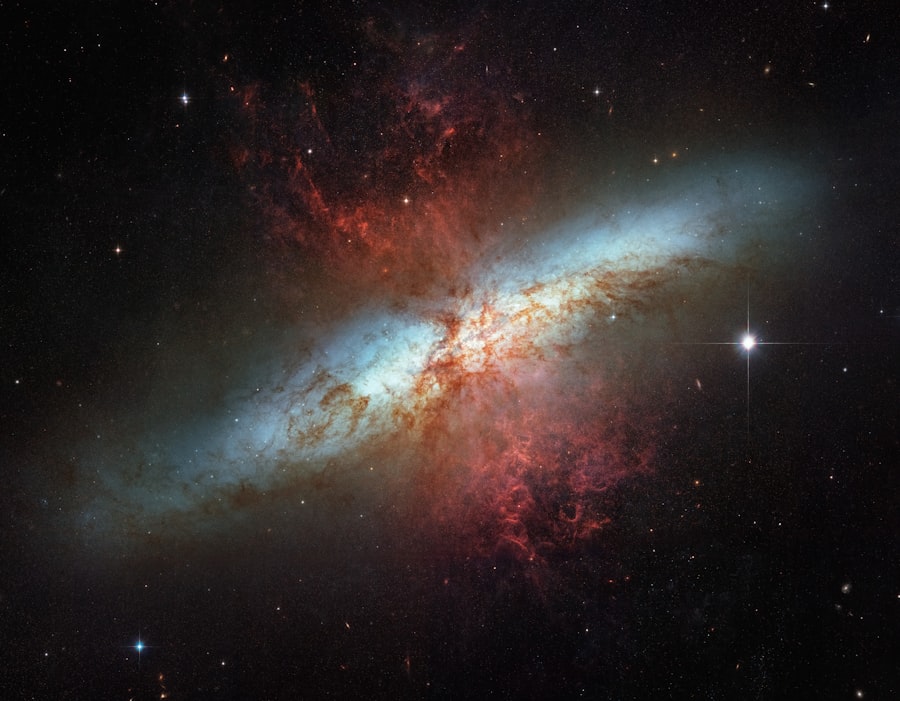
The distribution of matter in the universe is not uniform. Instead, galaxies and galaxy clusters are organized into a vast, intricate network known as the cosmic web, a filamentary structure that envelops enormous, nearly empty voids. Understanding the formation and evolution of this cosmic web is crucial for comprehending the universe’s large-scale structure and its ultimate fate.
Mapping the Universe: The Large-Scale Structure
Mapping the cosmic web involves identifying the positions and velocities of millions of galaxies. Large-scale galaxy surveys, such as the Sloan Digital Sky Survey (SDSS) and the Dark Energy Survey (DES), have provided unprecedented detail in these maps, revealing the filamentary structure and the presence of voids.
Baryonic Matter Distribution: The Visible Threads
The visible threads of the cosmic web are comprised of baryonic matter – the ordinary matter that forms stars, galaxies, and planets. The gravitational influence of this matter dictates the clustering of galaxies, forming the filaments and knots of the web. Observations of the distribution of galaxies and the intergalactic medium – the diffuse gas that permeates the space between galaxies – provide direct evidence of this large-scale structure.
The Influence of Dark Matter: The Invisible Framework
However, the visible matter alone cannot account for the observed structure of the cosmic web. Cosmological simulations and observations of gravitational lensing consistently indicate the presence of dark matter, an invisible substance that interacts only weakly with ordinary matter. Dark matter is thought to form the underlying scaffolding of the cosmic web, its gravitational pull dictating the distribution of baryonic matter. Understanding the nature and distribution of dark matter is a paramount objective in modern cosmology.
Galaxy Formation and Evolution within the Web
The cosmic web provides the environment in which galaxies form and evolve. Galaxies form in the denser regions of the web, accreting gas and merging with other galaxies over cosmic time.
Filaments and Halos: Galactic Nurseries
Galaxies tend to reside within halos of dark matter, and these halos are strung together by filaments. Gas flows along these filaments, feeding star formation within galaxies and fueling the growth of supermassive black holes at their centers. Studying the properties of galaxies within the cosmic web allows astronomers to understand the interplay between galaxy evolution and the large-scale structure of the universe. Galaxies in the densest regions of the web tend to be older and more evolved, while those in less dense regions are often sites of active star formation.
Cosmic Voids: The Empty Expanse
The regions between the filaments of the cosmic web are known as cosmic voids, vast, underdense regions of space. While seemingly empty, these voids are not entirely devoid of matter and play a role in the universe’s overall structure and evolution. Studying the properties of galaxies within and around voids can provide insights into the expansion history of the universe and the nature of dark energy, the mysterious force driving its accelerated expansion.
The concept of the cosmic data stream offers fascinating insights into the universe’s vastness and complexity. For those interested in exploring this topic further, a related article can be found on the My Cosmic Ventures website, which delves into the implications of cosmic signals and their potential to reshape our understanding of astrophysics. You can read more about it in this detailed exploration that connects various cosmic phenomena and their significance in the grand tapestry of the cosmos.
Towards a Unified Understanding: The Future of Cosmic Data Analysis
| Metric | Description | Value / Range | Unit |
|---|---|---|---|
| Data Transmission Rate | Speed at which cosmic data is transmitted through space | Up to 109 | bits per second (bps) |
| Frequency Range | Electromagnetic spectrum frequencies used in cosmic data streams | 30 MHz – 300 GHz | Hertz (Hz) |
| Signal-to-Noise Ratio (SNR) | Ratio of signal power to background noise in cosmic data reception | 20 – 50 | Decibels (dB) |
| Latency | Time delay in receiving cosmic data from source to Earth | Minutes to billions of years | Seconds / Years |
| Data Volume | Amount of data collected from cosmic sources per observation | Terabytes to Petabytes | Bytes |
| Source Distance | Distance of cosmic data source from Earth | Thousands to billions | Light years |
| Data Encoding | Methods used to encode cosmic data for transmission | Frequency modulation, Pulse code modulation | N/A |
The ongoing quest to unveil the cosmic data stream is a testament to humanity’s insatiable curiosity and its drive to comprehend its place in the universe. As observational capabilities advance and computational power increases, scientists are developing new methods to integrate and analyze the ever-growing volume of cosmic information.
Multi-Messenger Astronomy: The Symphony of Signals
The future of cosmic data analysis lies in the integration of information from multiple sources. Multi-messenger astronomy, the simultaneous observation of astrophysical phenomena using different types of cosmic signals – such as electromagnetic radiation, gravitational waves, and neutrinos – is revolutionizing our understanding of the universe.
Synergistic Observations: A Holistic View
By combining data from these disparate messengers, scientists can obtain a more complete and nuanced picture of cosmic events. For example, the detection of a gravitational wave signal from a binary neutron star merger, followed by the observation of gamma-ray bursts and other electromagnetic emissions, provided unprecedented insights into the physics of these extreme events and their role in the production of heavy elements. This synergetic approach allows for cross-validation of data and the unveiling of phenomena that would remain hidden if observed in isolation.
Unraveling Complex Phenomena: A Deeper Dive
Multi-messenger astronomy enables scientists to probe complex phenomena like supernovae, active galactic nuclei, and the environments around black holes with a level of detail previously unimaginable. Each messenger provides a unique piece of the puzzle, and their combined analysis allows for a more profound understanding of the underlying physical processes.
Artificial Intelligence and Machine Learning: Decoding the Cosmic Language
The sheer volume and complexity of cosmic data necessitate the use of advanced analytical tools. Artificial intelligence (AI) and machine learning (ML) algorithms are proving to be indispensable in sifting through this vast information, identifying patterns, and extracting meaningful insights.
Pattern Recognition: Finding Needles in Haystacks
AI and ML algorithms can be trained to recognize subtle patterns in vast datasets, such as the faint signatures of exoplanet transits in stellar light curves or the complex waveforms of gravitational waves. This allows astronomers to automate tedious tasks, accelerate discovery, and uncover phenomena that might be overlooked by human analysis alone. These tools act as sophisticated filters, helping researchers to efficiently navigate the immense ocean of cosmic information.
Predictive Modeling and Anomaly Detection: Forecasting and Discovering the Unknown
Beyond identifying known patterns, AI/ML can also be used to build predictive models of cosmic phenomena and to detect anomalies that might indicate new physics or undiscovered celestial objects. This capability is crucial for advancing our understanding of the universe and pushing the boundaries of scientific knowledge. The ability to predict the behavior of cosmic systems or flag unusual signals can lead to serendipitous discoveries and guide future research efforts.
The Future of Cosmic Exploration: New Frontiers and Unanswered Questions
The pursuit of understanding the cosmic data stream is an ongoing journey, with new observatories and missions continuously being developed. The next generation of telescopes, both ground-based and space-based, promises to push the boundaries of our observational capabilities even further, allowing us to probe deeper into the universe and explore new frontiers of scientific inquiry. The unanswered questions about dark matter, dark energy, the origins of the universe, and the potential for life beyond Earth continue to drive this exploration. The cosmic data stream, in its infinite complexity, remains our most profound source of knowledge about the universe and our place within it.
FAQs
What is the cosmic data stream?
The cosmic data stream refers to the continuous flow of information and signals originating from various cosmic sources, such as stars, galaxies, and cosmic microwave background radiation, which scientists analyze to understand the universe.
How is the cosmic data stream detected?
The cosmic data stream is detected using advanced instruments like radio telescopes, space probes, and satellite observatories that capture electromagnetic signals across different wavelengths, including radio waves, visible light, and X-rays.
Why is the cosmic data stream important for astronomy?
Studying the cosmic data stream allows astronomers to gain insights into the formation and evolution of celestial bodies, the structure of the universe, and fundamental physical processes, helping to answer key questions about the cosmos.
What challenges are involved in interpreting the cosmic data stream?
Interpreting the cosmic data stream involves challenges such as filtering out noise and interference, distinguishing between different types of signals, and managing the vast amount of data collected, which requires sophisticated algorithms and computational resources.
Can the cosmic data stream provide information about extraterrestrial life?
While the cosmic data stream primarily contains natural cosmic signals, scientists also analyze it for potential artificial signals or anomalies that could indicate the presence of extraterrestrial intelligence, though no confirmed evidence has been found to date.