The fabric of spacetime, a fundamental concept in understanding the universe, is not a static canvas but a dynamic entity, capable of stretching, compressing, and rippling. For centuries, humanity peered into the cosmos, observing light from distant stars and galaxies, piecing together a picture of the universe through electromagnetic radiation. However, a deeper, more fundamental layer of cosmic reality remained elusive. This article delves into the groundbreaking discovery of gravitational waves, disturbances in spacetime itself, and their profound implications for understanding the very genesis of our universe and the dawn of time.
The Unseen Symphony of Ripples
Imagine dropping a stone into a still pond. The resulting ripples propagate outwards, carrying information about the disturbance. Gravitational waves are the cosmic equivalent of these ripples, but instead of water, they are distortions in the very fabric of spacetime, a four-dimensional continuum that warps and curves in the presence of mass and energy. These waves are generated by some of the most violent and energetic events in the universe, such as the collision of black holes or neutron stars. Until their direct detection, these cosmic tremors were theoretical predictions, a cornerstone of Albert Einstein’s General Theory of Relativity published in 1915. For a century, scientists dreamed of an instrument sensitive enough to detect these faint whispers from the cosmos.
A Century of Theoretical Foreshadowing
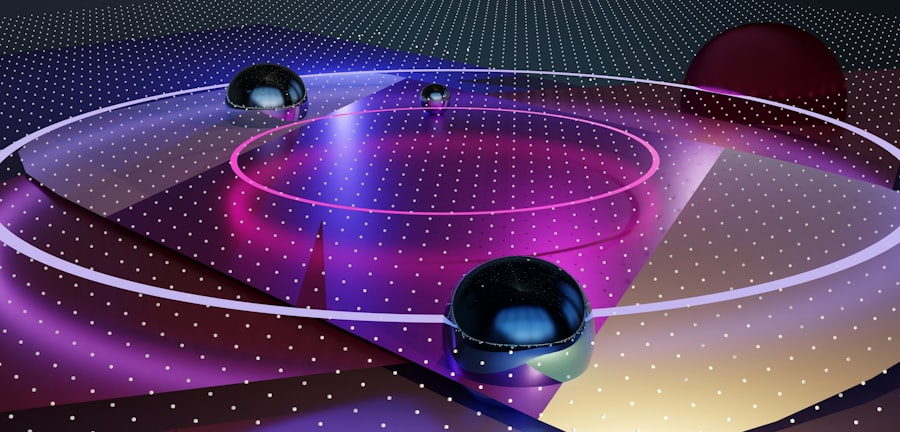
Einstein’s equations painted a picture of gravity not as a force acting at a distance, but as a manifestation of the curvature of spacetime. Massive objects warp this fabric, and accelerating masses generate “gravitational waves” – propagating disturbances that carry energy. The analogy often used is that of a stretched rubber sheet; placing a heavy ball on it creates a dip, and moving that ball rapidly would send ripples across the sheet. However, these ripples are incredibly subtle. By the time they reach Earth, they have stretched and squeezed spacetime by an almost unimaginably small amount, akin to altering the distance between the Earth and the Sun by less than the width of a human hair. This minuscule distortion made their direct detection a formidable technological challenge.
The Elusive Signals: Why the Long Wait?
The weakness of gravitational waves is a primary reason for the extended period between Einstein’s prediction and their observation. The energy carried by these waves dissipates rapidly with distance. Furthermore, our detectors must contend with a constant barrage of terrestrial noise – seismic vibrations, magnetic field fluctuations, and even the random motion of atoms within the detector itself. Isolating the faint chirps of gravitational waves from this cacophony required unprecedented levels of precision engineering and sophisticated data analysis techniques.
Gravitational waves have opened new avenues for understanding the universe, particularly in relation to the origins of time itself. A fascinating article that delves deeper into this topic is available at My Cosmic Ventures, where the interplay between gravitational waves and the fabric of spacetime is explored. This resource provides insights into how these ripples in spacetime could help us unravel the mysteries of the cosmos and the very beginning of time.
The Dawn of Observational Gravitational Wave Astronomy
LIGO and Virgo: The Sentinels of Spacetime
The breakthrough came with the advent of sophisticated interferometers like the Laser Interferometer Gravitational-Wave Observatory (LIGO) in the United States and Virgo in Europe. These instruments employ a clever design: splitting a laser beam and sending it down two perpendicular arms of several kilometers in length. Mirrors at the ends of these arms reflect the beams back, where they recombine. If a gravitational wave passes through, it will momentarily stretch one arm while compressing the other, altering the path length of the laser light. This minute change in path length results in a measurable interference pattern when the beams recombine, a faint but distinct signal that, with immense effort, can be teased out of the noise.
The Ingenuity of Interferometry
The core principle of these detectors relies on the phenomenon of interference. When two waves of light meet, their amplitudes can either add up constructively (making the light brighter) or cancel each other out destructively (making the light dimmer), depending on their relative phase. In LIGO and Virgo, the laser light is precisely tuned. The arms are designed to ensure destructive interference when no gravitational wave is present. A passing gravitational wave, by subtly altering the arm lengths, disrupts this perfect cancellation, producing a temporary flicker of constructive interference – the tell-tale sign of a spacetime ripple. It’s like listening for a whisper in a hurricane, but with incredibly advanced noise-canceling technology.
Overcoming Terrestrial Noise
The challenge of terrestrial noise is immense. LIGO and Virgo are situated in some of the quietest environments on Earth, far from sources of human-generated vibrations. The lasers are incredibly stable, and the entire apparatus is suspended in a vacuum to minimize disturbances. Even then, sophisticated algorithms are employed to filter out remaining noise, a process that resembles sifting grains of sand on a vast beach to find a single, perfectly shaped pebble. The dedication of thousands of scientists and engineers has been instrumental in achieving this level of sensitivity.
The First Direct Detection: A Cosmic Whisper Heard
On September 14, 2015, humanity heard its first direct chorus of gravitational waves. The signal, designated GW150914, originated from the cataclysmic merger of two black holes, each about 30 times the mass of our Sun, located over a billion light-years away. This detection was not just a triumph of technology but a profound confirmation of Einstein’s predictions and the opening of a new window onto the universe. The signal was a brief “chirp” – a rising frequency and amplitude – characteristic of inspiraling and merging black holes.
The Signature of Merging Black Holes
The signal GW150914 provided a unique fingerprint. The frequency of the gravitational waves increases as the two black holes spiral closer and faster, culminating in a final merger. The amplitude also increases during this inspiral. The specific waveform of the detected signal allowed scientists to deduce the masses and spins of the merging black holes with remarkable accuracy. This was akin to listening to a celestial orchestra and being able to identify not only the instruments but also their specific notes and rhythms.
More Than Just a Confirmation: A New Era Dawns
The detection of GW150914 was far more than just a scientific curiosity. It marked the birth of gravitational wave astronomy. For the first time, we could observe the universe not just by receiving light, but by feeling its physical vibrations. This opened up possibilities for studying phenomena that are invisible to traditional telescopes, such as the interiors of black holes and the earliest moments of the universe when light itself was not yet free to travel.
Gravitational Waves and the Birth of Time
The Pre-Inflationary Universe: A Veil Lifted
One of the most exciting frontiers that gravitational waves promise to illuminate is the period before the epoch of cosmic inflation. Inflation is a theoretical period of exponential expansion that is believed to have occurred fractions of a second after the Big Bang, smoothing out the universe and seeding the structures we observe today. However, inflation is thought to have erased much of the direct evidence of what came before. Gravitational waves, especially those generated during this incredibly energetic period, could have propagated unimpeded through the universe and might still be detectable today.
Primordial Gravitational Waves: Relics of the Big Bang
During the inflationary epoch, quantum fluctuations were stretched to cosmic scales, potentially generating a background of primordial gravitational waves. These waves would have been imprinted on the very fabric of spacetime at the universe’s inception. Unlike photons, which were trapped by the dense plasma of the early universe, these gravitational waves could have escaped and traveled across cosmic distances. Detecting this primordial gravitational wave background would be a direct probe of the physics of the Big Bang, offering invaluable insights into the fundamental forces and conditions that governed the universe at its absolute birth.
Unraveling the Mysteries of Cosmic Inflation
The detection and detailed study of primordial gravitational waves would provide a powerful tool for testing and refining our models of cosmic inflation. Different inflationary models predict different characteristics for this gravitational wave background, such as its amplitude and polarization. By observing these properties, cosmologists could distinguish between competing theories and gain a deeper understanding of the mechanisms driving this crucial early phase of cosmic expansion. This would be like finding a fossil from the very first creature to ever exist, revealing its form and function.
The Arrow of Time: A Deeper Understanding
The concept of time itself becomes more tangible when considering gravitational waves. While we experience time as an inexorable forward march, its fundamental nature remains a profound mystery. The study of gravitational waves, particularly those from the very beginning of the universe, may offer clues to how time originated and how it evolved. The very act of a gravitational wave propagating through spacetime is an event occurring in time. Observing these phenomena with unprecedented precision could shed light on the quantum nature of time and its relationship with gravity.
Time as a Property of Spacetime
In Einstein’s framework, time is not an independent entity but is inextricably linked with space, forming spacetime. Gravitational waves are distortions of this spacetime. Their propagation is a temporal process. Understanding how these distortions behave, especially in extreme conditions like the Big Bang or near black hole mergers, can help us understand how our perception of time is shaped by the geometry of the universe. It’s like deciphering the underlying code that governs the rhythm of the universe’s unfolding.
The Entropic Arrow and Gravitational Waves
The arrow of time, the irreversible progression from past to future, is often linked to the concept of entropy – the tendency for systems to move towards disorder. While gravitational wave events are often described as irreversible (e.g., black holes merging), their study might reveal deeper connections to entropy and thermodynamics in the context of spacetime. Do these cosmic ripples inherently carry information about increasing disorder, or is their behavior governed by more fundamental principles that dictate the directionality of time?
Beyond the Horizon: The Future of Gravitational Wave Discovery

The Growing Network: Enhanced Sensitivity and Localization
The current generation of gravitational wave detectors, like LIGO and Virgo, is already delivering groundbreaking discoveries. However, the future promises an even more powerful network of instruments. The planned upgrades to existing detectors and the construction of new ones, such as the Einstein Telescope in Europe and Cosmic Explorer in the US, will dramatically increase sensitivity. This will allow us to detect fainter signals from more distant sources and to observe a wider range of cosmic events.
A Global Tapestry of Detectors
The expansion of the gravitational wave detection network to include more instruments across the globe is crucial for precise source localization. By triangulating the arrival times of gravitational waves at different detectors, scientists can pinpoint the origin of the signal in the sky with much greater accuracy. This is essential for coordinating observations with traditional telescopes, enabling us to capture the electromagnetic counterparts of gravitational wave events and unlock a more complete picture of these cosmic phenomena.
Pushing the Boundaries of Sensitivity
The quest for ever-greater sensitivity is paramount. As detectors become more sensitive, they can probe lower-frequency gravitational waves, which are produced by larger and less energetic cosmic events, such as the inspiral of supermassive black holes. Furthermore, increased sensitivity allows us to detect gravitational waves from a much larger volume of the universe, providing a more statistically representative sample of cosmic events and phenomena.
Unveiling the Dark Universe: Black Holes, Neutron Stars, and Beyond
Gravitational waves offer a unique lens through which to study objects that are otherwise elusive. Black holes, by definition, emit no light. Their mergers are prime sources of gravitational waves, allowing us to probe their properties, test the limits of General Relativity in their strong gravitational fields, and understand how they form and evolve. Similarly, the mergers of neutron stars, extremely dense remnants of stellar explosions, produce both gravitational waves and electromagnetic radiation, offering a multi-messenger astronomy that provides unparalleled insights into nuclear physics and the creation of heavy elements.
The Enigmatic Nature of Black Holes
The detection of gravitational waves from black hole mergers has confirmed the existence of these exotic objects and has provided a wealth of data to study their properties. They allow us to empirically test predictions about the behavior of spacetime around these regions of extreme gravity. Scientists are now able to measure the masses and spins of black holes with unprecedented accuracy, revealing a diversity in their populations and offering clues about their formation mechanisms.
Neutron Star Mergers: Cosmic Alchemists
The observation of gravitational waves from the merger of neutron stars, particularly the event GW170817, was a landmark achievement. This event was also accompanied by electromagnetic signals across the spectrum, from gamma-ray bursts to optical and radio afterglows. This multi-messenger observation confirmed that neutron star mergers are significant sites for the cosmic production of heavy elements, such as gold and platinum, through a process called the r-process. It transformed our understanding of stellar nucleosynthesis and the origin of the elements that make up our world.
The Gravitational Wave Background: A Cosmic Hum
Beyond discrete events, the universe is likely permeated by a stochastic background of gravitational waves – a continuous hum of overlapping signals from numerous unresolved sources. This background could originate from a multitude of sources, including the Big Bang itself (primordial gravitational waves), the combined emissions from countless binary black hole mergers throughout cosmic history, or even exotic phenomena predicted by theories beyond the Standard Model of particle physics. Identifying and characterizing this background would be a monumental undertaking, akin to discerning the faint murmur of the entire universe.
Distinguishing Signal from Noise
Detecting this cosmic gravitational wave background is an even greater challenge than observing individual events. It requires extremely sensitive instruments and sophisticated data analysis techniques to distinguish this persistent, low-amplitude signal from instrumental noise and astrophysical foregrounds. The search for this background is an ongoing frontier in gravitational wave research.
The Ultimate Probe of the Early Universe
Should a primordial gravitational wave background be detected, it would provide an unparalleled direct probe of the Big Bang. It would allow us to peer into the universe’s infancy, shedding light on the physics of inflation, the fundamental forces at play, and potentially even the nature of dark matter and dark energy. The discovery of such a background would represent a paradigm shift in our understanding of cosmology.
The journey into the realm of gravitational waves is still in its nascent stages, but its discoveries have already begun to reshape our understanding of the cosmos. From confirming Einstein’s theories to offering a glimpse into the very birth of time, these cosmic ripples are not merely scientific curiosities; they are fundamental messengers from the universe, carrying the whispers of its grandest events and the secrets of its origins. As our instruments grow more sensitive and our analyses more refined, we can anticipate a continuous unveiling of cosmic wonders, pushing the boundaries of human knowledge and deepening our appreciation for the majestic symphony of spacetime.
FAQs
What are gravitational waves?
Gravitational waves are ripples in the fabric of spacetime caused by some of the most violent and energetic processes in the universe, such as merging black holes or neutron stars. They were predicted by Albert Einstein’s theory of general relativity in 1916 and were first directly detected in 2015.
How do gravitational waves help us understand the beginning of time?
Gravitational waves carry information about the early universe that is not accessible through electromagnetic radiation (light). By studying these waves, scientists can gain insights into events that occurred fractions of a second after the Big Bang, potentially revealing conditions and processes from the universe’s earliest moments.
What instruments are used to detect gravitational waves?
Gravitational waves are detected using highly sensitive observatories such as LIGO (Laser Interferometer Gravitational-Wave Observatory) in the United States and Virgo in Europe. These facilities use laser interferometry to measure minute disturbances in spacetime caused by passing gravitational waves.
Can gravitational waves tell us about the Big Bang?
Yes, gravitational waves can provide information about the Big Bang and the very early universe. Primordial gravitational waves, if detected, would offer direct evidence of cosmic inflation—a rapid expansion of the universe immediately after the Big Bang—and help scientists understand the physics of that era.
What challenges exist in studying gravitational waves from the beginning of time?
Detecting gravitational waves from the early universe is extremely challenging due to their weak signals and the presence of noise from various sources. Additionally, current detectors are primarily sensitive to waves from relatively recent cosmic events, so new technologies and methods are needed to observe primordial gravitational waves from the universe’s beginning.