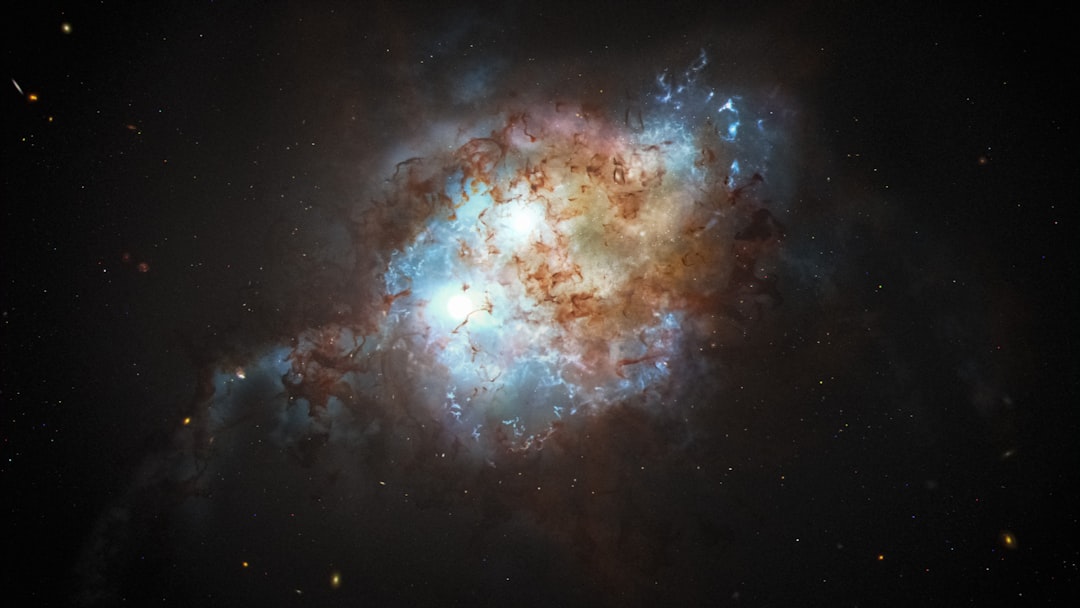
The launch of the James Webb Space Telescope (JWST) in December 2021 marked a pivotal moment in astronomy, heralding an unprecedented era of deep space observation. Designed to peer into the infrared, a region of the electromagnetic spectrum largely obscured by Earth’s atmosphere, the JWST has begun to unravel the mysteries of the early universe. Its primary mandate includes observing the first stars and galaxies that formed after the Big Bang, a period often referred to as the “cosmic dawn.” The initial data, released in mid-2022, has already challenged established cosmological models and provided a wealth of unexpected findings, leading to a significant reassessment of our understanding of galactic evolution.
The JWST’s capabilities, particularly its large mirror and highly sensitive infrared instruments, allow astronomers to overcome the limitations of previous observatories. The expansion of the universe causes light from distant objects to be redshifted, meaning its wavelength is stretched towards the red end of the spectrum. For the most distant galaxies, this redshift is so pronounced that their visible and ultraviolet light is shifted into the infrared, rendering them invisible to telescopes like Hubble. The JWST, therefore, acts as a cosmic time machine, allowing researchers to observe these ancient galaxies as they were billions of years ago.
The Redshift Frontier
The redshifting phenomenon is central to understanding how JWST observes the early universe. Imagine a siren on an ambulance; as it moves away, the pitch drops. Similarly, as light sources move away from us due to cosmic expansion, their light stretches to longer, redder wavelengths. The higher the redshift, the further back in time we are looking. JWST is designed to detect these extreme redshifts, reaching unprecedented z-values (a measure of redshift) that correspond to epochs just a few hundred million years after the Big Bang.
Overcoming Dust and Obscuration
Another significant advantage of infrared astronomy is its ability to penetrate dust clouds. Many processes in the early universe, particularly star formation, occur within dense cocoons of gas and dust that block visible light. Infrared radiation, however, can pass through these obscuring layers, revealing the nascent stars and galactic structures within. This capability is crucial for understanding the true demographics and activity of early galaxies, which are likely to have been highly dusty.
Enhanced Spatial Resolution
Beyond its spectral capabilities, JWST offers superior angular resolution compared to previous infrared space telescopes. This means it can resolve finer details in distant objects. For early galaxies, which are typically small and compact, this high resolution is invaluable. It allows astronomers to differentiate between individual clumps of star formation within a galaxy, observe merging galaxies, and study the morphology of these primordial systems with unprecedented clarity. The sharp imagery reveals intricacies that were previously blurred into amorphous blobs, fundamentally altering our perception of their structure.
The recent discoveries made by the James Webb Space Telescope (JWST) have unveiled surprising characteristics of early galaxies, challenging our previous understanding of cosmic evolution. For a deeper dive into these revelations and their implications for our knowledge of the universe, you can read a related article that explores these findings in detail. Check it out here: JWST Early Galaxy Surprises Explained.
Unexpected Abundance and Maturity of Early Galaxies
One of the most striking discoveries from the initial JWST data is the sheer number of high-redshift galaxies observed. Cosmological models generally predicted a more gradual buildup of galactic populations, with fewer and smaller galaxies in the very early universe. However, JWST has revealed a surprising abundance of luminous galaxies at redshifts greater than z=8, corresponding to less than 650 million years after the Big Bang.
Challenging ΛCDM Cosmology
The standard cosmological model, Lambda-CDM (ΛCDM), posits a universe dominated by dark energy (Λ) and cold dark matter (CDM). While highly successful in explaining many cosmic phenomena, the rapid formation of massive galaxies so early in the universe challenges some of its predictions regarding structure formation and galactic evolution. The observed abundance and luminosity of these early galaxies suggest a more efficient and rapid process of star formation and assembly than previously anticipated. This does not necessarily invalidate ΛCDM, but it compels theorists to refine their models to accommodate these new observations.
Early Stellar Mass Buildup
The luminosity of a galaxy is a direct indicator of its stellar mass – the total mass of all the stars it contains. The unexpectedly high luminosities of several JWST-observed galaxies at extremely high redshifts imply that these galaxies accumulated substantial stellar mass in a remarkably short period. This suggests that the processes of gas accretion, star formation, and feedback in these nascent galaxies were far more vigorous and efficient than previously thought. It’s like finding fully mature oak trees in a forest that was planted only a few years ago.
“Too Big, Too Soon” Phenomenon
Several individual galaxies have been identified that appear to be significantly more massive and evolved than current models predict for their epoch. For instance, observations have hinted at galaxies with stellar masses comparable to the Milky Way at redshifts exceeding z=10. Such findings, if fully confirmed, necessitate a reassessment of the timeline for galactic assembly and the mechanisms driving star formation in the very early universe. It forces us to consider whether the initial conditions for galaxy formation were more favorable or if the early universe was intrinsically more efficient at creating stars and building galactic structures.
Morphological Diversity of Primordial Systems

Prior to JWST, the prevailing view of early galaxies was largely homogeneous, often depicting them as small, clumpy, and irregular systems. This was partly due to the limited resolution of previous telescopes, which blurred out fine details. JWST’s high-resolution infrared imaging, however, has revealed a surprising morphological diversity amongst these ancient galaxies, challenging the notion of a uniform evolutionary path.
Evidence of Early Disk Formation
Remarkably, some high-redshift galaxies observed by JWST exhibit nascent disk-like structures, complete with spiral arms or nascent bulges. The formation of well-ordered disks is generally considered a relatively late stage in galactic evolution, requiring substantial time for gas to settle and stars to form in a coherent rotational plane. The presence of such structures so early in the universe suggests that the processes leading to disk formation might be more rapid and efficient than previously thought, or that multiple pathways to galactic morphology exist. It is akin to seeing complex architectural designs in buildings constructed shortly after the invention of basic tools.
Mergers and Interactions at Extreme Redshifts
The JWST has also provided clear evidence of galactic mergers and interactions occurring at extremely high redshifts. These violent cosmic collisions are a fundamental driver of galactic evolution, triggering bursts of star formation and contributing to the growth of larger structures. Observing these events in the very early universe indicates that this mechanism was active from the earliest stages of galaxy formation, shaping their morphology and contributing to their rapid mass buildup. The chaotic dance of merging galaxies offers a glimpse into the dynamic youth of the universe.
Compact and Dense Structures
While some galaxies show nascent disk features, many others remain highly compact and dense. These systems are often characterized by vigorous star formation occurring in a small volume. Understanding the prevalence and properties of these compact galaxies is crucial for comprehending the early growth of galactic bulges and the eventual formation of supermassive black holes at their centers. These dense regions could be the seeds from which more elaborate galactic structures later blossomed.
Implications for Supermassive Black Hole Formation
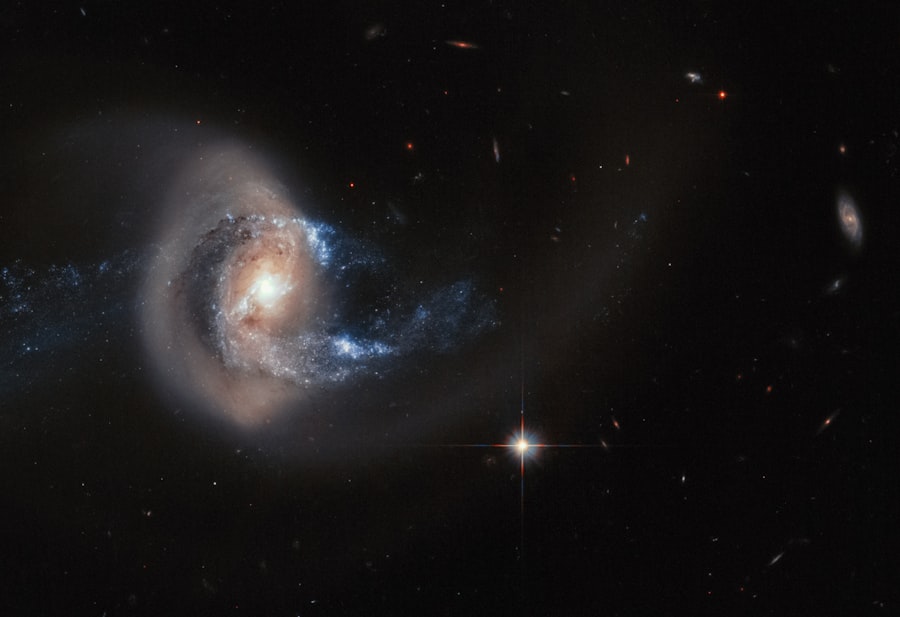
The connection between galaxies and their central supermassive black holes (SMBHs) is a well-established paradigm in modern astrophysics. Most massive galaxies are believed to harbor an SMBH at their core, and their growth appears to be intricately linked. JWST’s observations of early galaxies are shedding new light on the origins and growth of these enigmatic objects.
Early Quasar Detection
Quasars, the extremely luminous cores of active galaxies powered by actively accreting SMBHs, have been detected at very high redshifts, indicating the presence of massive black holes just a few hundred million years after the Big Bang. JWST is contributing to the discovery of even earlier and potentially less massive active galactic nuclei (AGN), providing a more complete picture of the accretion activity in the early universe. These observations push the timeline for SMBH formation significantly earlier than previously thought.
“Heavy Seed” Scenario Reinforcement
The rapid growth of such massive black holes so early in the universe poses a significant challenge to theoretical models. One favored explanation is the “heavy seed” scenario, where early black holes form directly from the collapse of massive gas clouds, bypassing the stellar-mass black hole phase. JWST’s ability to identify galaxies with both active star formation and potential AGN activity at extreme redshifts could provide crucial observational evidence to support or refine such scenarios. It’s like finding a fully grown tree in a newly planted sapling forest; the “seed” must have been larger than initially anticipated.
Co-evolution of Galaxies and Black Holes
The tight correlations observed between the properties of galaxies (like stellar mass or velocity dispersion) and their central SMBHs (like black hole mass) suggest a strong co-evolutionary relationship. By observing these objects at various stages of cosmic history, JWST allows astronomers to trace how this relationship developed. The findings from JWST will inform models of feedback, where energy and momentum from the SMBH influence star formation in the host galaxy, and accretion, where gas flows into the black hole. Understanding this intertwined dance is key to deciphering the evolution of both galaxies and their central behemoths.
The recent discoveries made by the James Webb Space Telescope (JWST) have unveiled unexpected features of early galaxies, challenging our understanding of cosmic evolution. For a deeper dive into these fascinating revelations, you can explore a related article that discusses the implications of these findings in greater detail. The article highlights how these surprises could reshape our knowledge of galaxy formation and the conditions of the early universe. To read more about this intriguing topic, visit this article for an insightful analysis.
Future Directions and Unanswered Questions
| Metric | Value | Description |
|---|---|---|
| Redshift Range | 7 to 12 | Epoch of early galaxies observed by JWST |
| Galaxy Mass | 10^8 to 10^10 Solar Masses | Estimated stellar mass of early galaxies |
| Star Formation Rate | 5 to 50 Solar Masses/year | Rate at which stars are forming in early galaxies |
| Metallicity | 0.01 to 0.1 Solar Metallicity | Measured abundance of elements heavier than helium |
| Galaxy Size | 0.5 to 3 kpc | Physical size of early galaxies |
| Surprise Factor | High | Unexpectedly mature and massive galaxies at early times |
| Explanation | Rapid star formation and early galaxy assembly | Proposed reason for early galaxy properties |
The initial results from JWST represent merely the tip of the iceberg. The wealth of data yet to be analyzed and the continuing observations promise to further revolutionize our understanding of the early universe. However, these discoveries also raise a new set of profound questions that will guide future research.
Confirmation and Follow-up Spectroscopy
Many of the initial findings, particularly regarding the high redshifts and stellar masses of early galaxies, are based on photometric redshifts, which are derived from the galaxy’s brightness in different filters. While reliable, spectroscopic confirmation is crucial for precise redshift determination and to study the physical properties of these galaxies in detail. JWST’s spectrographs will play a vital role in providing these definitive measurements. This is like having a preliminary sketch; now we need the detailed blueprint.
Statistical Samples and Deeper Surveys
While individual “extreme” galaxies garner significant attention, building statistically robust samples of early galaxies is essential to understand the overall population characteristics and evolutionary trends. Deeper and wider surveys with JWST will be crucial for this, pushing the detection limits even further and identifying fainter, more numerous galaxies that represent the typical building blocks of the universe.
Theoretical Model Refinement
The observed discrepancies between JWST data and current cosmological and galaxy evolution models necessitate a significant effort in theoretical refinement. This involves revisiting assumptions about star formation efficiency, initial mass functions of stars, feedback mechanisms, and the role of dark matter halos in galaxy formation. The JWST acts as a crucial testbed for these theoretical frameworks, forcing them to adapt to an increasingly detailed observational reality.
The Reionization Epoch
The period when the universe transitioned from a neutral state to an ionized state, known as reionization, is closely linked to the first stars and galaxies. JWST’s observations of early galaxies, particularly their luminosity functions and spectral properties, will provide invaluable insights into the sources responsible for reionization. Understanding how and when the universe was reionized is a fundamental goal of modern cosmology, and JWST is uniquely positioned to address this.
The James Webb Space Telescope has, in a short span, fundamentally reshaped our view of the early universe. It has unveiled a cosmic landscape teeming with surprises, from an unexpected abundance of mature galaxies at extreme redshifts to the early emergence of complex galactic structures. As JWST continues its mission, its data will serve as a lighthouse, guiding astronomers through the uncharted waters of cosmic history and revealing the intricate processes that sculpted the universe we inhabit today. The journey of cosmic discovery has only just begun, and the JWST is at the vanguard, illuminating paths we never knew existed.
FAQs
What is the JWST and why is it important for studying early galaxies?
The James Webb Space Telescope (JWST) is a powerful space observatory designed to observe the universe in infrared wavelengths. It is important for studying early galaxies because it can see through cosmic dust and detect faint, distant objects, allowing astronomers to study the formation and evolution of galaxies shortly after the Big Bang.
What surprising findings has JWST revealed about early galaxies?
JWST has revealed that some early galaxies are more massive and mature than previously expected, showing complex structures and higher rates of star formation. These findings challenge existing models of galaxy formation and suggest that galaxies evolved faster in the early universe than scientists had thought.
How do these JWST discoveries impact our understanding of the universe?
The discoveries suggest that the processes driving galaxy formation and evolution may be more efficient or different than current theories predict. This could lead to revisions in cosmological models and improve our understanding of how the first galaxies formed and contributed to the reionization of the universe.
What methods does JWST use to study early galaxies?
JWST uses its advanced infrared instruments to capture detailed images and spectra of distant galaxies. By analyzing the light from these galaxies, astronomers can determine their composition, age, distance, and star formation rates, providing insights into their physical properties and evolutionary history.
What are the next steps for research following JWST’s early galaxy findings?
Researchers plan to conduct more detailed observations of early galaxies to confirm initial findings and explore their properties further. They will also refine theoretical models to better explain the rapid growth and complexity of these galaxies, and use JWST data to study other cosmic phenomena related to the early universe.