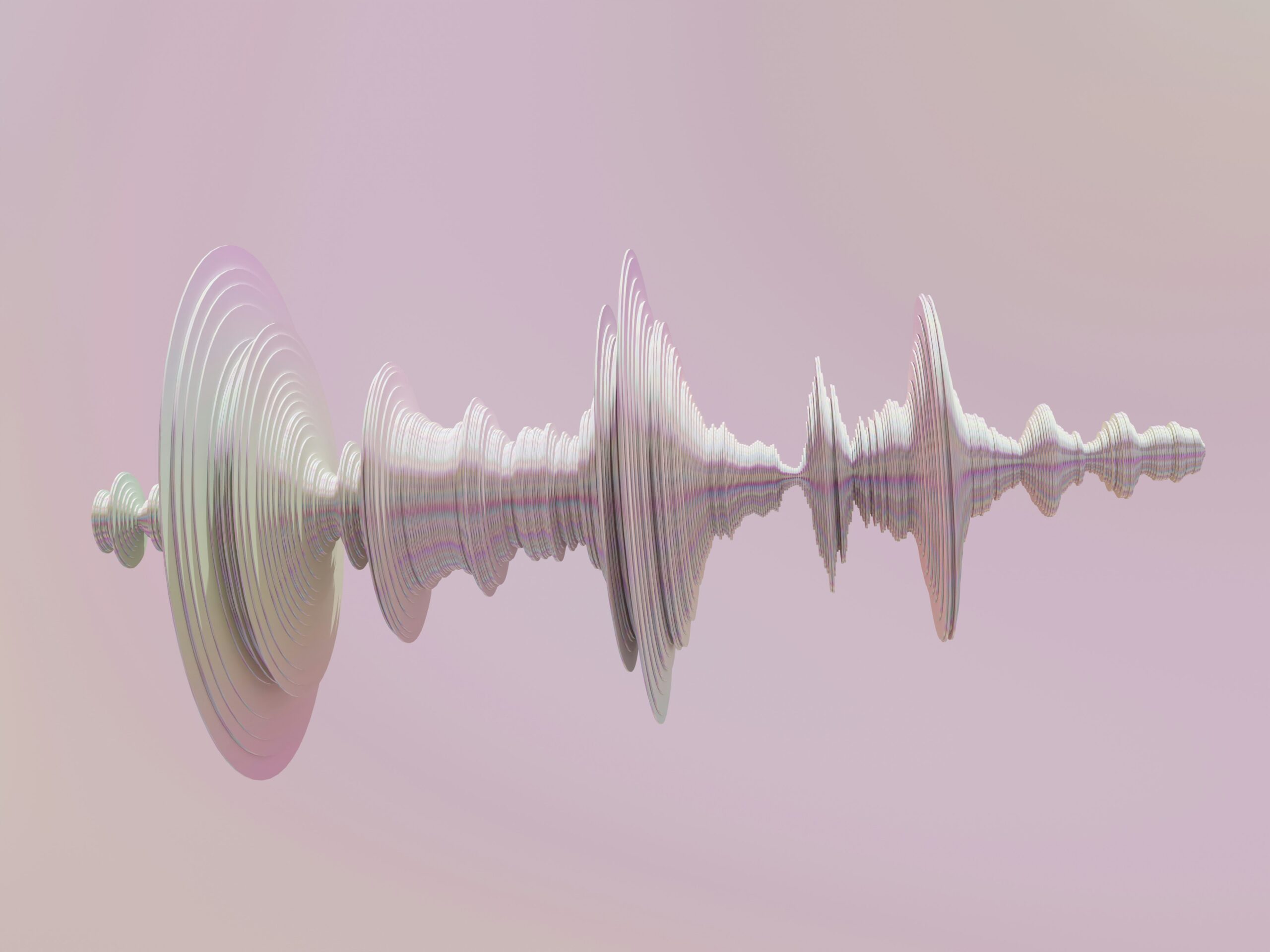
The universe, in its vast and enigmatic expanse, whispers secrets to those who listen. For decades, cosmologists have been diligently deciphering these cosmic murmurs, piecing together the grand narrative of its formation and evolution. Among the most powerful tools in this endeavor are Baryon Acoustic Oscillations (BAO), imprints of sound waves that rippled through the early universe. Now, the Dark Energy Spectroscopic Instrument (DESI) has embarked on an ambitious mission to map these oscillations with unprecedented precision, promising to revolutionize our understanding of dark energy, the mysterious force driving the universe’s accelerated expansion.
The Genesis of Baryon Acoustic Oscillations: Echoes from the Dawn of Time
To truly appreciate DESI’s groundbreaking work, one must first understand the fundamental physics behind Baryon Acoustic Oscillations. These cosmic ripples are not random fluctuations but rather a predictable consequence of the universe’s hot, dense infancy. Imagine a primordial soup of photons, baryons (protons and neutrons), and dark matter. In this epoch, the universe was incredibly hot, so hot that photons and baryons were tightly coupled, forming a fluid known as baryon-photon plasma.
The Role of Radiation Pressure
The intense energy of the photons exerted significant outward pressure, acting like a sound wave propagating through this plasma. This radiation pressure pushed against the baryons, causing them to move outwards from regions of higher density.
The Decoupling Epoch and the Frozen Sound Horizon
This outward expansion, however, was not infinite. As the universe cooled, a pivotal event occurred: decoupling. At approximately 380,000 years after the Big Bang, the universe had cooled enough for electrons and protons to combine, forming neutral hydrogen atoms. This process broke the tight coupling between photons and baryons. The photons, now free to travel unimpeded, decoupled from the baryonic matter.
The outward-propagating sound waves in the baryon-photon plasma had, by this point, traveled a specific distance. This distance is known as the “sound horizon.” After decoupling, the baryonic matter, no longer supported by the outward radiation pressure, was gravitationally attracted back towards the denser regions of dark matter. However, the outward momentum imprinted by the sound waves meant that the baryons didn’t simply collapse back to their starting points. Instead, they settled into spherical shells around the dark matter overdensities, at a characteristic distance determined by the sound horizon.
The Cosmic Web and the BAO Signal
These shells of baryonic matter, formed at the sound horizon distance, are the cosmic fingerprints that BAO observations seek. When astronomers survey the distribution of galaxies across vast cosmic distances, they look for a subtle but statistically significant overdensity of galaxies at this characteristic distance from other galaxies. This overdensity is the acoustic “peak” in the galaxy correlation function.
The sound horizon at decoupling is a fixed physical scale, determined by fundamental cosmological parameters. As the universe expands over billions of years, this fixed physical scale is stretched by the expansion, becoming a measurable angular scale in the sky. By measuring this angular scale and knowing its physical size, cosmologists can use BAO as a “standard ruler” to probe the expansion history of the universe.
In the study of baryon acoustic oscillations, the DESI (Dark Energy Spectroscopic Instrument) project plays a crucial role in understanding the large-scale structure of the universe. For a deeper insight into how DESI contributes to our knowledge of cosmic evolution and the distribution of galaxies, you can read a related article on this topic at My Cosmic Ventures. This resource provides valuable information on the implications of baryon acoustic oscillations for dark energy research and the overall dynamics of the cosmos.
DESI’s Ambitious Vision: Mapping the Cosmic Symphony
The Dark Energy Spectroscopic Instrument (DESI) is a next-generation cosmological survey designed to measure the positions and redshifts of tens of millions of galaxies and quasars across a significant portion of the observable universe. Its primary goal is to provide the most precise measurements of dark energy to date, and BAO are central to this mission. DESI’s sheer scale and sensitivity allow for a dramatically improved detection and measurement of the BAO signal, pushing the frontiers of our cosmic knowledge.
A Spectroscopic Powerhouse
DESI is mounted on the Mayall 4-meter telescope at Kitt Peak National Observatory in Arizona. What makes DESI truly exceptional is its revolutionary spectroscopic capability. It employs an array of 5,000 fiber optic positioners, each capable of simultaneously gathering light from a distinct astronomical object. This allows DESI to obtain the spectra of thousands of galaxies and quasars in a single exposure, drastically increasing the survey’s efficiency.
Measuring Redshift with Precision
The spectra obtained by DESI are crucial for determining the redshift of each observed object. Redshift is the phenomenon where light from distant objects is stretched towards longer, redder wavelengths due to the expansion of the universe. By measuring the redshift, astronomers can infer the distance to these galaxies and quasars. The precision with which DESI can measure these redshifts is paramount for accurately mapping the distribution of matter and identifying the BAO signal.
The Scale of the Survey
DESI is designed to survey a vast volume of the universe, covering approximately one-third of the entire sky and extending out to redshifts of z ≈ 1.7. This enormous reach translates to observing tens of millions of galaxies and quasars, far surpassing previous BAO surveys in sheer numbers. This vast sample size is essential for reducing statistical uncertainties and isolating the subtle BAO signal from random fluctuations in the cosmic distribution of galaxies.
Unlocking the Secrets of Dark Energy: The BAO as a Cosmic Thermometer
The primary motivation behind DESI’s ambitious BAO survey is to shed light on the enigmatic nature of dark energy. This mysterious entity is believed to constitute about 68% of the universe’s total energy density and is responsible for the observed acceleration of cosmic expansion. Understanding dark energy is one of the most pressing challenges in modern cosmology, and BAO measurements offer a powerful probe.
The Expansion History of the Universe
By measuring the BAO signal at different redshifts, cosmologists can reconstruct the expansion history of the universe. The size of the BAO feature at a given redshift acts as a standard ruler, allowing us to determine the distance to objects at that redshift. Comparing these distances to the redshifts themselves provides a direct measure of how the expansion rate of the universe has changed over cosmic time.
Constraining Cosmological Models
Different theoretical models of dark energy predict different expansion histories. By precisely measuring the expansion rate at various epochs, DESI can test these models and constrain their parameters. For example, if dark energy is a cosmological constant (Lambda), its density remains constant as the universe expands. If it is a more dynamic entity, its density might change over time. BAO measurements are sensitive to these variations.
The Cosmic Microwave Background as a Complement
The Cosmic Microwave Background (CMB) radiation, the afterglow of the Big Bang, provides a snapshot of the universe at the decoupling epoch. It reveals the initial conditions of the universe, including the primordial power spectrum of density fluctuations and the initial value of the sound horizon. BAO measurements, tracing the distribution of matter much later in cosmic history, complement CMB observations by providing information about how the universe has evolved since the CMB epoch, specifically how the expansion has been driven by dark energy.
The DESI BAO Data Release: A First Glimpse of Cosmic Structures
The initial data releases from DESI have already begun to showcase its power in mapping the large-scale structure of the universe and detecting the BAO signal. These early results, while preliminary, are already competitive with and in some cases exceeding the precision of previous BAO measurements.
Early Science Results and Their Significance
The early science results from DESI have focused on analyzing a subset of the full survey data. Even with this partial dataset, the team has been able to extract a robust BAO signal from the distribution of luminous red galaxies (LRGs) and emission-line galaxies (ELGs). These galaxies serve as tracers of the underlying dark matter distribution.
The Power of Early Data
The significance of these early results lies not only in their scientific content but also in demonstrating DESI’s operational readiness and data processing pipelines. The ability to obtain such precise measurements with a fraction of the planned data bodes extremely well for the full survey, which is expected to deliver an order of magnitude improvement in BAO precision.
Contributions to Cosmology
These early BAO measurements contribute to ongoing efforts to refine cosmological parameters, such as the Hubble constant ($H_0$) and the matter density parameter ($Omega_m$). While the full implications will unfold as more data is analyzed, these initial findings already provide valuable insights into the universe’s composition and its evolutionary trajectory.
Recent studies on DESI baryon acoustic oscillations have provided new insights into the large-scale structure of the universe. These oscillations serve as a crucial tool for understanding cosmic expansion and the distribution of dark matter. For a deeper exploration of this topic, you can read a related article that discusses the implications of these findings on our understanding of cosmic evolution. The article can be found here, offering a comprehensive overview of the latest research in this fascinating field.
Future Prospects and the Unveiling of Dark Energy’s Nature
DESI’s full survey, expected to run for several years, promises to deliver a wealth of data that will revolutionize our understanding of dark energy and the universe’s evolution. The sheer volume of galaxies and quasars that DESI will map will allow for the most precise BAO measurements ever achieved.
Enhanced Precision and Broader Redshift Coverage
The full DESI survey will provide BAO measurements across a broader range of redshifts than previously accessible with such precision. This will allow cosmologists to build a more complete picture of the universe’s expansion history, from the relatively recent past all the way back to the epoch when dark energy began to dominate.
Investigating Different Dark Energy Models
With greatly reduced statistical uncertainties, DESI will be able to distinguish between subtle differences in the predictions of various dark energy models. This could potentially reveal whether dark energy is a simple cosmological constant or a more complex, evolving phenomenon.
The Quest for a “Why”
Ultimately, DESI’s BAO measurements aim to move beyond simply describing the universe’s expansion to understanding why it is expanding in the way it is. By precisely charting the universe’s cosmic history, DESI hopes to uncover the fundamental nature of dark energy, answering one of the most profound questions in modern science. The echoes of those early cosmic sound waves, meticulously mapped by DESI, may well hold the key to unlocking the universe’s deepest secrets. The ongoing analysis of DESI data is a testament to humanity’s insatiable curiosity and its persistent quest to comprehend its place within the grand cosmic tapestry.

Dark Energy May Be Changing—So What Happens to the Universe?
FAQs

What are DESI baryon acoustic oscillations?
DESI baryon acoustic oscillations refer to the study of the large-scale structure of the universe using the Dark Energy Spectroscopic Instrument (DESI) to measure the distribution of galaxies and quasars. Baryon acoustic oscillations are regular, periodic fluctuations in the density of the visible matter in the universe, which can be used to measure the expansion history of the universe.
How does DESI measure baryon acoustic oscillations?
DESI measures baryon acoustic oscillations by using a spectrograph to observe the redshift of galaxies and quasars. By measuring the redshift, DESI can determine the distance to these objects, allowing for the mapping of the large-scale structure of the universe and the measurement of baryon acoustic oscillations.
What is the significance of studying DESI baryon acoustic oscillations?
Studying DESI baryon acoustic oscillations is significant because it provides insights into the expansion history of the universe and the nature of dark energy. By measuring the distribution of galaxies and quasars, scientists can better understand the underlying physics driving the expansion of the universe.
What are some potential applications of DESI baryon acoustic oscillations?
Potential applications of DESI baryon acoustic oscillations include testing theories of gravity, constraining the properties of dark energy, and improving our understanding of the large-scale structure of the universe. These measurements can also provide valuable information for cosmological models and the evolution of the universe.
How does DESI contribute to our understanding of the universe?
DESI contributes to our understanding of the universe by providing precise measurements of the large-scale structure of the universe, including the distribution of galaxies and quasars. These measurements can help address fundamental questions about the nature of dark energy, the expansion history of the universe, and the formation of cosmic structure.