Unraveling the Mystery of Dark Comets: Origins and Characteristics
The celestial realm holds many enigmas, and among the most captivating are the dark comets. These celestial wanderers, appearing as faint smudges against the backdrop of distant stars, possess a silent allure, hinting at ancient secrets and the very building blocks of our solar system. Unlike their more flamboyant cousins, which erupt in spectacular displays of gas and dust, dark comets often remain shrouded in mystery, their composition and origins elusive. This article aims to illuminate these enigmatic visitors, delving into their potential origins, defining characteristics, and the scientific endeavors dedicated to understanding them.
Dark comets, at their core, are essentially a departure from the typical cometary image. When we think of comets, the mind often conjures the majestic spectacle of a comet with a glowing coma and a trailing tail, a celestial spectacle that has inspired awe and fear throughout human history. This iconic appearance is the result of the Sun’s heat vaporizing volatile materials as the comet approaches. However, dark comets deviate from this norm. Their defining characteristic is their incredibly low albedo, meaning they reflect very little sunlight. This low reflectivity makes them exceptionally difficult to detect and study, as they absorb most of the light that strikes them. Imagine a lump of coal drifting in the cosmic ocean – that analogy, while simplistic, captures the essence of their dark nature.
What Defines a “Dark” Comet?
The term “dark comet” is not a rigid classification but rather a descriptive label applied to celestial bodies that exhibit exceptionally low reflectivity. Scientists use the albedo, a measure of how much light an object reflects, to categorize celestial bodies. A pure white golf ball has a high albedo, while a piece of black velvet has a very low albedo. Dark comets, with albedos often below 0.05, fall into the latter category, absorbing more than 95% of the incident solar radiation. This extreme darkness is the primary factor that differentiates them and poses significant observational challenges.
Distinguishing from Other Small Solar System Bodies
It is crucial to differentiate dark comets from other dark objects in our solar system, such as carbonaceous asteroids. Both can appear dark, but their origins and behavioral patterns offer clues to their distinct identities.
Carbonaceous Asteroids: A Comparative Perspective
Carbonaceous asteroids, found primarily in the asteroid belt, are rich in carbon compounds. While some exhibit low albedos, they generally lack the volatile ices that characterize comets. Their formation is thought to have occurred closer to the Sun, where volatile materials would have been driven away. Therefore, while sharing a dark appearance, their chemical makeup and likely formation environments set them apart from comets, even dark ones.
The Presence of Volatiles: A Key Differentiator
The defining characteristic that separates a comet from an asteroid, regardless of its darkness, is the presence of volatile materials – ices like water, carbon dioxide, and methane – within its nucleus. When a comet approaches the Sun, these ices sublimate, or turn directly from solid to gas, creating the characteristic coma and tail. Dark comets, despite their dim appearance, are believed to harbor these volatiles. The challenge lies in detecting their activity, which may be subdued due to their composition or orbital path.
For those interested in exploring the intriguing phenomenon of dark comets and their origins, a related article can provide further insights into the subject. You can read more about the mysterious nature of these celestial bodies and their potential impact on our understanding of the solar system by visiting this link: What are dark comets and where do they come from.
Potential Origins of Dark Comets
The very nature of dark comets suggests a formation environment and history distinct from their brighter counterparts. Their extreme darkness points towards an origin in regions of the solar system where sunlight has had minimal impact over billions of years, or where their surface has been shielded from solar radiation’s degrading effects.
The Kuiper Belt: A Prime Suspect
The Kuiper Belt, a vast torus of icy bodies beyond Neptune, is a leading candidate for the origin of many comets, including potentially dark ones. Objects in this frigid region have remained largely pristine since the formation of the solar system, preserving a primitive inventory of ices and organic molecules. The distant and cold environment of the Kuiper Belt offers a plausible setting for the formation of dark cometary nuclei.
Primordial Ices and Organic Matter
Within the Kuiper Belt, the extremely low temperatures would have allowed for the condensation and preservation of a wide variety of ices, including water ice, methane ice, and ammonia ice. These ices, when mixed with dust and rock, form the building blocks of cometary nuclei. The organic molecules present in these primordial ices are of particular interest, as they may have played a role in the origin of life on Earth.
Gravitational Perturbations and Orbital Migration
Objects in the Kuiper Belt are not static. Gravitational interactions with the giant planets, particularly Neptune, can perturb their orbits, sending them on trajectories that bring them into the inner solar system. It is through these gravitational nudges that Kuiper Belt objects become accessible for observation.
The Oort Cloud: A More Distant Reservoir
Beyond the Kuiper Belt lies the Oort Cloud, a theoretical spherical shell of icy bodies thought to surround our solar system at distances of up to 100,000 astronomical units (AU). This region is considered the deepest reservoir of comets, and objects originating here are typically long-period comets, making only one pass through the inner solar system before returning to the frigid outer reaches.
The Depths of the Oort Cloud
The Oort Cloud represents the most distant frontier of our solar system, a realm of perpetual twilight where sunlight is incredibly faint. The icy bodies that reside here are thought to have formed closer to the Sun and were flung outwards by the gravitational influence of the giant planets during the early formation of the solar system. The extreme cold and isolation of the Oort Cloud would provide an environment conducive to forming dark, pristine cometary nuclei.
Long-Period Comets and Interstellar Interlopers
Oort Cloud comets are characterized by their highly elongated orbits and long orbital periods, often spanning thousands or even millions of years. Occasionally, these comets can be perturbed by passing stars or other galactic events, sending them on a direct course into the inner solar system. While the majority of dark comets are believed to originate from the Kuiper Belt, the possibility of dark objects from the Oort Cloud, or even interstellar comets, cannot be entirely dismissed.
The Darkening Process: Why So Dim?

The exceptional darkness of these comets is a subject of intense scientific inquiry. While their origins in the outer solar system contribute to their initial composition, subsequent processes can further darken their surfaces, rendering them nearly invisible to astronomical instruments.
Surface Alteration by Solar Radiation
Even in the outer solar system, prolonged exposure to cosmic rays and ultraviolet radiation can alter the surface chemistry of cometary nuclei. These energetic particles can break down organic molecules, leading to the formation of a dark, carbonaceous crust. This process is akin to how organic materials can darken and degrade when exposed to sunlight over long periods.
Desiccation and the Formation of a Crust
As comets journey through the solar system, even at great distances, repeated cycles of sublimation and refreezing can lead to the desiccation of their outer layers. This drying process, combined with the accumulation of non-volatile dust, can form a compact, dark crust on the surface of the nucleus. This layer effectively shields the more volatile ices beneath from further sublimation, contributing to the comet’s dim appearance.
Carbonaceous Mantles: A Protective Layer
One of the leading hypotheses for the extreme darkness of these comets is the formation of carbonaceous mantles. These mantles are thought to be composed of complex organic molecules formed through chemical reactions on the comet’s surface, or deposited by infalling interstellar dust. This dark coating, like a protective cloak, absorbs sunlight and prevents the sublimation of underlying ices.
The “Dead Comet” Hypothesis
The “dead comet” hypothesis suggests that some dark comets may have exhausted their volatile ices through past close encounters with the Sun, leaving behind a rocky, dormant nucleus with a dark, carbon-rich surface. These objects would then resemble asteroids but would have originated as comets.
Exhausted Volatiles and Leftover Nucleus
Over time, repeated passages through the inner solar system can lead to the gradual depletion of a comet’s volatile content. Each perihelion passage triggers sublimation, releasing gas and dust. Eventually, the nucleus can become depleted of its readily available ices, rendering it inactive and unable to produce a visible coma. This dormant, inactive nucleus, stripped of its vibrant activity, can then present as a dark, rocky body.
The Challenge of Identification
Distinguishing a truly “dead” comet from an asteroid with similar characteristics poses a significant challenge for astronomers. Without the telltale coma and tail, these objects can easily be mistaken for asteroids, and their true cometary heritage remains hidden.
Detecting and Studying Dark Comets
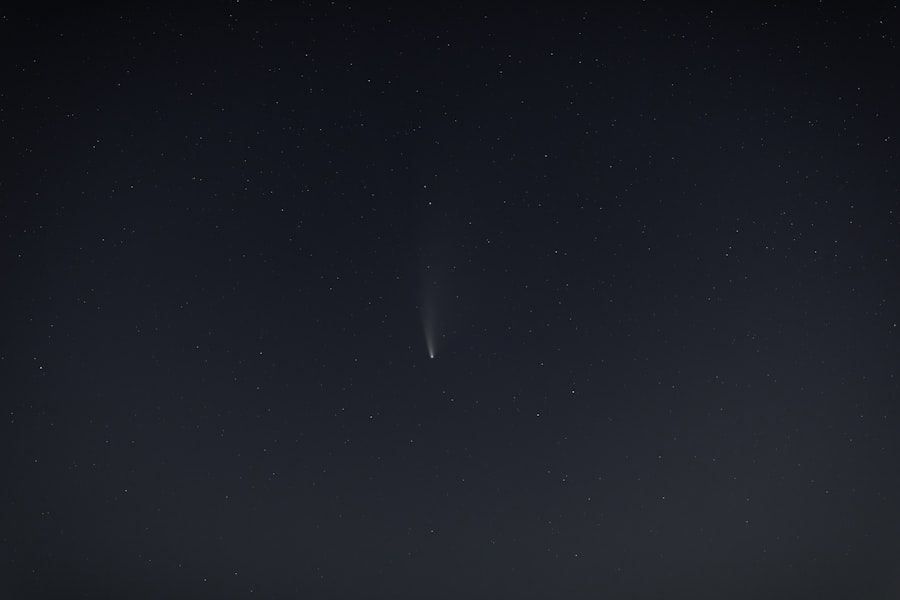
The detection and study of dark comets present a formidable challenge, akin to searching for a shadow in a dimly lit room. Their inherent faintness requires specialized observational techniques and sophisticated instruments.
Advanced Telescopes and Infrared Astronomy
The dimness of dark comets necessitates the use of powerful telescopes equipped with sensitive detectors. Infrared astronomy plays a crucial role, as these wavelengths can penetrate dust and reveal the heat emitted by objects that do not reflect much visible light.
Ground-Based Observatories
Prominent ground-based observatories, such as the Subaru Telescope and the Keck Observatory, equipped with advanced adaptive optics systems, are vital for capturing faint, distant objects. These instruments can provide the resolution and sensitivity needed to detect the subtle signs of dark cometary activity.
Space-Based Observatories
Space-based observatories, like the Hubble Space Telescope and the James Webb Space Telescope, offer unparalleled views of the universe, free from the distortions of Earth’s atmosphere. Their extended wavelength coverage and observational capabilities are crucial for detecting and characterizing dark comets, especially those in the far reaches of the solar system.
Spectroscopic Analysis: Unveiling Composition
Once detected, spectroscopic analysis is employed to determine the composition of dark comets. By analyzing the light that is reflected or emitted by the comet, scientists can identify the chemical elements and molecules present in its nucleus and coma, if any.
Identifying Volatile Signatures
Even faint cometary activity can leave spectral “fingerprints.” The presence of specific spectral lines or absorption bands can indicate the presence of water vapor, carbon monoxide, or other volatile compounds, confirming its cometary nature.
The Search for Organic Molecules
Spectroscopy is also instrumental in the search for organic molecules. The presence of complex organic compounds in dark comets could provide crucial insights into the delivery of prebiotic materials to Earth and the potential for life elsewhere.
Dark comets are fascinating celestial objects that have recently garnered attention due to their mysterious origins and unique characteristics. For those interested in exploring this topic further, a related article discusses the potential sources of these elusive comets and their implications for our understanding of the solar system. You can read more about it in this insightful piece on cosmic phenomena at My Cosmic Ventures, where you will find a wealth of information on various astronomical topics.
The Significance of Dark Comets in Solar System Formation
| Metric | Description | Details |
|---|---|---|
| Definition | What are dark comets? | Small celestial bodies with comet-like orbits but very low reflectivity, making them difficult to detect. |
| Albedo | Surface reflectivity | Typically less than 0.05, indicating very dark surfaces that absorb most sunlight. |
| Origin | Where do they come from? | Believed to originate from the outer solar system, possibly from the Kuiper Belt or Oort Cloud. |
| Composition | Material makeup | Likely composed of dark organic compounds, dust, and possibly ice beneath the surface. |
| Orbital Characteristics | Typical orbits | Highly elliptical orbits similar to traditional comets, often bringing them close to the Sun. |
| Detection Methods | How are they found? | Detected through infrared observations and tracking their motion against background stars. |
| Scientific Importance | Why study dark comets? | They provide insights into the early solar system and the composition of primordial materials. |
Dark comets are not merely celestial curiosities; they are time capsules, offering invaluable insights into the conditions and processes that shaped our solar system billions of years ago. Their primordial nature makes them key players in our understanding of planetary formation and the origin of life.
Windows into the Early Solar System
The pristine composition of dark comets, particularly those originating from the Kuiper Belt and Oort Cloud, provides a direct link to the materials that existed at the very beginning of our solar system’s formation. They are like relics from a bygone era, preserved in the deep freeze of space.
The Building Blocks of Planets
The composition of these icy bodies reflects the chemical environment of the protoplanetary disk from which the planets formed. Studying their mix of ices, dust, and organic molecules helps astronomers refine models of planet formation and understand how different planetary bodies acquired their unique characteristics.
The Delivery of Water and Organics to Earth
The prevailing hypothesis for the origin of Earth’s water and organic molecules involves delivery by comets and asteroids during the early bombardment period. Dark comets, with their potentially abundant volatile ices and organic compounds, are significant candidates for this crucial delivery mechanism. Their passage through the inner solar system could have seeded our planet with the essential ingredients for life.
Understanding Our Galactic Neighborhood
The study of dark comets also contributes to our broader understanding of the solar system’s place within the Milky Way galaxy. Their compositions can reveal information about the interstellar medium from which our solar system formed and the processes that govern the evolution of planetary systems.
Interstellar Material and the Genesis of Our System
By analyzing the isotopic ratios and elemental abundances within dark comets, scientists can compare them to other celestial objects and even interstellar gas clouds. This allows for a deeper understanding of the raw materials that coalesced to form our Sun and its accompanying planets.
The Dynamic Evolution of the Solar System
The orbits of dark comets, often highly eccentric and inclined, hint at the dynamic and tumultuous history of our solar system. Gravitational interactions with planets and passing stars have played a significant role in scattering these icy bodies throughout the solar system, shaping its current architecture.
In conclusion, dark comets, despite their elusive nature, hold immense scientific value. They are silent witnesses to the solar system’s birth, offering a window into the primordial chemistry that paved the way for planets and, ultimately, life. Continued research, utilizing ever more sophisticated observational capabilities, promises to unravel more of their secrets, bringing us closer to understanding our cosmic origins.
FAQs
What are dark comets?
Dark comets are celestial objects that resemble comets but have very low reflectivity, making them difficult to detect with traditional telescopes. They often have surfaces covered with dark, carbon-rich materials that absorb most of the sunlight.
How do dark comets differ from regular comets?
Unlike regular comets, which typically have bright, icy comas and tails visible when near the Sun, dark comets have much less visible activity and appear faint due to their dark surfaces. This makes them harder to observe and study.
Where do dark comets originate?
Dark comets are believed to originate from the outer regions of the solar system, such as the Kuiper Belt or the Oort Cloud. They may be comets that have lost much of their volatile ices after multiple passes near the Sun, leaving behind a dark, inert surface.
Why are dark comets important to study?
Studying dark comets helps scientists understand the composition and evolution of small bodies in the solar system. They provide clues about the early solar system’s materials and the processes that alter cometary surfaces over time.
How are dark comets detected if they are so faint?
Dark comets are detected using sensitive instruments that can observe in infrared or other wavelengths where their thermal emissions are more noticeable. Space-based telescopes and surveys designed to detect faint objects also play a key role in identifying dark comets.