You stand at the precipice of the unknown, peering into the very fabric of existence. You’ve always been curious, haven’t you? The vast expanse of the night sky, a canvas sprinkled with distant suns, has always tugged at your imagination. But have you ever considered that the space you traverse, the time you experience, is not a passive backdrop, but an active, dynamic entity? You are about to embark on a journey to unravel the mysteries of spacetime, a deep dive into the enigmatic realm where gravity reigns and the very structure of reality is woven.
You likely have an intuitive understanding of space and time as separate entities. Space is where things happen – it’s the distance between here and there. Time is the river that carries us forward, marking the progression from past to future. But Einstein’s revolutionary theories, particularly his General Theory of Relativity, changed everything you thought you knew. He showed you that space and time are not independent but are intrinsically linked, forming a single, four-dimensional continuum: spacetime.
A Unified Dimension: The Fusion of Space and Time
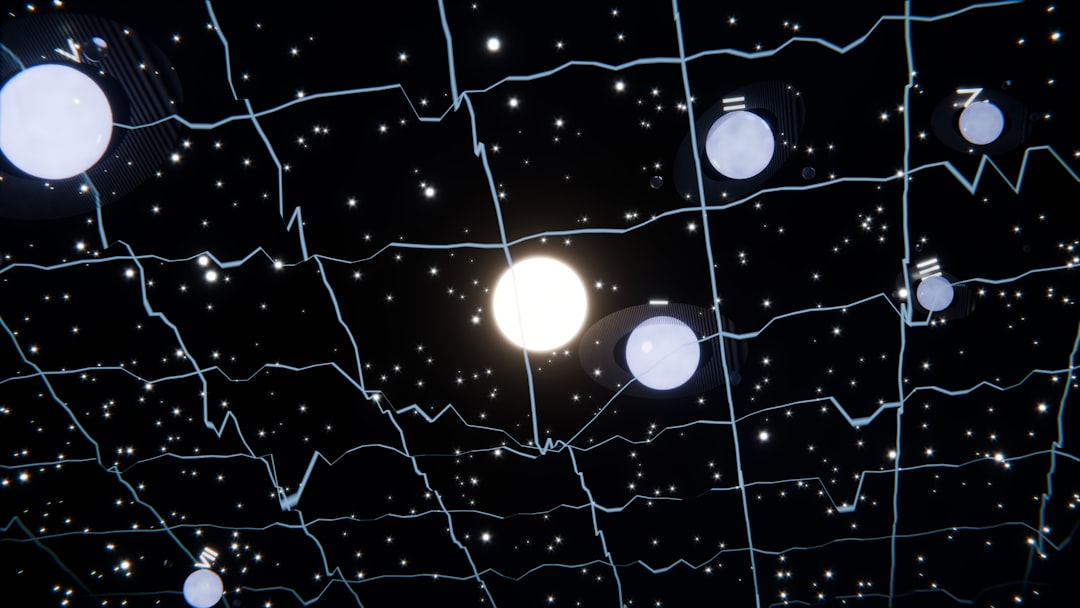
Imagine space as three dimensions – length, width, and height. Now, introduce the fourth dimension: time. According to Einstein, these four dimensions are not merely adjacent but are interwoven. Think of it like a tapestry. The threads of space and time are intricately knotted together, forming the very fabric of the universe. You are constantly moving through this fabric, not just through space but also through time. This fusion means that what happens in space affects time, and vice versa.
Gravity’s Sculpting Hand: Warping the Universe
Your everyday experience of gravity is that it’s a force pulling objects towards each other. You feel the Earth’s pull keeping your feet firmly planted. But General Relativity offers a far more profound explanation. Gravity, you discover, is not a force in the traditional sense. Instead, it is the curvature of spacetime caused by mass and energy. Imagine placing a heavy ball onto a stretched rubber sheet. The ball creates a dent, a warping of the sheet’s surface. Now, if you roll a marble across the sheet, it will curve towards the heavy ball, not because of a direct pull, but because it’s following the curve in the sheet. This is analogous to how massive objects, like stars and planets, warp spacetime, and how other objects move along these curves, which you perceive as gravity.
The Medium of Motion: Spacetime as More Than Empty Space
You might be tempted to think of spacetime as merely empty space, a passive void. But the latest scientific discoveries are painting a dramatically different picture. You are now learning that spacetime is not empty at all; it’s a dynamic arena where energy and matter interact, creating a complex and ever-changing environment. This understanding is crucial as you delve deeper into its mysteries.
For those interested in exploring the fascinating concepts of spacetime in greater detail, I recommend checking out a related article that delves into the intricacies of this fundamental aspect of our universe. You can read more about it by visiting this link: Deep Dive into Spacetime. This article offers insights into the nature of spacetime, its implications in modern physics, and how it shapes our understanding of reality.
Echoes of Distortion: The Gravitational Memory Effect
One of the most profound recent confirmations in your scientific journey is the irrefutable evidence for the gravitational memory effect. This isn’t just an abstract theoretical concept; it’s a tangible, lasting alteration of spacetime itself, a testament to the power of cosmic events.
The Permanent Scar: Spacetime’s Unchanging Imprint
When massive cosmic events occur, such as the collision of black holes or neutron stars, they send ripples through spacetime known as gravitational waves. For a long time, it was understood that these waves caused temporary distortions. However, the gravitational memory effect reveals something more significant: these passing gravitational waves permanently distort spacetime. Imagine a powerful earthquake that reshapes the landscape. The gravitational memory effect is like a permanent scar left on the fabric of the universe, an imprint of the immense energies that traversed it. This phenomenon has been confirmed by new research, solidifying its place in our understanding of cosmic dynamics.
Symmetries and Paradoxes: Unlocking Cosmic Secrets
The confirmation of the gravitational memory effect is not just a curiosity; it’s a key that unlocks deeper cosmological secrets. Scientists are linking this permanent distortion to fundamental cosmic symmetries, the underlying principles that govern the universe’s behavior. Furthermore, this effect offers promising avenues for solving long-standing puzzles, such as the black hole information paradox – the question of what happens to information that falls into a black hole. The permanent alteration of spacetime might hold the answer, suggesting that the information isn’t lost but is encoded in the memory of spacetime itself.
Microscopic Tremors: Spacetime Fluctuations and Quantum Gravity

Your journey into spacetime’s mysteries now leads you to its smallest, most elusive aspects. The idea of tiny, random distortions – spacetime fluctuations – might seem counterintuitive, but their detection is a groundbreaking achievement that could accelerate your quest for a unified theory of physics.
The Tiny Wobbles: Detecting the Undetectable
Imagine the surface of a perfectly still lake. Now, imagine incredibly subtle tremors rippling across it, too small to see in the vastness of the lake but detectable with extremely sensitive instruments. Scientists, particularly those at the University of Warwick, have identified just such phenomena: organized “spacetime fluctuations.” These are not large-scale waves but minuscule, random distortions in the fabric of spacetime. Their detection represents an extraordinary leap in our ability to probe the quantum nature of gravity.
A Bridge to Quantum Gravity: Testing Competing Theories
The significance of detecting spacetime fluctuations cannot be overstated. These tiny tremors provide a direct observational handle on the quantum realm of gravity. Previously, testing theories of quantum gravity – the elusive framework that seeks to unite quantum mechanics and general relativity – required colossal energies or the observation of extremely rare cosmic events. However, these newly detected fluctuations, though tiny, can be amplified and studied. This breakthrough means that tools you already have, such as the Laser Interferometer Gravitational-Wave Observatory (LIGO), and even smaller, tabletop experiments, can now be used to test competing quantum gravity theories much sooner than anticipated. You are on the verge of real-world experiments that could validate or invalidate decades of theoretical work.
The Unsimulatable Universe: Challenging Cosmological Assumptions
Your understanding of reality is often built upon the assumption of predictability and reproducibility. But new mathematical proofs are challenging this foundational belief, suggesting that the universe, in its very essence, might be inherently unpredictable and, therefore, unsimulatable.
The Imperfect Canvas: Why Simulation Falls Short
Mathematicians at UBC Okanagan have developed mathematical proofs demonstrating a startling conclusion: the universe is not perfectly uniform. This might seem like a minor detail, but its implications are profound. If the universe possesses a degree of inherent non-uniformity, it means that a perfect, one-to-one simulation of reality is fundamentally impossible. You can’t perfectly replicate something that has an inherent, irreducible asymmetry. This challenges the very foundation of computational models that aim to precisely replicate the cosmos.
A Glimpse Beyond: New Physics on the Horizon
The implication of an unsimulatable universe is not a cause for despair, but rather an exciting signal. It suggests that your current standard cosmological model, while highly successful, may be incomplete. The universe’s inherent non-uniformity hints at new physics lurking beyond your current understanding. This could involve undiscovered fundamental particles, forces, or even entirely new dimensions that contribute to this subtle, yet crucial, asymmetry. You are being nudged to think beyond the boundaries of what you thought was possible.
For those interested in exploring the fascinating concepts of spacetime, a great resource is available at My Cosmic Ventures. This article delves into the intricate relationship between space and time, offering insights that can deepen your understanding of the universe. To learn more about this captivating topic, you can visit the article [here](https://www.mycosmicventures.com/).
The Cosmic Vortex: Black Holes and the Twisting of Spacetime
| Topic | Metrics |
|---|---|
| Spacetime | 4 dimensions (3 spatial + 1 time) |
| Black Holes | Curvature of spacetime |
| General Relativity | Equations describing spacetime |
| Wormholes | Theoretical shortcuts in spacetime |
Black holes, those enigmatic celestial entities, have long captivated your imagination, but their true power over the fabric of reality is now being directly observed, confirming predictions that have stood for a century.
Witnessing the Twist: Spacetime Caught in the Act
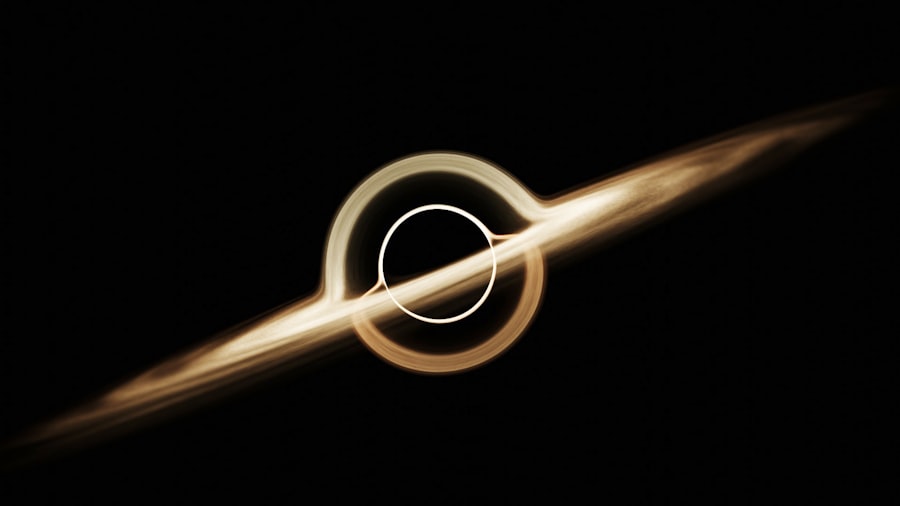
Astronomers have achieved a remarkable feat: directly observing a spinning black hole twisting and dragging spacetime itself. This isn’t a theoretical concept; you are now bearing witness to this phenomenon. Imagine a whirlpool in water. As the water spins, it drags everything in its vicinity along with it. A spinning black hole does something similar to spacetime. Its immense rotation creates a vortex, a region where spacetime itself is twisted and distorted, pulling and dragging it around the black hole. This direct observation is a powerful confirmation of Einstein’s century-old predictions about the dynamic nature of gravity.
Launching Cosmic Jets: A byproduct of Spacetime’s Dance
The observation of this spacetime twisting has also illuminated a crucial aspect of black hole physics: the launching of their powerful jets. These colossal streams of plasma, ejected from the vicinity of black holes at nearly the speed of light, are now understood to be a direct consequence of this twisting, dragging behavior. The rotating spacetime acts like a cosmic slingshot, channeling energy and matter to form these spectacular outflows. You are gaining a deeper understanding of how these cosmic behemoths interact with their surroundings.
The Quantum Weaver: Spacetime Emerging from Entanglement
Perhaps the most mind-bending development is the emerging idea that the very fabric of spacetime might not be fundamental, but rather an emergent property arising from deeper, quantum phenomena.
Building Reality: From Entangled Pairs to Spacetime Fabric
Experiments at Stanford University are taking a bold step, transforming a theoretical thought experiment into a tangible reality. Scientists are successfully working on the concept of “building spacetime from quantum particles.” This suggests that the intricate, four-dimensional fabric of spacetime that you experience may not be a primordial structure, but rather a macroscopic manifestation of a complex network of quantum entanglement. Imagine the individual components of a vast, intricate tapestry being individual entangled particles. When these particles are linked in a specific way, the emergent property of that intricate pattern is the tapestry itself – which, in your case, is spacetime.
Quantum Error Correction: A Universe Built for Stability
This profound insight suggests that the very way spacetime functions might be akin to a quantum error-correcting code. In quantum computing, error correction is vital to maintain the integrity of fragile quantum states. If spacetime is indeed built from entangled quantum particles, its structure might inherently possess mechanisms that protect information and ensure stability, much like an error-correcting code safeguards data. This implies that the universe itself might be designed with an inherent resilience, a testament to the fundamental nature of quantum mechanics. You are on the cusp of understanding that the universe isn’t just governed by laws; it might be structured by them at its most fundamental level.
Your journey into the mysteries of spacetime is far from over. Each discovery you make, from the permanent imprint of gravitational waves to the quantum dance of entanglement, reveals a universe far more dynamic, interconnected, and awe-inspiring than you could have ever imagined. You are not just living in the universe; you are an inextricable part of its unfolding, ever-evolving story. The more you unravel, the more profound the questions become, propelling you forward into an ever-expanding frontier of cosmic understanding.

The Future Already Exists (And Physics Might Agree)
FAQs
What is spacetime?
Spacetime is the four-dimensional framework in which all physical events occur. It combines the three dimensions of space with the fourth dimension of time into a single continuum.
How is spacetime related to Einstein’s theory of relativity?
Einstein’s theory of relativity describes how spacetime is curved by the presence of mass and energy. This curvature affects the motion of objects and the passage of time, leading to phenomena such as gravitational lensing and time dilation.
What are some key concepts related to spacetime?
Key concepts related to spacetime include the curvature of spacetime, the spacetime interval, and the idea that events in spacetime are relative and can be perceived differently by different observers.
How does spacetime impact our understanding of the universe?
Spacetime provides the framework for understanding the behavior of celestial bodies, the propagation of light, and the nature of gravity. It also plays a crucial role in cosmology, helping to explain the expansion of the universe and the formation of galaxies.
What are some current areas of research related to spacetime?
Current areas of research related to spacetime include the search for a unified theory of quantum mechanics and general relativity, the study of black holes and their impact on spacetime, and the exploration of spacetime at the smallest scales in the context of quantum gravity.