
Quantum physics, a branch of physics that concerns itself with the behavior of matter and energy at the atomic and subatomic levels, presents a formidable challenge to conventional intuition. Unlike the classical physics that governs our macroscopic world, quantum mechanics operates under a set of rules that often appear counterintuitive, even bizarre. This article aims to explore some of the fundamental concepts and ongoing mysteries within this fascinating field, providing a foundational understanding for those seeking to delve deeper into its complexities.
The origins of quantum physics can be traced back to the early 20th century, a period marked by a series of theoretical breakthroughs and experimental observations that classical physics could not adequately explain. These initial developments laid the groundwork for a revolutionary new understanding of reality.
Planck’s Quantum Hypothesis
In 1900, Max Planck introduced the radical idea that energy is not continuous but exists in discrete packets, which he called “quanta.” This departure from the classical view was necessitated by his successful explanation of black-body radiation. Imagine a ramp where you can smoothly glide up or down; classical physics envisioned energy like this ramp. Planck, however, proposed that energy is more like a staircase, where one can only exist on specific steps, and movement between steps involves discrete jumps. This seemingly small adjustment had profound implications for future scientific thought.
Einstein’s Photoelectric Effect
Albert Einstein, building upon Planck’s work, further solidified the concept of energy quantization in 1905 with his explanation of the photoelectric effect. He proposed that light itself is composed of discrete packets of energy, which he termed “photons.” When light shines on a material, these photons transfer their energy to electrons, causing them to be ejected. The key insight was that the energy of the ejected electrons depended on the frequency of the light, not its intensity, a phenomenon inexplicable by classical wave theory. This provided compelling evidence for the particle-like nature of light, even though light was also known to exhibit wave-like properties.
Bohr’s Atomic Model
Niels Bohr applied quantum principles to the structure of the atom in 1913. He proposed that electrons orbit the nucleus in specific, quantized energy levels, much like planets orbiting the sun, but with a crucial difference: electrons could only occupy certain “allowed” orbits. When an electron transitions between these energy levels, it either absorbs or emits a photon with an energy precisely equal to the difference in energy between the two levels. This model successfully explained the discrete spectral lines observed in atomic emissions, a puzzle that classical physics struggled to resolve.
Quantum physics continues to unravel the mysteries of the universe, and a fascinating article that delves deeper into its implications is available at this link. For those interested in exploring the intricate relationship between quantum mechanics and the nature of reality, I recommend checking out this insightful piece: Quantum Physics and the Nature of Reality. This article provides a comprehensive overview of recent advancements in the field and discusses how these discoveries may reshape our understanding of existence itself.
The Peculiarities of the Quantum Realm
Once the foundational concepts were established, a series of even more perplexing phenomena emerged, challenging the very fabric of our understanding of reality. These peculiarities lie at the heart of quantum mechanics and continue to be areas of active research and philosophical debate.
Wave-Particle Duality
One of the most mind-bending aspects of quantum physics is wave-particle duality. It posits that all particles, such as electrons and photons, exhibit both wave-like and particle-like properties, depending on how they are observed or measured. Consider light: it behaves as a wave, exhibiting diffraction and interference patterns, yet it also behaves as a particle, as demonstrated by the photoelectric effect. Similarly, electrons, traditionally considered particles, can also exhibit wave-like behavior, as shown in experiments like the double-slit experiment. This duality is not an either/or situation but rather a fundamental aspect of their nature. It’s akin to a coin that is both heads and tails simultaneously until you look at it, at which point it collapses into one state.
Quantum Superposition
Quantum superposition describes the ability of a quantum system to exist in multiple states simultaneously until a measurement is made. For instance, an electron might be in a superposition of spin-up and spin-down at the same time. Only when an observer measures its spin does it “collapse” into one definite state. A commonly used metaphor is Schrödinger’s Cat, a thought experiment where a cat in a sealed box is simultaneously dead and alive until the box is opened and its state is observed. This concept challenges the classical notion of an objective reality, suggesting that the act of observation plays a crucial role in defining the state of a quantum system.
Quantum Entanglement
Quantum entanglement is a phenomenon where two or more particles become linked in such a way that the quantum state of one particle is instantaneously correlated with the state of the others, regardless of the distance separating them. If you measure the spin of one entangled electron and find it to be spin-up, you instantly know that the other entangled electron, no matter how far away, will be spin-down. This “spooky action at a distance,” as Einstein famously called it, has no classical analogue and suggests a deeply interconnected universe at the quantum level. It raises profound questions about locality and causality.
Interpreting Quantum Mechanics
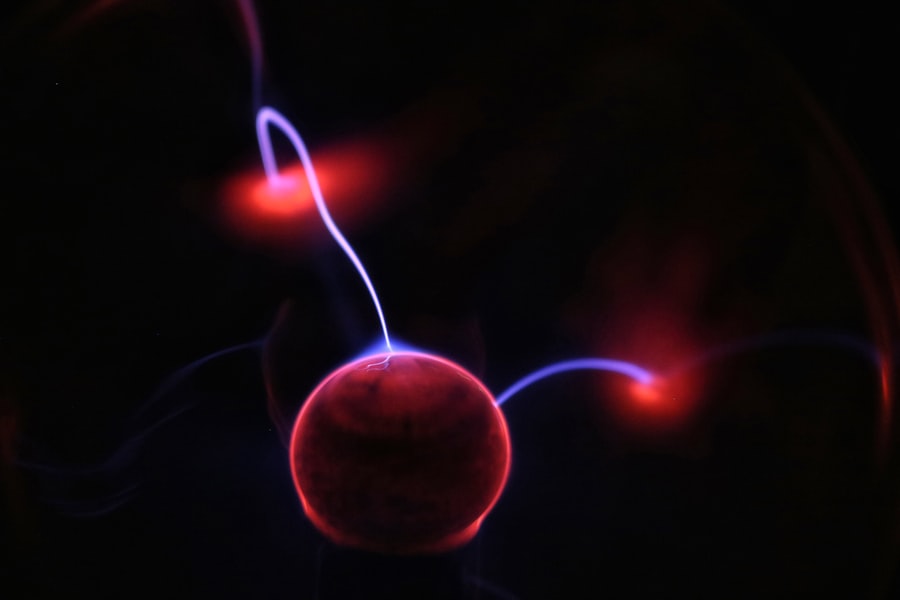
The mathematical formalism of quantum mechanics is incredibly successful in predicting experimental results, but its implications for the nature of reality have led to various interpretations. These interpretations attempt to provide a conceptual framework for understanding the bizarre behaviors observed in the quantum realm.
The Copenhagen Interpretation
The Copenhagen interpretation, primarily developed by Niels Bohr and Werner Heisenberg, is one of the oldest and most widely accepted interpretations. It states that quantum systems do not possess definite properties until they are measured. The act of measurement causes the wave function (a mathematical description of the quantum state) to “collapse” into a single, definite state. Furthermore, it emphasizes the complementary nature of wave and particle descriptions and asserts that quantum mechanics provides a complete description of reality, even if that reality is inherently probabilistic and not fully comprehensible in classical terms.
Many-Worlds Interpretation
Hugh Everett III proposed the Many-Worlds Interpretation (MWI) in 1957 as an alternative to wave function collapse. In this interpretation, every quantum measurement causes the universe to split into multiple parallel universes, each representing a different possible outcome of the measurement. In the Schrödinger’s Cat example, upon opening the box, the universe splits into two: one where the cat is alive, and one where the cat is dead. All possible outcomes are realized in different branches of the universe, and we only perceive the branch we are in. While fascinating, it comes with the philosophical baggage of an infinitely branching multiverse.
Pilot-Wave Theory (de Broglie-Bohm Theory)
Pilot-wave theory, or the de Broglie-Bohm theory, offers a deterministic alternative to the probabilistic nature of other interpretations. It posits the existence of “pilot waves” that guide particles. Particles always have a definite position, and their apparent wave-like behavior is a consequence of these guiding waves. While it eliminates the concept of wave function collapse and restores determinism, it requires the existence of nonlocal interactions in a seemingly empty space, and has faced challenges in developing relativistic extensions.
Quantum Technologies and Future Prospects

Despite its abstract nature, quantum physics is not merely a theoretical curiosity. Its principles are already being harnessed to develop groundbreaking technologies, and the future holds even greater promise.
Quantum Computing
Quantum computing leverages the principles of superposition and entanglement to perform calculations that are impossible for classical computers. Unlike classical bits, which can be either 0 or 1, quantum bits (qubits) can exist in a superposition of both 0 and 1 simultaneously. Entanglement allows multiple qubits to be linked, vastly increasing the computational power. This technology promises to revolutionize fields such as drug discovery, materials science, cryptography, and artificial intelligence, by being able to solve problems currently intractable for even the most powerful supercomputers.
Quantum Cryptography
Quantum cryptography utilizes the fundamental laws of quantum mechanics to ensure secure communication. The most prominent application is Quantum Key Distribution (QKD), which allows two parties to exchange encryption keys with provable security. Any attempt by an eavesdropper to intercept the key would disturb the quantum state of the photons, instantly alerting the communicating parties. This inherent security against eavesdropping is a direct consequence of the no-cloning theorem and the measurement postulate of quantum mechanics.
Quantum Sensors and Metrology
Quantum sensors exploit the exquisite sensitivity of quantum systems to external influences. These sensors can achieve unprecedented levels of precision in measurements of time, magnetic fields, gravity, and acceleration. Applications range from highly accurate atomic clocks used in GPS systems to advanced medical imaging techniques and geological surveys. The potential for quantum sensors to push the boundaries of measurement precision across various scientific and technological domains is immense.
Quantum physics continues to unravel the mysteries of the universe, offering insights that challenge our classical understanding of reality. For those interested in exploring this fascinating field further, a related article can be found at My Cosmic Ventures, where you can discover the latest advancements and theories that are shaping our comprehension of quantum mechanics. This exploration not only deepens our knowledge but also opens up new possibilities for technology and our understanding of the cosmos.
Unresolved Questions and the Road Ahead
| Metric | Description | Typical Value | Unit |
|---|---|---|---|
| Planck Constant (h) | Fundamental constant in quantum mechanics representing the quantum of action | 6.62607015 × 10⁻³⁴ | J·s (joule seconds) |
| Reduced Planck Constant (ħ) | Planck constant divided by 2π, used in angular momentum quantization | 1.0545718 × 10⁻³⁴ | J·s |
| Speed of Light (c) | Speed at which light propagates in vacuum, important in relativistic quantum mechanics | 2.99792458 × 10⁸ | m/s |
| Electron Mass (mₑ) | Mass of an electron, fundamental particle in quantum physics | 9.10938356 × 10⁻³¹ | kg |
| Elementary Charge (e) | Magnitude of electric charge of a proton or electron | 1.602176634 × 10⁻¹⁹ | C (coulombs) |
| Bohr Radius (a₀) | Typical size of the hydrogen atom in its ground state | 5.291772109 × 10⁻¹¹ | m |
| Quantum Entanglement Entropy | Measure of entanglement between quantum systems | Varies (0 to log₂(dim)) | bits |
| Energy of Photon (E) | Energy carried by a photon of frequency ν | E = hν | J |
| Quantum Decoherence Time | Time scale over which a quantum system loses coherence | 10⁻⁶ to 10⁻³ | seconds (varies by system) |
Despite the remarkable progress made in understanding and applying quantum mechanics, fundamental questions persist, prompting ongoing research and intellectual exploration.
The Measurement Problem
The measurement problem remains one of the deepest mysteries in quantum mechanics. It concerns the transition from a quantum system’s superposed state to a definite, observed state upon measurement. What precisely constitutes a “measurement”? Does consciousness play a role? How does the wave function collapse, and why? Different interpretations attempt to address this, but a universally accepted resolution remains elusive. This problem highlights the foundational tensions between quantum theory and classical reality.
Unifying Quantum Mechanics and General Relativity
One of the grand challenges in theoretical physics is to unify quantum mechanics, which describes the universe at the microscopic level, with Einstein’s theory of general relativity, which describes gravity and the large-scale structure of the cosmos. These two highly successful theories are currently incompatible. Developing a “theory of everything” that seamlessly integrates both frameworks, such as string theory or loop quantum gravity, is a holy grail for physicists, promising a more complete understanding of space, time, and matter.
The Nature of Reality Itself
Ultimately, quantum physics forces us to re-evaluate our fundamental understanding of reality. Concepts like objective reality, locality, and causality, which are cornerstones of classical physics, are challenged by quantum phenomena. The implications of quantum mechanics extend beyond physics, influencing philosophy, epistemology, and our place in the universe. As we continue to probe the quantum realm, we may uncover even more profound insights into the very nature of existence.
In conclusion, quantum physics is a field rich with both established principles and enduring mysteries. From the initial quantization hypotheses to the development of quantum technologies, it has profoundly reshaped our scientific understanding and technological capabilities. While some aspects remain enigmatic and subject to ongoing debate, the journey into the quantum world promises continued discoveries and a deeper appreciation for the intricate and often counterintuitive workings of the universe. The reader would be well-advised to approach this subject with an open mind, as the quantum realm frequently defies the expectations of classical intuition.

WATCH NOW ▶️ Dark energy is deleting the universe proof
FAQs
What is quantum physics?
Quantum physics is a branch of physics that studies the behavior of matter and energy at the smallest scales, such as atoms and subatomic particles. It explains phenomena that cannot be described by classical physics, including wave-particle duality and quantum entanglement.
How does quantum physics differ from classical physics?
Quantum physics differs from classical physics in that it deals with probabilities and uncertainties rather than definite outcomes. While classical physics describes macroscopic objects and predictable behavior, quantum physics addresses the probabilistic nature of particles at microscopic scales.
What is wave-particle duality?
Wave-particle duality is a fundamental concept in quantum physics stating that particles like electrons and photons exhibit both wave-like and particle-like properties. Depending on the experiment, they can behave as discrete particles or as waves spreading through space.
What is quantum entanglement?
Quantum entanglement is a phenomenon where two or more particles become linked so that the state of one instantly influences the state of the other, regardless of the distance between them. This challenges classical ideas of locality and has important implications for quantum computing and communication.
What are some practical applications of quantum physics?
Quantum physics has led to numerous technological advancements, including the development of semiconductors, lasers, magnetic resonance imaging (MRI), and emerging technologies like quantum computing and quantum cryptography, which promise to revolutionize information processing and security.