The universe, in its vastness and complexity, has long been a subject of profound human inquiry. From the earliest stargazers to the most sophisticated theoretical physicists, humanity has strived to comprehend our cosmic origins and destiny. In recent decades, a new frontier has emerged, merging the enigmatic realm of quantum mechanics with the grand narratives of cosmology: Quantum Cosmology. This discipline aims to tackle some of the most fundamental questions about the universe, such as its very beginning, the nature of spacetime at its most extreme, and the possibility of multiverses. It is a field where abstract mathematical equations describe realities that defy everyday intuition, a place where the smallest, most fundamental particles interact with the largest structures imaginable. The journey to unravel these mysteries is as intricate and fascinating as the universe itself.
The prevailing cosmological model, the Big Bang theory, describes a universe that began in an incredibly hot, dense state and has been expanding and cooling ever since. However, the Big Bang theory, in its classical formulation, encounters limitations when pushed to its absolute beginning – the singularity. It is here, at the Planck epoch (approximately 10-43 seconds after the Big Bang), that the fabric of spacetime is thought to have been so distorted and extreme that classical physics breaks down. Quantum mechanics, with its inherently probabilistic nature and its ability to describe phenomena at incredibly small scales, becomes indispensable in understanding this nascent universe.
The Singularity Problem and the Need for Quantum Gravity
Classical general relativity predicts a singularity at the Big Bang – a point of infinite density and curvature. This is not a physical prediction but rather an indication that the theory is incomplete. Just as classical electromagnetism fails to explain the stability of atoms, classical general relativity fails to describe the very genesis of the universe. Physicists propose that a quantum theory of gravity is needed to resolve this singularity. Such a theory would describe how gravity behaves at quantum scales, offering a more complete picture of the universe’s earliest moments.
Quantum Fluctuations as Seeds of Structure
In quantum mechanics, even in the vacuum, there are constant fluctuations of energy. These are known as quantum fluctuations. In the context of the early universe, it is theorized that these microscopic quantum fluctuations, amplified during a period of rapid expansion called inflation, could have been the seeds that ultimately grew into the large-scale structures we observe today – galaxies, clusters of galaxies, and the cosmic web. This is a profound idea: the vastness of the cosmos, with all its intricate patterns, may have originated from the ephemeral dance of quantum uncertainty.
Inflationary Cosmology and its Quantum Underpinnings
Inflationary cosmology, a theoretical extension of the Big Bang model, proposes a period of exponential expansion in the universe’s first fraction of a second. This period elegantly solves several cosmological puzzles, such as the horizon problem (why the cosmic microwave background is so uniform) and the flatness problem (why the universe appears so geometrically flat). Crucially, inflation also provides a mechanism for generating the primordial density fluctuations that seeded structure formation. The nature of the field driving this inflation is thought to be a quantum field, making inflation a fundamentally quantum cosmological phenomenon.
Quantum cosmology is a fascinating field that explores the intersection of quantum mechanics and the universe’s origins. For a deeper understanding of this subject, you might find the article “The Quantum Universe: Bridging the Gap Between Quantum Mechanics and Cosmology” particularly insightful. It delves into the principles of quantum theory and how they apply to cosmological models, providing a comprehensive overview of current research in the field. You can read the article here: The Quantum Universe: Bridging the Gap Between Quantum Mechanics and Cosmology.
The Nature of Spacetime: Foam, Granularity, and Holography
Our everyday understanding of spacetime is that of a smooth, continuous fabric. However, quantum mechanics suggests that at extremely small scales, this smooth continuum might break down. Quantum cosmology probes the very fabric of reality, questioning whether spacetime itself is quantized, perhaps resembling a chaotic foam or a granular structure.
Spacetime Foam: A Quantum Jitter
At scales approaching the Planck length (approximately 10-35 meters), the quantum vacuum is predicted to be a violent, fluctuating entity. This concept is often referred to as “spacetime foam.” Here, quantum fluctuations of spacetime geometry would be so significant that the very notions of distance and time become ill-defined. Imagine a bubbling, frothing cauldron of reality, where points in space and moments in time constantly merge and split. Quantum cosmology seeks to understand the dynamics and implications of this potential spacetime foam.
Loop Quantum Gravity: Quantizing Spacetime Itself
One of the leading candidates for a theory of quantum gravity is Loop Quantum Gravity (LQG). Instead of treating spacetime as a background in which quantum fields propagate, LQG attempts to quantize spacetime itself. In this framework, spacetime is portrayed as a network of discrete loops, forming a granular structure at the Planck scale. This “quantum geometry” suggests that there are fundamental units of area and volume, much like pixels on a screen. LQG offers a potential way to resolve the Big Bang singularity by suggesting that the universe might have “bounced” from a previous contracting phase rather than originating from an infinitely dense point.
The Holographic Principle: The Universe as a Projection
The holographic principle, arising from studies of black hole thermodynamics and string theory, proposes a radical idea: the information content of a volume of spacetime can be fully described by a theory living on its boundary. In essence, our three-dimensional universe might be a projection, or hologram, of a lower-dimensional reality. This principle has profound implications for quantum cosmology, suggesting that the fundamental degrees of freedom of the universe may reside on its boundary, or perhaps that the early universe was governed by a quantum gravitational theory with holographic properties.
The Wave Function of the Universe: A Cosmic Schrödinger Equation

Just as quantum mechanics describes the state of a particle using a wave function, quantum cosmology attempts to describe the state of the entire universe with a similar mathematical object – the “wave function of the universe.” This concept, pioneered by physicists like James Hartle and Stephen Hawking, seeks to apply the principles of quantum mechanics to the universe as a whole.
The Wheeler-DeWitt Equation: A Timeless Universe?
The Wheeler-DeWitt equation is a central equation in quantum cosmology, analogous to the Schrödinger equation in standard quantum mechanics but for the universe itself. However, it possesses a peculiar feature: it appears to be time-independent. This “problem of time” suggests that in a quantum description of the universe, time might not be a fundamental, evolving quantity as we perceive it. Instead, it may emerge from the correlations between different parts of the universe. Understanding this timelessness is a crucial challenge in quantum cosmology.
What Does the Wave Function Tell Us?
The wave function of the universe would, in principle, contain all the information about the universe’s past, present, and future. However, the exact form of this wave function is unknown, and deriving it is a monumental task. If a complete wave function could be found or approximated, it could potentially answer fundamental questions about the probability of different universal histories, the initial conditions of the universe, and even the likelihood of other universes.
The Multiverse Hypothesis: Beyond Our Observable Horizon
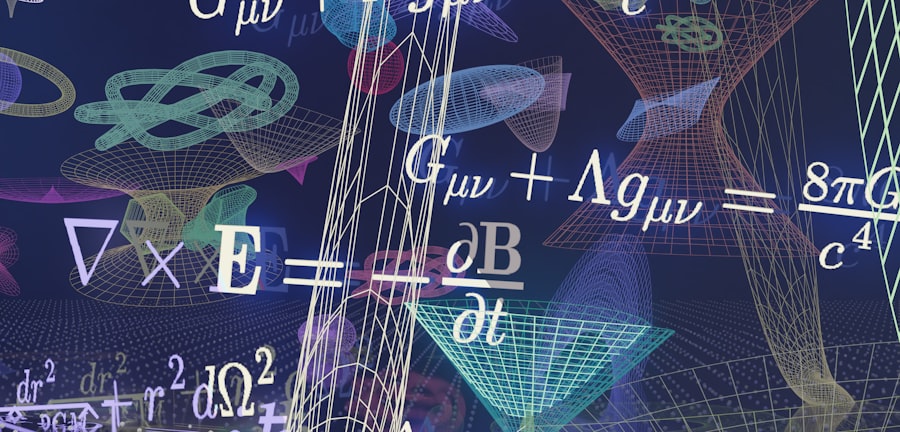
Quantum cosmology, in its exploration of initial conditions and the parameters of physical laws, has led to some of the most mind-bending concepts, including the possibility of a multiverse. The idea that our universe is not the only one in existence arises from various theoretical frameworks.
Eternal Inflation and Bubble Universes
One prominent mechanism for generating a multiverse comes from inflationary cosmology. If inflation is “eternal,” meaning it continues to occur in some regions of spacetime, then our observable universe might be just one “bubble” that has stopped inflating, with other bubbles constantly forming and continuing to inflate in the surrounding “sea” of energy. Each bubble could potentially possess different physical constants and even different fundamental laws, leading to a vast array of universes.
String Theory and the Landscape of Vacua
String theory, a candidate for a unified theory of physics, suggests a vast number of possible “vacua” or stable states, each corresponding to a universe with different properties. The theory predicts a “landscape” of these vacua, with our universe representing just one possibility among an astronomical number. If these different vacua can be realized as distinct universes, then string theory lends further support to the multiverse hypothesis.
Quantum Mechanics and the Many-Worlds Interpretation
The Many-Worlds Interpretation (MWI) of quantum mechanics, proposed by Hugh Everett III, offers another perspective on multiverses, albeit of a different kind. In MWI, every quantum measurement or event causes the universe to split into multiple branches, with each branch representing a different outcome. According to this interpretation, all possible quantum outcomes are realized in parallel universes. While not a direct product of quantum cosmology in the same way as bubble universes, MWI highlights the inherently probabilistic nature of quantum reality and its potential implications for cosmic existence.
Quantum cosmology is a fascinating field that explores the intersection of quantum mechanics and the universe’s origins. For those interested in delving deeper into this topic, a related article can provide valuable insights into the fundamental principles and implications of quantum theories in cosmology. You can read more about it in this comprehensive overview of the subject at My Cosmic Ventures, which discusses how quantum fluctuations may have influenced the early universe and shaped its evolution.
The Quest for Evidence: Testing the Undyable
| Concept | Explanation |
|---|---|
| Quantum Cosmology | The study of the origin and evolution of the universe using quantum mechanics principles. |
| Quantum Fluctuations | Small variations in the energy density of the early universe, which can have significant effects on its evolution. |
| Wave Function of the Universe | A hypothetical wave function that describes the entire universe, incorporating all possible states and evolutions. |
| Quantum Gravity | Theoretical framework that aims to unify quantum mechanics and general relativity to describe the behavior of the universe at the smallest scales. |
One of the greatest challenges in quantum cosmology is the lack of direct experimental evidence. The phenomena it describes typically occur at scales far beyond our current observational capabilities or involve energies that are impossible to replicate in terrestrial laboratories. Nevertheless, scientists are pursuing indirect avenues to test these revolutionary ideas.
Cosmic Microwave Background Anomalies
The Cosmic Microwave Background (CMB) radiation, a remnant glow from the early universe, provides a snapshot of conditions about 380,000 years after the Big Bang. Scientists meticulously analyze the subtle temperature fluctuations and polarization patterns in the CMB, searching for imprints of quantum processes that occurred during inflation or earlier. Anomalies or unexpected features in the CMB could provide crucial clues to support or challenge quantum cosmological models.
Gravitational Waves as Cosmic Messengers
The detection of gravitational waves, ripples in spacetime generated by massive accelerating objects, has opened a new window into the universe. Future, more sensitive gravitational wave detectors might be able to pick up faint signals from the Planck epoch or from the inflationary period. These “primordial” gravitational waves could carry direct information about the quantum gravity regime and the Big Bang itself, providing a powerful tool for testing quantum cosmological theories.
Theoretical Consistency and Predictive Power
While direct evidence is scarce, the progress in quantum cosmology is also measured by the internal consistency and predictive power of its theoretical frameworks. Theories like LQG and string theory are constantly being refined, aiming to derive observable predictions. The ability of a theory to explain existing cosmological observations more accurately or to predict new phenomena that can then be sought by astronomers is a strong indicator of its validity.
The Enduring Enigma
Quantum cosmology remains at the forefront of scientific inquiry, a testament to humanity’s insatiable curiosity. It is a field that pushes the boundaries of our understanding, grappling with questions that have eluded us for millennia. The journey to unravel the mysteries of the universe’s origins, the true nature of spacetime, and the potential existence of countless other realities is far from over. Yet, with each theoretical advancement and each subtle observation, we inch closer to comprehending the grand, quantum tapestry of existence. The universe, it seems, is a far more intricate and wondrous place than we could have ever imagined, and quantum cosmology is the key to unlocking its deepest secrets.

Physics Can’t Explain Why Reality Exists
FAQs
What is quantum cosmology?
Quantum cosmology is a branch of theoretical physics that seeks to apply the principles of quantum mechanics to the field of cosmology, which is the study of the origin and evolution of the universe.
How does quantum cosmology differ from classical cosmology?
Classical cosmology relies on classical physics to describe the behavior of the universe, while quantum cosmology takes into account the principles of quantum mechanics, which govern the behavior of particles at the smallest scales.
What are the key concepts in quantum cosmology?
Key concepts in quantum cosmology include the wave function of the universe, the role of quantum fluctuations in the early universe, and the application of quantum principles to the study of the Big Bang and the formation of the universe.
What are some current theories and developments in quantum cosmology?
Current theories and developments in quantum cosmology include the study of quantum gravity, the application of loop quantum cosmology to the early universe, and the exploration of the multiverse hypothesis within a quantum framework.
Why is quantum cosmology important in our understanding of the universe?
Quantum cosmology is important because it provides a framework for understanding the behavior of the universe at its earliest moments, and it offers potential insights into the fundamental nature of space, time, and the laws of physics at the most fundamental level.