
The universe, in its vast and intricate tapestry, hums with the fundamental principles of physics. For millennia, humanity has gazed at the stars, pondered the fall of an apple, and questioned the very fabric of reality. Unraveling these mysteries is not an endeavor reserved for cloistered academics; rather, it is an invitation to understand the world around us in a profound and awe-inspiring way. This guide serves as a gentle introduction, a compass for navigating the initial currents of physics, making its complex beauty accessible to the curious beginner.
At its core, physics is the study of matter, energy, space, and time, and the fundamental forces that govern their interactions. Often, these forces are invisible, subtle whispers that dictate everything from the orbits of planets to the spark of a thought. Yet, their impact is undeniable and omnipresent.
Gravity: The Universal Embrace
Perhaps the most familiar of these forces is gravity. It is the invisible hand that pulls objects towards each other, the force that keeps our feet firmly planted on the ground and the moon in its celestial dance around Earth.
Newton’s Law of Universal Gravitation: A Classical Foundation
Sir Isaac Newton, observing an apple’s descent, formulated a revolutionary idea: the same force that pulled the apple to the earth also held the planets in their orbits. His law of universal gravitation, expressed mathematically, states that every particle of matter in the universe attracts every other particle with a force. This force is directly proportional to the product of their masses and inversely proportional to the square of the distance between their centers. While this classical description has been refined, it remains a cornerstone of our understanding of gravity. It explains why objects with more mass exert a stronger gravitational pull and why the force weakens significantly as objects move further apart.
Einstein’s General Relativity: A Warped Spacetime
A more profound understanding of gravity emerged with Albert Einstein’s theory of general relativity. Instead of a force acting across space, Einstein proposed that gravity is a manifestation of the curvature of spacetime itself. Massive objects, like stars and planets, warp the fabric of spacetime around them, much like a heavy ball placed on a stretched rubber sheet. Other objects, moving through this warped spacetime, follow these curves, which we perceive as gravitational attraction. This elegant concept not only explained phenomena that Newtonian gravity struggled with, such as the precise orbit of Mercury, but also predicted new ones, like gravitational waves – ripples in spacetime that are now being directly detected.
Electromagnetism: The Dance of Charges
Another fundamental force, electromagnetism, is responsible for a vast array of phenomena, from the light we see to the electricity that powers our lives. It governs the interactions between electrically charged particles.
Electric Forces: Like Repels, Unlike Attracts
The fundamental principle of electric forces is simple: like charges repel each other, while opposite charges attract. This is evident in the static cling of clothes or the repulsion between two positively charged balloons. This attraction and repulsion, dictated by Coulomb’s Law, are crucial for the formation of atoms, where negatively charged electrons are held in orbit around the positively charged nucleus.
Magnetic Forces: The Flow of Charge
Magnetism is intimately linked to electricity. It arises from moving electric charges. Just as a single charge creates an electric field, a moving charge (an electric current) creates a magnetic field. This is why electromagnets can be switched on and off by controlling the flow of electricity. The interaction between magnetic fields is responsible for the forces that steer compass needles and power electric motors.
The Unification of Electricity and Magnetism: Maxwell’s Equations
James Clerk Maxwell, in the 19th century, was instrumental in unifying electricity and magnetism into a single, comprehensive theory of electromagnetism. His set of equations, a masterpiece of theoretical physics, elegantly described all known electric and magnetic phenomena and predicted the existence of electromagnetic waves. Light itself was revealed to be an electromagnetic wave, a crucial revelation that paved the way for modern communication technologies.
For those interested in a deeper understanding of the fundamental principles of physics, I recommend checking out the article on quantum mechanics available at My Cosmic Ventures. This article delves into the intriguing world of particles and waves, providing insights into how these concepts shape our understanding of the universe. Whether you’re a student or simply a curious reader, this resource offers valuable explanations that complement the broader topics covered in physics.
The Building Blocks of Reality: From Atoms to Quarks
The universe, at its most granular level, is composed of fundamental particles and their interactions. Understanding these building blocks is essential for comprehending the nature of matter and energy.
Atoms: The Classic Constituents
For a long time, the atom was considered the smallest indivisible unit of matter. We now understand that atoms are complex structures themselves, containing even smaller particles.
The Nucleus: A Dense Core
At the heart of every atom lies the nucleus, a dense region composed of protons and neutrons. Protons carry a positive electric charge, while neutrons, as their name suggests, are electrically neutral. The number of protons in an atom defines its element – for example, all atoms with one proton are hydrogen.
Electrons: The Orbital Dance
Orbiting the nucleus are electrons, tiny particles with a negative electric charge. The electrostatic attraction between the positively charged protons in the nucleus and the negatively charged electrons holds the atom together. This electron cloud is not a simple planetary orbit but rather a region of probability where electrons are likely to be found.
Subatomic Particles: Delving Deeper
The exploration of atoms revealed that even protons and neutrons are not fundamental. They are composed of even smaller entities, leading to the realm of particle physics.
Protons and Neutrons: Not So Fundamental After All
Protons and neutrons are classified as baryons, which are composite particles made up of three fundamental particles called quarks.
Quarks: The Flavor of Reality
There are six “flavors” of quarks: up, down, charm, strange, top, and bottom. Protons are made of two up quarks and one down quark, while neutrons are composed of one up quark and two down quarks. These quarks are bound together by the strong nuclear force, mediated by particles called gluons.
Leptons: The Lightweights
Another class of fundamental particles are leptons. The most familiar lepton is the electron. Other leptons include the muon and the tau, along with their associated neutrinos. Neutrinos are notoriously elusive, interacting very weakly with other matter, making them extremely difficult to detect.
The Strange World of Quantum Mechanics

When we venture into the realm of the very small – atoms and their constituent particles – the rules of classical physics no longer apply. Here, a peculiar and counterintuitive set of principles called quantum mechanics reigns supreme.
Quantization: The Discrete Nature of Energy
One of the foundational concepts of quantum mechanics is quantization. This means that certain physical quantities, like energy, are not continuous but exist in discrete packets or “quanta.”
Planck’s Quantum Hypothesis: Energy Packets
Max Planck, while studying blackbody radiation, proposed that energy is emitted or absorbed in discrete units, or quanta. This revolutionary idea, initially met with skepticism, laid the groundwork for quantum theory. The energy of a photon, the quantum of light, is directly proportional to its frequency.
Electron Energy Levels: Atomic Orbits
In atoms, electrons can only occupy specific energy levels. They cannot exist at arbitrary energies in between. When an electron absorbs energy, it jumps to a higher energy level; when it emits energy, it falls to a lower one, often releasing a photon of light. This explains the distinct spectral lines observed for different elements.
Wave-Particle Duality: A Dual Nature
Perhaps the most perplexing aspect of quantum mechanics is wave-particle duality. Quantum entities, like electrons and photons, exhibit characteristics of both waves and particles, depending on how they are observed.
The Double-Slit Experiment: A Classic Demonstration
The iconic double-slit experiment vividly illustrates wave-particle duality. When particles like electrons are fired towards a screen with two slits, they behave as waves, passing through both slits simultaneously and creating an interference pattern on a detector screen. However, if we try to observe which slit each electron passes through, they suddenly behave like particles, and the interference pattern disappears. This suggests that the act of observation influences the behavior of quantum systems.
The Uncertainty Principle: Limits to Our Knowledge
Heisenberg’s uncertainty principle states that there are fundamental limits to how precisely certain pairs of physical properties of a particle can be known simultaneously. For example, the more precisely we know the position of a particle, the less precisely we can know its momentum, and vice versa. This is not a limitation of our measuring instruments but an intrinsic property of quantum reality.
The Fabric of Spacetime: Relativity and Beyond
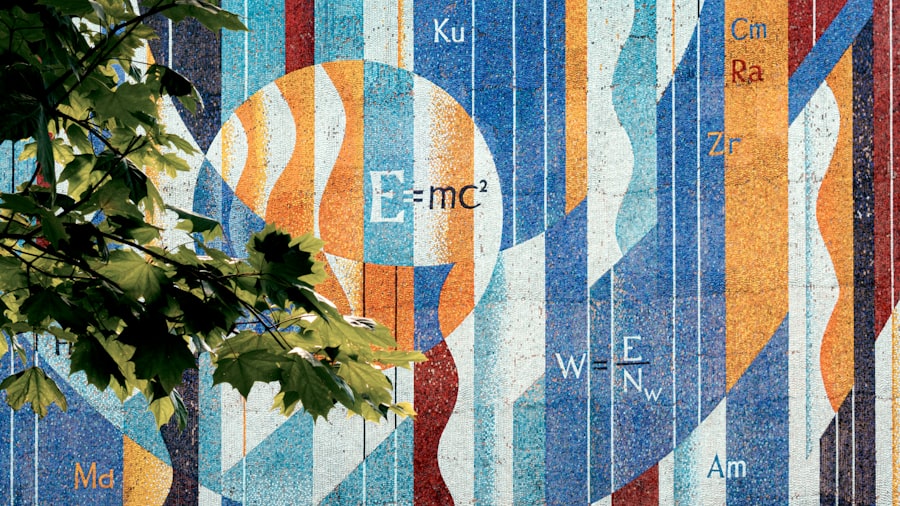
Our understanding of space and time has been revolutionized by the theories of relativity, challenging our intuitive notions of a fixed and absolute framework.
Special Relativity: Speed and Time
Albert Einstein’s theory of special relativity, published in 1905, deals with the relationship between space, time, and motion in the absence of gravity.
The Constancy of the Speed of Light: A Universal Speed Limit
One of the cornerstones of special relativity is the postulate that the speed of light in a vacuum is constant for all observers, regardless of their own motion. This seemingly simple idea has profound consequences.
Time Dilation: Time is Relative
A direct consequence of the constancy of the speed of light is time dilation. As an object moves faster, time passes more slowly for it relative to a stationary observer. This effect becomes significant at speeds approaching the speed of light. So, an astronaut traveling at near-light speed would age less than their twin who remained on Earth.
Length Contraction: Distances Shrink
Another effect predicted by special relativity is length contraction. Objects moving at high speeds appear to be shorter in the direction of their motion when observed by a stationary observer.
Mass-Energy Equivalence: E=mc²
Perhaps the most famous equation in physics, E=mc², arises from special relativity. It states that energy (E) and mass (m) are interchangeable, related by the square of the speed of light (c²). This equation reveals that mass is a form of energy and that a small amount of mass can be converted into a tremendous amount of energy, a principle behind nuclear power.
General Relativity: Gravity and the Universe
As discussed earlier, general relativity extends special relativity by incorporating gravity. It describes gravity not as a force, but as a curvature of spacetime caused by mass and energy.
Gravitational Lensing: Bending Light
General relativity predicts that light will bend as it passes through regions of strong gravitational fields. This phenomenon, known as gravitational lensing, has been observed and confirmed, where massive objects like galaxies act as lenses, distorting and magnifying the light from more distant objects.
Black Holes: Regions of Infinite Density
General relativity also predicts the existence of black holes, regions of spacetime where gravity is so strong that nothing, not even light, can escape. These enigmatic objects are formed from the collapse of massive stars and are characterized by an event horizon, the boundary beyond which escape is impossible.
In exploring the fascinating world of physics, one can gain deeper insights by reading related articles that delve into specific topics. For instance, an intriguing piece on the fundamental principles of quantum mechanics can enhance your understanding of the subject. You can find this article by following this link, which provides a comprehensive overview of how quantum phenomena shape our universe. Engaging with such resources can significantly enrich your knowledge and appreciation of the complexities of physics.
Modern Physics: Unifying the Forces and Exploring the Unknown
| Topic | Explanation |
|---|---|
| Newton’s Laws | Three laws that describe the relationship between a body and the forces acting on it. |
| Energy | The ability to do work, and it comes in various forms such as kinetic, potential, and thermal energy. |
| Electricity and Magnetism | Phenomena associated with the presence and flow of electric charge and the interaction of magnets. |
| Quantum Mechanics | The branch of physics that deals with the behavior of very small particles, such as atoms and subatomic particles. |
While we have made tremendous strides in understanding the universe, many mysteries remain. Modern physics strives to unify the fundamental forces and explore the frontiers of our knowledge.
The Standard Model of Particle Physics: A Unified Framework
The Standard Model is a theoretical framework that describes the known fundamental particles and three of the four fundamental forces (electromagnetism, the strong nuclear force, and the weak nuclear force). It successfully explains a vast array of experimental results but does not include gravity.
Fundamental Particles: Fermions and Bosons
The Standard Model categorizes fundamental particles into two main groups: fermions (matter particles like quarks and leptons) and bosons (force-carrying particles like photons and gluons). Each fundamental particle has a corresponding antiparticle, identical in mass but opposite in charge and other quantum properties.
Fundamental Forces: The Interactions
The Standard Model describes three fundamental forces, each mediated by specific force-carrying bosons: electromagnetism (photons), the strong nuclear force (gluons), and the weak nuclear force (W and Z bosons).
The Quest for a Theory of Everything: Unifying Gravity
One of the grandest aims of modern physics is to develop a “Theory of Everything” that could unify all four fundamental forces, including gravity, within a single, coherent framework.
String Theory: Vibrating Strings
String theory proposes that the fundamental constituents of the universe are not point-like particles but tiny, vibrating strings. Different vibration modes of these strings correspond to different fundamental particles and forces. String theory requires extra spatial dimensions beyond the familiar three.
Loop Quantum Gravity: Quantized Spacetime
Loop quantum gravity offers an alternative approach to unifying quantum mechanics and general relativity. It suggests that spacetime itself is quantized, existing in discrete units at the smallest scales.
Dark Matter and Dark Energy: The Cosmic Enigma
Observations of the universe have revealed the existence of mysterious components that dominate its mass-energy content yet remain invisible and largely unknown.
Dark Matter: The Unseen Gravitational Influence
Galaxies rotate faster than they should based on the visible matter they contain, and galaxy clusters hold together through gravitational forces that cannot be accounted for by ordinary matter alone. This suggests the presence of “dark matter,” a substance that does not interact with light but exerts a gravitational pull.
Dark Energy: The Driving Force of Expansion
Furthermore, the expansion of the universe is accelerating, a phenomenon attributed to “dark energy.” This enigmatic energy is thought to be a property of space itself, pushing galaxies further apart. Together, dark matter and dark energy are estimated to constitute about 95% of the universe’s total energy density.
Embarking on the journey of understanding physics is akin to deciphering an ancient, yet perpetually unfolding, manuscript. It is a testament to human curiosity, a continuous exploration that pushes the boundaries of our comprehension. From the subtle pull of gravity to the mind-boggling probabilities of quantum mechanics, each discovery opens new avenues of inquiry. While the universe’s mysteries are vast, the beauty of physics lies in its elegant laws and its ongoing quest to reveal the fundamental truths that govern our cosmos. This guide has merely scratched the surface, offering a glimpse into the profound wonders that await the curious mind eager to unravel the mysteries of physics.

Physics Can’t Explain Gravity (And That’s a Problem)
FAQs
What is physics?
Physics is the natural science that studies matter, energy, and the fundamental forces of nature. It seeks to understand how the universe behaves at the most basic level.
What are the main branches of physics?
The main branches of physics include classical mechanics, electromagnetism, thermodynamics, quantum mechanics, and relativity. These branches cover a wide range of phenomena and have applications in various fields.
How does physics explain the behavior of objects and phenomena in the universe?
Physics uses mathematical models and experimental observations to describe and predict the behavior of objects and phenomena in the universe. It seeks to uncover the fundamental laws and principles that govern the natural world.
What are some real-world applications of physics?
Physics has numerous real-world applications, including the development of technology such as computers, smartphones, and medical imaging devices. It also plays a crucial role in fields such as engineering, astronomy, and environmental science.
Why is physics important for society?
Physics is important for society because it helps us understand the world around us and develop new technologies that improve our quality of life. It also provides the foundation for other scientific disciplines and contributes to our overall knowledge of the universe.