
The universe, a tapestry of stars, gas, and dark matter, is punctuated by countless galaxies, each a sprawling metropolis of cosmic wonders. The formation of these majestic structures is a topic of intense study and ongoing discovery in astrophysics. Understanding how galaxies coalesce and evolve offers crucial insights into the origins and destiny of the cosmos itself. This article delves into the complex processes of galaxy formation, from the earliest seeds in the primordial universe to the intricate mergers and interactions that shape galaxies today.
The journey of galaxy formation commences in the very early universe, just after the Big Bang. This period, known as the cosmic dark ages, was characterized by a relatively uniform distribution of matter, primarily hydrogen and helium. However, this uniformity was not absolute. Minute fluctuations in density, theorized to have originated from quantum fluctuations during the inflationary epoch, served as the initial “seeds” for future structures. These tiny overdensities, imperceptible at the time, would eventually become the gravitational wells around which matter would accumulate.
Cosmic Microwave Background Radiation and Initial Conditions
The Cosmic Microwave Background (CMB) radiation, a relic from the Big Bang, provides crucial evidence for these initial conditions. The slight temperature anisotropies observed in the CMB correspond directly to the density variations present in the early universe. These fluctuations, representing fractions of a percent difference in temperature, betray the nascent structure of the cosmos. Astronomers interpret these variations as the imprints of the gravitational potential wells that would eventually grow into galaxies and clusters of galaxies. The CMB is, in essence, a baby picture of the universe, revealing the earliest stages of its structural development.
Dark Matter Halos: The Cosmic Scaffolding
While baryonic matter (the ordinary matter that makes up stars and planets) is responsible for the visible aspects of galaxies, the dominant force in structure formation is dark matter. This enigmatic substance, which does not interact with light and is detected only through its gravitational effects, constitutes approximately 27% of the universe’s mass-energy content. In the early universe, dark matter, being collisionless, began clumping together much earlier than baryonic matter. These concentrated regions of dark matter formed what are known as “dark matter halos,” acting as gravitational scaffolds upon which visible galaxies would later assemble. Imagine these halos as invisible magnetic fields, drawing in scattered iron filings (baryonic matter) to form intricate patterns.
Galaxy formation is a complex process that has intrigued astronomers for decades, and understanding it requires delving into various astrophysical phenomena. A related article that explores the intricacies of this subject can be found at My Cosmic Ventures, where researchers discuss the role of dark matter and cosmic inflation in shaping the universe’s structure. This resource provides valuable insights into the mechanisms that drive galaxy formation and evolution, making it a must-read for anyone interested in the cosmos.
The Epoch of Reionization and First Stars
Following the dark ages, a pivotal epoch known as reionization occurred. The universe, previously opaque due to neutral hydrogen, underwent a profound transformation as the first stars and quasars began to form and emit powerful ultraviolet radiation. This radiation stripped electrons from neutral hydrogen atoms, reionizing the intergalactic medium and making the universe transparent to light. This period marks a significant turning point in galaxy formation, as the energy released by these early stellar populations profoundly influenced the subsequent evolution of cosmic structures.
Population III Stars and Early Feedback
The very first stars, theorized as “Population III” stars, were massive, hot, and short-lived. Composed almost entirely of hydrogen and helium, they lacked the heavier elements found in later stellar generations. Despite their brevity, these stars played a crucial role in enriching the intergalactic medium with the first heavy elements through supernova explosions. This process, known as “feedback,” is a recurring theme in galaxy formation, where the energy and matter released by stars and black holes influence their surroundings, sometimes inhibiting further star formation or expelling gas from nascent galaxies. Picture these early stars as cosmic pioneers, clearing the path and sowing the seeds for future generations.
Quasars and Active Galactic Nuclei
Alongside the first stars, supermassive black holes began to grow, feeding on gas and dust in the centers of early galaxies. When actively accreting matter, these black holes become incredibly luminous objects known as quasars or active galactic nuclei (AGN). The immense energy output from quasars can have a substantial impact on their host galaxies, driving powerful outflows of gas and potentially suppressing star formation. This “quasar feedback” mechanism is considered a critical regulator of galaxy growth, preventing galaxies from becoming overly massive. Consider quasars as cosmic furnaces, intensely burning fuel and shaping their immediate environment with their fiery output.
Hierarchical Structure Formation
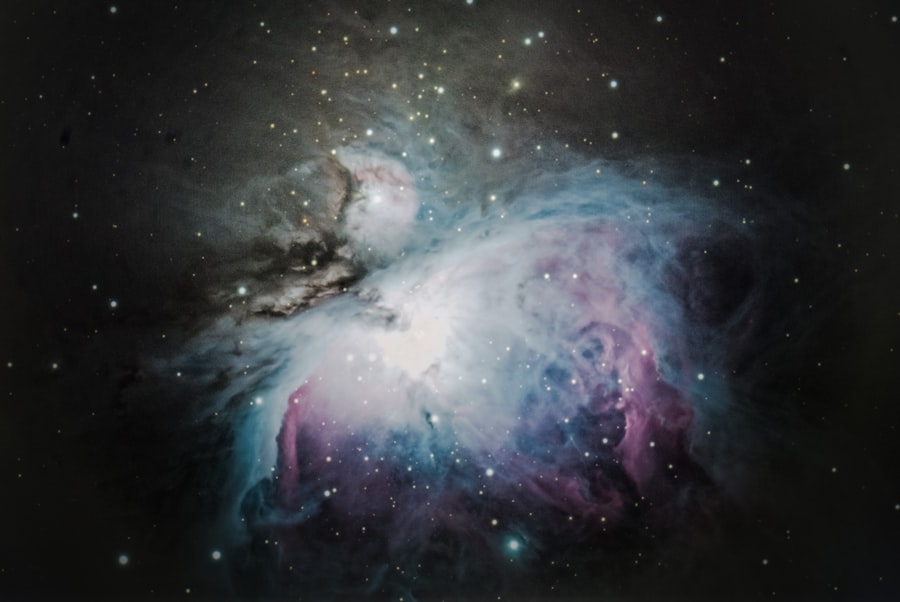
The prevailing model for galaxy formation is hierarchical structure formation, often referred to as the Lambda-CDM (Lambda-Cold Dark Matter) model. This model posits that larger structures, such as galaxies and galaxy clusters, form through the gravitational assembly of smaller structures. It’s a bottom-up approach, where small dark matter halos merge to form larger ones, dragging baryonic matter along with them.
Mergers and Accretion
Galaxy mergers are a fundamental process in hierarchical formation. When two or more galaxies approach each other, their mutual gravitational attraction can lead to a collision. These collisions are rarely head-on impacts in the sense of solid objects; rather, they are extended periods of gravitational interaction, during which galaxies warp, stretch, and eventually merge their stellar populations and gas reservoirs. Mergers can trigger bursts of star formation, called starbursts, as gas is compressed and efficiently converted into new stars. They also play a crucial role in the growth of supermassive black holes at galactic centers. Imagine two rivers converging, not as a violent crash, but as a gradual intertwining of currents, eventually forming a larger, more powerful waterway.
Cold Gas Accretion and Disc Formation
Another vital mechanism in galaxy growth is the accretion of cold gas from the intergalactic medium. This process is particularly important for the formation of disc galaxies, like our own Milky Way. As gas cools and falls into the gravitational well of a dark matter halo, it settles into a rotating disc, where it can efficiently form stars. This continuous infall of fresh gas provides the fuel for ongoing star formation throughout the lifetime of a disc galaxy. Think of the gas as rain falling into a pond, gradually filling it and providing the essential water for life.
Morphological Diversity of Galaxies
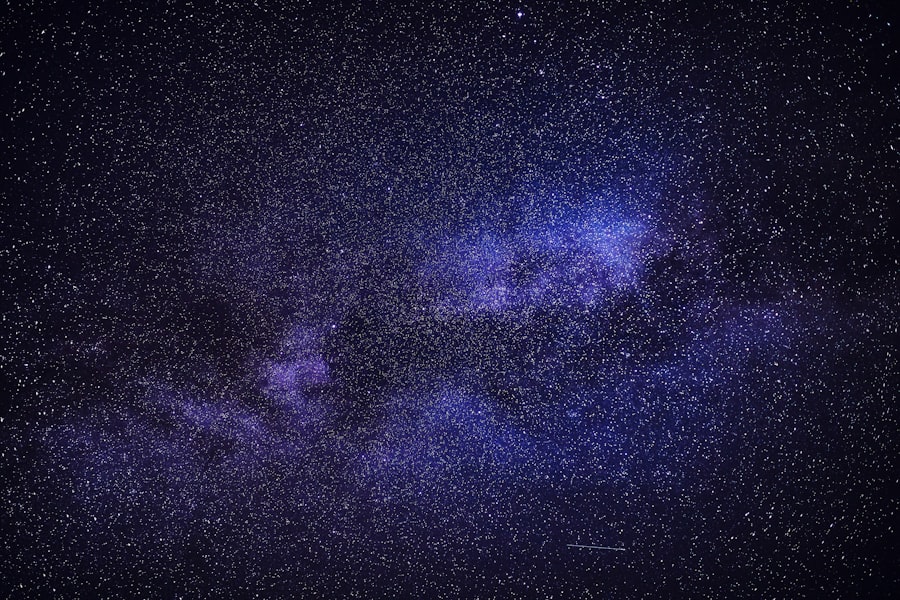
Galaxies exhibit a stunning array of morphologies, from the elegant spirals with their prominent arms to the smooth, featureless ellipticals and the chaotic irregulars. The hierarchical formation model, coupled with various physical processes, helps to explain this observed diversity.
Spiral Galaxies: Ordered Star Formation
Spiral galaxies, characterized by a central bulge and a flattened disc with spiral arms, are typically found in less dense environments. Their discs are rich in gas and dust, providing a continuous supply for ongoing star formation, particularly within the spiral arms. The spiral arms themselves are thought to be density waves, or regions where gas and dust are temporarily compressed, triggering new star formation. The rotation of the disc is a key factor in maintaining their characteristic spiral structure. Visualize a celestial whirlpool, where continuous stirring keeps the structure vibrant and dynamic.
Elliptical Galaxies: Mergers and Star Formation Quenching
Elliptical galaxies, conversely, are spheroidally shaped with little to no discernible disc and often appear redder, indicating an older stellar population and a lack of ongoing star formation. They are more prevalent in dense environments, such as galaxy clusters. Ellipticals are widely believed to form through the mergers of smaller galaxies, particularly spiral galaxies. These mergers can deplete the gas reserves, either by consuming it in starbursts or by expelling it through feedback mechanisms, effectively “quenching” star formation. The resulting galaxy is a massive, slowly rotating system with a more uniform distribution of stars. Imagine the fusion of two vibrant watercolors, blending into a more subdued, homogeneous hue.
Irregular Galaxies and Environmental Influences
Irregular galaxies, as their name suggests, lack a defined structure. They are often smaller than spirals and ellipticals and can be rich in gas and actively forming stars. Irregulars can arise from interactions between galaxies, or they may be dwarf galaxies that have not yet undergone significant evolutionary processes. Environmental factors also play a crucial role in shaping galaxies. For instance, galaxies in dense clusters can experience “ram-pressure stripping,” where the hot gas in the cluster exerts pressure on the galaxy’s gas, stripping it away and halting star formation. This acts as a cosmic broom, sweeping away the lifeblood of stars.
Galaxy formation is a fascinating process that has intrigued astronomers for decades, shedding light on the evolution of the universe. Recent studies have explored various aspects of this phenomenon, including the role of dark matter and the influence of cosmic radiation. For those interested in delving deeper into this subject, a related article can be found at My Cosmic Ventures, which discusses the latest discoveries and theories surrounding the birth and development of galaxies. Understanding these processes not only enhances our knowledge of the cosmos but also helps us appreciate our place within it.
Future Research and Unanswered Questions
| Metric | Description | Typical Value / Range | Units |
|---|---|---|---|
| Redshift (z) | Measure of the universe’s expansion; indicates galaxy formation epoch | 6 to 10 (early galaxies) | Dimensionless |
| Star Formation Rate (SFR) | Rate at which new stars form in a galaxy | 0.1 to 100 | Solar masses per year (M☉/yr) |
| Galaxy Mass | Total mass including stars, gas, and dark matter | 10^7 to 10^12 | Solar masses (M☉) |
| Gas Fraction | Ratio of gas mass to total baryonic mass in a galaxy | 0.1 to 0.9 | Fraction |
| Metallicity (Z) | Abundance of elements heavier than helium | 0.0001 to 0.03 | Fraction of solar metallicity |
| Dark Matter Halo Mass | Mass of the dark matter halo hosting the galaxy | 10^10 to 10^15 | Solar masses (M☉) |
| Galaxy Size | Typical radius of a galaxy | 1 to 50 | kiloparsecs (kpc) |
| Age of Galaxy | Time since galaxy formation | 0.5 to 13.5 | Billion years (Gyr) |
Despite significant strides in understanding galaxy formation, numerous mysteries persist, driving ongoing research in astrophysics. The universe continues to offer new puzzles, pushing the boundaries of our knowledge.
The Role of Feedback Mechanisms
While feedback from supernovae and active galactic nuclei is recognized as critical, the precise mechanisms and their quantitative impact on galaxy evolution are still areas of active investigation. How exactly do these energetic outbursts regulate star formation, and what are their long-term consequences for galaxy morphology and mass assembly? Researchers are employing increasingly sophisticated simulations and observational techniques to unravel these complex interactions. This is akin to understanding the intricate feedback loops in a complex ecosystem, where every action has ripple effects.
The Small-Scale Structure Problem and Dark Matter
The Lambda-CDM model, while remarkably successful at large scales, faces challenges at smaller scales, particularly concerning the predicted number of small dark matter halos. Theoretical models often predict more dwarf galaxies than are actually observed. This “small-scale structure problem” could point to limitations in our understanding of dark matter properties or the intricate baryonic processes that regulate dwarf galaxy formation. This presents a fascinating challenge, reminding us that even successful models can have unresolved nuances at specific scales.
Early Galaxy Formation and Reionization Epoch
Observations of the earliest galaxies, just a few hundred million years after the Big Bang, are pushing the limits of current telescopes like the James Webb Space Telescope. These observations are crucial for understanding the initial conditions of galaxy formation and the precise timeline of reionization. How quickly did the first stars form, and how did they contribute to the reionization of the universe? These fundamental questions are at the forefront of observational cosmology. Peering into these early cosmic epochs is like looking at the first pages of a grand saga, where the initial twists and turns set the stage for everything that follows.
The Co-evolution of Galaxies and Supermassive Black Holes
There is compelling evidence that galaxies and their central supermassive black holes co-evolve, influencing each other’s growth and properties. The exact nature of this symbiotic relationship, however, remains a subject of intense scrutiny. What triggered the initial growth of these black holes, and how do their feedback mechanisms precisely impact the star formation histories and morphologies of their host galaxies? Unraveling this cosmic dance requires a deep understanding of both stellar and gravitational physics. This intertwined story of cosmic giants reveals a profound interconnectedness in the universe.
The unraveling of galaxy formation is a monumental scientific endeavor, combining observational astronomy with theoretical astrophysics and sophisticated numerical simulations. Each new discovery refines our understanding of the universe’s grand narrative, pushing the boundaries of human knowledge and revealing the intricate beauty of cosmic evolution. The journey to fully comprehend how galaxies came to be is an ongoing exploration, promising many more captivating revelations in the years to come.
FAQs
What is galaxy formation?
Galaxy formation is the process by which gas, dust, and dark matter in the early universe coalesce under gravity to form galaxies, which are large systems of stars, stellar remnants, interstellar gas, dust, and dark matter.
When did galaxy formation begin in the universe?
Galaxy formation began several hundred million years after the Big Bang, roughly around 100 to 500 million years post-Big Bang, during a period known as the Cosmic Dawn.
What are the main types of galaxies formed?
The main types of galaxies formed include spiral galaxies, elliptical galaxies, and irregular galaxies, each differing in shape, size, and star formation activity.
What role does dark matter play in galaxy formation?
Dark matter provides the gravitational framework that helps gas and dust collapse to form galaxies. It forms large halos that attract normal matter, facilitating the formation and growth of galaxies.
How do astronomers study galaxy formation?
Astronomers study galaxy formation through observations using telescopes across various wavelengths (optical, infrared, radio), computer simulations, and by analyzing the light from distant galaxies to understand their structure and evolution over time.