
The vast cosmos, stretching beyond comprehension and twinkling with an astonishing array of stars and galaxies, is a spectacle that has captivated humanity for millennia. Yet, beneath this observable beauty lies a profound enigma, a cosmic ghost that influences the very fabric of the universe but remains stubbornly invisible to our instruments. This phantom substance is known as dark matter, and its presence, though indirect, is as certain as the dawn. Scientists have pieced together a compelling, albeit incomplete, picture of this elusive component of reality, unraveling its mysteries bit by bit.
The journey to understand dark matter began not with a direct observation, but with a subtle discrepancy in gravitational behavior. In the early 20th century, Swiss astronomer Fritz Zwicky, while studying the Coma Cluster of galaxies, noticed something peculiar. The galaxies within the cluster were moving far too rapidly, their velocities suggesting that the cluster should have flown apart eons ago if only the visible matter were present. He proposed that an unseen, massive component must be providing the extra gravitational glue to hold the cluster together. This was an early hint that our luminous inventory of the universe was woefully incomplete.
Galaxy Rotation Curves: A Persistent Puzzle
Decades later, astronomer Vera Rubin and her colleagues provided even stronger evidence through the study of individual galaxies. They painstakingly measured the rotational speeds of stars and gas within spiral galaxies, from the bright, central regions to the faint outer fringes. According to Newtonian physics, the further an object is from the center of mass, the slower it should orbit, much like planets in our solar system orbit the Sun at speeds inversely proportional to their distance. However, Rubin’s observations revealed a startling pattern: stars and gas in the outer reaches of galaxies were orbiting just as fast, if not faster, than those closer to the center. This observation, replicated across hundreds of galaxies, was akin to finding a merry-go-round spinning at the same speed at its edge as it does at its hub – a clear indication that there was a significant amount of unseen mass extending far beyond the visible disk of the galaxy, dictating its rotation.
Galaxy Clusters: Not Just Galaxies in Isolation
The evidence from galaxy clusters, first noted by Zwicky, continued to accumulate and strengthen. Observations of the X-ray emissions from hot gas trapped within galaxy clusters revealed that this gas was far hotter and more energetic than could be explained by the gravitational pull of the visible galaxies alone. To contain this superheated gas and prevent it from dissipating into the void, a much larger gravitational potential well was required, a well created by a substantial amount of unseen matter. The dynamics of colliding galaxy clusters, such as the Bullet Cluster, provided a particularly striking visual metaphor. In these collisions, the visible matter (galaxies) pass through each other, while the hot gas, made of ordinary baryonic matter, interacts and slows down. Yet, the inferred distribution of mass, mapped through gravitational lensing (discussed below), shows a clear separation from the baryonic matter, with the bulk of the mass following the path of the galaxies, a behavior consistent with non-interacting dark matter.
Recent studies in astrophysics have shed light on the enigmatic nature of dark matter, a substance that makes up a significant portion of the universe’s mass yet remains largely undetectable. For a deeper understanding of the latest theories and discoveries surrounding dark matter, you can read the related article available at My Cosmic Ventures. This article explores various hypotheses and the ongoing research efforts aimed at unraveling the mysteries of this elusive component of our universe.
The Cosmic Web and Large-Scale Structure
Dark matter is not merely a local phenomenon confined to galaxies and clusters. Its influence permeates the universe on the grandest scales, shaping the very architecture of the cosmos. The distribution of galaxies and galaxy clusters is not random; they are organized into vast filaments and voids, forming what is often referred to as the “cosmic web.”
Structure Formation: The Cosmic Scaffolding
Cosmological simulations demonstrate that the observed large-scale structure of the universe can only arise if dark matter played a crucial role in its early development. In the very early universe, matter was distributed almost uniformly, with tiny fluctuations in density. These slight overdensities acted as gravitational seeds. Because dark matter does not interact with light, it could begin to clump together under its own gravity much earlier than baryonic matter, which was still coupled to photons and experiencing outward pressure. This early clumping of dark matter created gravitational potential wells, which then attracted baryonic matter. This process is akin to laying down an invisible scaffolding upon which the visible universe was built, guiding the formation of galaxies and galaxy clusters along these dark matter filaments. Without this early gravitational influence, the structures we see today would not have had enough time to form.
Gravitational Lensing: Bending Light with Invisible Mass
One of the most powerful tools for detecting the presence and mapping the distribution of dark matter is gravitational lensing. As predicted by Einstein’s theory of general relativity, massive objects warp the fabric of spacetime, causing light to bend as it passes by. This phenomenon can distort, magnify, or even create multiple images of distant background galaxies. By analyzing these distortions, astronomers can effectively map the distribution of mass in the foreground, even if that mass is invisible. Surveys of galaxy clusters and individual galaxies have consistently shown that the mass required to produce the observed lensing effects is far greater than the mass accounted for by visible stars and gas. The light from distant quasars, passing through intervening galaxies, is bent, creating a distorted arc or multiple images; the degree of bending directly tells us about the total mass responsible for the lensing, much of which is revealed to be dark matter.
What is Dark Matter Made Of? The Elusive Candidates
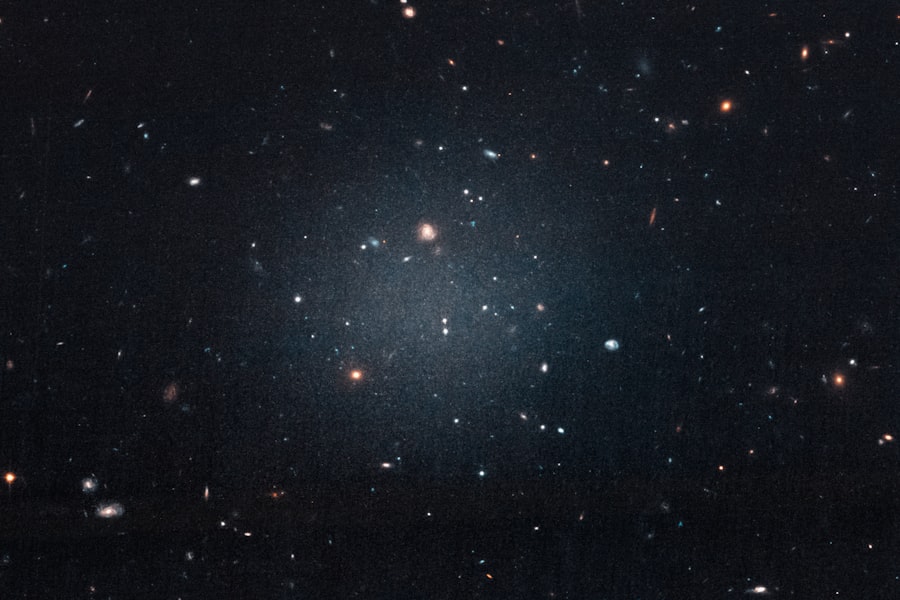
Despite the overwhelming evidence for its existence, the fundamental nature of dark matter remains one of the greatest unsolved mysteries in physics. Scientists have proposed numerous candidates, each with its own strengths and weaknesses, but none have yet been definitively confirmed.
Weakly Interacting Massive Particles (WIMPs): The Leading Contenders
For a long time, the favored candidates for dark matter were Weakly Interacting Massive Particles, or WIMPs. These are hypothetical particles that are massive, meaning they have significant mass, and weakly interacting, meaning they only interact through gravity and the weak nuclear force, but not the electromagnetic force (which is why they don’t emit or absorb light). This would explain why they are so difficult to detect. Theories such as supersymmetry predict the existence of such particles, often referred to as neutralinos. Extensive experimental efforts have been undertaken to directly detect WIMPs by looking for the faint recoils of atomic nuclei in highly sensitive underground detectors when a WIMP particle theoretically collides with them. However, despite years of searching, these experiments have yet to yield a conclusive detection, leading some to question the WIMP hypothesis.
Axions: A Lighter Proposition
Another class of candidates gaining traction are axions. These are extremely light, hypothetical elementary particles proposed to solve a problem in quantum chromodynamics, the theory describing the strong nuclear force. Axions are also weakly interacting and could potentially make up a significant fraction of dark matter. Experiments are underway to detect axions by looking for their conversion into photons in the presence of strong magnetic fields. While conceptually different from WIMPs, axions also possess the necessary properties to be invisible and gravitationally influential.
Sterile Neutrinos: The Ghostly Relatives of Known Particles
Neutrinos are well-known subatomic particles that are almost massless and interact only via the weak force and gravity. They are considered “active” neutrinos because they participate in the weak interaction. A hypothetical type of neutrino, called a “sterile neutrino,” would interact even more weakly, making it even more elusive. If sterile neutrinos exist and have the right mass, they could contribute to or even constitute all of dark matter. However, their existence is also purely theoretical and has not been experimentally verified.
Primordial Black Holes: The Unexpected Possibility
While the focus has largely been on elementary particles, some scientists have revived the idea that dark matter could be composed of primordial black holes. These would be black holes that formed in the very early universe from the collapse of dense regions, rather than from the gravitational collapse of stars. If these black holes are sufficiently small, they would not emit detectable radiation as they accrete matter, and their gravitational influence would be significant. However, observational constraints on the abundance and mass distribution of such primordial black holes are quite stringent, and current evidence suggests they are unlikely to account for the entirety of dark matter.
The Unseen Influence: Dark Energy and the Expanding Universe
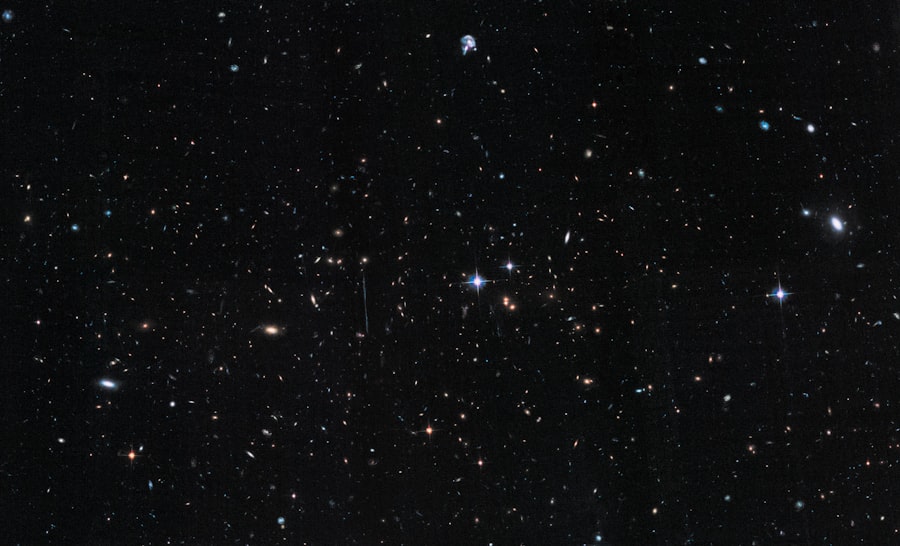
While dark matter addresses the “missing mass” problem and explains the gravitational scaffolding of cosmic structures, it is not the only invisible component shaping the universe’s destiny. The discovery of the accelerating expansion of the universe has introduced another, even more perplexing, cosmic entity: dark energy.
The Accelerating Universe: A Cosmic Surprise
In the late 1990s, two independent teams of astronomers studying distant supernovae made a groundbreaking discovery. Supernovae of a particular type, called Type Ia, act as “standard candles” – their intrinsic brightness is known, allowing astronomers to calculate their distance from Earth based on their apparent brightness. By measuring the redshift of these supernovae, which indicates how much the universe has expanded since the light was emitted, these astronomers were able to map the expansion history of the universe. To their astonishment, they found that the expansion was not slowing down, as expected due to gravity, but was instead accelerating. This implies the existence of a repulsive force counteracting gravity on cosmic scales.
The Cosmological Constant and Beyond
The simplest explanation for this acceleration is the cosmological constant, a term that Albert Einstein initially introduced into his equations of general relativity to maintain a static universe, but later abandoned. This constant represents a uniform energy density inherent to spacetime itself. However, theoretical calculations for the vacuum energy density are vastly larger than what is observed, posing a significant fine-tuning problem. Alternative explanations for dark energy involve dynamic fields that change over time and space, such as “quintessence.” Regardless of its exact nature, dark energy is estimated to constitute about 70% of the total energy density of the universe, making it the dominant component, while dark matter makes up about 25%, and ordinary baryonic matter a mere 5%.
Recent studies in astrophysics have shed light on the enigmatic nature of dark matter, revealing its crucial role in the formation of galaxies and the overall structure of the universe. For those interested in exploring this topic further, a fascinating article can be found at My Cosmic Ventures, which delves into the latest discoveries and theories surrounding dark matter. Understanding these concepts not only enhances our knowledge of the cosmos but also raises intriguing questions about the fundamental nature of reality itself.
The Quest for Detection: Experimental Frontiers
| Metric | Value | Unit | Description |
|---|---|---|---|
| Estimated Percentage of Universe’s Mass-Energy | 27% | Percent | Proportion of total mass-energy content attributed to dark matter |
| Density in Milky Way Halo | 0.3 | GeV/cm³ | Local dark matter density near the Solar System |
| Particle Mass Range (WIMPs) | 10 – 1000 | GeV/c² | Hypothetical mass range for Weakly Interacting Massive Particles |
| Velocity Dispersion in Galaxy Clusters | 1000 | km/s | Typical velocity spread of galaxies influenced by dark matter gravity |
| Dark Matter Halo Radius (Milky Way) | 150 | kpc | Approximate radius of the Milky Way’s dark matter halo |
| Gravitational Lensing Effect | Varies | Magnitude | Deflection of light by dark matter in galaxy clusters |
The pursuit of understanding dark matter is a vibrant and ongoing endeavor, marked by ingenious experimental techniques and a relentless drive to push the boundaries of scientific discovery. Scientists are employing a multi-pronged approach, attempting to detect dark matter through direct interactions, indirect signals, and by recreating conditions that might have produced it.
Direct Detection Experiments: Listening for a Whisper
Direct detection experiments aim to observe the rare occasions when a dark matter particle might collide with the nucleus of an atom in a highly sensitive detector. These detectors are typically placed deep underground, shielded from cosmic rays and other background radiation that could mimic a dark matter signal. Examples include laboratories like the Gran Sasso National Laboratory in Italy, which houses experiments such as XENONnT and LUX-ZEPLIN (LZ). These detectors, filled with noble liquids like xenon, are designed to register the faint flashes of light or ionization produced when a dark matter particle strikes a xenon nucleus. The challenge lies in distinguishing these extremely rare events from the persistent hum of background noise.
Indirect Detection: Looking for Cosmic Clues
Indirect detection experiments search for the byproducts of dark matter annihilation or decay. If dark matter particles are their own antiparticles, they could annihilate when they meet, producing detectable particles such as gamma rays, neutrinos, or antimatter. Telescopes like the Fermi Gamma-ray Space Telescope and the IceCube Neutrino Observatory are employed to look for these faint astrophysical signals coming from regions where dark matter is expected to be abundant, such as the galactic center or dwarf galaxies. Similarly, experiments like the Alpha Magnetic Spectrometer (AMS-02) on the International Space Station search for an excess of positrons or antiprotons in cosmic rays, which could be indicative of dark matter annihilation.
Collider Experiments: Recreating the Conditions
While not directly detecting dark matter, particle accelerators like the Large Hadron Collider (LHC) at CERN are crucial for exploring the fundamental physics that underpins potential dark matter candidates. By smashing protons together at incredibly high energies, scientists can recreate conditions similar to those that existed shortly after the Big Bang. If dark matter particles are produced in these collisions, they would escape detection directly but would leave a signature of missing energy and momentum in the detector. Analyzing these events could reveal new particles and interactions that shed light on the nature of dark matter. This approach is akin to carefully examining the debris from a cosmic event to infer the properties of the original players.
The Horizon of Knowledge: Future Directions and Implications
The mysteries of dark matter and dark energy are not merely academic curiosities; they represent fundamental questions about the composition, evolution, and ultimate fate of our universe. The ongoing quest to unravel these cosmic enigmas holds profound implications for our understanding of physics and our place within the grand cosmic tapestry.
The Standard Model’s Limitations and New Physics
The existence of dark matter and dark energy strongly suggests that our current understanding of fundamental physics, embodied by the Standard Model of particle physics, is incomplete. The Standard Model describes all known fundamental particles and forces, but it makes no provision for these dominant components of the universe. The discovery of dark matter almost certainly points towards the existence of new particles and potentially new forces that lie beyond the Standard Model. This drive for new physics is a powerful motivator for theoretical and experimental research.
Cosmological Implications: Shaping Our Future
Understanding dark matter and dark energy is crucial for accurately modeling the evolution of the universe and predicting its ultimate fate. The balance between the attractive force of gravity (driven by dark matter and ordinary matter) and the repulsive “force” of dark energy dictates whether the universe will continue to expand forever, eventually reach a state of equilibrium, or possibly even collapse in on itself. Precise measurements of the properties of dark matter and dark energy are essential for refining our cosmological models and offering a clearer picture of our cosmic destiny.
Technological Advancements and Interdisciplinary Collaboration
The pursuit of the unseen has always been a catalyst for technological innovation. The sophisticated detectors, sensitive telescopes, and powerful computing resources required for dark matter research are pushing the boundaries of engineering and computer science. Furthermore, unraveling these cosmic mysteries necessitates close collaboration between particle physicists, astrophysicists, cosmologists, and computer scientists, fostering an interdisciplinary approach that is essential for tackling such complex challenges.
The universe, it seems, holds more secrets than can be readily seen. Dark matter, though invisible, is an undeniable force that shapes galaxies, clusters, and the very large-scale structure of the cosmos. The quest to understand its true nature is a testament to humanity’s insatiable curiosity and our enduring desire to comprehend the universe we inhabit. As scientists continue to probe the cosmic darkness, they are not only seeking to solve a profound mystery but also to expand the very frontiers of human knowledge, revealing the hidden architecture of reality.

WATCH NOW ▶️ Dark energy is deleting the universe proof
FAQs
What is dark matter?
Dark matter is a form of matter that does not emit, absorb, or reflect light, making it invisible to current telescopes. It is believed to make up about 27% of the universe’s total mass and energy.
How do scientists know dark matter exists if it cannot be seen?
Scientists infer the existence of dark matter through its gravitational effects on visible matter, such as the rotation curves of galaxies, gravitational lensing, and the large-scale structure of the universe.
What are the leading theories about the composition of dark matter?
The leading theories suggest dark matter is composed of unknown particles that do not interact with electromagnetic forces. Candidates include Weakly Interacting Massive Particles (WIMPs), axions, and sterile neutrinos.
How does dark matter affect the formation of galaxies?
Dark matter provides the gravitational scaffolding necessary for galaxies to form and hold together. Its presence helps explain why galaxies rotate at the speeds they do without flying apart.
Can dark matter be detected directly?
Direct detection of dark matter remains a challenge. Experiments using highly sensitive detectors deep underground aim to observe rare interactions between dark matter particles and ordinary matter, but no conclusive detection has been made yet.