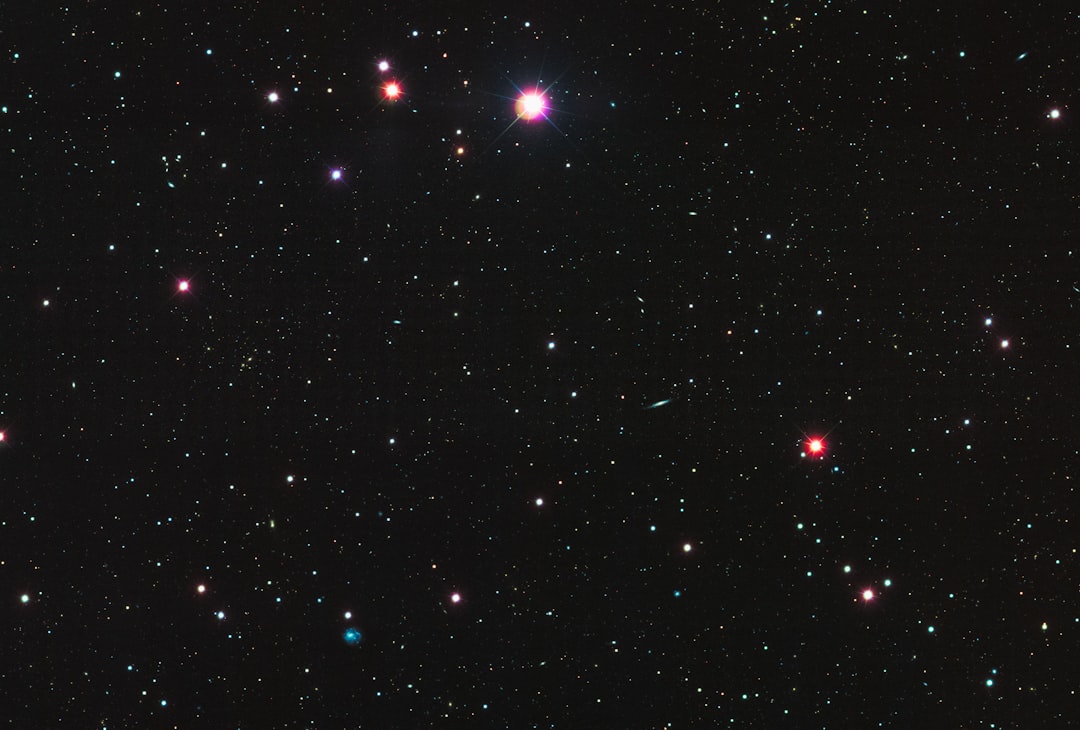
The cosmos, a grand stage for celestial ballet, is far from what it appears. While stars blaze, galaxies swirl, and nebulae paint the void with cosmic hues, a significant portion of the universe remains shrouded in enigma. This unseen architect, this ghostly presence, is known to scientists as dark matter. It is a substance that defies direct observation, interacting only through its gravitational influence, yet its existence is compellingly inferred from a wealth of astronomical data. Understanding dark matter is not merely an academic pursuit; it is a quest to decipher the fundamental fabric of reality, to peel back the layers of cosmic deception and reveal the universe’s true composition.
The concept of dark matter didn’t arise from idle speculation; it emerged as a necessary explanation for phenomena that classical physics, as understood in the early 20th century, could not account for. Imagine trying to understand the movement of a bustling marketplace by only observing the customers. You see them moving, interacting, but you don’t see the underlying infrastructure – the streets, the buildings, the stalls – that facilitates their activity. Dark matter is that unseen infrastructure of the universe.
Galactic Rotation Curves: The First Disturbing Clues
One of the most compelling pieces of early evidence for dark matter came from the study of how galaxies rotate. Fritz Zwicky, in the 1930s, observed the Coma Cluster of galaxies and noted that the galaxies within it were moving much faster than expected. Based on the visible luminous matter (stars and gas) in the cluster, there wasn’t enough gravitational pull to hold these galaxies together. They should have been flung apart, like a carousel spinning too fast for its riders to hold on.
Later, in the 1960s and 70s, Vera Rubin and her colleagues embarked on a meticulous study of spiral galaxies. They measured the speed at which stars and gas clouds orbited the galactic center at various distances. The expectation, based on Newton’s laws of gravity and the distribution of visible matter, was that orbital speeds would decrease as one moved further from the galactic center, much like planets in our solar system orbit slower the further they are from the Sun. Instead, Rubin’s observations revealed a peculiar flat curve: stars and gas in the outer regions of galaxies were orbiting just as fast, if not faster, than those closer to the center. This defied expectations; it was as if there was an invisible gravitational halo surrounding each galaxy, providing an extra tug that kept these outer stars tethered. This “anomalous galactic rotation” was the first strong whisper of something unseen, something massive, dominating the gravitational landscape of galaxies.
Galaxy Clusters: More Speed, More Mystery
The observations of galaxy clusters by Zwicky were not isolated incidents. Subsequent studies of other clusters yielded similar results. The velocities of individual galaxies within these clusters, when summed up, indicated a mass far exceeding that which could be accounted for by the visible galaxies and the hot gas observed between them. This “missing mass” problem in galaxy clusters became a persistent puzzle. The gravitational potential well of these clusters, determined by the observed matter, was too shallow to contain the speeds of the galaxies within them.
The Virial Theorem and its Discrepancies
The Virial Theorem, a fundamental concept in physics, relates the kinetic energy of a gravitationally bound system to its potential energy. For a system to be stable, its kinetic energy (related to the speed of its components) must be balanced by its potential energy (related to the gravitational force). Applying the Virial Theorem to galaxy clusters revealed a significant discrepancy. The observed kinetic energies of the galaxies were far too high for the gravitational potential energy provided by the visible matter. This strongly suggested that a substantial amount of unseen mass was contributing to the gravitational binding of these clusters, lending further weight to the dark matter hypothesis.
Gravitational Lensing: Bending Light, Revealing Mass
Gravitational lensing offers a more direct, albeit indirect, way to “see” mass. Imagine light as a flowing river. Massive objects, like galaxies and galaxy clusters, warp the fabric of spacetime around them, acting like cosmic lenses. This warping bends the path of light from distant objects, distorting their images. Strong gravitational lensing can create multiple, magnified images of a single background object, or even arcs and rings resembling Einstein’s cross. Weak gravitational lensing, subtle distortions spread across vast areas of the sky, can be statistically analyzed to map the distribution of mass.
By studying how the light from distant quasars and galaxies is bent by intervening galaxy clusters, astronomers can precisely map the distribution of mass within those clusters. These lensing maps consistently reveal that the majority of the mass is not associated with the visible galaxies but is spread out in a smooth, extended halo. This distribution of mass precisely aligns with the predictions for dark matter, acting as an invisible gravitational lens that shapes the appearance of the universe. It’s like seeing the effect of a strong wind on a field of grass – you don’t see the wind itself, but you see its undeniable impact.
Cosmic Microwave Background Radiation: Echoes of the Early Universe
The Cosmic Microwave Background (CMB) radiation is the afterglow of the Big Bang, a faint whisper of the universe’s infancy, approximately 380,000 years after its birth. This radiation, observed in all directions of the sky, contains subtle temperature fluctuations. These fluctuations are incredibly important as they represent the seeds from which the large-scale structure of the universe, including galaxies and clusters, eventually grew.
The precise pattern of these fluctuations, as measured by missions like WMAP and Planck, is exquisitely sensitive to the composition of the early universe. Cosmological models that include dark matter are remarkably successful at explaining the observed CMB anisotropy. Without dark matter, the peaks and troughs in the CMB power spectrum would look dramatically different, failing to match the observational data. This means that the very blueprint of the universe, as imprinted on the CMB, points to the existence and abundance of dark matter. It’s akin to analyzing the composition of a cake by examining the patterns in its crumbs – the patterns reveal the ingredients that were present during its creation.
Dark matter continues to be one of the most intriguing mysteries in astrophysics, and recent research has shed light on its potential properties and implications for the universe. For those interested in exploring this topic further, a related article can be found at this link, where you can delve into the latest findings and theories surrounding dark matter and its role in cosmic evolution.
The Invisible Menace: Properties of Dark Matter
While we cannot see dark matter directly, astronomers have been able to deduce some of its fundamental properties based on its observed gravitational effects. These properties paint a picture of a substance that is both elusive and profoundly influential.
Non-Baryonic Nature: Not Our Familiar Stuff
The term “baryonic” refers to matter made of baryons, which are subatomic particles like protons and neutrons – the building blocks of atoms. The luminous matter we see in the universe – stars, planets, gas clouds, and ourselves – is all baryonic. However, the evidence strongly suggests that dark matter is not baryonic.
Constraints from Big Bang Nucleosynthesis
The abundance of light elements (hydrogen, helium, lithium) formed in the Big Bang, a process known as Big Bang Nucleosynthesis (BBN), is precisely predicted by models that take into account the total amount of baryonic matter in the universe. The observed abundances of these elements fit remarkably well with a cosmic composition where baryonic matter accounts for only about 4-5% of the total energy density of the universe. The vast majority, however, is composed of dark matter and dark energy. If dark matter were baryonic, its contribution would significantly alter these predicted abundances, which would then contradict the observed ratios of light elements. This incompatibility is a powerful argument against dark matter being composed of ordinary atoms.
Cold and Collisionless: A Gentle Giant
The term “cold” in the context of dark matter refers not to its temperature in the everyday sense, but rather to its velocity in the early universe. “Cold dark matter” (CDM) particles were moving non-relativistically (much slower than the speed of light) during the era of structure formation. This slow movement allowed for the clumping and gravitational collapse of matter, forming the large-scale structures we observe today. In contrast, “hot dark matter” (HDM) particles, moving at relativistic speeds, would have smoothed out these initial density fluctuations, preventing the formation of galaxies and clusters as we know them.
Furthermore, dark matter appears to be “collisionless,” meaning it interacts very weakly, if at all, with itself and with ordinary matter through forces other than gravity. This is why it forms extended halos around galaxies rather than dense, compact objects. Unlike gas particles that collide and heat up, dark matter particles stream through each other without losing significant energy or momentum. This property is crucial for the formation and stability of the cosmic web, the vast network of filaments and voids that connects galaxies and clusters.
Electrically Neutral: The Ghostly Demeanor
A key characteristic of dark matter is its apparent lack of interaction with the electromagnetic force. This means it does not absorb, emit, or scatter light, which is why it is invisible to our telescopes. If dark matter particles were electrically charged, they would readily interact with photons, and we would be able to detect them through their electromagnetic signatures. Their neutrality is a defining aspect of their elusive nature.
Searching for the Elusive: Detection Strategies

The elusive nature of dark matter presents a formidable challenge to scientists. Nevertheless, a multi-pronged approach is underway, employing ingenious methods to either directly or indirectly detect these phantom particles. The search is like trying to catch ghosts in a haunted house – you don’t see them, but you might detect the chill in the air or the bump of a spectral footstep.
Direct Detection Experiments: Listening for Whispers
Direct detection experiments aim to observe the rare instances when a dark matter particle might collide with an atomic nucleus in a highly sensitive detector. These detectors are typically placed deep underground, shielded from cosmic rays and other background radiation that could mimic a dark matter signal. The principle is to create an environment so pure and quiet that even a faint whisper from a dark matter particle can be heard.
The Principle of Recoil
When a dark matter particle (hypothesized to be a Weakly Interacting Massive Particle, or WIMP) passes through a detector material (such as liquid xenon or germanium crystals), it may occasionally interact with an atomic nucleus. This interaction would cause the nucleus to recoil, imparting a tiny amount of energy. Detectors are designed to register this recoil through various means, such as detecting the faint flash of light (scintillation), the production of heat (phonons), or the ionization of atoms. Examples include experiments like LUX-ZEPLIN (LZ), XENONnT, and SuperCDMS. The challenge lies in distinguishing these rare events from the constant bombardment of background noise.
Indirect Detection: Looking for Cosmic Clues
Indirect detection experiments search for the byproducts of dark matter annihilation or decay. If dark matter particles are their own antiparticles, they could annihilate each other upon collision, producing detectable Standard Model particles like gamma rays, neutrinos, or antimatter. Alternatively, some theorized dark matter particles might decay over very long timescales, also producing such byproducts.
Astrophysical Observatories
Telescopes specifically designed to detect high-energy photons (gamma rays) and neutrinos, such as the Fermi Gamma-ray Space Telescope, the Cherenkov Telescope Array (CTA, under construction), and neutrino observatories like IceCube, are employed in this search. Scientists look for an excess of these particles coming from regions where dark matter is expected to be abundant, such as the galactic center or dwarf spheroidal galaxies. These observations are like searching for smoke signals rising from a hidden forest.
Collider Searches: Forcing a Revelation
Particle accelerators, like the Large Hadron Collider (LHC) at CERN, are designed to smash particles together at extremely high energies. The goal is to recreate the conditions of the early universe and potentially produce dark matter particles. If dark matter is indeed part of a larger theoretical framework, such as supersymmetry, then it might be created in these collisions.
Missing Energy Signatures
Detectors at colliders are designed to measure the energy and momentum of all particles produced in a collision. If dark matter particles are created, they would escape the detector without leaving a trace. This would manifest as an imbalance in the total energy and momentum of the detected particles, a phenomenon known as “missing energy.” Discovering a consistent pattern of missing energy in specific types of collisions could be a strong indication of dark matter production.
The Cosmic Web: Dark Matter’s Grand Design

Dark matter plays a pivotal role in the formation and evolution of the large-scale structure of the universe, often referred to as the cosmic web. Without its gravitational influence, the universe would be a far more homogeneous and less interesting place. It is the invisible armature upon which the visible universe is built.
Inflation and Structure Formation: The Seeds of Galaxies
Following the Big Bang and an epoch of rapid expansion known as cosmic inflation, the universe was nearly uniform. However, minuscule quantum fluctuations, amplified by inflation, created slight density variations. These overdense regions acted as gravitational wells, and it was within these wells that dark matter began to accumulate. Because dark matter does not interact with radiation, it could start clumping together even when the universe was still a hot, opaque plasma.
The Role of Dark Matter Halos
As dark matter clumps aggregated, they formed massive, invisible halos. These halos then acted as gravitational beacons, attracting ordinary baryonic matter from their surroundings. As the baryonic gas fell into these dark matter halos, it cooled, condensed, and eventually ignited to form the first stars and galaxies. The distribution of these halos dictates the large-scale structure of the universe, creating the filaments and voids that characterize the cosmic web. It’s like the initial invisible framework of a spiderweb, guiding the strands that will eventually catch the dew.
The Cosmic Web: Filaments, Voids, and Clusters
The cosmic web is not a random arrangement. Observations of galaxy distributions show a clear pattern: galaxies are not spread uniformly but are found in long, filamentary structures, often intersected at nodes where galaxy clusters reside. Between these structures are vast, empty regions known as voids. This intricate cosmic architecture is a direct consequence of the initial dark matter distribution. The filaments are where dark matter density is highest, acting as cosmic highways along which galaxies have migrated and accumulated. The voids represent regions where dark matter density is lowest.
Recent discoveries in astrophysics have shed light on the elusive nature of dark matter, a mysterious substance that makes up a significant portion of the universe’s mass. For those interested in exploring this topic further, a related article discusses the latest theories and experiments aimed at understanding dark matter’s properties and its role in cosmic evolution. You can read more about these fascinating developments in the article found here.
The Future of Dark Matter Research: Unanswered Questions
| Metric | Value | Unit | Description |
|---|---|---|---|
| Estimated Mass Percentage in Universe | 27 | % | Percentage of total mass-energy content of the universe attributed to dark matter |
| Density | 0.3 | GeV/cm³ | Local dark matter density near the Solar System |
| Interaction Type | Gravitational | N/A | Primary known interaction of dark matter with ordinary matter |
| Detection Method | Indirect and Direct Detection Experiments | N/A | Methods used to infer or detect dark matter particles |
| Particle Candidates | WIMPs, Axions, Sterile Neutrinos | N/A | Hypothetical particles proposed as constituents of dark matter |
| Effect on Galaxy Rotation Curves | Significant | N/A | Dark matter explains the flat rotation curves of galaxies |
| Cosmic Microwave Background Influence | Observable | N/A | Dark matter affects the anisotropies in the CMB radiation |
Despite decades of dedicated research, the true nature of dark matter remains one of the most profound mysteries in modern physics. The ongoing quest is not just about identifying this substance, but also about understanding its implications for our understanding of gravity, particle physics, and the ultimate fate of the universe.
Identifying the Dark Matter Particle: The Quest Continues
The most pressing question is: what exactly is dark matter? Is it composed of WIMPs, axions, sterile neutrinos, or something entirely unexpected? Identifying the specific particle or particles that constitute dark matter is the holy grail of dark matter research. Each new detection experiment or theoretical advancement brings us closer to this revelation.
Alternatives to Dark Matter: Challenging Gravity
While the dark matter hypothesis is well-supported by observational evidence, some scientists explore alternative explanations that do not invoke new, unseen matter. These theories, collectively known as Modified Newtonian Dynamics (MOND) and its relativistic extensions, propose that gravity itself behaves differently on large scales than predicted by Einstein’s General Relativity.
MOND and its Successes and Limitations
MOND, for instance, suggests that the gravitational force becomes stronger at very low accelerations, such as those experienced by stars in the outer regions of galaxies. This modification of gravity can explain galactic rotation curves without the need for dark matter. However, MOND faces significant challenges when explaining phenomena on the scale of galaxy clusters and the cosmic microwave background. While it offers an intriguing alternative, the evidence for dark matter remains more widely accepted and explanatory across a broader range of cosmological observations. The debate between dark matter and modified gravity continues to fuel scientific inquiry.
The Interplay Between Dark Matter and Dark Energy: Cosmic Co-conspirators?
Dark matter is not the only invisible component of the universe. Dark energy, a mysterious force driving the accelerated expansion of the universe, accounts for about 68% of its total energy density. While dark matter acts as a cosmic sculptor, pulling matter together, dark energy acts as a cosmic repellant, pushing everything apart. Understanding the relationship, if any, between these two enigmatic constituents is a crucial next step in unraveling the universe’s grand narrative. Are they independent forces, or do they somehow influence each other? This is a cosmic question that continues to shape the future of cosmology.
The journey to unravel the mysteries of dark matter is a testament to human curiosity and the relentless pursuit of knowledge. It is a journey that transcends the visible, probing the unseen architecture of the cosmos. As scientists continue to refine their detectors, develop new theories, and analyze vast datasets, the veil of secrecy surrounding dark matter may yet be lifted, revealing a fundamental truth about our universe that has been hidden in plain sight all along.
FAQs
What is dark matter?
Dark matter is a form of matter that does not emit, absorb, or reflect light, making it invisible to current telescopes. It is believed to make up about 27% of the universe’s total mass and energy.
How do scientists know dark matter exists if it cannot be seen?
Scientists infer the existence of dark matter through its gravitational effects on visible matter, such as the rotation curves of galaxies, gravitational lensing, and the large-scale structure of the universe.
What are the leading theories about the composition of dark matter?
The leading theories suggest dark matter is composed of unknown particles that do not interact with electromagnetic forces. Candidates include Weakly Interacting Massive Particles (WIMPs), axions, and sterile neutrinos.
How does dark matter affect the formation of galaxies?
Dark matter provides the gravitational scaffolding necessary for galaxies to form and hold together. Its gravitational pull helps attract ordinary matter, leading to the formation of stars and galaxies.
Can dark matter be detected directly?
Direct detection of dark matter remains a challenge. Experiments are ongoing using highly sensitive detectors deep underground or in space to observe rare interactions between dark matter particles and ordinary matter, but no conclusive detection has been made yet.