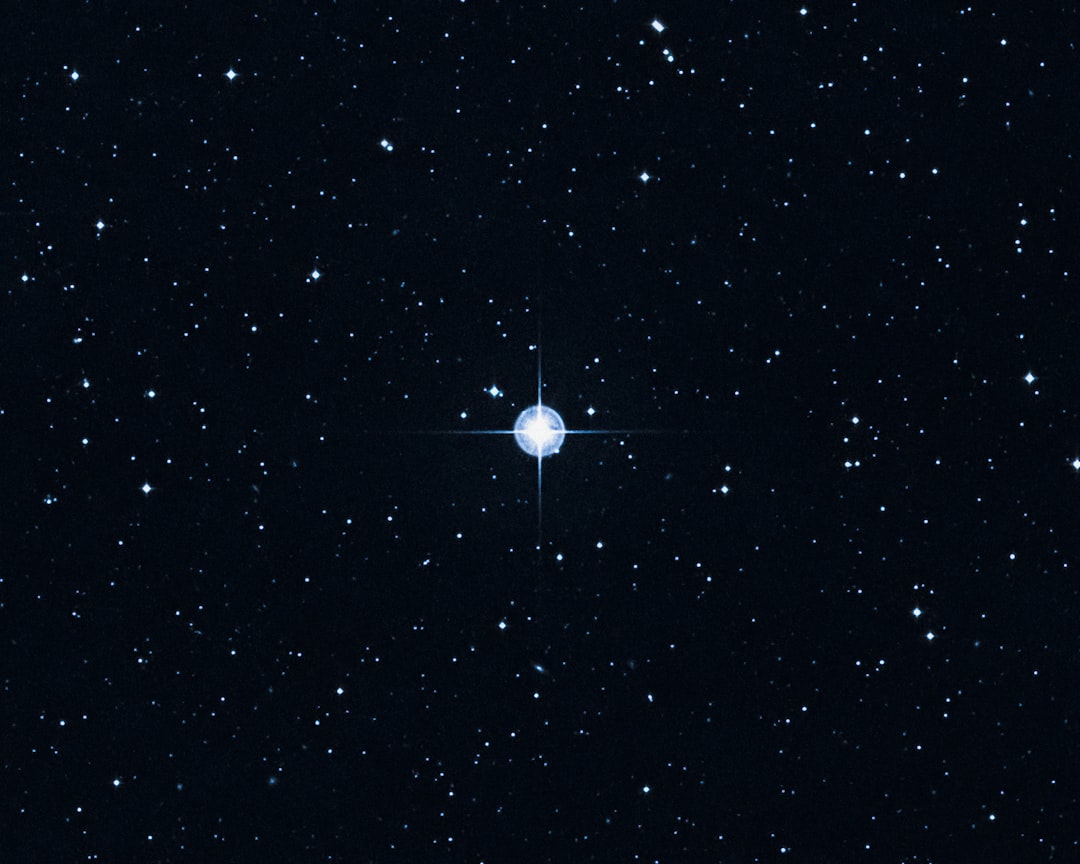
The vast expanse of the cosmos, a tapestry woven with stars, galaxies, and shadowy voids, has long captivated the human imagination. From ancient stargazers charting celestial movements to modern scientists probing the fundamental nature of reality, the quest to understand our universe remains a driving force of scientific inquiry. Cosmology, the study of the origin, evolution, and ultimate fate of the universe, is a field that constantly pushes the boundaries of our knowledge, seeking to unravel the profound mysteries that lie beyond our immediate perception. It is a discipline where theoretical frameworks collide with observational data, where mind-bending concepts like dark matter and dark energy dominate discussions, and where the very fabric of space and time is under scrutiny.
The prevailing cosmological model, the Big Bang theory, paints a picture of the universe originating from an incredibly hot, dense state approximately 13.8 billion years ago. While the term “explosion” might conjure images of a blast in pre-existing space, the Big Bang describes the rapid expansion of space itself, carrying matter and energy along with it. This theory is not mere speculation; it is supported by a wealth of observational evidence that has shaped our understanding of cosmic history.
Evidence for Expansion: The Redshift of Galaxies
One of the most compelling pieces of evidence for the Big Bang is the observed redshift of light from distant galaxies. Proposed by Edwin Hubble in the late 1920s, the redshift phenomenon indicates that galaxies are, on average, moving away from us. This is analogous to the Doppler effect with sound waves; as a source moves away, the emitted waves are stretched, resulting in a lower frequency (or longer wavelength). In the case of light, this stretching shifts the light towards the red end of the spectrum. The further away a galaxy is, the greater its redshift, implying a universe in expansion. This observation is a cornerstone of our cosmic narrative, suggesting that if the universe is expanding today, it must have been smaller and denser in the past.
The Cosmic Microwave Background Radiation: The Echo of Creation
Another monumental pillar supporting the Big Bang is the Cosmic Microwave Background (CMB) radiation. Discovered serendipitously in 1964 by Arno Penzias and Robert Wilson, the CMB is a faint, uniform glow of microwave radiation that permeates the entire sky. This radiation is interpreted as the afterglow of the early universe, a relic from a time when the universe was hot and opaque, about 380,000 years after the Big Bang. As the universe expanded and cooled, it became transparent, allowing this radiation to travel freely. The CMB is remarkably uniform in temperature, but precise measurements have revealed tiny temperature fluctuations. These seemingly insignificant variations are critically important, as they represent the seeds from which the large-scale structures of the universe, such as galaxies and galaxy clusters, eventually grew.
Nucleosynthesis: The First Elements Forged
The abundance of light elements in the universe – hydrogen, helium, and lithium – also provides strong evidence for the Big Bang. According to the Big Bang model, in the first few minutes after the universe’s birth, the extreme temperatures and densities allowed for nuclear fusion to occur, forging these primordial elements. The predicted ratios of these elements, particularly the abundance of helium-4, closely match the observed abundances in the oldest stars and gas clouds, further validating the Big Bang scenario.
For those interested in a deeper understanding of the universe and its origins, a related article that delves into the intricacies of cosmology can be found at My Cosmic Ventures. This article explores the fundamental concepts of the Big Bang theory, dark matter, and the expansion of the universe, providing readers with a comprehensive overview of current cosmological research and theories.
The Enigma of Dark Matter: The Invisible Scaffold
While the Big Bang theory successfully explains many aspects of the universe’s evolution, it leaves significant questions unanswered, particularly concerning the distribution and motion of visible matter. Observations of galaxies and galaxy clusters reveal a discrepancy between the mass we can observe (stars, gas, dust) and the gravitational forces at play. This discrepancy has led to the postulation of dark matter, a mysterious substance that does not interact with light and is therefore invisible to our telescopes, yet exerts significant gravitational influence.
Galactic Rotation Curves: Galaxies Spinning Too Fast
One of the earliest and most compelling pieces of evidence for dark matter comes from the study of galactic rotation curves. When astronomers measure the speed at which stars orbit the center of galaxies, they find that stars in the outer regions are moving much faster than predicted by the gravitational pull of the visible matter alone. To explain these unexpectedly high speeds, there must be a substantial amount of unseen mass, distributed in a halo around the galaxy, providing the extra gravitational grip.
Galaxy Clusters: Gravitational Lensing Revelation
Galaxy clusters, the largest known gravitationally bound structures in the universe, also provide strong evidence for dark matter. When light from distant galaxies passes through a galaxy cluster, its path is bent by the cluster’s gravitational field – a phenomenon known as gravitational lensing. The degree of bending allows astronomers to estimate the total mass of the cluster. These estimates consistently reveal that the visible matter accounts for only a small fraction of the total mass, with the majority attributed to dark matter.
The Search for Dark Matter Particles: A Scientific Pursuit
Despite the overwhelming evidence for its existence, the exact nature of dark matter remains elusive. Scientists are actively pursuing various avenues to directly detect or indirectly infer the properties of dark matter particles. Leading candidates include Weakly Interacting Massive Particles (WIMPs) and axions, hypothetical particles that could explain the observed gravitational effects without interacting with ordinary matter or light. Experiments are underway in underground laboratories, shielded from cosmic rays, to search for these elusive particles.
The Accelerating Universe and Dark Energy: A Cosmic Mystery Deepens

Adding another layer of complexity to our cosmic understanding is the recent discovery that the universe’s expansion is not only ongoing but is also accelerating. This finding, based on observations of distant supernovae, implies the existence of yet another mysterious component, dubbed dark energy, which acts as a repulsive force counteracting gravity.
Type Ia Supernovae: Cosmic Distance Markers
Type Ia supernovae are a crucial tool for measuring cosmic distances. These are stellar explosions that occur when a white dwarf star in a binary system accrues enough mass from its companion to trigger a runaway nuclear reaction. Because these supernovae have a remarkably consistent intrinsic brightness, they can be used as “standard candles.” By comparing their apparent brightness to their intrinsic brightness, astronomers can determine their distances. Observations of Type Ia supernovae in the late 1990s revealed that distant supernovae were fainter than expected, indicating that the universe’s expansion had been slowing down in the past but is now speeding up.
The Cosmological Constant and Beyond: Explaining the Acceleration
The accelerating expansion of the universe suggests that some form of energy is pushing space apart. The simplest explanation, proposed by Albert Einstein in his theory of general relativity, is the cosmological constant, denoted by the Greek letter lambda ($\Lambda$). This constant represents a uniform energy density inherent to space itself. However, theoretical calculations of the vacuum energy of space predict a value far larger than what is observed, leading to a significant puzzle. Alternative theories for dark energy, such as quintessence or modified gravity, are also being explored to explain this cosmic acceleration.
The Fate of the Universe: A Dark Energy Dominated Future?
The dominance of dark energy in the universe has profound implications for its ultimate fate. If dark energy continues to be a constant force, the universe will continue to expand at an accelerating rate. Galaxies will become increasingly isolated, and eventually, the observable universe will shrink, leading to a scenario known as the “Big Freeze” or “heat death,” where the universe becomes cold, dark, and diffuse. Other possibilities, depending on the nature of dark energy, include a “Big Rip,” where the expansion becomes so strong that it tears apart galaxies, stars, and even atoms.
Inflation: Seeding the Early Universe with Fluctuations

While the Big Bang theory describes the universe’s expansion from a hot, dense state, it doesn’t fully explain certain fine-tuning problems, such as the remarkable uniformity of the CMB and the flatness of the universe. The theory of cosmic inflation offers a compelling solution to these puzzles, suggesting a period of exponential expansion in the universe’s very first moments.
The Horizon Problem: Why So Uniform?
The horizon problem highlights the fact that widely separated regions of the universe, which, according to the standard Big Bang model, should never have been in causal contact, have remarkably similar temperatures in the CMB. Inflation proposes that the entire observable universe originated from a tiny region that was in thermal equilibrium. This region then underwent a period of extremely rapid expansion, stretching this pre-existing homogeneity across vast distances.
The Flatness Problem: A Universeuncurved
Another puzzle addressed by inflation is the flatness problem. Observations indicate that the universe is remarkably flat, meaning its geometry is Euclidean. According to general relativity, any deviation from perfect flatness in the early universe would have been amplified over time. For the universe to be as flat as it is today, it must have been extraordinarily flat in its nascent stages. Inflation provides a mechanism to flatten out any initial curvature, akin to how inflating a balloon smooths out wrinkles on its surface.
Quantum Fluctuations: The Seeds of Structure
Furthermore, inflation provides a mechanism for generating the initial density fluctuations that would eventually lead to the formation of galaxies and large-scale structures. According to quantum mechanics, even in empty space, there are ephemeral, random fluctuations in energy. During the inflationary epoch, these tiny quantum fluctuations were stretched to macroscopic scales, becoming the seeds for the cosmic web we observe today. The precise pattern of these fluctuations, imprinted on the CMB, offers a powerful test of inflationary models.
In the fascinating field of cosmology, understanding the origins and evolution of the universe is crucial. A related article that delves deeper into these concepts can be found at My Cosmic Ventures, where readers can explore various theories and discoveries that have shaped our understanding of the cosmos. This resource provides valuable insights into the fundamental questions that continue to intrigue scientists and enthusiasts alike.
The Quest for a Unified Theory: Merging the Cosmic and the Quantum
| Topic | Explanation |
|---|---|
| Big Bang Theory | The prevailing cosmological model that explains the early development of the universe. |
| Dark Matter | A form of matter that is thought to account for approximately 85% of the matter in the universe. |
| Dark Energy | A hypothetical form of energy that permeates all of space and tends to accelerate the expansion of the universe. |
| Cosmic Microwave Background Radiation | The afterglow of the Big Bang, which provides strong evidence for the Big Bang model. |
| Galaxies | Huge systems of stars, gas, dust, and dark matter that are held together by gravity. |
One of the ultimate goals of cosmology is to develop a unified theory that can describe the universe at all scales, from the subatomic realm to the cosmic expanse. This ambition requires reconciling the seemingly disparate frameworks of general relativity, which governs gravity and the large-scale structure of the universe, and quantum mechanics, which describes the behavior of matter and energy at the smallest scales.
General Relativity vs. Quantum Mechanics: A Fundamental Divide
General relativity, our current best description of gravity, paints a picture of spacetime as a dynamic entity, curved by mass and energy. Quantum mechanics, on the other hand, describes the universe in terms of probabilistic particles and fields. At extreme conditions, such as those found in the early universe or within black holes, these two theories break down, leading to contradictions and singularities.
String Theory and Loop Quantum Gravity: Promising Avenues
Leading contenders for a unified theory include string theory and loop quantum gravity. String theory proposes that fundamental particles are not point-like entities but rather tiny vibrating strings. Different vibration modes correspond to different particles, and the theory inherently incorporates gravity. Loop quantum gravity, on the other hand, quantizes spacetime itself, proposing that space is not continuous but is made up of discrete “loops.” Both approaches are highly speculative and face significant challenges in terms of experimental verification.
The Future of Cosmology: New Observatories and Theoretical Breakthroughs
The unraveling of cosmic mysteries is a continuous journey, driven by technological advancements and theoretical ingenuity. The development of next-generation telescopes, both ground-based and space-borne, such as the James Webb Space Telescope and the Vera C. Rubin Observatory, promises to provide unprecedented data on the universe’s structure, composition, and evolution. Simultaneously, theoretical physicists continue to push the boundaries of our understanding, seeking elegant mathematical frameworks that can unify gravity with quantum mechanics and explain the profound enigmas of dark matter and dark energy. The quest to understand our place in the cosmos is an ongoing saga, one that continues to inspire awe, curiosity, and a relentless pursuit of knowledge.

Physics Can’t Explain Gravity (And That’s a Problem)
FAQs
What is cosmology?
Cosmology is the scientific study of the origin, evolution, and eventual fate of the universe. It seeks to understand the large-scale structure and dynamics of the universe as a whole.
What are the main components of the universe according to cosmology?
According to cosmology, the universe is composed of dark matter, dark energy, and ordinary matter. Dark matter and dark energy are thought to make up the majority of the universe’s mass and energy, while ordinary matter, which includes atoms and molecules, makes up a small fraction.
What is the Big Bang theory in cosmology?
The Big Bang theory is the prevailing cosmological model for the observable universe from the earliest known periods through its subsequent large-scale evolution. It suggests that the universe began as a hot, dense state and has been expanding and cooling over time.
How do cosmologists study the universe?
Cosmologists study the universe using a combination of observational and theoretical methods. Observational methods include using telescopes and other instruments to observe celestial objects and phenomena, while theoretical methods involve developing mathematical models and simulations to understand the behavior of the universe.
What are some of the key unanswered questions in cosmology?
Some of the key unanswered questions in cosmology include the nature of dark matter and dark energy, the ultimate fate of the universe, the origin of cosmic structure, and the possibility of other universes beyond our own. These questions continue to drive research and exploration in the field of cosmology.