
The vast expanse of the cosmos, a canvas stretching to unimaginably distant horizons, has captivated human curiosity for millennia. Astrophysics, the scientific discipline that merges the principles of physics with the observational study of celestial objects, endeavors to unravel the profound mysteries held within this cosmic tapestry. It seeks to understand the fundamental laws governing the universe, from the birth and life of stars to the enigmatic nature of dark matter and dark energy. For those who delve into its depths, astrophysics offers a journey of intellectual discovery, transforming our perspective on our place in the grand cosmic narrative.
Stars, the luminous beacons that populate the night sky, are not static entities but rather dynamic cosmic laboratories where the fundamental elements of the universe are forged. Their life cycles, from incandescent birth to eventual demise, are governed by the relentless forces of gravity and nuclear fusion. Understanding stellar evolution is crucial for comprehending the chemical enrichment of the universe and the eventual formation of planets, including our own Earth.
Stellar Nurseries: The Birth of Stars
The birth of a star is a dramatic and prolonged process, occurring within colossal clouds of gas and dust known as nebulae. These nebulae, often vast interstellar reservoirs, are primarily composed of hydrogen and helium, the primordial elements forged in the Big Bang. Under the influence of gravitational instability, denser regions within these clouds begin to collapse. As a protostar grows, its core temperature and pressure escalate. When these pressures reach a critical threshold, nuclear fusion ignites, marking the true birth of a star. This process, where atomic nuclei merge to form heavier elements, releases an immense amount of energy, counteracting the inward pull of gravity and stabilizing the star. The Sun, a G-type main-sequence star, is currently in a stable phase of its life, powered by the fusion of hydrogen into helium in its core.
The Main Sequence: A Star’s Youth and Middle Age
The main sequence represents the longest and most stable phase of a star’s life. During this period, stars steadily fuse hydrogen into helium in their cores. The duration of a star’s stay on the main sequence is directly related to its mass. More massive stars burn through their fuel at a significantly faster rate, leading to shorter lifespans, while less massive stars can exist for billions or even trillions of years. Our Sun, for instance, is expected to remain on the main sequence for approximately 10 billion years, having already completed about half of this journey. Different spectral types of stars, indicated by their color, are intrinsically linked to their mass and temperature. Blue stars are the hottest and most massive, while red stars are cooler and less massive.
The Twilight of Stellar Life: Stellar Death and Remnants
The eventual exhaustion of hydrogen fuel in a star’s core signals the beginning of the end of its main sequence phase. The subsequent evolutionary path of a star is critically dependent on its initial mass.
Red Giants and Supergiants: Expansion and Fusion
As a star exhausts its core hydrogen, it begins to contract under gravity, leading to a rapid increase in core temperature. This increased temperature ignites hydrogen fusion in a shell surrounding the core, causing the star’s outer layers to expand dramatically and cool, transforming it into a red giant (for stars like the Sun) or a red supergiant (for more massive stars). In these expanded envelopes, helium fusion can eventually begin in the core, producing carbon and oxygen. This phase is a crucial period for the dispersion of heavier elements into the interstellar medium, acting as cosmic seeding material for future generations of stars and planets.
Stellar Endpoints: White Dwarfs, Neutron Stars, and Black Holes
The ultimate fate of a star is determined by its mass. Lower-mass stars, like our Sun, will eventually shed their outer layers, forming a planetary nebula, and their core will collapse into a dense, Earth-sized object called a white dwarf. These white dwarfs slowly cool over billions of years, eventually becoming cold, dark embers.
More massive stars, however, face more dramatic ends. After exhausting their nuclear fuel and undergoing explosive supernova events, their cores collapse further. If the remnant core has a mass between roughly 1.4 and 3 times the mass of the Sun, it will compress into an incredibly dense object called a neutron star. These objects are so dense that a teaspoonful of neutron star material would weigh as much as Mount Everest.
For stars with initial masses exceeding about 20-30 times that of the Sun, the gravitational collapse during a supernova is so extreme that nothing, not even light, can escape its pull. This results in the formation of a black hole, a region of spacetime with an immense gravitational field. The study of stellar remnants provides crucial insights into the extreme physics of gravity and matter.
Astrophysics continues to unveil the mysteries of the universe, and a fascinating article that delves deeper into this field can be found at My Cosmic Ventures. This resource explores the latest discoveries in cosmic phenomena, including black holes and dark matter, providing insights that enhance our understanding of the cosmos. Whether you are a seasoned astrophysicist or a curious enthusiast, this article offers valuable information that connects to the broader themes of astrophysical research.
The Enigmatic Universe: Dark Matter and Dark Energy
Our current understanding of the universe suggests that the luminous matter we observe – stars, galaxies, planets – constitutes only a small fraction of its total mass-energy content. The vast majority is attributed to two mysterious components: dark matter and dark energy. Their existence is inferred from their gravitational effects and their influence on the expansion of the universe, yet their fundamental nature remains one of the most compelling puzzles in modern astrophysics. Unraveling these enigmas is akin to trying to understand a vast library where most of the books are written in an unknown language.
Dark Matter: The Invisible Scaffolding
Dark matter is a hypothetical form of matter that does not interact with electromagnetic radiation, meaning it does not absorb, reflect, or emit light, making it invisible to telescopes. Its presence is primarily deduced from its gravitational influence on visible matter. For instance, the observed rotation speeds of galaxies are far too high to be explained by the visible matter alone; a significant amount of unseen mass, dark matter, must be present to provide the necessary gravitational pull, acting as invisible scaffolding holding galaxies together. The distribution of dark matter also appears to play a crucial role in the formation and structure of galaxy clusters. Several candidates for dark matter particles have been proposed, including Weakly Interacting Massive Particles (WIMPs) and axions, but direct detection remains elusive, pushing the boundaries of experimental physics.
Dark Energy: The Accelerating Expander
Dark energy is an even more enigmatic component, thought to be responsible for the observed acceleration of the universe’s expansion. For decades, astronomers believed that the expansion of the universe, initiated by the Big Bang, would be slowing down due to the mutual gravitational attraction of all the matter within it. However, observations of distant supernovae in the late 1990s revealed the opposite: the expansion is actually speeding up. This unexpected discovery led to the concept of dark energy, a pervasive force with negative pressure that counteracts gravity and drives this acceleration. The nature of dark energy is largely unknown, with leading theories suggesting it could be a cosmological constant (a property inherent to space itself) or a dynamic field that varies over time. Its existence has profound implications for the ultimate fate of the universe, hinting at a future of ever-increasing expansion and isolation.
From the Big Bang to Cosmic Structures: Cosmology and the Universe’s Evolution
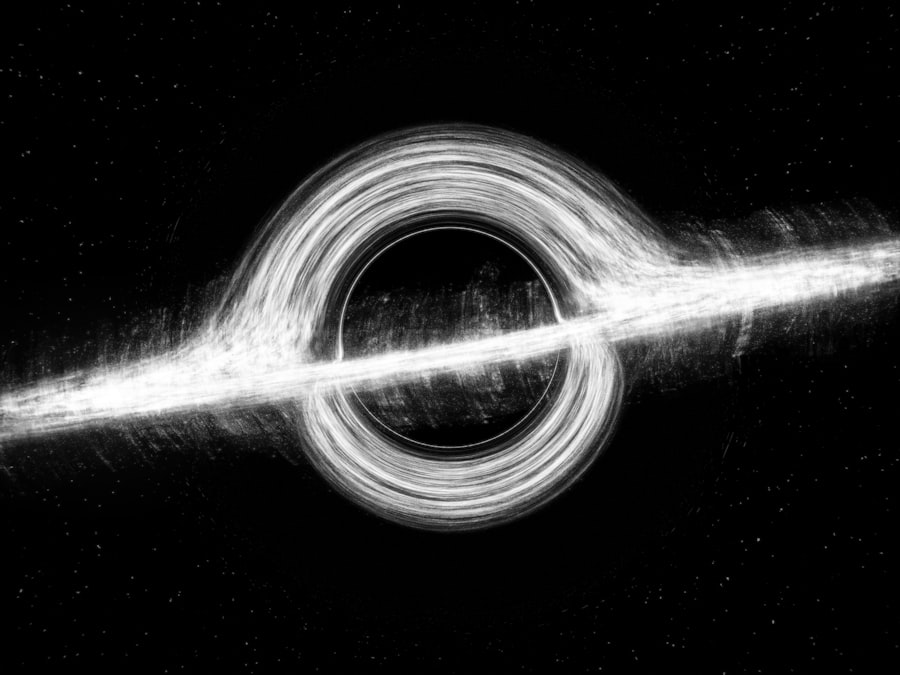
Cosmology, the study of the origin, evolution, and large-scale structure of the universe, forms the bedrock of astrophysical inquiry. It seeks to paint a coherent picture of the cosmos, tracing its history from the initial moments after the Big Bang to the intricate web of galaxies and clusters we observe today. Understanding this grand narrative requires piecing together evidence from various cosmic epochs.
The Big Bang: The Genesis of Reality
The prevailing cosmological model posits that the universe began approximately 13.8 billion years ago in an event known as the Big Bang. This was not an explosion in pre-existing space, but rather the rapid expansion of space itself from an infinitesimally small, hot, and dense state. In the immediate aftermath, the universe underwent a period of rapid inflation, expanding exponentially. As the universe cooled, fundamental particles formed, followed by protons and neutrons, which eventually combined to form the first atomic nuclei. The cosmic microwave background (CMB) radiation, a faint afterglow of this primordial era, serves as a powerful testament to the Big Bang, providing a snapshot of the universe when it was only about 380,000 years old. Studying subtle variations in the CMB allows cosmologists to probe the initial conditions of the universe and test various cosmological models.
Cosmic Inflation: Smoothing the Universe
Cosmic inflation is a theoretical period of exponential expansion of the nascent universe, proposed to explain several observed features that are difficult to account for within the standard Big Bang model alone. It is thought to have occurred within fractions of a second after the Big Bang. Inflation helps to explain why the universe appears so uniform on large scales (the horizon problem) and why the geometry of the universe is so close to being flat (the flatness problem). Furthermore, quantum fluctuations during inflation are believed to have been stretched to macroscopic scales, providing the initial seeds for the large-scale structure of the universe, such as galaxies and galaxy clusters. While direct observational evidence for inflation is challenging to obtain, its predictions often align with CMB observations.
The Formation of Large-Scale Structures: The Cosmic Web
Over billions of years, gravity has acted upon the initial density fluctuations imprinted during inflation, leading to the formation of the hierarchical structure of the universe. Denser regions attracted more matter, eventually coalescing into what we observe as galaxies. Galaxies, in turn, are not randomly distributed but are organized into vast filaments, sheets, and voids, forming a cosmic web. This large-scale structure is a direct consequence of the interplay between dark matter, which provides the dominant gravitational scaffolding, and baryonic matter, which eventually cools and condenses to form stars and galaxies within these dark matter halos. Simulations of this process, incorporating gravity, dark matter, and gas dynamics, provide powerful tools for understanding how the observed cosmic structures emerged from the early universe.
Exploring Extreme Cosmic Laboratories: Black Holes and Neutron Stars
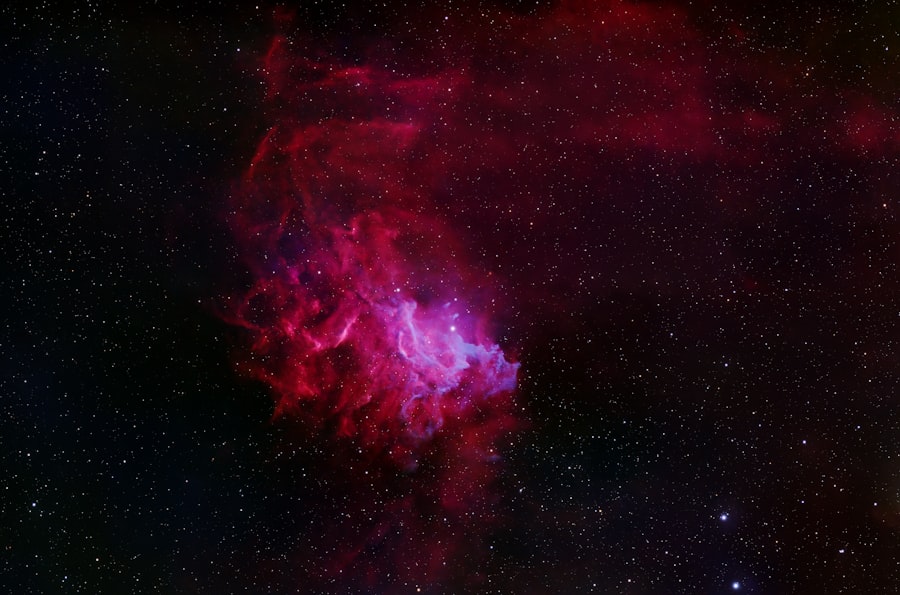
The universe is replete with environments where matter and energy exist under conditions far exceeding anything achievable on Earth. Black holes and neutron stars represent the ultimate extremes of physics, offering unparalleled opportunities to test our understanding of gravity, matter, and spacetime itself. Studying these celestial behemoths is like peering into nature’s most formidable laboratories.
Black Holes: The Ultimate Gravitational Prisons
Black holes are regions of spacetime where gravity is so strong that nothing, not even light, can escape. They are formed from the gravitational collapse of massive stars (stellar-mass black holes) or through other processes that accumulate immense amounts of mass in a small volume (supermassive black holes found at the centers of galaxies). The boundary beyond which escape is impossible is called the event horizon. While we cannot directly observe the interior of a black hole, their presence is inferred through their gravitational effects on surrounding matter. For instance, gas and dust falling into a black hole form an accretion disk, which heats up to extremely high temperatures and emits X-rays, a telltale sign of a black hole’s presence. The study of black holes, particularly their interaction with spacetime and their role in galactic evolution, has been revolutionized by the development of advanced observational techniques and theoretical frameworks, such as Einstein’s theory of general relativity.
Neutron Stars: Densely Packed Stellar Remnants
Neutron stars are the collapsed cores of massive stars that have undergone supernova explosions. They are incredibly dense, with a typical diameter of only about 20 kilometers, yet they contain more mass than our Sun. The extreme pressure within a neutron star forces protons and electrons to combine into neutrons, hence their name. These objects are characterized by their rapid rotation and powerful magnetic fields, leading to the emission of beams of radiation that astronomers observe as pulsars, if these beams sweep across Earth. Neutron stars are also crucial for understanding the behavior of matter under extreme densities and pressures, conditions that cannot be replicated in terrestrial laboratories. They are also cosmic factories for the production of many heavy elements, synthesized through rapid neutron capture processes.
Astrophysics is a fascinating field that explores the fundamental nature of the universe, from the behavior of black holes to the formation of galaxies. For those interested in delving deeper into this subject, a related article on the latest discoveries in dark matter can provide valuable insights. You can read more about it in this engaging piece that highlights recent advancements in our understanding of the cosmos. Check out the article here to expand your knowledge on this captivating topic.
The Frontiers of Discovery: Gravitational Waves and Exoplanets
| Metric | Value | Unit | Description |
|---|---|---|---|
| Speed of Light | 299,792,458 | m/s | Speed at which light travels in a vacuum |
| Gravitational Constant (G) | 6.67430 × 10⁻¹¹ | m³ kg⁻¹ s⁻² | Universal constant in Newton’s law of gravitation |
| Hubble Constant (H₀) | 70 | km/s/Mpc | Rate of expansion of the universe |
| Mass of Sun | 1.989 × 10³⁰ | kg | Mass of our star, the Sun |
| Radius of Earth | 6,371 | km | Average radius of Earth |
| Age of Universe | 13.8 | billion years | Estimated age since the Big Bang |
| Temperature of Cosmic Microwave Background | 2.725 | K | Temperature of the residual radiation from the Big Bang |
| Solar Luminosity | 3.828 × 10²⁶ | Watts | Total energy output of the Sun per second |
Astrophysics is a dynamic field constantly pushing the boundaries of human knowledge. Two of the most exciting frontiers in recent astrophysical research are the detection of gravitational waves and the discovery of exoplanets. These advancements are not only revealing new phenomena but also democratizing our understanding of the universe, bringing its wonders closer to home.
Gravitational Waves: Ripples in Spacetime
Albert Einstein’s theory of general relativity predicted the existence of gravitational waves – disturbances in the fabric of spacetime that propagate at the speed of light, generated by accelerating massive objects. For decades, these waves remained theoretical. However, in 2015, the Laser Interferometer Gravitational-Wave Observatory (LIGO) made the first direct detection of gravitational waves, originating from the merger of two stellar-mass black holes. This groundbreaking discovery opened a new window onto the universe, allowing astronomers to “hear” cosmic events that were previously invisible. Since then, numerous other gravitational wave events have been detected, including those from the merger of neutron stars, providing unprecedented insights into the dynamics of extreme astrophysical phenomena and the nature of gravity itself. This new field, known as multi-messenger astronomy, allows for simultaneous observation of cosmic events through both electromagnetic radiation and gravitational waves.
Exoplanets: Worlds Beyond Our Solar System
The quest to find planets orbiting stars other than our Sun, known as exoplanets, has witnessed an explosion of discoveries in recent decades. Thanks to sophisticated ground-based telescopes and space observatories like the Kepler Space Telescope and the Transiting Exoplanet Survey Satellite (TESS), thousands of exoplanets have been confirmed, ranging in size from gas giants to rocky worlds similar in mass to Earth. These discoveries are profoundly impacting our understanding of planetary formation and the prevalence of potentially habitable environments in the galaxy. The study of exoplanet atmospheres, using techniques like transmission spectroscopy, aims to detect biosignatures – chemical indicators of life – offering the tantalizing prospect of answering the age-old question: are we alone in the universe? As our observational capabilities continue to advance, we can expect many more discoveries that will further reshape our perspective on the cosmos and our place within it.
FAQs
What is astrophysics?
Astrophysics is a branch of astronomy that focuses on understanding the physical properties and underlying processes of celestial objects and phenomena in the universe, such as stars, planets, galaxies, black holes, and cosmic radiation.
How does astrophysics differ from astronomy?
While astronomy is the broader study of celestial objects and the universe as a whole, astrophysics specifically applies the principles of physics and chemistry to explain how these objects form, evolve, and interact.
What tools do astrophysicists use to study the universe?
Astrophysicists use a variety of tools including telescopes (optical, radio, X-ray, and gamma-ray), spectrometers, satellites, and computer simulations to observe and analyze celestial phenomena.
What are some key topics studied in astrophysics?
Key topics include the life cycles of stars, the nature of black holes, the expansion of the universe, dark matter and dark energy, cosmic microwave background radiation, and the formation of galaxies.
Why is astrophysics important?
Astrophysics helps us understand fundamental questions about the origin, structure, and fate of the universe, providing insights into the laws of physics under extreme conditions and contributing to technological advancements through its research.