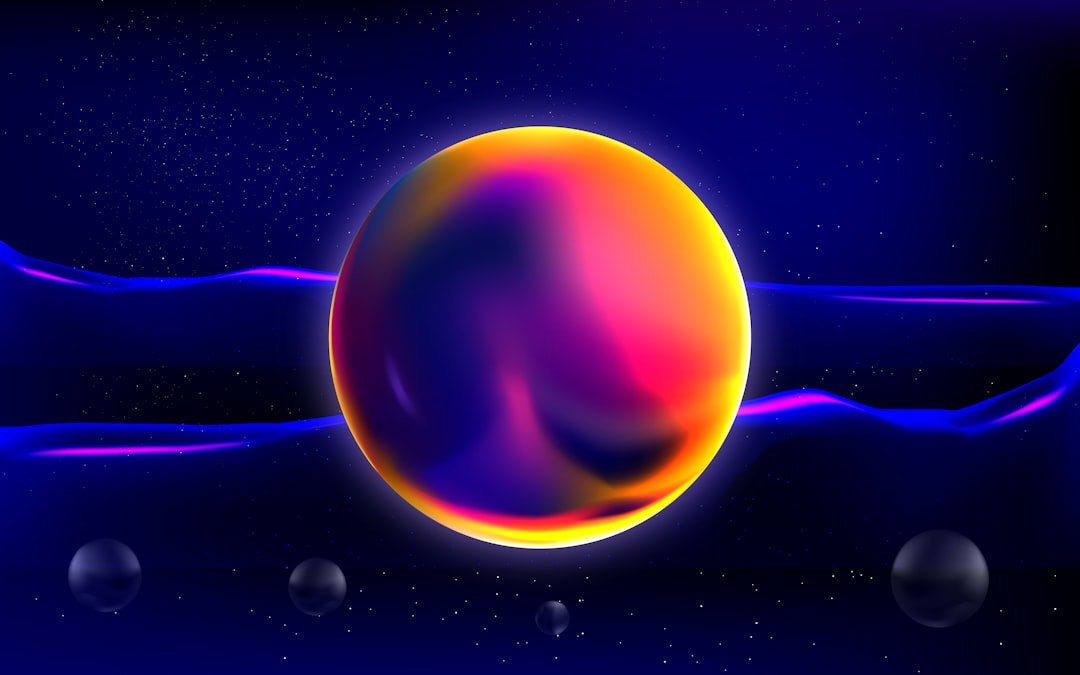
The fabric of reality, as currently understood, is built upon a foundation of seemingly immutable laws and stable states. However, whispers of a profound alternative have begun to coalesce into a compelling theoretical framework: the Metastable Universe Theory. This concept challenges the conventional notion of an eternally persistent cosmos, proposing instead an existence poised on a knife’s edge, capable of transitioning into vastly different states. To unravel this theory is to embark on a journey into the fundamental nature of existence, exploring possibilities that stretch the imagination and reshape our understanding of cosmic destiny.
The Metastable Universe Theory posits that our current universe, seemingly stable and predictable, may actually be in a state of relative metastability. Unlike a truly stable state, which would persist indefinitely, a metastable state is one that is stable for a considerable period but could, under certain conditions, spontaneously transition to a lower energy state, a state of true stability. Imagine a marble resting at the bottom of a small dip on a vast, undulating landscape. For all intents and purposes, it appears stable, but a significant enough nudge could send it rolling down into a deeper valley, a configuration that is intrinsically more stable. In the context of physics, these “states” refer to fundamental configurations of physical laws and constants.
The Concept of Metastability in Physics
Metastability is a well-established concept in physics, particularly in thermodynamics and quantum mechanics. A classic example is supercooled water. Water at atmospheric pressure typically freezes at 0°C. However, if pure water is cooled carefully below this temperature without disturbance, it can remain in a liquid state. This liquid water is metastable; a sudden shock or the introduction of a seed crystal can trigger rapid freezing, bringing it to its thermodynamically favored solid state. Similarly, the universe, in this theoretical framework, might be analogous to supercooled water.
Distinguishing Between Stability and Metastability
The key distinction lies in the potential for change. A truly stable universe would represent the lowest possible energy state of all fundamental fields and particles. No external influence or internal fluctuation would be sufficient to drive it into a different configuration. A metastable universe, however, is like a system in a local minimum of its energy landscape. Energy exists that could, in principle, allow it to reach a deeper, more stable minimum, thereby fundamentally altering its properties. This transition would not necessarily be a gradual decay but could be a sudden, universe-altering event.
The Role of Vacuum Energy
Central to the Metastable Universe Theory is the concept of vacuum energy. The vacuum in quantum field theory is not an empty void but a dynamic sea of fluctuating quantum fields. These fields possess a certain energy density, often referred to as the vacuum energy or the cosmological constant. The current value of this vacuum energy dictates many of the large-scale properties of our universe, including its accelerated expansion. The theory suggests that the present vacuum state might not be the absolute minimum energy state available.
Implications for Our Universe
If our universe resides in a metastable vacuum, it implies that there might be other, more stable vacua with different physical laws and constants. The transition from our current vacuum to a lower energy vacuum would be a catastrophic event, akin to a phase transition in condensed matter physics. This transition would fundamentally rewrite the rules of physics, potentially rendering our current particles and forces irrelevant and leading to a universe with entirely different properties.
The concept of a metastable universe presents intriguing possibilities about the nature of our cosmos, suggesting that our universe may exist in a temporary state that could eventually transition to a more stable configuration. For a deeper exploration of this theory and its implications, you can read a related article that delves into the nuances of metastable states in cosmology. To learn more, visit My Cosmic Ventures.
The Physics Behind the Metastable State
The theoretical underpinnings of the Metastable Universe Theory are deeply rooted in quantum field theory and cosmology, particularly the Standard Model of particle physics and inflationary cosmology. These frameworks, which have been remarkably successful in describing observed phenomena, also open the door to possibilities of non-unique vacuum states.
Quantum Field Theory and Vacuum States
Quantum field theory describes fundamental particles as excitations of underlying quantum fields. For each fundamental force and particle type, there is a corresponding field that permeates spacetime. The vacuum state of a quantum field is its lowest energy configuration. However, many quantum field theories allow for a multitude of possible vacuum states, each with a different vacuum energy. The universe, in this context, could be envisioned as existing in one particular vacuum state among many potential ones.
The Higgs Field and the Electroweak Vacuum
A prime candidate for a metastable vacuum state is the electroweak vacuum, associated with the Higgs field. The Higgs field is responsible for giving mass to fundamental particles. Its potential energy function is often depicted as a Mexican hat shape, with multiple minima. The universe currently appears to be in a particular minimum of this potential. However, calculations suggest that this minimum might not be the absolute lowest one. If the universe were to tunnel quantum mechanically from its current Higgs vacuum to a deeper minimum, the masses of fundamental particles would change drastically, altering the very nature of matter and interactions. Some physicists have speculated that our universe might be in a metastable state with respect to the Higgs potential.
Inflationary Cosmology and the Eternal Inflation Scenario
Inflationary cosmology, the leading model for the early universe, proposes a period of rapid exponential expansion. In some models of inflation, known as eternal inflation, inflation does not end everywhere. Instead, as inflation proceeds, quantum fluctuations can cause small regions to stop inflating and to nucleate into “bubble universes.” Our universe could be one such bubble, and the process of inflation might continue indefinitely in other regions of the multiverse. This concept of a multiverse, where different bubble universes might have different physical laws, is closely linked to the Metastable Universe Theory. We might simply inhabit a universe that managed to fall into a metastable state, while others have transitioned to more stable configurations, or perhaps remain unsettled.
The Role of Dark Energy
The accelerated expansion of our universe is driven by dark energy, which is often modeled as being related to the vacuum energy. The precise nature of dark energy is still a profound mystery. If our vacuum state is indeed metastable, then the current value of dark energy could be a temporary characteristic of this metastable state, destined to change if a transition to a more stable vacuum occurs. This could imply that the observed accelerated expansion is not a permanent feature of the universe’s future.
Fine-Tuning and the Anthropic Principle
The Metastable Universe Theory offers a potential explanation for the apparent fine-tuning of fundamental constants in our universe, which seem to be precisely set to allow for the existence of life. If there are many possible vacuum states, each with different physical laws, then it is not surprising that we find ourselves in a universe with life-permitting laws. We could not observe a universe where such laws were absent. This is an application of the anthropic principle, which suggests that our observations of the universe are biased by the fact that we exist to make them.
Evidence and Observational Signatures

Directly observing evidence for the Metastable Universe Theory is a significant challenge, as the proposed transitions are rare and potentially catastrophic. However, theoretical physicists are exploring potential observational signatures that could hint at such a scenario. These signatures are subtle and often require sophisticated analysis of cosmological data and particle physics experiments.
Cosmic Microwave Background Anomalies
The Cosmic Microwave Background (CMB) radiation is a relic of the early universe and provides a snapshot of its conditions shortly after the Big Bang. Anomalies or unexpected patterns in the CMB could potentially be interpreted as evidence for a pre-inflationary epoch or for a universe that underwent phase transitions. Some researchers are investigating whether such anomalies could be consistent with certain models of a metastable universe. These might manifest as unusual temperature fluctuations or correlations in the CMB.
Particle Physics Experiments
Experiments at particle accelerators, like those at CERN, probe the fundamental nature of matter and forces. Precise measurements of particle masses, interaction strengths, and the properties of the Higgs boson are crucial. If the Higgs potential is indeed metastable, then future ultra-high-energy experiments might be able to probe regions of the potential or detect subtle effects that are indicative of this metastability. For instance, observing rare decay modes or unexpected resonances could provide clues.
Gravitational Waves
Gravitational waves, ripples in spacetime generated by massive accelerating objects, offer a new window into the universe. Certain cosmological phase transitions, which could occur in a metastable universe, might generate characteristic gravitational wave signals. Detecting such signals could provide direct evidence for these early universe events and help distinguish between different cosmological models. These waves could be considered the “echoes” of fundamental shifts in the universe’s structure.
The Nature of Dark Energy
The ongoing quest to understand dark energy might indirectly shed light on the Metastable Universe Theory. If dark energy turns out to be something other than a constant vacuum energy, such as a dynamic field that evolves, it could be more consistent with a universe in a non-absolute vacuum state. Precise measurements of the expansion history of the universe and the properties of dark energy over cosmic time are therefore crucial.
Theoretical Predictions for Future Transitions
While current observations may not definitively prove or disprove metastability, theoretical models can make predictions about the probability of a transition and what the consequences would be. If our universe is metastable, even with a very low probability of a catastrophic transition in any given moment, the sheer vastness of cosmic time implies that such an event might eventually occur. Understanding these probabilities is a key area of research.
Potential Consequences of a Metastable Transition

The consequences of a transition from our current metastable vacuum to a more stable one would be profound and far-reaching, fundamentally altering the nature of reality as we know it. These changes would not be gradual ameliorations but dramatic shifts in the fundamental laws governing existence.
Alteration of Fundamental Constants
A transition to a lower energy vacuum would likely involve a fundamental change in the values of some, or all, of the fundamental constants of nature. This includes constants like the speed of light, Planck’s constant, the gravitational constant, and the fine-structure constant, which governs the strength of the electromagnetic interaction. The masses of elementary particles, as dictated by the Higgs field, would also be drastically altered.
Changes in Particle Physics and Forces
The fundamental particles and forces that we understand would cease to exist in their current form. New particles might emerge, and existing forces could change their strength or nature. Our current understanding of the Standard Model of particle physics would become obsolete. The very building blocks of matter and the interactions between them would be fundamentally different.
The End of Life as We Know It
Life as we know it, being intricately dependent on the current physical laws and constants, would most likely be unable to survive such a transition. The chemical bonds that hold molecules together, the processes of stellar evolution that create heavier elements, and the biological machinery of living organisms are all finely tuned to the current physical regime. A different set of laws could render these processes impossible. It would be like trying to play a familiar symphony with an entirely new set of notes and a different musical scale.
Cosmological Reconfiguration
The large-scale structure and evolution of the universe would also be dramatically altered. The value of the cosmological constant, and thus the rate of cosmic expansion, would likely change. The formation of galaxies, stars, and planetary systems would follow entirely new rules. The universe might shrink or expand at a different rate, or its fundamental geometry could change.
The Possibility of Multiple Universes
The Metastable Universe Theory is often discussed within the context of the multiverse. If such a transition occurs in our region of space, it might not affect other regions that have already transitioned to different stable vacua or that remain in their own distinct inflationary bubbles. This could lead to a scenario where our “universe” is just one of many, with different physical laws operating in each. However, it’s important to differentiate between a transition within our current observable universe and the existence of separate bubble universes as proposed by some eternal inflation models.
The “Doomsday” Scenario
The prospect of a vacuum decay event is sometimes referred to as a “doomsday” scenario. If a bubble of true vacuum were to nucleate and expand at the speed of light, it would sweep through our universe, converting everything it encounters into the new, stable configuration. There would be no warning and no escape. However, it is crucial to emphasize that the probability of such an event occurring in the near future, or even within the lifespan of the current universe, is considered to be extremely low by many physicists.
The concept of a metastable universe theory presents intriguing possibilities about the nature of our cosmos, suggesting that our universe may exist in a temporary state that could eventually transition to a more stable configuration. For those interested in diving deeper into this fascinating topic, a related article can be found at My Cosmic Ventures, which explores the implications and consequences of such a theory on our understanding of time and space. This exploration not only enhances our grasp of cosmology but also raises profound questions about the future of the universe itself.
Philosophical and Cosmic Implications
| Metric | Description | Value / Estimate | Unit |
|---|---|---|---|
| Vacuum State | Current state of the universe’s vacuum energy | Metastable (false vacuum) | N/A |
| True Vacuum Energy | Energy level of the universe’s true vacuum | Lower than current vacuum energy | Energy density (unknown exact value) |
| Decay Probability | Likelihood of vacuum decay per unit time | Extremely low (estimated) | Per billion years |
| Decay Trigger | Event that could cause transition to true vacuum | Quantum tunneling or high-energy particle collision | N/A |
| Decay Consequence | Effect of vacuum decay on universe | Bubble of true vacuum expanding at speed of light, destroying current structures | N/A |
| Higgs Boson Mass | Mass of Higgs boson influencing vacuum stability | Approximately 125 GeV/c² | Giga electron volts per speed of light squared |
| Top Quark Mass | Mass of top quark affecting vacuum stability calculations | Approximately 173 GeV/c² | Giga electron volts per speed of light squared |
| Universe Age | Current age of the universe relevant to metastability | 13.8 billion | Years |
Beyond the physics, the Metastable Universe Theory raises profound philosophical questions about the nature of reality, our place within it, and the ultimate fate of the cosmos. It challenges our anthropocentric view and invites contemplation of possibilities beyond our current experience.
The Argument from Fine-Tuning Revisited
As mentioned earlier, the theory offers a compelling explanation for the apparent fine-tuning of physical constants that allow for life. If our universe is just one of many possible “outcomes” from a vast landscape of potential vacua, then finding ourselves in a life-permitting universe becomes less of a statistical anomaly and more of an observational selection effect. This aligns with the anthropic principle, suggesting that the universe appears fine-tuned because we are here to observe it.
The Nature of Reality and Determinism
The Metastable Universe Theory introduces an element of contingency to the very fabric of reality. If the universe’s foundational laws are not set in stone but are instead subject to potential change, it implies a less deterministic cosmos than some might assume. The future of the universe is not necessarily preordained but could be shaped by quantum fluctuations or inherent instabilities. This opens up discussions about free will on a cosmic scale, albeit in a rather abstract sense.
Our Place in the Cosmic Tapestry
This theory situates our existence within a potentially much larger and more dynamic cosmic structure. If our universe is just one metastable state among many, then our current reality is not necessarily unique or permanent. It encourages a humility in our understanding of cosmic significance, recognizing that other forms of existence, governed by different rules, might be possible or even prevalent in a larger multiverse. We are akin to temporary inhabitants in a vast cosmic hotel, with countless other rooms possessing entirely different furnishings and amenities.
The Pursuit of Knowledge and Uncertainty
The very act of grappling with such theories highlights the ongoing, and perhaps inherently incomplete, nature of scientific inquiry. The Metastable Universe Theory, while speculative, is a product of rigorous scientific thought and mathematical modeling. It underscores the scientific endeavor’s commitment to exploring even the most mind-bending possibilities, pushing the boundaries of our understanding and acknowledging the inherent uncertainties that lie at the frontier of knowledge. It signifies that the map of reality is still being drawn, with vast uncharted territories.
The Question of Meaning
If the universe is inherently unstable and could fundamentally change, does this diminish or enhance the meaning of our existence? Some might find a sense of urgency and preciousness in our current, fleeting reality, while others might find solace in the broader perspective of a potentially infinite cosmic evolution. The theory compels us to consider what constitutes meaning in a universe that may not be eternally fixed.
Future Directions and Unanswered Questions
The Metastable Universe Theory remains an active area of research. Key unanswered questions include the precise probabilities of different vacuum states, the mechanisms by which transitions might occur, and the development of more definitive observational tests. Future advancements in cosmology, particle physics, and gravitational wave astronomy will be crucial in shedding more light on this fascinating and potentially fundamental aspect of our universe. Is it a brief chapter in an unfolding epic, or a fleeting dream on the cusp of a grand awakening? The question echoes through the cosmos.
WATCH NOW ▶️ WARNING: The Universe Is Deleting Itself
FAQs
What is the metastable universe theory?
The metastable universe theory suggests that our universe exists in a temporary, unstable state that could potentially transition to a more stable state. This concept arises from quantum field theory and cosmology, indicating that the vacuum of space might not be in its lowest possible energy state.
How does the metastable state affect the fate of the universe?
If the universe is metastable, it means that a sudden shift to a more stable vacuum state could occur, leading to a catastrophic event known as vacuum decay. This event would fundamentally alter the laws of physics and the structure of matter, potentially destroying the universe as we know it.
What evidence supports the metastable universe theory?
The theory is supported by calculations involving the Higgs boson mass and the top quark mass, which suggest that the current vacuum state of the universe might not be absolutely stable. However, direct experimental evidence is lacking, and the theory remains speculative.
Can the metastable universe theory be tested or observed?
Currently, there is no practical way to test or observe vacuum decay directly because it would be an extremely rare and sudden event. Scientists rely on particle physics experiments and cosmological observations to refine their understanding of vacuum stability.
What implications does the metastable universe theory have for physics and cosmology?
The theory challenges our understanding of fundamental physics, including the stability of the vacuum and the ultimate fate of the universe. It also motivates research into new physics beyond the Standard Model to explain why the universe appears metastable and how it might transition to a stable state.