
The universe, in its grand tapestry, presents a profound mystery: dark matter. This enigmatic substance, comprising an estimated 27% of the cosmos, continues to elude direct detection, acting as the universe’s “unrendered code.” Scientists grapple with its nature, its existence primarily inferred through its gravitational effects on visible matter, leading to a compelling narrative of scientific pursuit and conceptual breakthroughs.
The concept of dark matter arose from a series of astronomical observations that could not be explained by the visible matter alone. These discrepancies suggested the presence of a substantial amount of unseen mass exerting gravitational influence.
Galactic Rotation Curves
One of the earliest and most compelling pieces of evidence for dark matter comes from observing galactic rotation. Astronomers measure the speed at which stars and gas clouds orbit the center of a spiral galaxy.
Expected vs. Observed Rotation
According to classical Newtonian mechanics, objects further from the galactic center should orbit more slowly, similar to how planets orbit the Sun. However, observations consistently show that stars and gas clouds at the outer edges of galaxies orbit at roughly the same speed as those closer to the center. This implies that the gravitational pull at the galaxy’s periphery is much stronger than what visible matter alone could provide, necessitating the presence of additional, unseen mass distributed throughout the galaxy’s halo.
Gravitational Lensing
Another powerful tool for detecting dark matter’s presence is gravitational lensing. This phenomenon, predicted by Einstein’s theory of general relativity, describes how massive objects bend the path of light passing near them.
Strong and Weak Lensing
When light from a distant galaxy passes through a massive foreground object, such as a galaxy cluster, its path is deflected. This can result in distorted, magnified, or even multiple images of the background galaxy. The degree of this lensing effect is directly proportional to the total mass of the foreground object. Astronomers observe that the lensing effect produced by galaxy clusters is significantly greater than what can be accounted for by their visible matter, indicating the presence of a vast amount of dark matter. Both strong lensing (producing highly distorted images) and weak lensing (subtle distortions analyzed statistically) contribute to this evidence.
Cosmic Microwave Background (CMB) Anisotropies
The cosmic microwave background, the remnant radiation from the Big Bang, provides a snapshot of the early universe. Its subtle temperature fluctuations, or anisotropies, are crucial for understanding the universe’s composition and evolution.
Imprints of Early Structure Formation
The patterns of these anisotropies are exquisitely sensitive to the universe’s matter content. The observed spectrum of fluctuations aligns remarkably well with models that include a substantial component of cold dark matter. Without dark matter, the gravitational wells necessary for the formation of large-scale structures like galaxies and galaxy clusters would not have been present early enough in the universe’s history to explain their current abundance.
Recent studies in astrophysics have shed light on the mysterious nature of dark matter, revealing its potential influence on galaxy formation and cosmic structure. For a deeper understanding of these findings, you can read a related article that explores the latest theories and discoveries in the field. Check it out here: My Cosmic Ventures.
The Search for the Unrendered Code: Dark Matter Candidates
The scientific community has proposed various hypothetical particles and concepts to explain dark matter’s nature. These candidates fall into several broad categories, each with its own theoretical underpinnings and experimental implications.
Weakly Interacting Massive Particles (WIMPs)
WIMPs represent a leading candidate for dark matter. As their name suggests, these hypothetical particles would interact with ordinary matter only through gravity and the weak nuclear force, making them incredibly difficult to detect.
Theoretical Frameworks
Many extensions to the Standard Model of particle physics, such as supersymmetry, naturally predict the existence of WIMPs. These particles are thought to have been produced in the early universe and survive to the present day due to their weak interactions. Their predicted mass range typically falls between tens and thousands of GeV/c².
Detection Strategies
Direct detection experiments, often located deep underground to shield them from cosmic rays, attempt to observe the rare occasions when a WIMP collides with an atomic nucleus in a detector material. Indirect detection experiments search for the annihilation or decay products of WIMPs, such as gamma rays or neutrinos, which might be produced in regions of high dark matter density. Particle accelerators, such as the Large Hadron Collider, attempt to create WIMPs in high-energy collisions.
Axions
Axions are another prominent dark matter candidate, distinct from WIMPs. They are hypothetical elementary particles proposed to solve the strong charge-parity (CP) problem in quantum chromodynamics (QCD), a theory describing the strong nuclear force.
Ultra-Light Scalar Particles
Unlike WIMPs, axions are theorized to be extremely light, with masses far below an electron volt. They are characterized by their extremely weak interactions with ordinary matter. Their wavelike nature at low energies makes them behave more like a classical field than individual particles, particularly in the dense environments of galactic halos.
Experimental Approaches
Experiments like ADMX (Axion Dark Matter eXperiment) attempt to detect axions by searching for their conversion into photons in the presence of strong magnetic fields. Other proposed experiments utilize different techniques, exploiting the unique properties of axions to hopefully reveal their presence.
Massive Compact Halo Objects (MACHOs)
MACHOs represent a more macroscopic dark matter candidate, encompassing objects made of ordinary baryonic matter that are simply very difficult to observe.
Brown Dwarfs, White Dwarfs, and Black Holes
This category includes objects like planet-sized bodies, brown dwarfs (failed stars), white dwarfs, and primordial black holes (formed in the early universe). While these objects are composed of ordinary matter, their faintness or compact nature makes them difficult to detect directly.
Microlensing Surveys
Astronomers search for MACHOs through gravitational microlensing. If a MACHO passes in front of a distant star, its gravity can temporarily brighten the star’s light. While initial microlensing surveys provided some evidence for MACHOs, subsequent, more comprehensive studies have largely ruled them out as a significant component of dark matter, suggesting that the bulk of dark matter is non-baryonic.
The Cosmic Web’s Ghost: Dark Matter Distribution
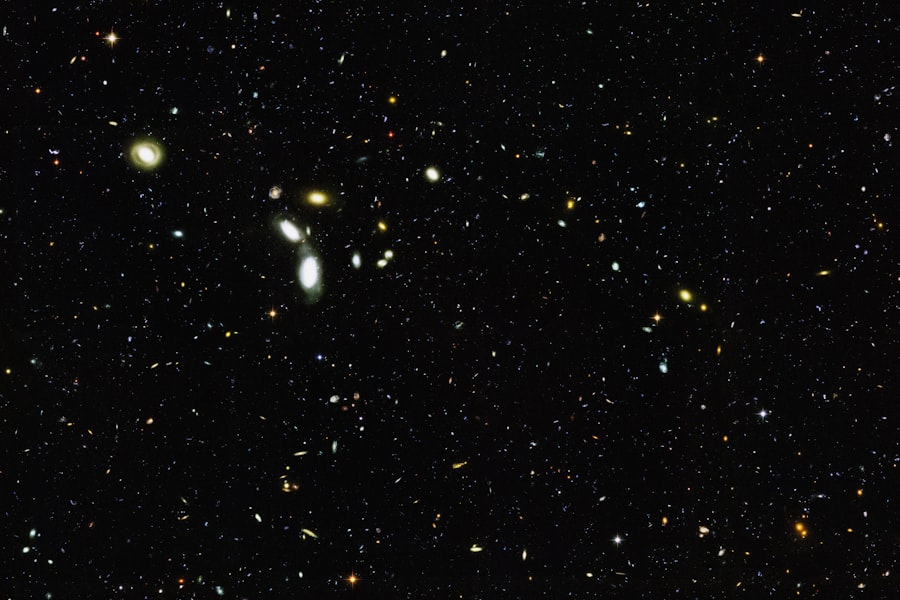
Understanding how dark matter is distributed throughout the universe is crucial for refining our cosmological models and guiding experimental searches. Simulations and observations paint a picture of an intricate, invisible scaffolding.
N-body Simulations
Cosmological simulations are powerful tools for modeling the evolution of the universe from the Big Bang to the present. These simulations, often called N-body simulations, treat dark matter as collisionless particles interacting only through gravity.
Formation of Large-Scale Structure
These simulations demonstrate that dark matter forms a vast, interconnected network known as the cosmic web, consisting of filaments, sheets, and dense halos. Visible matter, in turn, is drawn into these dark matter structures, forming galaxies and galaxy clusters along the filaments and within the halos. Without dark matter, large-scale structures would not have formed in the observed timescale.
Dark Matter Halos
Galaxies are believed to be embedded within massive, roughly spherical halos of dark matter. These halos are far more extensive than the visible stellar disk of a galaxy.
Mass Dominance
The mass of these dark matter halos is estimated to be several times greater than the mass of the visible matter in the galaxy they host. The gravitational pull of these halos is essential for holding galaxies together and for their sustained rotation. Understanding their density profiles and substructure is a key area of research.
Experimental Frontiers: Probing the Unseen

The quest to directly detect dark matter is a global effort, employing diverse experimental techniques. These experiments are pushing the boundaries of scientific instrumentation and ingenuity.
Direct Detection Experiments
Direct detection experiments aim to observe the faint recoil of an atomic nucleus after a collision with a dark matter particle. These experiments are characterized by their extreme sensitivity and shielding.
Cryogenic Detectors
Many experiments utilize cryogenic detectors, cooled to extremely low temperatures to minimize thermal noise. Examples include XENONnT, LUX-ZEPLIN (LZ), and SuperCDMS. These experiments employ noble liquids (like xenon or argon) or germanium crystals as target materials, looking for tiny flashes of light or ionization signals generated by a dark matter interaction.
Background Suppression
A major challenge is discriminating between rare dark matter interactions and an overwhelming background of ordinary particle interactions. This is addressed by locating experiments deep underground, using ultra-pure materials, and sophisticated shielding techniques to minimize cosmic rays, natural radioactivity, and other sources of noise.
Indirect Detection Experiments
Indirect detection experiments search for the products of dark matter annihilation or decay. If dark matter particles collide with each other in regions of high density, they might produce observable particles.
Gamma-Ray Telescopes
Space-based gamma-ray telescopes, such as the Fermi Gamma-ray Space Telescope, search for excesses of high-energy gamma rays from regions where dark matter is expected to be abundant, such as the galactic center or dwarf spheroidal galaxies. The energy spectrum and spatial distribution of these gamma rays could provide a signature of dark matter annihilation.
Neutrino Observatories
Neutrino observatories, like IceCube at the South Pole, look for high-energy neutrinos. If dark matter annihilates in astronomical objects like the Sun or Earth, the resulting neutrinos could potentially be detected.
Collider Experiments
Particle accelerators, such as the Large Hadron Collider (LHC) at CERN, attempt to produce dark matter particles in high-energy collisions.
Missing Energy Signature
If dark matter particles are produced in these collisions, they would escape the detectors without interacting, leading to a “missing energy” signature. By carefully analyzing the momentum and energy balance of the collision products, physicists hope to infer the production of undetectable particles. While the LHC has placed constraints on various dark matter models, a definitive dark matter particle has yet to be observed in these experiments.
Recent studies in astrophysics have shed light on the elusive nature of dark matter, a mysterious substance that makes up a significant portion of the universe’s mass. Researchers are exploring various theories to understand its properties and effects on cosmic structures. For those interested in delving deeper into this fascinating topic, you can read more about the latest findings in a related article on dark matter at My Cosmic Ventures. This exploration not only enhances our comprehension of the universe but also challenges our existing theories of physics.
The Enduring Enigma: Future Prospects and Remaining Questions
| Metric | Value | Unit | Description |
|---|---|---|---|
| Estimated Mass Percentage | 27 | % | Proportion of dark matter in the total mass-energy content of the universe |
| Density | 0.3 | GeV/cm³ | Local dark matter density near the solar system |
| Interaction Cross-Section | < 10⁻⁴⁶ | cm² | Upper limit on dark matter particle interaction with normal matter |
| Velocity Dispersion | 220 | km/s | Typical velocity of dark matter particles in the Milky Way halo |
| Particle Mass Range | 1 – 1000 | GeV/c² | Hypothetical mass range for WIMP dark matter candidates |
Despite decades of intense research, dark matter remains an unsolved puzzle. The ongoing pursuit of its true nature promises to reshape our understanding of the universe.
Beyond WIMPs and Axions
The lack of definitive detection for WIMPs and axions has prompted scientists to explore an even broader range of dark matter candidates.
Sterile Neutrinos and Other Exotic Particles
These include sterile neutrinos (hypothetical heavy neutrinos that interact only through gravity), primordial black holes of certain mass ranges, and even models involving “dark sectors” with their own dark forces and dark photons. The theoretical landscape of dark matter is continually expanding, reflecting the profound challenge it presents.
Implications for Cosmology
A definitive understanding of dark matter will have profound implications for our understanding of cosmology.
Refined Cosmological Models
It will refine our models of galaxy formation, the evolution of large-scale structure, and the ultimate fate of the universe. The “unrendered code” of dark matter holds the key to unlocking deeper truths about the cosmos. The continued synthesis of experimental data, theoretical advancements, and computational simulations will undoubtedly lead to new discoveries, potentially unveiling this invisible force that sculpts the universe. The journey to unraveling the enigma of dark matter is a testament to humanity’s tireless curiosity and relentless pursuit of knowledge.
FAQs
What is dark matter?
Dark matter is a form of matter that does not emit, absorb, or reflect light, making it invisible to current electromagnetic observation methods. It is believed to make up about 27% of the universe’s mass-energy content and is detected through its gravitational effects on visible matter, radiation, and the large-scale structure of the universe.
How do scientists detect dark matter if it cannot be seen?
Scientists infer the presence of dark matter by observing its gravitational influence on galaxies, galaxy clusters, and the cosmic microwave background. For example, the rotation curves of galaxies and gravitational lensing effects provide evidence that there is more mass present than what is visible.
What are the leading theories about the composition of dark matter?
The leading theories suggest that dark matter is composed of non-baryonic particles that do not interact strongly with electromagnetic forces. Candidates include Weakly Interacting Massive Particles (WIMPs), axions, and sterile neutrinos. However, no direct detection of these particles has been confirmed yet.
Why is dark matter important in cosmology?
Dark matter plays a crucial role in the formation and evolution of cosmic structures. It provides the gravitational scaffolding necessary for galaxies and galaxy clusters to form and influences the overall dynamics and fate of the universe.
What experiments are currently being conducted to study dark matter?
Several experiments aim to detect dark matter particles directly or indirectly. These include underground detectors like the Large Underground Xenon (LUX) experiment, the Xenon1T detector, and particle accelerators such as the Large Hadron Collider (LHC). Additionally, astronomical observations continue to provide indirect evidence and constraints on dark matter properties.