You stand at the precipice of one of the universe’s most profound mysteries, a puzzle that has gnawed at the minds of physicists for decades: the Black Hole Information Paradox. It sounds like science fiction, and in many ways, it is. But this isn’t a tale spun from imagination; it’s a very real problem that arises when you try to reconcile our most successful theories of gravity and quantum mechanics. You’re about to journey into this enigmatic territory, peeling back the layers of what we know, what we suspect, and what remains tantalizingly out of reach.
Before you can truly grasp the paradox, you need to understand the bedrock upon which it stands. You’re dealing with two colossal pillars of modern physics, each incredibly successful in its own domain, but seemingly at odds when brought together in the extreme conditions of a black hole.
General Relativity: The Fabric of Spacetime
Albert Einstein’s theory of General Relativity revolutionized your understanding of gravity. It posits that gravity isn’t a force in the way you might think, but rather a consequence of the curvature of spacetime. Massive objects warp this fabric, bending the paths of anything that travels through it, including light. This explains the orbits of planets, the bending of starlight around stars, and, crucially for this discussion, the very existence of black holes.
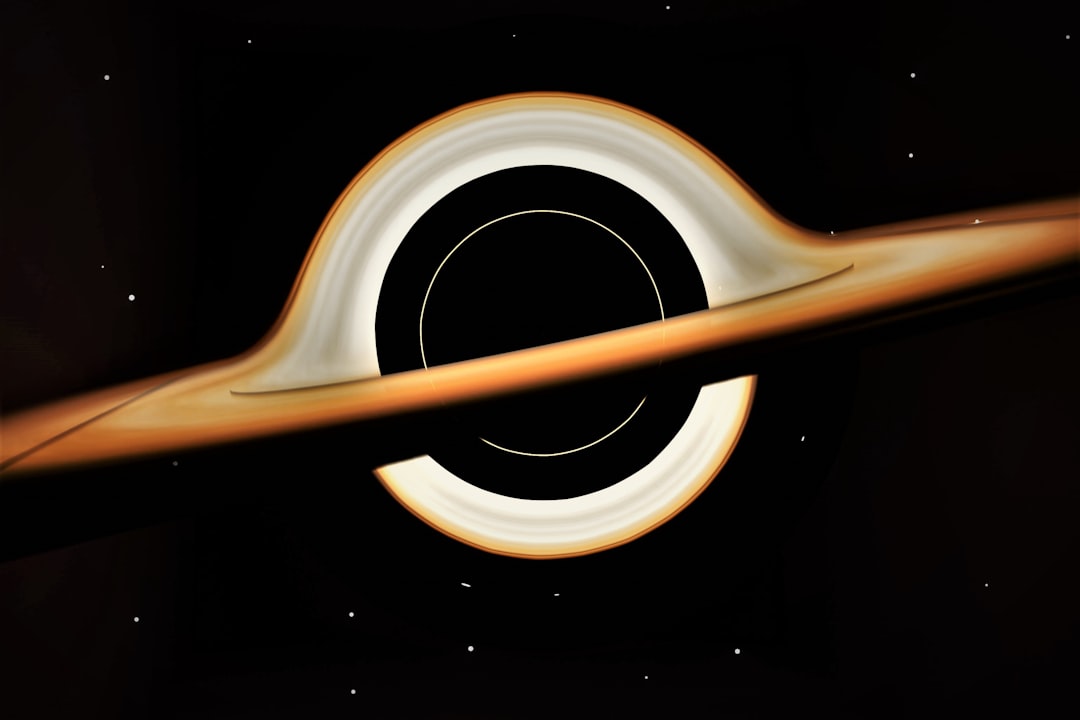
When a star collapses under its own gravity, it can form a singularity – a point of infinite density. Surrounding this singularity is the event horizon, a boundary beyond which nothing, not even light, can escape. Once something crosses the event horizon, it’s effectively lost to the outside universe. General Relativity tells you that whatever falls into a black hole is crushed at the singularity, its information seemingly erased from existence.
Quantum Mechanics: The Realm of the Infinitesimal
On the other side of the cosmic coin is Quantum Mechanics. This theory governs the behavior of matter and energy at the smallest scales – the realm of atoms and subatomic particles. Quantum mechanics is famously probabilistic and deterministic in a peculiar way: while you can’t predict the exact outcome of a single event, the overall behavior of a system is governed by precise mathematical rules.
One of the most fundamental principles of quantum mechanics is the conservation of information. This means that information about the quantum state of a system is never truly lost. It might be scrambled, hidden, or transformed, but it always persists in some form. Think of it like burning a book; while the original paper and ink are gone, the information encoded in the words still exists within the ash and smoke, albeit in a very dispersed and difficult-to-access state. This principle is so ingrained in quantum theory that challenging it is akin to questioning the laws of physics themselves.
The black hole information paradox poses a significant challenge to our understanding of physics, particularly in reconciling quantum mechanics with general relativity. A related article that delves deeper into this intriguing topic can be found at My Cosmic Ventures, where it explores various theories and perspectives surrounding the paradox, including the implications for our understanding of information preservation in the universe.
The Birth of the Paradox: Hawking Radiation’s Enigma
The paradox truly ignites when you introduce Stephen Hawking’s groundbreaking work on black hole evaporation. This is where the seemingly irreconcilable natures of General Relativity and Quantum Mechanics collide.
Quantum Fluctuations at the Event Horizon
Hawking, in the 1970s, realized that even empty space isn’t truly empty according to quantum mechanics. It’s teeming with “virtual particles” that pop in and out of existence in pairs, annihilating each other almost instantaneously. However, near the event horizon of a black hole, this delicate dance can be disrupted.
Imagine a pair of virtual particles: one falls into the black hole, while the other escapes. To an outside observer, it appears as if the black hole is emitting particles. This is Hawking radiation. Because the infalling particle has negative energy, its escape effectively drains energy from the black hole itself.
The Black Hole Evaporates, Taking Information With It?
Over vast amounts of time, this continuous emission of Hawking radiation causes the black hole to lose mass and eventually evaporate completely. And here’s where the problem arises: Hawking radiation, according to the original calculations, is thermal. This means it’s random and carries no information about what fell into the black hole. It’s like having a campfire that burns down and only leaves behind ash, with no way to reconstruct the original wood, leaves, or anything else that was thrown into it.
So, if the black hole evaporates, and its radiation is devoid of information, where does the information about the matter that formed and fell into the black hole go? Does it simply vanish? This is the core of the black hole information paradox. It suggests a fundamental violation of quantum mechanics’ cherished principle of information conservation.
The Loss of Information: A Violation of Quantum Law?
You’re facing a direct contradiction. General Relativity describes black holes as perfect information destroyers, while Quantum Mechanics insists information can never be truly erased. This isn’t just an academic debate; it has profound implications for your understanding of reality.
Unitary Evolution: The Unshakeable Quantum Principle
In quantum mechanics, the evolution of a quantum system over time is described by a mathematical operation called “unitary evolution.” This process is reversible, meaning that if you know the state of a system at one point in time, you can, in principle, reconstruct its state at any other point in time, past or future. This reversibility is intrinsically linked to the conservation of information. If a quantum process were truly irreversible, it would imply that information has been lost, which is a direct violation of unitarity.
The evaporation of a black hole, if it truly destroys information, would be a fundamentally non-unitary process. You would be witnessing a fundamental law of quantum mechanics being broken. This is something physicists are loath to accept, as quantum mechanics has been tested and verified to an astonishing degree. The paradox forces you to ask if your understanding of either gravity or quantum mechanics, or perhaps both, is incomplete.
What Does “Information” Mean in This Context?
It’s important to clarify what you mean by “information” in this context. You’re not talking about the lyrics of a song or the plot of a novel. You’re referring to the precise quantum properties of the particles and fields that constitute matter. This includes their spin, charge, energy, and their spatial relationships. For example, if you throw a book into a black hole, the information about the quantum states of all the atoms that make up that book is what’s at stake.
If this information is lost, it means that the specific initial quantum state of the universe is no longer knowable, even in principle, from its final state. This would have profound consequences for causality and our ability to predict the future or understand the past.
Potential Resolutions: Towards a Unified Picture

The paradox has spurred an immense amount of research, with physicists proposing various ingenious solutions. While no single answer has emerged as universally accepted, these proposed resolutions offer glimpses into how the universe might reconcile this apparent contradiction.
Complementarity: Two Sides of the Same Coin?
One of the earliest and most influential proposed resolutions comes from the idea of Black Hole Complementarity, championed by Leonard Susskind and others. This principle suggests that the information that falls into a black hole is not actually lost, but rather it is both encoded on the event horizon and eventually radiated back out.
From the perspective of an infalling observer, nothing special happens at the event horizon; they simply cross it and continue towards the singularity. Yet, from the perspective of an outside observer, the information is somehow imprinted on the event horizon. When the black hole evaporates, the Hawking radiation carries this information.
The crucial aspect of complementarity is that these two perspectives are not contradictory because an observer can never simultaneously occupy both. An infalling observer will never be able to compare their experience with the information encoded on the horizon. Similarly, an outside observer will never be able to witness the infalling observer’s journey beyond the horizon. This is a way of salvaging information conservation by allowing for different, non-contradictory descriptions of the same reality depending on the observer’s reference frame.
The Holographic Principle: A Universe of Projections
Another powerful idea that has emerged is the Holographic Principle. Inspired by string theory and research into black holes, this principle suggests that the physical description of a volume of space can be thought of as encoded on a lower-dimensional boundary of that region. Think of a hologram: a 3D image is projected from a 2D surface.
Applied to black holes, the holographic principle suggests that all the information about the matter that falls into a black hole might be encoded on its two-dimensional event horizon. As the black hole evaporates, this information would then be released with the Hawking radiation. This resolves the paradox by suggesting that information isn’t destroyed, but rather re-expressed in a different form and location, adhering to the principles of quantum mechanics.
This idea has profound implications, suggesting that the universe itself might be holographic, with all of its complexity encoded on a distant 3D boundary.
Firewalls: A Radical Reinterpretation
More recently, the firewall paradox, a thought experiment arising from the intersection of complementarity and quantum entanglement, has challenged existing resolution attempts. It proposes that as matter approaches the event horizon, it might encounter a “firewall” – a region of high-energy particles that would incinerate anything falling in.
This firewall scenario aims to preserve entanglement between the Hawking radiation and the interior of the black hole, which is a key aspect of quantum mechanics. However, it creates new problems, such as violating the equivalence principle of General Relativity, which states that spacetime is smooth and featureless at the event horizon for an infalling observer. The firewall hypothesis suggests that our current understanding of spacetime might need radical revision.
The black hole information paradox has intrigued physicists for decades, raising questions about the fundamental nature of information and its preservation in the universe. A related article that delves deeper into this topic can be found on My Cosmic Ventures, where it explores various theories and implications surrounding black holes and quantum mechanics. For those interested in understanding the complexities of this paradox, the article provides valuable insights and perspectives. You can read more about it here.
The Role of String Theory and Quantum Gravity
| Aspect | Description |
|---|---|
| Definition | The black hole information paradox refers to the conflict between the principles of quantum mechanics and general relativity regarding the fate of information that falls into a black hole. |
| Key Question | One of the key questions is whether information that enters a black hole is lost forever or if it can be preserved in some form. |
| Contributors | Physicists such as Stephen Hawking, Leonard Susskind, and others have made significant contributions to the study of the black hole information paradox. |
| Proposed Solutions | Various theories and hypotheses have been proposed to address the paradox, including the idea of black hole complementarity and the concept of holography. |
| Implications | Resolving the black hole information paradox has profound implications for our understanding of the fundamental laws of physics and the nature of spacetime. |
The most promising avenues for a complete resolution of the information paradox appear to lie in the pursuit of a theory of quantum gravity. This is the holy grail of theoretical physics, aiming to unify General Relativity and Quantum Mechanics into a single, consistent framework.
String Theory’s Stringent Requirements
String theory, one of the leading candidates for a theory of quantum gravity, offers potential mechanisms for information preservation. In string theory, fundamental particles are not point-like but rather tiny vibrating strings. The interactions and behavior of these strings can, in principle, account for gravity and quantum phenomena within a single framework.
String theory suggests that black holes are not singularities but rather composite objects made of these vibrating strings. The way these strings interact and rearrange themselves during black hole formation and evaporation could provide a mechanism for encoding and releasing information, thus resolving the paradox. While string theory is mathematically complex and experimentally difficult to verify, it provides a framework where the paradox might naturally dissolve.
Loop Quantum Gravity: Another Path to Unification
Another significant approach to quantum gravity is Loop Quantum Gravity. This theory quantifies spacetime itself, suggesting that it is not a smooth continuum but rather granular, made up of discrete loops. Loop quantum gravity offers a different perspective on black holes, viewing them as structures within this quantized spacetime.
Researchers in loop quantum gravity are exploring how information might be preserved through the quantum structure of spacetime, even in the extreme conditions of a black hole. While still in development, it offers an alternative theoretical playground for tackling the information paradox.
The Ongoing Quest: What Lies Ahead?
You’ve traversed the mind-bending landscape of the black hole information paradox. You’ve witnessed the clash between General Relativity and Quantum Mechanics, the enigmatic nature of Hawking radiation, and the myriad of proposed solutions that push the boundaries of your understanding. The quest for a definitive answer is far from over, but the journey itself is yielding profound insights.
The Importance of Experimental Evidence
While much of the work on the information paradox is theoretical, the search for indirect experimental evidence continues. Observing the subtle signatures of Hawking radiation, perhaps from primordial black holes or through gravitational wave astronomy, could provide crucial clues. Ultimately, a deeper understanding of quantum gravity will likely require new experimental approaches or theoretical breakthroughs that bridge the gap between these disparate realms of physics.
The Universe’s Hidden Secrets
The black hole information paradox is more than just a theoretical puzzle; it’s a mirror reflecting the limitations of your current understanding of the universe. It forces you to question fundamental assumptions about space, time, gravity, and the very nature of information. Each proposed resolution, each new theoretical development, is a step closer to unraveling the universe’s deepest secrets, revealing a reality that is perhaps stranger and more intricate than you can currently comprehend. You stand on the edge of a grand cosmic mystery, and the answers, when they come, will undoubtedly reshape your perception of reality itself.

Physicists Think Reality Might Be 2D
FAQs
What is the black hole information paradox?
The black hole information paradox refers to the conflict between the principles of quantum mechanics and general relativity in the context of black holes. It questions what happens to the information of particles that fall into a black hole, as according to quantum mechanics, this information cannot be destroyed, while general relativity suggests that it is lost.
Why is the black hole information paradox important?
The resolution of the black hole information paradox is important because it has implications for our understanding of fundamental physics, including the nature of space, time, and information. It also has implications for the consistency of quantum mechanics and general relativity.
What are some proposed solutions to the black hole information paradox?
Some proposed solutions to the black hole information paradox include the idea that information is somehow encoded on the event horizon of the black hole, the concept of “firewalls” at the event horizon, and the possibility of information leaking out of black holes through quantum processes.
What are the implications of resolving the black hole information paradox?
Resolving the black hole information paradox could have significant implications for our understanding of the fundamental laws of physics, including the nature of space, time, and information. It could also lead to new insights into the behavior of black holes and the nature of quantum gravity.
What are some current areas of research related to the black hole information paradox?
Current areas of research related to the black hole information paradox include studying the behavior of black holes using quantum field theory, investigating the properties of black hole event horizons, and exploring the connections between quantum mechanics and general relativity in the context of black holes.