The cosmic enigma of black holes has captivated scientists for decades, driving relentless efforts to understand these celestial behemoths that warp spacetime and defy conventional physics. While their gravitational influence is undeniable, the direct detection of black holes has proven to be one of the most formidable challenges in astrophysics. This quest involves not merely confirming their existence, but also unveiling their properties, their formation mechanisms, and their role in the grand cosmic tapestry. The journey to unraveling this challenge is a testament to human ingenuity and the relentless pursuit of knowledge, pushing the boundaries of observational capabilities and theoretical frameworks.
The Elusive Nature of Darkness
Black holes, by their very definition, are regions of spacetime where gravity is so intense that nothing, not even light, can escape. This inherent property makes them fundamentally invisible in the traditional sense. Unlike stars that emit light or planets that reflect it, black holes do not radiate electromagnetic waves that can be directly observed by telescopes. Their presence is inferred solely through their gravitational interactions with surrounding matter and light. This indirect evidence, while compelling, leaves a tantalizing gap in our understanding, fueling the drive for direct observational proof.
Gravitational Shadows and Event Horizons
The concept of the event horizon is central to the elusive nature of black holes. It represents the boundary beyond which escape is impossible. For astronomers, the event horizon is not a directly observable surface, but rather a theoretical construct defined by the black hole’s mass and spin. The region immediately surrounding the event horizon, however, is where the most dramatic interactions occur. Matter falling into a black hole can form an accretion disk, a swirling vortex of superheated gas and dust that emits intense radiation across the electromagnetic spectrum. This radiation, particularly X-rays, has been a primary means of indirectly detecting black holes. Yet, this is still not a direct “seeing” of the black hole itself.
The Quest for the “Shadow”
The breakthrough in directly observing a black hole came with the Event Horizon Telescope (EHT). This ingenious project links radio telescopes across the globe, effectively creating a virtual telescope with an Earth-sized aperture. This immense resolution allows astronomers to resolve the “shadow” of a black hole – the region of spacetime from which light cannot escape – against the bright backdrop of its accretion disk. The first image of the supermassive black hole at the center of galaxy Messier 87 (M87) in 2019, and later the image of Sagittarius A (Sgr A*), the black hole at the center of our own Milky Way, marked a monumental achievement. These images are not of the black hole itself, but rather of its silhouette cast against the light of infalling matter. They provide concrete visual evidence of the black hole’s presence and its immense gravitational pull, validating theoretical predictions.
The challenge of directly detecting black holes has captivated scientists and astronomers for decades, as it could provide unprecedented insights into the nature of these enigmatic cosmic entities. For a deeper understanding of the latest advancements and ongoing research in this field, you can explore a related article that discusses innovative techniques and the implications of potential discoveries. To read more, visit My Cosmic Ventures.
Indirect Signatures: The Detective Work of Astrophysics
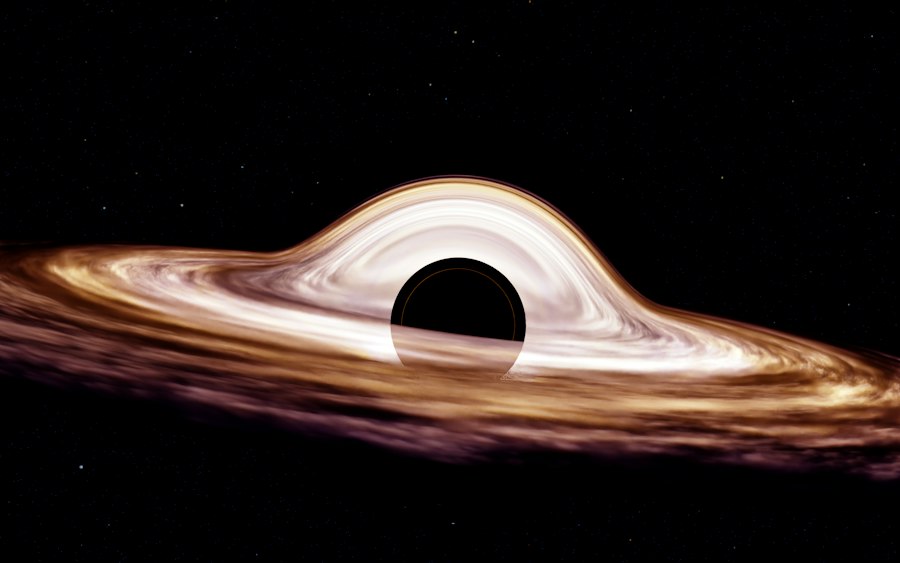
For a long time, the only way to “detect” a black hole was through meticulous detective work, piecing together clues from the cosmic environment. These indirect signatures have been instrumental in building the case for black holes and guiding the development of more direct observational techniques. They are the whispers of a hidden object, each piece of evidence a breadcrumb leading closer to the truth.
Accretion Disks and X-ray Emissions
When matter is drawn towards a black hole, it doesn’t fall straight in. Instead, it spirals inwards, forming an accretion disk. Friction within this disk heats the material to millions of degrees, causing it to emit powerful X-rays. Observatories like Chandra X-ray Observatory and the XMM-Newton telescope have been crucial in detecting these X-ray emissions from binary star systems where a visible star orbits an unseen compact object, strongly suggesting the presence of a black hole. The intensity and spectrum of these X-rays provide information about the mass and accretion rate of the black hole. However, these are emissions from matter around the black hole, not the black hole itself.
Gravitational Lensing and Warped Spacetime
The immense gravity of a black hole, like any massive object, can bend the path of light passing near it. This phenomenon, known as gravitational lensing, can distort the images of background galaxies. While lensing is observed around galaxies and galaxy clusters, the extreme warping of spacetime around a black hole can create unique lensing signatures. Detecting these precise distortions, though challenging, can offer clues about the mass and distribution of mass, potentially pointing to the presence of a black hole. This is akin to seeing the effect of an invisible object on the light from distant stars.
The challenge of directly detecting black holes has captivated scientists for years, as they seek to unravel the mysteries of these enigmatic cosmic entities. Recent advancements in observational technology have brought researchers closer to this goal, making it a hot topic in astrophysics. For those interested in exploring this subject further, a related article discusses the latest breakthroughs and methodologies in the field, shedding light on the complexities involved in black hole detection. You can read more about it in this insightful piece here.
Stellar Orbits and Kinematics
In the centers of galaxies, astronomers observe stars orbiting a central, invisible mass at incredibly high speeds. The orbits of these stars, mapped through precise measurements of their positions and velocities over many years, reveal the presence of a supermassive object whose mass cannot be accounted for by visible matter. The most compelling evidence for Sgr A* came from observing the orbits of stars like S0-2, which whip around the galactic center at astonishing speeds, indicating a mass of several million solar masses confined to a very small region – a hallmark of a supermassive black hole. This is indirect detection through gravitational influence on visible objects.
Gravitational Waves: Ripples in the Fabric of Spacetime

The direct detection of gravitational waves by the Laser Interferometer Gravitational-Wave Observatory (LIGO) and Virgo collaborations marked a paradigm shift in astronomy, opening a new window onto the universe. These ripples in spacetime, predicted by Einstein’s theory of general relativity, are generated by cataclysmic cosmic events, most notably the merger of black holes. This was the first time astronomers could directly “hear” the universe’s most violent events, offering an entirely new way to study black holes.
Merging Black Holes: The Loudest Cosmic Events
When two black holes spiral into each other and merge, they release an enormous amount of energy in the form of gravitational waves. These waves, traveling at the speed of light, stretch and squeeze spacetime as they pass. The LIGO and Virgo detectors are incredibly sensitive instruments designed to measure these minuscule distortions. The characteristic “chirp” signal detected by these observatories provides a direct fingerprint of the merging black holes, allowing scientists to determine their masses, spins, and the distance to the event. This is a direct observation of the phenomenon caused by the black holes, not the black holes themselves, but it is a direct observation of their gravitational influence in action.
Unveiling Stellar-Mass and Intermediate-Mass Black Holes
The detection of gravitational waves has been particularly crucial for discovering stellar-mass black holes in binary systems and, excitingly, hinting at the existence of intermediate-mass black holes (IMBHs). While supermassive black holes reside at galactic centers, and stellar-mass black holes are typically formed from the collapse of massive stars, IMBHs – with masses between stellar-mass and supermassive black holes – have remained elusive. Gravitational wave events have provided strong evidence for the existence of these missing links, filling a crucial gap in our understanding of black hole formation and evolution.
The Future of Gravitational Wave Astronomy
The field of gravitational wave astronomy is still in its infancy. With ongoing upgrades to existing detectors and the development of next-generation observatories like the Einstein Telescope and Cosmic Explorer, astronomers anticipate detecting fainter and more distant gravitational wave signals. This will allow for the study of a much larger population of black holes, including those formed in the early universe, and could potentially reveal new types of black hole mergers and other exotic gravitational wave sources.
The Event Horizon Telescope: Peering into the Abyss
The Event Horizon Telescope (EHT) represents a triumph of technological innovation and international collaboration, pushing the boundaries of observational astronomy to unprecedented levels. Its ability to capture images of the “shadows” of black holes has provided the most direct visual evidence yet of these enigmatic objects, transforming our understanding from theoretical inference to tangible observation.
Synthesizing Data from a Global Network
The EHT is not a single telescope but a network of radio telescopes located at observatories across the globe, including in Hawaii, Arizona, Spain, Chile, and even at the South Pole. By employing a technique called Very Long Baseline Interferometry (VLBI), these telescopes synchronize their observations with atomic clocks, effectively creating a virtual telescope with an angular resolution equivalent to a dish the size of the Earth. The sheer volume of data generated by this network is staggering, requiring sophisticated algorithms and supercomputers to process and reconstruct the final images.
Imaging

Did a Runaway Black Hole Leave This 200,000-Light-Year Trail?
FAQs
What is the black hole direct detection challenge?
The black hole direct detection challenge is a scientific endeavor aimed at detecting and studying black holes through direct observation and measurement of their properties.
How do scientists attempt to detect black holes directly?
Scientists use various methods such as gravitational wave detectors, X-ray telescopes, and radio telescopes to observe the effects of black holes on their surrounding environment and infer their presence.
Why is direct detection of black holes important?
Direct detection of black holes can provide valuable insights into their formation, evolution, and behavior, as well as help test the predictions of general relativity and other theories of gravity.
What are some of the challenges in directly detecting black holes?
Some challenges in directly detecting black holes include their elusive nature, the extreme conditions near them, and the need for advanced technology and observational techniques to overcome these obstacles.
What are the potential implications of successfully detecting black holes directly?
Successfully detecting black holes directly could lead to a better understanding of the universe, the nature of gravity, and the role of black holes in shaping galaxies and other cosmic structures.