You stand on the precipice of understanding your universe, a universe that began in a cataclysm of unimaginable proportion. Yet, it’s not the fiery explosion that whispers its secrets to you today, but the delicate echo, the faint hum that permeates the very fabric of existence. This is the Big Bang afterglow, the Cosmic Microwave Background (CMB), and unraveling its mysteries is like piecing together the primordial lullaby of everything you perceive.
Imagine a time, a mere 380,000 years after the unimaginable birth of your cosmos. The universe, still a scorching plasma, was opaque. Photons, the fundamental particles of light, were constantly scattering off free electrons, trapped in a dazzling, inescapable dance. But as the universe expanded and cooled, things changed. Electrons and protons finally found each other, binding together to form stable atoms of hydrogen and helium. Suddenly, the universe became transparent. The photons, freed from their cosmic prison, were able to travel unimpeded. This is the moment the CMB was born – the moment the universe first became transparent to light, and those liberated photons became the oldest light you can possibly detect.
A Uniformity Unveiled: The Initial State of the Universe
When you first look at the CMB, you might be struck by its remarkable uniformity. It appears as a near-perfect, almost featureless glow across the entire sky, emanating from every direction with an astounding consistency in temperature. This uniformity is a profound clue. It suggests that in its infancy, the universe was incredibly homogeneous. Local variations in density and temperature were minuscule, setting the stage for a remarkably smooth expansion. This apparent sameness, however, holds within it the seeds of all the cosmic structures you see today.
The Doppler Effect’s Signature: Our Motion Through Space
While the CMB is remarkably uniform, it’s not perfectly so. You’ll notice tiny temperature variations, fluctuations of mere parts per hundred thousand. But before you delve into those subtle shifts, consider this: the CMB isn’t entirely still relative to you. The slight dip in temperature in one part of the sky and the corresponding slight warmth in another aren’t inherent to the CMB itself but are a reflection of your motion. You, along with our entire solar system, the Milky Way galaxy, and even our local galactic cluster, are hurtling through space. This motion creates a Doppler effect on the CMB photons: those coming from the direction you’re moving towards are slightly blueshifted (and thus appear warmer), while those from the direction you’re moving away from are slightly redshifted (and appear cooler). Understanding this dipole, this apparent “hot” and “cold” spot due to our movement, is crucial for correctly interpreting the true nature of the CMB’s inherent variations.
Beyond the Visible: Observing the Invisible
The CMB isn’t something you can see with your naked eye. Its light falls in the microwave portion of the electromagnetic spectrum, just beyond the visible light we perceive. To detect and study it, you need specialized instruments – radio telescopes equipped with highly sensitive detectors that can pick up these faint microwave signals. These observatories, often located in extremely dry, high-altitude locations to minimize atmospheric interference, are your windows into the universe’s earliest moments.
The fascinating phenomenon of the Big Bang afterglow, known as cosmic microwave background radiation, has been a subject of extensive research and discussion in the field of cosmology. For those interested in exploring this topic further, a related article can be found at My Cosmic Ventures, which delves into the implications of this afterglow on our understanding of the universe’s origins and evolution.
Unearthing the Tiny Ripples: The CMB’s Anisotropies
The real magic of the CMB lies not in its overwhelming uniformity, but in the incredibly subtle lack of uniformity – the anisotropies. These are the minuscule temperature fluctuations, the cosmic fingerprints left behind by the early universe. They are not random noise; they are the encoded history of the universe’s infancy, the primordial seeds from which all galaxies and cosmic structures eventually grew.
The Sound of the Early Universe: Acoustic Oscillations
Imagine the early universe as a vast, rapidly expanding fluid plasma. Within this plasma, regions of slightly higher density would have exerted a gravitational pull, attracting more matter. However, the outward pressure from the hot photons, constantly trying to escape, also played a crucial role. This interplay between gravity, pulling matter in, and photon pressure, pushing it out, created a resonant phenomenon akin to sound waves oscillating through the plasma. These are known as acoustic oscillations.
Peaks and Valleys: The Power Spectrum’s Story
When you analyze the statistical properties of these temperature fluctuations, you get something called the CMB power spectrum. This is essentially a graph that shows the strength of the temperature variations at different angular scales across the sky. The power spectrum of the CMB is remarkably well-defined and exhibits distinct peaks and troughs. The positions and heights of these peaks tell you a tremendous amount about the composition and evolution of the early universe. The first, most prominent peak, for example, corresponds to the largest acoustic oscillations that had time to fully form before the universe became transparent. Subsequent peaks represent smaller oscillations, providing a detailed map of the universe’s primordial soundscape.
The Seeds of Structure: How Gravitational Instabilities Grew
Those tiny density fluctuations, amplified by acoustic oscillations and then further influenced by gravity, were the crucial seeds for all the cosmic structures you see today. Regions of slightly higher density, where matter began to clump together, acted as gravitational wells. Over billions of years, these wells attracted more matter, drawing in gas and dark matter, eventually leading to the formation of stars, galaxies, and the vast cosmic web that stretches across the universe. The anisotropies in the CMB are a direct testament to the very beginning of this cosmic sculpting process.
The Role of Dark Matter: An Invisible Architect
The formation of structures is not solely dictated by visible matter. Dark matter, an invisible form of matter that interacts only through gravity, plays a pivotal role. Because dark matter doesn’t interact with photons, its density fluctuations were not smoothed out by the same acoustic oscillations as baryonic (visible) matter in the early universe. Instead, these dark matter overdensities grew unimpeded, providing the gravitational scaffolding upon which baryonic matter later collapsed to form galaxies. The CMB anisotropies are instrumental in constraining the amount of dark matter in the universe.
Decoding the Universe’s Composition: What the CMB Tells You

The detailed analysis of the CMB’s temperature fluctuations has allowed you to paint an incredibly precise picture of your universe’s fundamental ingredients. It’s like having a cosmic ingredient list, revealed by the ancient light.
The Baryonic Bounty: Visible Matter’s Slice
The CMB directly reveals the proportion of ordinary, visible matter – the stuff that makes up stars, planets, and you. This is the baryonic matter. Through meticulous analysis of the power spectrum, cosmologists have determined that baryonic matter constitutes a surprisingly small fraction of the universe’s total mass-energy.
The Mystical Dark Matter: The Dominant Force
As mentioned earlier, dark matter is a significant player. The CMB data strongly supports the existence of dark matter and provides an estimate of its abundance. It’s fascinating to consider that the majority of the matter in your universe is something you cannot see or directly interact with.
The Energetic Dark Energy: The Cosmic Accelerator
Perhaps the most intriguing discovery from CMB observations is the existence of dark energy. This mysterious force appears to be driving the accelerated expansion of the universe, pushing galaxies further and further apart at an ever-increasing rate. The CMB’s geometry and the patterns within its anisotropies are exquisitely sensitive to the overall curvature of the universe and how that curvature has evolved over time, providing compelling evidence for the dominance of dark energy in the universe’s energy budget.
Beyond the Standard Model: Probing Fundamental Physics
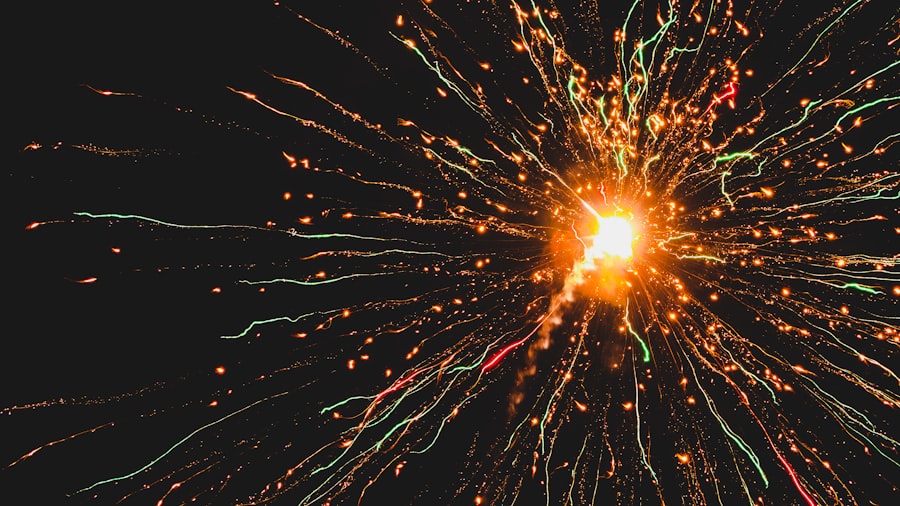
The precision with which you can measure the CMB has propelled particle physics and cosmology into new realms, pushing the boundaries of your understanding and hinting at physics beyond the current Standard Model.
Inflationary Echoes: The Dawn of Cosmic Expansion
One of the most significant implications of CMB observations is the strong support for the theory of cosmic inflation. This theory proposes an extremely rapid period of exponential expansion in the universe’s first fleeting moments, just fractions of a second after the Big Bang. Inflation explains the observed homogeneity and flatness of the universe. Crucially, it predicts certain statistical properties of the CMB anisotropies, which your observations have remarkably confirmed. Detecting primordial gravitational waves, a predicted consequence of inflation, would be the ultimate confirmation.
Searching for Polarization: Gravitational Wave Signatures
Inflation is also predicted to leave its mark on the CMB through polarization – the orientation of the light waves. Specifically, it should produce a pattern of B-modes in the CMB polarization. Detecting these B-modes is a major goal for current and future CMB experiments. Their presence would be a smoking gun for gravitational waves generated during inflation, offering an unprecedented glimpse into the universe at its absolute earliest moments and providing crucial data to refine or even revolutionize your models of fundamental physics.
Testing Cosmological Models: Precision Cosmology’s Triumph
The CMB acts as a Rosetta Stone for cosmology. By precisely measuring its properties, you can test and refine your cosmological models with unprecedented accuracy. The concordance between different cosmological parameters derived from CMB observations and those derived from other astronomical measurements is a testament to the success of the current Lambda-CDM model, which describes a universe dominated by dark energy and cold dark matter. However, any deviations from the predicted patterns could signal the need for entirely new physics.
The study of the Big Bang afterglow has captivated scientists for decades, shedding light on the origins of our universe. For those interested in delving deeper into this fascinating topic, a related article offers a comprehensive explanation of cosmic microwave background radiation and its significance in understanding the early universe. You can explore this intriguing subject further by visiting this article, which provides valuable insights into the remnants of the Big Bang and their implications for modern cosmology.
The Future of Afterglow: What Lies Ahead
| Metrics | Data |
|---|---|
| Age of the universe | 13.8 billion years |
| Temperature of the cosmic microwave background radiation | 2.725 Kelvin |
| Composition of the universe | 68% dark energy, 27% dark matter, 5% ordinary matter |
| Observable universe size | 93 billion light-years in diameter |
Your understanding of the CMB is far from complete. As your observational capabilities and analytical techniques advance, you continue to unravel deeper secrets and push the frontiers of cosmic knowledge.
Next-Generation Telescopes: Sharper Eyes on the Past
The ongoing development of even more sensitive and sophisticated CMB telescopes promises to deliver data with unprecedented resolution and precision. These new instruments are designed to detect fainter signals, map polarization with greater accuracy, and probe the CMB at different frequencies, allowing for a more detailed dissection of its intricate patterns.
Exploring the Epoch of Reionization: A Cosmic Fog to Pierce
Beyond the CMB we routinely observe, there’s another frontier: the Epoch of Reionization. After the initial formation of neutral atoms, the universe was filled with neutral hydrogen. The first stars and galaxies began to form, and their intense ultraviolet radiation started to ionize this hydrogen, eventually clearing the cosmic fog. Studying the subtle effects of this process on future CMB observations or through other associated signals is a key area of research.
The Ultimate Questions: Mysteries Still to Unravel
Despite your remarkable progress, fundamental questions about the CMB and the universe it represents remain. What exactly is dark energy? Did inflation truly happen, and if so, what was its precise mechanism? Are there other particles or forces that influenced the early universe that we haven’t yet discovered? The CMB, with its ancient whispers, continues to beckon you towards these profound cosmic enigmas, promising further revelations as you continue to listen to its timeless story.

The Universe Never Truly Forgets. Physics Can’t Explain Why.
FAQs
What is the big bang afterglow?
The big bang afterglow, also known as the cosmic microwave background (CMB), is the residual radiation left over from the Big Bang. It is the oldest light in the universe, dating back to about 380,000 years after the Big Bang.
How is the big bang afterglow explained?
The big bang afterglow is explained by the theory of cosmic inflation, which suggests that the universe underwent a rapid expansion in the first moments after the Big Bang. This expansion caused the universe to cool and allowed for the formation of the CMB.
What does the big bang afterglow tell us about the universe?
Studying the big bang afterglow provides valuable insights into the early universe, including its age, composition, and overall structure. It also supports the Big Bang theory and helps scientists understand the formation and evolution of the universe.
How is the big bang afterglow observed?
The big bang afterglow is observed using telescopes and satellites that can detect microwave radiation. One of the most famous instruments used to study the CMB is the Planck satellite, which mapped the afterglow in unprecedented detail.
What are the implications of understanding the big bang afterglow?
Understanding the big bang afterglow has significant implications for our understanding of the universe’s origins and evolution. It helps to confirm the Big Bang theory and provides crucial data for cosmological models and theories. Additionally, it offers insights into the fundamental properties of the universe, such as its expansion rate and overall structure.