
The universe, vast and enigmatic, holds secrets that have captivated humanity for millennia. While telescopes have provided glimpses into its celestial tapestry, the true nature of galaxies – their formation, evolution, and the cosmic structures they inhabit – remains a subject of intense scientific inquiry. Cataloging and characterizing these luminous islands of stars en masse presents a formidable challenge. Historically, this process was slow and laborious. However, a significant advancement in astronomical instrumentation, the multiplex spectrograph, has revolutionized our ability to conduct large-scale galaxy surveys, thus unlocking a deeper understanding of the universe.
Multiplex spectrographs are sophisticated instruments that allow for the simultaneous spectral analysis of multiple astronomical objects. Unlike traditional spectrographs that focus on a single target, these advanced devices are equipped with an array of optical fibers or other light-splitting mechanisms. Each fiber or element is precisely positioned to capture light from an individual galaxy within a targeted region of the sky. This multiplexing capability drastically accelerates the data acquisition process, transforming the pace at which astronomers can gather crucial spectroscopic information about a vast number of galaxies. This article delves into the impact and methodologies of multiplex spectrograph galaxy surveys, exploring their scientific objectives, technical underpinnings, and the profound insights they are yielding about the cosmos.
The study of galaxies is fundamental to understanding the universe’s history and its ultimate fate. Individual galaxy observations, while valuable, can only offer a fragmented picture. Large-scale surveys, enabled by multiplex spectrographs, provide the statistical power and comprehensive datasets necessary to address fundamental cosmological questions.
Tracing Cosmic Structure and Evolution
Galaxies are not randomly distributed throughout the universe. They aggregate into complex filamentary structures and vast voids, forming the “cosmic web.” Surveying millions of galaxies allows astronomers to map this cosmic architecture with unprecedented detail, providing insights into the initial conditions of the universe and the gravitational processes that have shaped its evolution over billions of years.
Mapping the Cosmic Web
The distribution of galaxies as observed in large surveys reveals a pattern reminiscent of a sponge, with dense clusters and superclusters connected by tenuous filaments, separated by enormous voids. Understanding the morphology and extent of these structures informs models of dark matter distribution, as dark matter is the dominant gravitational influence driving the formation of these large-scale structures.
Understanding Galaxy Formation and Mergers
The physical properties of galaxies, such as their star formation rates, chemical compositions, and stellar populations, are imprinted in their spectra. By analyzing these spectra for entire surveys, astronomers can identify trends and correlations, revealing how galaxies form and grow over cosmic time. Specifically, the presence and abundance of different elements indicate the history of star formation and nucleosynthesis within a galaxy.
Probing the Distant Universe and Early Cosmic Epochs
Light travels at a finite speed. Therefore, observing distant galaxies is akin to looking back in time. Multiplex spectrograph surveys are designed to capture light from objects billions of light-years away, providing a window into the universe as it was in its youth. This is crucial for understanding how the first galaxies formed and how the universe transitioned from a homogeneous state to the complex structure we observe today.
Redshift Measurements and Cosmological Distances
The redshift of a galaxy, the stretching of its light towards longer wavelengths due to the expansion of the universe, is a direct measure of its recession velocity and, consequently, its distance. Multiplex spectrographs are highly efficient at obtaining precise redshift measurements for thousands of galaxies simultaneously. This allows for the construction of three-dimensional maps of the universe, revealing the spatial distribution of galaxies and the expansion history of the cosmos.
Studying the Epoch of Reionization
The early universe was a neutral and opaque medium. The epoch of reionization, when the first stars and galaxies emerged and their ultraviolet radiation began to ionize the surrounding hydrogen, marked a pivotal transformation. Spectroscopic surveys of high-redshift galaxies, facilitated by multiplex spectrographs, are essential for identifying the sources responsible for reionization and understanding its timeline and impact on the subsequent evolution of the universe.
Characterizing Galaxy Populations and Their Diversity
The universe is populated by a diverse array of galaxies, varying in size, shape, star formation activity, and metallicity. Spectroscopic surveys allow for the detailed characterization of these populations, enabling astronomers to classify galaxies and investigate the physical processes that lead to their distinct properties.
The Hubble Sequence and Beyond
While the Hubble sequence provides a morphological classification of galaxies, spectroscopic data offers a more fundamental understanding of their underlying physics. By analyzing emission and absorption lines in galaxy spectra, astronomers can determine their star formation rates, the age of their stellar populations, and the presence of active galactic nuclei (AGN). This allows for a more nuanced classification based on physical characteristics rather than just visual appearance.
The Role of Environment in Galaxy Evolution
Galaxies do not evolve in isolation. Their evolutionary pathways are significantly influenced by their surroundings, including the density of their environment and the presence of nearby galaxies. Large spectroscopic surveys enable the study of galaxy properties as a function of their environment, revealing how interactions, mergers, and gas accretion shape galactic evolution.
Recent advancements in multiplex spectrograph galaxy surveys have significantly enhanced our understanding of the universe’s structure and evolution. For a deeper dive into the implications of these surveys and their impact on cosmology, you can explore the related article available at this link. This resource provides valuable insights into how multiplex spectrographs are revolutionizing our ability to study distant galaxies and their properties.
The Technology: How Multiplex Spectrographs Work
The remarkable efficiency of multiplex spectrograph galaxy surveys is a testament to significant advancements in optical engineering, detector technology, and data processing. These instruments are complex systems designed to gather and analyze light from many targets concurrently.
Optical Fiber Spectrographs
One of the most common implementations of multiplex spectrographs utilizes optical fibers. Thousands of these flexible glass filaments are precisely drilled into a metal plate, known as a focal plane mask, which is positioned at the telescope’s focal point. Each fiber is aligned to capture light from a specific galaxy or astronomical object within the field of view.
Focal Plane Mask Fabrication
The fabrication of focal plane masks is a critical and intricate process. Astronomers use imaging data from wide-field mosaic cameras to identify target galaxies. These targets are then meticulously mapped onto a drill pattern for the focal plane mask. High-precision robotic drills are used to create the holes for the optical fibers, ensuring that each fiber is accurately positioned to capture light from its designated target.
Fiber Alignment and Positioning
Once the fibers are installed, they are carefully aligned to ensure optimal light transmission. The free ends of the fibers are then grouped and fed into spectrographs. The ability to precisely position thousands of fibers allows for the simultaneous observation of a vast number of galaxies within a single pointing of the telescope.
Integral Field Units (IFUs)
Another powerful approach to multiplex spectroscopy is the use of Integral Field Units (IFUs). Unlike fiber-based systems that sample discrete points, IFUs capture a complete spectrum for every spatial pixel within a defined two-dimensional field of view. This provides spatially resolved spectroscopic information across a galaxy or a small region of the sky.
Reformatting Light for Spectroscopy
IFUs typically employ a series of lenses or mirrors to slice the incoming two-dimensional field of view into multiple thin strips. These strips are then rearranged or “reformatted” into a pseudo-3D data cube, where one dimension represents wavelength and the other two represent spatial dimensions. This allows for the generation of spectral data for every point within the observed region.
Spatially Resolved Kinematics and Chemistry
The spatially resolved spectroscopic data provided by IFUs is invaluable for studying internal galaxy dynamics, such as rotation curves and velocity dispersions. It also allows for mapping the distribution of different chemical elements within galaxies, revealing gradients and variations in star formation history and chemical enrichment.
Detector Technology and Data Acquisition
The success of multiplex spectrograph surveys also relies heavily on advanced detector technology and efficient data acquisition systems. Modern astronomical detectors, such as charge-coupled devices (CCDs) and complementary metal-oxide-semiconductor (CMOS) sensors, are highly sensitive and capable of recording faint signals from distant galaxies.
High-Quantum Efficiency Detectors
The detectors used in these instruments are chosen for their high quantum efficiency, meaning they are very effective at converting incoming photons into measurable electronic signals. This is crucial for detecting the faint light emitted by distant galaxies.
Efficient Readout and Data Pipelines
The sheer volume of data generated by multiplex surveys necessitates robust and efficient data acquisition and processing pipelines. Automated software systems are employed to process raw spectral data, perform calibration, extract individual galaxy spectra, and measure their redshifts and other key parameters, often in near real-time.
Pioneering Surveys: The Impact of Early Multiplex Spectrographs
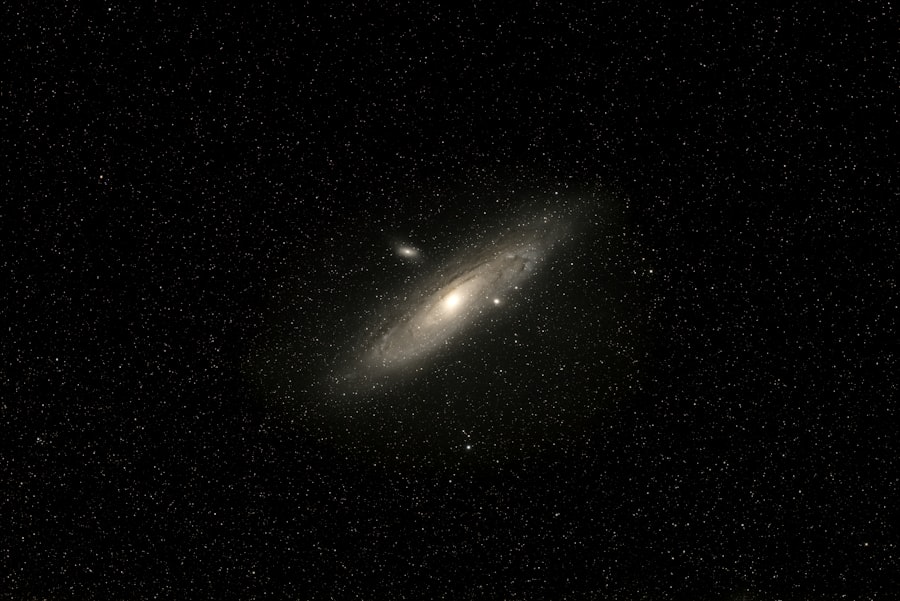
The development and deployment of early multiplex spectrographs marked a paradigm shift in astronomical surveys. These instruments enabled scientists to move beyond studying individual galaxies in detail to systematically cataloging vast populations and unveiling large-scale cosmic structures.
The Anglo-Australian Telescope (AAT) and the 2dF Galaxy Redshift Survey
The 2dF Galaxy Redshift Survey, conducted using the 2dF spectrograph on the Anglo-Australian Telescope, was one of the most influential early multiplex surveys. It demonstrated the power of this technology by collecting spectra for over 200,000 galaxies.
Mapping the Local Universe
The 2dF survey provided unprecedented detail in mapping the distribution of galaxies in the local universe, confirming and refining the existence of the cosmic web and providing crucial data for cosmological parameter estimation. The accuracy and sheer number of redshift measurements allowed for detailed studies of galaxy clustering and the properties of galaxy halos.
Investigating Galaxy Populations
By collecting spectra, the 2dF survey also enabled the investigation of the physical properties of different galaxy populations within the mapped volume. This included studies of the relationship between galaxy morphology and environment, as well as the star formation history of galaxies in different cosmic structures.
The Sloan Digital Sky Survey (SDSS) and its Spectroscopic Components
The Sloan Digital Sky Survey (SDSS) is a monumental undertaking that has continually pushed the boundaries of astronomical surveys. Its spectroscopic components have employed innovative multiplexing techniques, including fiber-fed spectrographs and IFUs, to gather an immense spectroscopic dataset.
Unveiling Millions of Galaxies
The SDSS has spectroscopically observed millions of galaxies, creating the largest three-dimensional maps of the universe ever produced. These surveys have provided definitive measurements of cosmological parameters such as the matter density, dark energy density, and the Hubble constant. The sheer scale of the SDSS data has enabled statistical studies of galaxy populations and their evolution with unprecedented precision.
Understanding Galaxy Properties and Evolution
Beyond redshift measurements, the SDSS spectroscopic data has allowed for detailed studies of galaxy properties, including their star formation rates, stellar masses, metallicities, and the presence of active galactic nuclei. This has led to a deeper understanding of how galaxies form, grow, and evolve over cosmic timescales, and how their properties are influenced by their environment. The SDSS has also been instrumental in identifying and characterizing the most luminous quasars, providing insights into the early phases of supermassive black hole growth.
The Next Generation: Future Multiplex Spectrograph Surveys
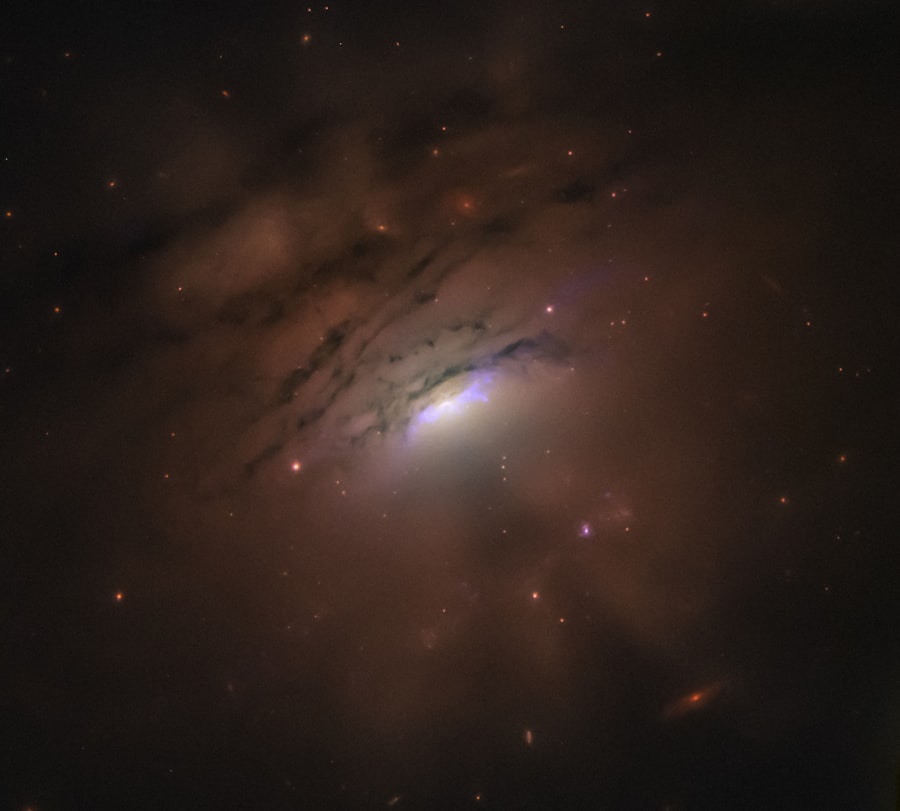
The success of previous multiplex spectrograph surveys has paved the way for even more ambitious projects. Future instruments and surveys are being designed to probe deeper into the universe, with higher resolution and sensitivity, to address more challenging scientific questions.
The Dark Energy Spectroscopic Instrument (DESI)
The Dark Energy Spectroscopic Instrument (DESI) is a cutting-edge facility designed to map the distribution of galaxies and quasars over a vast volume of the universe. Its primary goal is to precisely measure the expansion history of the universe and constrain the nature of dark energy.
Targeting Millions of Fibers
DESI utilizes a unique design with 5,000 robotic optical fibers mounted on a single focal plane. These fibers can be independently positioned to target galaxies and quasars, allowing for the rapid acquisition of spectra for a large number of objects in a single exposure. This massive multiplexing capability is key to its ambitious survey goals.
Constraining Dark Energy Models
By meticulously charting the large-scale structure of the universe, DESI will provide highly precise measurements of baryonic acoustic oscillations (BAOs) and other cosmological probes. These measurements are crucial for understanding the nature of dark energy, the mysterious force driving the accelerated expansion of the universe, and for testing various theoretical models of cosmology.
The Prime Focus Spectrograph (PFS) on the Subaru Telescope
The Prime Focus Spectrograph (PFS) is a wide-field, fiber-based multi-object spectrograph being installed on the Subaru Telescope. It is designed to conduct large-scale spectroscopic surveys focused on understanding galaxy evolution, the formation of supermassive black holes, and the nature of dark matter.
Extensive Target Capabilities
PFS will be able to feed up to 2,396 optical fibers, allowing for the simultaneous spectroscopic observation of a large number of astronomical objects. This broad capability makes it suitable for both deep spectroscopy of individual galaxies and large-scale surveys of galaxy populations across various cosmic epochs.
Exploring Galaxy Evolution and Cosmology
PFS will contribute significantly to our understanding of how galaxies evolve in different environments, the co-evolution of galaxies and supermassive black holes, and the distribution of dark matter. Its observations will extend to high redshifts, providing insights into the early universe and the formation of the first luminous structures.
The Multi-Object Spectrograph for the Giant Magellan Telescope (GMT-Pol)
As ground-based telescopes grow in size and capability, so too do their spectroscopic instruments. Instruments for future Extremely Large Telescopes (ELTs) like the Giant Magellan Telescope (GMT) will push the boundaries of multiplex spectroscopy even further.
Pushing the Limits of Sensitivity and Resolution
Instruments like GMT-Pol, designed for the GMT, will leverage the unprecedented light-gathering power of the ELT to conduct surveys with exceptional sensitivity and spectral resolution. This will enable the detailed study of faint, distant galaxies and the measurement of subtle spectroscopic features that are currently inaccessible.
Addressing Fundamental Cosmological Questions
These future instruments will be crucial for answering some of the most profound questions in astrophysics and cosmology. They will enable detailed studies of the epoch of reionization, the formation of the first stars and galaxies, and the precise measurement of cosmological parameters that could reveal new physics beyond our current standard model.
Recent advancements in multiplex spectrograph galaxy surveys have significantly enhanced our understanding of the universe. These surveys allow astronomers to observe and analyze the light from thousands of galaxies simultaneously, providing valuable insights into their formation and evolution. For those interested in exploring this topic further, a related article can be found at My Cosmic Ventures, which delves into the latest techniques and discoveries in the field. This innovative approach is reshaping our knowledge of cosmic structures and their interactions.
Challenges and Future Directions
| Survey Name | Number of Galaxies | Observational Wavelength Range | Resolution |
|---|---|---|---|
| SDSS (Sloan Digital Sky Survey) | over 2 million | 380-920 nm | 55,000 |
| 2dF Galaxy Redshift Survey | over 245,000 | 360-800 nm | 9,000 |
| DEEP2 Galaxy Redshift Survey | over 50,000 | 650-910 nm | 6,000 |
Despite the immense progress made with multiplex spectrograph galaxy surveys, several challenges remain, and future research will need to address these to further unlock the universe’s secrets.
Data Volume and Processing
The sheer volume of data generated by modern multiplex spectrograph surveys is a significant challenge. Efficient data processing, storage, and analysis require substantial computational resources and sophisticated algorithms. Developing even more advanced automated pipelines and machine learning techniques will be crucial for extracting scientific insights from these ever-growing datasets.
Developing Advanced Data Analysis Techniques
As datasets increase in size, so does the complexity of extracting meaningful scientific information. Future research should focus on developing novel algorithms for cataloging, deblending, and analyzing spectra from millions of objects. Machine learning and artificial intelligence are already playing an increasing role, and their application will likely expand.
Ensuring Data Accessibility and Collaboration
Making these large datasets publicly accessible and fostering collaborative research is essential for maximizing their scientific impact. Establishing robust data archives and facilitating interdisciplinary collaboration will accelerate discovery and ensure that the full potential of these surveys is realized.
Observing Time and Resource Allocation
Observing time on large telescopes is a precious and competitive resource. Optimizing survey strategies and maximizing the scientific return from each allocated observing slot is paramount. This involves careful planning, target selection, and efficient instrument calibration.
Optimizing Survey Strategies
Careful consideration of survey design, including target selection criteria, sky coverage, and exposure times, is vital for maximizing scientific output within limited observing time. This requires close collaboration between observational astronomers and theorists to ensure that surveys are designed to address key scientific questions.
Technological Innovations in Instrumentation
Continuous innovation in instrumentation is essential. Future multiplex spectrographs will likely incorporate new technologies such as adaptive optics to improve image quality, advanced detector technologies for greater sensitivity, and more sophisticated fiber positioning systems for increased efficiency.
Understanding Spectroscopic Uncertainties and Biases
All astronomical observations are subject to uncertainties and potential biases. Precisely understanding and quantifying these limitations in spectroscopic measurements is critical for drawing robust scientific conclusions. This includes accounting for factors such as atmospheric conditions, instrument calibration errors, and inherent selection biases in the target selection process.
Calibration and Error Analysis
Rigorous calibration procedures are essential for ensuring the accuracy of spectroscopic measurements. This includes accounting for instrumental signatures, telluric absorption, and flux calibration. Precise error analysis is also critical for assessing the reliability of scientific results derived from the data.
Mitigating Selection Effects
Galaxy surveys are often subject to selection effects, where the observed sample may not be perfectly representative of the underlying galaxy population. Understanding and mitigating these biases, for example, by observing over a wide range of apparent magnitudes and redshifts, is crucial for drawing accurate conclusions about the universe.
Multiplex spectrograph galaxy surveys have irrevocably transformed our understanding of the universe. By enabling the comprehensive and efficient spectroscopic analysis of millions of galaxies, these groundbreaking instruments have allowed us to map the cosmic web, trace the evolution of galaxies across cosmic time, and probe the fundamental properties of the universe. As technology continues to advance and future surveys are launched, we can anticipate even more profound discoveries, further unlocking the mysteries of the cosmos.
FAQs
What is a multiplex spectrograph galaxy survey?
A multiplex spectrograph galaxy survey is a method used by astronomers to study large numbers of galaxies simultaneously. It involves using a spectrograph to measure the light from multiple galaxies at the same time, allowing for efficient data collection and analysis.
How does a multiplex spectrograph work in galaxy surveys?
A multiplex spectrograph works by splitting the light from multiple galaxies into its component wavelengths, allowing astronomers to analyze the spectra of each galaxy. This provides valuable information about the galaxies’ composition, motion, and distance from Earth.
What are the advantages of using a multiplex spectrograph for galaxy surveys?
Using a multiplex spectrograph for galaxy surveys allows astronomers to study a large number of galaxies in a relatively short amount of time. This can lead to more comprehensive and statistically significant results, and can help researchers better understand the large-scale structure of the universe.
What are some examples of multiplex spectrograph galaxy surveys?
Some examples of multiplex spectrograph galaxy surveys include the Sloan Digital Sky Survey (SDSS) and the Dark Energy Spectroscopic Instrument (DESI) survey. These surveys have provided valuable data on the distribution and properties of galaxies in the universe.
How do multiplex spectrograph galaxy surveys contribute to our understanding of the universe?
Multiplex spectrograph galaxy surveys contribute to our understanding of the universe by providing data on the distribution, composition, and motion of galaxies. This information can help astronomers study the large-scale structure of the universe, the evolution of galaxies over time, and the nature of dark matter and dark energy.