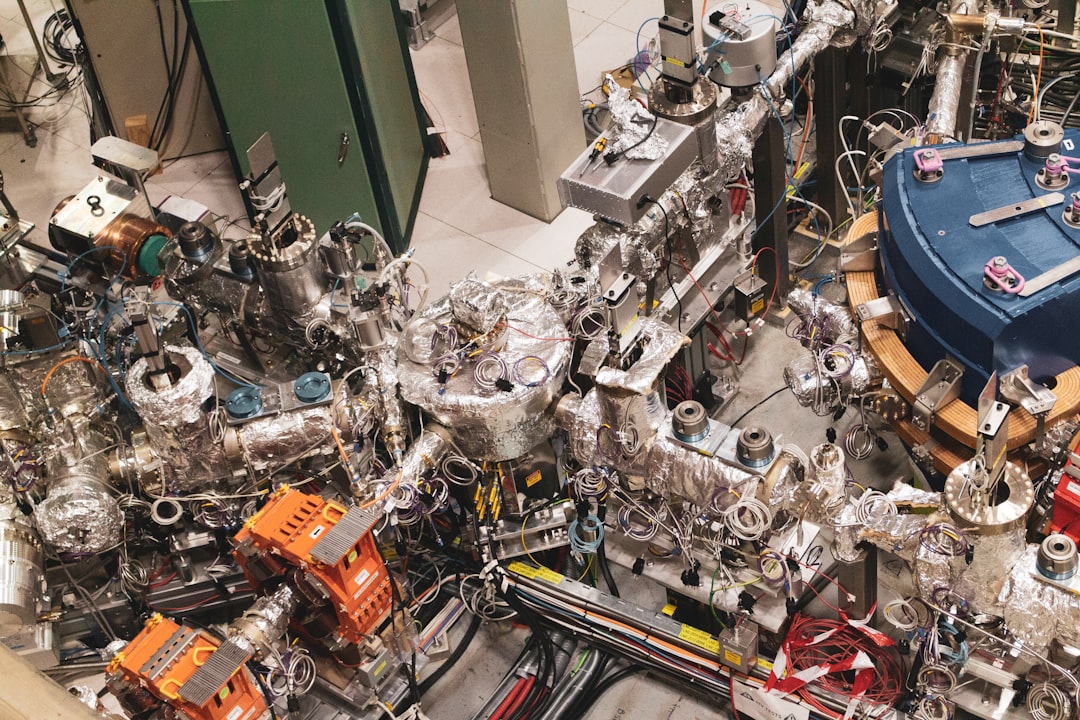
The notion of quantum mechanics, traditionally confined to the subatomic realm of electrons and photons, has increasingly found its way into discussions about biological processes. While definitive proof often remains elusive, a growing body of research speculates on the potential for quantum effects to play a significant, albeit subtle, role in the remarkable adaptive capabilities of living organisms. This exploration delves into the hypothetical concept of “Quantum Adaptive Engines” – intricate, emergent systems within biological entities that leverage quantum phenomena to optimize survival and function. It is crucial to preface this discussion by acknowledging that the term “Quantum Adaptive Engine” is a speculative construct, a framework for analyzing observed biological adaptability through a quantum lens. This article aims to outline the theoretical underpinnings and potential areas of investigation rather than presenting established scientific fact.
The Biological Imperative for Adaptation
Life, in its myriad forms, is characterized by an inherent drive to adapt. From single-celled organisms navigating fluctuating environments to complex multicellular beings responding to evolutionary pressures, adaptation is the bedrock of survival. This process, driven by genetic variation and natural selection, allows organisms to maintain homeostasis, exploit available resources, and reproduce successfully in diverse and often challenging conditions.
Environmental Dynamics and Organismal Response
Organisms are constantly subjected to a dynamic interplay with their surroundings. Temperature fluctuations, nutrient availability, the presence of pathogens, and the behavior of other species all necessitate a flexible and responsive physiology. The ability to sense these changes, process them, and elicit appropriate responses is fundamental to survival.
The Spectrum of Adaptation
Adaptation operates on multiple timescales. Acclimation, a short-term physiological adjustment, allows an organism to cope with immediate environmental shifts. Over longer periods, evolutionary adaptation, driven by heritable changes, leads to the development of new traits that confer a survival advantage.
Efficiency as a Driving Force
Many adaptive mechanisms appear to prioritize efficiency. Organisms often find the most energetically favorable pathways for biochemical reactions, the most effective means of locomotion, or the most strategic methods for resource acquisition. This drive for optimization suggests underlying mechanisms that might extend beyond classical biochemical interactions.
Recent advancements in the field of quantum adaptive engines in living matter have sparked significant interest among researchers. A related article that delves deeper into this fascinating topic can be found at My Cosmic Ventures, where the implications of quantum mechanics on biological systems are explored. This article discusses how these engines could revolutionize our understanding of life processes and enhance various applications in biotechnology and medicine.
Hypothetical Quantum Principles in Biological Function
The concept of a Quantum Adaptive Engine posits that certain biological functions might be influenced or even orchestrated by quantum mechanical principles that operate at a more macroscopic, emergent level than typically considered.
Quantum Coherence and Information Processing
One key area of speculation centers on quantum coherence. In classical systems, information is processed through discrete, localized states. Quantum systems, however, can exist in superpositions, where multiple states are simultaneously possible. If biological systems could maintain or exploit quantum coherence, it could lead to vastly more efficient and complex information processing capabilities.
Superposition and Parallel Processing
Imagine a biological molecule or a network of molecules capable of existing in a superposition of different configurations or interaction states. This could allow for the evaluation of multiple possibilities simultaneously, a form of highly parallel processing that far exceeds classical computational limits.
Entanglement and Distributed Sensing
Quantum entanglement, where the fates of two or more particles are linked regardless of distance, is another theoretical avenue. If biological components could become entangled, it might allow for instantaneous, coordinated responses across spatially separated parts of an organism, or even enable a form of distributed sensing that bypasses traditional signal transduction pathways.
Quantum Tunneling in Enzyme Catalysis and Electron Transport
Quantum tunneling, the phenomenon where a particle can pass through an energy barrier that it classically would not have enough energy to overcome, is a more concrete area of research.
Enhanced Reaction Rates
Evidence suggests that quantum tunneling may play a role in accelerating certain enzymatic reactions. This phenomenon could allow for faster and more efficient metabolic processes, crucial for rapid adaptation to changing conditions.
Efficient Energy Transfer
In processes like photosynthesis, the efficient transfer of energy from light-harvesting complexes to reaction centers is vital. Some theories propose that quantum coherence might allow for exploration of multiple energy transfer pathways simultaneously, ensuring the most efficient route is taken, a mechanism that could be extrapolated to other biological energy transfer systems.
Potential Manifestations of Quantum Adaptive Engines
Identifying specific biological systems that could be candidates for operating as Quantum Adaptive Engines requires careful consideration of biological processes that exhibit traits of remarkable efficiency, speed, or complex coordination.
Photosynthesis: A Quantum-Inspired Energy Harvester
Photosynthesis, the process by which plants and other organisms convert light energy into chemical energy, has long been a subject of quantum mechanical inquiry. The near-perfect efficiency of exciton transfer in light-harvesting complexes has led researchers to hypothesize that quantum coherence plays a crucial role.
Exciton Delocalization and Coherence
The ability of an exciton (an excited electron-hole pair) to delocalize across multiple pigment molecules, facilitated by quantum coherence, is thought to allow it to explore various pathways simultaneously, maximizing the probability of reaching the reaction center.
Directed Energy Transfer
Beyond simple delocalization, there is speculation that quantum effects might even guide the exciton’s movement towards the reaction center, akin to a quantum search algorithm optimizing energy flow.
Avian Navigation: Quantum Compass Mechanisms
The remarkable navigational abilities of migratory birds have long puzzled scientists. One prominent hypothesis involves the use of a “quantum compass” in their eyes.
Radical Pair Mechanism
This theory suggests that light absorbed by special molecules in the bird’s retina can create pairs of free radicals whose spins are entangled. The Earth’s magnetic field can then influence the relative spin states of these radicals, altering the chemical outcome of subsequent reactions.
Magnetic Field Sensing and Directionality
If this mechanism is accurate, it would allow birds to perceive the direction of the Earth’s magnetic field with extraordinary sensitivity, enabling celestial navigation even in overcast conditions.
Olfaction: Quantum Effects in Smell Perception
The human sense of olfaction, with its ability to distinguish a vast array of different odors, might also benefit from quantum principles.
Vibrational Spectroscopy Hypothesis
This theory proposes that olfactory receptors work not just by fitting odorant molecules like a lock and key, but also by detecting the specific vibrational frequencies of these molecules. Quantum tunneling of electrons across the receptor could be triggered by these vibrations, leading to a signal.
Precise Odor Discrimination
This quantum-based mechanism could explain the remarkable specificity and sensitivity with which humans can discriminate between different smells, a feat that is challenging to explain purely through classical binding site models.
The Challenges and Future Directions in Quantum Biology
While the concept of Quantum Adaptive Engines is intriguing, its investigation is fraught with significant scientific challenges. Distinguishing genuine quantum effects from classical approximations in complex biological systems is a formidable task.
Experimental Verification and Control
The ephemeral nature of quantum states makes their detection and manipulation within the warm, wet, and noisy environment of a living cell incredibly difficult. Developing new experimental techniques capable of isolating and probing these potential quantum phenomena is paramount.
Spectroscopic Techniques
Advanced spectroscopic methods, such as ultrafast laser spectroscopy, are being employed to observe the dynamics of energy transfer and molecular interactions in biological systems. These techniques aim to capture fleeting quantum events.
Quantum Sensing in Biological Environments
The development of highly sensitive quantum sensors capable of operating within biological matrices could provide unprecedented insights into localized quantum phenomena.
Theoretical Modeling and Computational Approaches
Developing accurate theoretical models that can describe quantum behavior in biological contexts is another critical area.
Quantum Chemistry in Biological Systems
Applying rigorous quantum chemistry calculations to complex biomolecules can help predict the likelihood and impact of quantum effects.
Hybrid Quantum-Classical Models
Given the scale and complexity of biological systems, hybrid models that combine quantum mechanics for specific processes with classical mechanics for others may be necessary to capture the full picture.
Recent research has explored the fascinating concept of quantum adaptive engines in living matter, shedding light on how biological systems may utilize quantum mechanics to enhance their efficiency and adaptability. This intriguing topic is further discussed in a related article that delves into the implications of quantum processes in biological functions. For more insights, you can read the full article here. Understanding these mechanisms could revolutionize our approach to both biology and technology, revealing the intricate connections between life and quantum phenomena.
The Long-Term Implications of Understanding Quantum Adaptation
Should the existence and functional relevance of Quantum Adaptive Engines be definitively established, the implications for both fundamental biology and applied fields would be profound.
Biomimicry and Technological Innovation
Understanding how nature utilizes quantum mechanics for adaptation could inspire the design of novel technologies.
Quantum Computing and Information Processing
If biological systems can harness quantum coherence for information processing, it could offer blueprints for more efficient and robust quantum computers and algorithms.
Advanced Sensors and Energy Harvesting
Technologies that mimic the energy transfer efficiency of photosynthesis or the sensitivity of the avian magnetic compass could revolutionize renewable energy and sensor technology.
Evolving Our Understanding of Life
The confirmation of quantum principles at play in biological adaptation would significantly deepen our understanding of the fundamental physical underpinnings of life itself.
Redefining Biological Efficiency
It would challenge our current paradigms of biological efficiency, suggesting that nature has already mastered principles that we are only beginning to explore in artificial systems.
The Emergence of Quantum Life
Ultimately, it could lead to a more comprehensive and nuanced view of life as a phenomenon that gracefully integrates classical and quantum physics to achieve its remarkable resilience and adaptability.
In conclusion, the concept of Quantum Adaptive Engines within living organisms remains a fascinating and speculative area of inquiry. While definitive proof of such macroscopic quantum phenomena is still under investigation, the theoretical frameworks and emerging experimental evidence suggest that quantum mechanics might be more deeply interwoven with the fabric of life than previously imagined. The pursuit of this understanding promises not only to unlock fundamental secrets of biology but also to pave the way for transformative technological advancements.
FAQs
What are quantum adaptive engines in living matter?
Quantum adaptive engines in living matter refer to the ability of biological systems to harness quantum mechanical processes for adaptive and functional purposes. This includes processes such as energy transfer, sensing, and information processing at the molecular level.
How do quantum adaptive engines work in living matter?
Quantum adaptive engines in living matter work by utilizing quantum phenomena such as superposition, entanglement, and coherence to perform specific biological functions. These processes enable living organisms to efficiently transfer and process energy, sense their environment, and carry out complex biochemical reactions.
What are some examples of quantum adaptive engines in living matter?
Examples of quantum adaptive engines in living matter include the photosynthetic processes in plants, where quantum coherence is utilized to enhance energy transfer efficiency. Additionally, some animals are believed to use quantum entanglement for navigation and sensing magnetic fields.
What is the significance of quantum adaptive engines in living matter?
The significance of quantum adaptive engines in living matter lies in their potential to inspire new technologies and applications in fields such as biotechnology, medicine, and materials science. Understanding and harnessing these quantum processes could lead to the development of more efficient energy systems and advanced sensing technologies.
How are quantum adaptive engines in living matter being studied?
Quantum adaptive engines in living matter are being studied through a combination of experimental techniques, theoretical modeling, and interdisciplinary research collaborations. Scientists are using advanced spectroscopic and imaging methods to observe quantum phenomena in biological systems and are developing theoretical frameworks to understand their functional significance.