
The Wheeler-DeWitt equation is a cornerstone equation in theoretical physics, particularly in the field of quantum gravity. It represents a significant attempt to reconcile the principles of quantum mechanics with Einstein’s theory of general relativity, the two pillars of modern physics that describe the universe at its smallest and largest scales, respectively. Despite its profound implications, understanding the Wheeler-DeWitt equation can be a daunting task due to the complex mathematical framework it employs and the conceptually challenging nature of quantum gravity itself. This article aims to demystify the Wheeler-DeWitt equation by providing a simple, yet factual explanation, exploring its origins, its mathematical structure, its interpretation, and its ongoing challenges.
Before delving into the equation itself, it is essential to understand the context from which it arose. The 20th century witnessed two revolutionary theories that fundamentally altered our understanding of the universe: quantum mechanics and general relativity.
Quantum Mechanics: The Realm of the Infinitesimally Small
Quantum mechanics, developed in the early 20th century by physicists like Max Planck, Albert Einstein, Niels Bohr, Werner Heisenberg, and Erwin Schrödinger, describes the behavior of matter and energy at the atomic and subatomic levels.
Key Principles of Quantum Mechanics
- Quantization: Properties like energy and momentum are not continuous but exist in discrete packets called quanta. Imagine a staircase where you can only stand on the steps, not in between them.
- Wave-Particle Duality: Particles, such as electrons, can exhibit wave-like behavior, and waves, such as light, can exhibit particle-like behavior (photons). This is akin to an object that can be both a solid ball and a ripple on a pond, depending on how you observe it.
- Superposition: A quantum system can exist in multiple states simultaneously until a measurement is made, at which point it “collapses” into a single, definite state. This is like having a coin spinning in the air, being both heads and tails until it lands.
- Uncertainty Principle: There are fundamental limits to how precisely certain pairs of physical properties, like a particle’s position and momentum, can be known simultaneously. The more precisely you know its position, the less precisely you know its momentum, and vice versa.
General Relativity: The Fabric of Spacetime
Albert Einstein’s theory of general relativity, published in 1915, provides a geometric description of gravity. It posits that gravity is not a force in the conventional sense, but rather a manifestation of the curvature of spacetime caused by the presence of mass and energy.
Core Ideas of General Relativity
- Spacetime: Space and time are not independent but are interwoven into a four-dimensional continuum called spacetime. Think of spacetime as a stretched rubber sheet.
- Curvature of Spacetime: Massive objects, like stars and planets, create dents or curves in this spacetime fabric.
- Gravity as Geometry: Objects moving through spacetime follow the curves created by mass and energy, and this geodesic path is what we perceive as the force of gravity. Imagine a marble rolling on the stretched rubber sheet; it will naturally curve towards a bowling ball placed on the sheet.
The Quantum Gravity Conundrum
The success of quantum mechanics in describing the microscopic world and general relativity in describing the macroscopic universe created a significant challenge: how can these two extraordinarily successful theories be unified? At extremely high energies and densities, such as those found in the early universe or at the singularity of a black hole, both quantum effects and strong gravitational fields are significant. Yet, applying the framework of quantum mechanics directly to general relativity, or vice versa, leads to nonsensical results, particularly infinities that cannot be resolved. This mismatch is the heart of the quantum gravity problem.
The Wheeler-DeWitt equation is a fundamental concept in quantum gravity, encapsulating the idea of a wave function for the entire universe. For those looking to understand this complex topic in simpler terms, a great resource is available in an article that breaks down the equation and its implications. You can read more about it in this insightful piece at My Cosmic Ventures, which provides a clear explanation and context for the Wheeler-DeWitt equation.
Introducing the Wheeler-DeWitt Equation: The Core Concept
The Wheeler-DeWitt equation emerged as a crucial step in the quest for a theory of quantum gravity. It is a proposal for a wave function of the universe, a central object in quantum mechanics that contains all the probabilistic information about a quantum system.
The Goal: Quantizing Gravity
The primary aim of the Wheeler-DeWitt equation is to quantize the gravitational field. This means treating spacetime itself as a quantum entity, subject to the rules of quantum mechanics. In simpler terms, it attempts to describe gravity not as a smooth, continuous field, but as a collection of discrete quantum units, or a wave function describing the probability of spacetime configurations.
The Hamiltonian Formalism
To arrive at the Wheeler-DeWitt equation, physicists typically employ the Hamiltonian formulation of general relativity. This approach involves rewriting the equations of general relativity in a way that highlights energy and momentum, which are fundamental to quantum mechanics.
From Lagrangian to Hamiltonian
- Lagrangian Formulation: General relativity is often formulated using a Lagrangian, which is a function describing the kinetic and potential energies of a system.
- Hamiltonian Conjugate Momenta: From the Lagrangian, one can derive “conjugate momenta” for each variable describing the gravitational field. These are analog to momentum in classical mechanics but are derived from the geometry of spacetime.
- Hamiltonian Constraint: The critical step is recognizing that in general relativity, there is a specific constraint on the Hamiltonian, meaning it must be zero. This constraint is a direct consequence of the symmetries of general relativity (specifically, coordinate invariance, which means the laws of physics shouldn’t depend on your choice of coordinate system).
The Wheeler-DeWitt Equation Itself
The Wheeler-DeWitt equation arises from applying quantum mechanical principles to this constrained Hamiltonian formalism of general relativity. It can be conceptually thought of as:
$\hat{H} \Psi = 0$
Where:
- $\Psi$ (Psi): This is the wave function of the universe. It is a mathematical object that, in principle, contains all the information about the quantum state of the entire universe, including its geometry and the matter and energy within it. Think of it as the ultimate probabilistic blueprint of reality.
- $\hat{H}$ (H-hat): This is the quantum Hamiltonian operator. It is derived from the classical Hamiltonian of general relativity, but with all the classical variables replaced by their corresponding quantum operators. These operators act on the wave function, much like mathematical functions operate on numbers.
The equation states that the Hamiltonian operator, acting on the wave function of the universe, must be equal to zero. This “zero Hamiltonian” is a direct translation of the vanishing Hamiltonian constraint from the classical theory into the quantum realm.
Deconstructing the Equation: The Mathematical Landscape
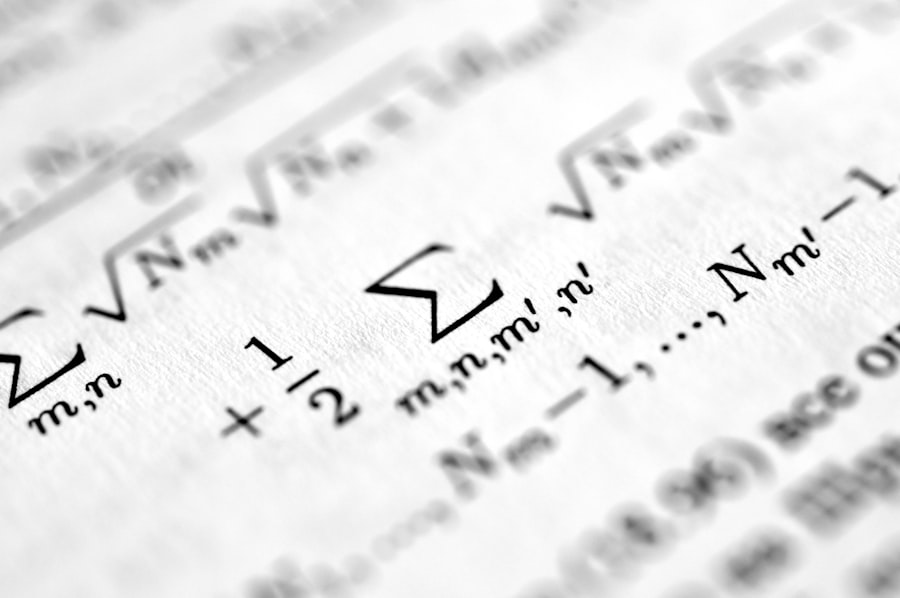
The mathematical form of the Wheeler-DeWitt equation is complex, involving sophisticated concepts from differential geometry and functional analysis. While a full derivation can be extensive, understanding its basic structure is crucial.
The Wave Function of the Universe
The wave function $\Psi$ in the Wheeler-DeWitt equation is not a wave function in the traditional sense of describing a single particle or a localized system. Instead, it’s a functional, meaning it depends on the configuration of the entire gravitational field, which is represented by a three-dimensional spatial metric (a way to measure distances on a hypothetical 3D slice of spacetime).
Dependence on the 3-Metric
$\Psi$ can be thought of as $\Psi(h_{ij})$, where $h_{ij}$ represents the three-dimensional spatial metric. This means that the wave function describes the probability amplitude of different possible three-dimensional spatial geometries existing. Visualize the universe as being made up of countless possibilities for what its spatial “shape” could be at any given moment.
The Hamiltonian Operator: A Glimpse Inside
The Hamiltonian operator $\hat{H}$ is where the quantum description of gravity truly resides. It is constructed by quantizing the terms in the classical Hamiltonian of general relativity. This process involves several challenging steps.
Quantizing the Metric and its Momenta
- The Wheeler-DeWitt Super-Hamiltonian: The Hamiltonian operator is often referred to as the Wheeler-DeWitt super-Hamiltonian. It contains terms related to the kinetic energy of the gravitational field (involving derivatives of the metric components) and potential energy terms (related to the curvature of spacetime).
- Diffeomorphism Invariance: A crucial aspect is that the Hamiltonian operator must be constructed in a way that respects the diffeomorphism invariance of general relativity. This means the operator cannot depend on the particular coordinate system used to describe spacetime. This often leads to operators that involve functional derivatives with respect to the metric.
The “Problem of Time”
One of the most profound and perplexing consequences of the Wheeler-DeWitt equation is what physicists call the “problem of time.” Since the entire Hamiltonian of the universe is zero, the equation does not appear to evolve in time.
The Static Universe Interpretation
If $\hat{H} \Psi = 0$, it suggests that the wave function $\Psi$ is timeless. This raises a fundamental question: if the universe’s wave function doesn’t change, how do we perceive the passage of time?
- Time as an Emergent Property: Many physicists believe that time, as we experience it, is not a fundamental aspect of reality at the quantum gravity level but rather an emergent property that arises from certain correlations within the universe. Imagine a frozen landscape; our perception of “change” or “time” might only come into play if we could describe the movement of individual snowflakes within that landscape.
Interpretations and Implications: What Does It Mean?
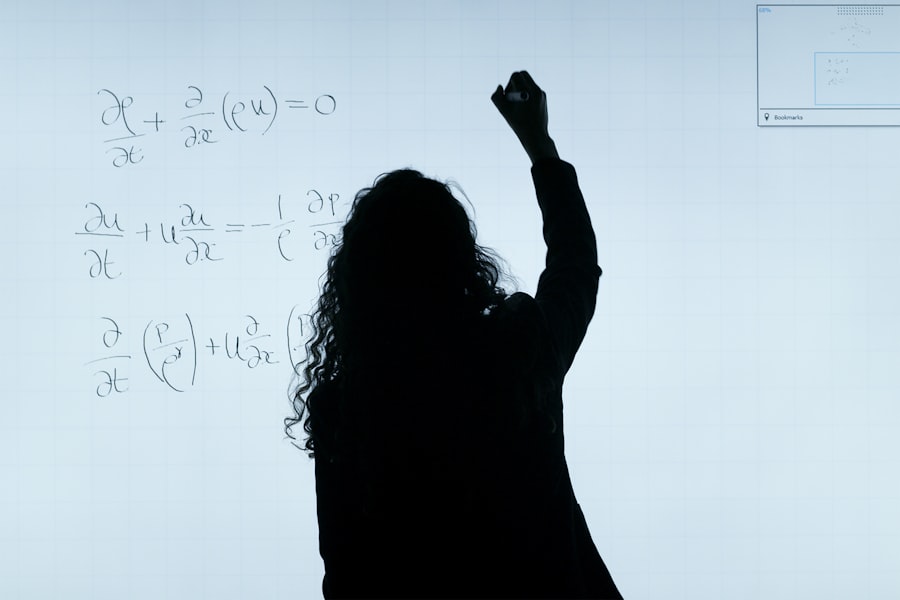
The Wheeler-DeWitt equation, despite its mathematical elegance, presents significant interpretational challenges. How do we make sense of a timeless wave function for the universe?
The “Frozen Formalism”
A common interpretation, often referred to as the “frozen formalism,” suggests that the Wheeler-DeWitt equation describes a static universe. In this view, all possible configurations of spacetime are already contained within the wave function, and there is no dynamic evolution.
Reconciling with Our Experience of Time
This static picture is, of course, deeply at odds with our everyday experience of a universe that clearly evolves. Numerous approaches have been proposed to bridge this gap.
- The Search for a Time Parameter: Researchers explore whether a hidden “time parameter” might exist within the framework, possibly related to the intrinsic properties of matter and energy within the universe. Imagine trying to understand the seasons without a calendar or clock; perhaps there’s an internal rhythm that dictates the passage of time.
The Role of Observers
Another avenue of interpretation involves the role of observers. In quantum mechanics, the act of measurement plays a crucial role in collapsing the wave function.
Observer-Dependent Time
It’s possible that time emerges for observers within the universe who interact with the quantum gravitational state. Their localized experiences, conditioned by their environment, might create the illusion of a flowing time. This is a bit like different people experiencing the same symphony differently based on their individual perspectives and the quality of their headphones.
The Problem of Probability
A standard interpretation of quantum mechanics assigns probabilities to different outcomes based on the square of the wave function’s amplitude. However, in the context of the Wheeler-DeWitt equation, defining probabilities for different “moments” in a timeless universe is problematic.
The WKB Approximation
The WKB (Wentzel–Kramers–Brillouin) approximation, a method for approximating solutions to wave equations, has been used to extract approximate dynamical behavior and the emergence of time from the Wheeler-DeWitt equation under certain conditions. This approximation is often useful in regimes where quantum fluctuations are small, allowing for a more classical-like behavior to emerge.
The Wheeler-DeWitt equation is a fascinating concept in quantum gravity that attempts to describe the quantum state of the universe. For those looking to delve deeper into this topic, a related article can be found at this link, which explains the implications of the equation in a more accessible manner. Understanding the Wheeler-DeWitt equation can provide valuable insights into the nature of spacetime and the fundamental structure of reality.
Challenges and Future Directions: The Road Ahead
| Aspect | Description | Simple Explanation | Importance |
|---|---|---|---|
| Definition | Wheeler-DeWitt equation is a functional differential equation in quantum gravity. | It describes the quantum state of the entire universe without time. | Central to attempts to unify quantum mechanics and general relativity. |
| Form | HΨ = 0, where H is the Hamiltonian constraint operator and Ψ is the wavefunction of the universe. | The equation sets the total energy of the universe to zero. | Reflects the timeless nature of the universe in quantum gravity. |
| Variables | Wavefunction Ψ depends on 3D spatial geometries (metrics) and matter fields. | Ψ encodes all possible shapes and matter configurations of space. | Allows study of quantum states of spacetime geometry. |
| Time Problem | Equation lacks explicit time parameter, leading to the “problem of time” in quantum gravity. | Time as we know it does not appear in the equation. | Challenges understanding of dynamics and evolution in quantum cosmology. |
| Applications | Used in quantum cosmology to study the early universe and black holes. | Helps predict possible quantum states of the universe’s geometry. | Provides insights into the origin and fate of the universe. |
The Wheeler-DeWitt equation, while a significant theoretical achievement, is not without its challenges. It has opened up new avenues of research but also highlighted the immense difficulty of achieving a complete theory of quantum gravity.
Non-Renormalizability and Infinities
One of the major challenges is that when one attempts to apply perturbative methods (approximations that treat deviations from a known solution) to quantize gravity derived from the Wheeler-DeWitt framework, the resulting theory is non-renormalizable.
The Problem of Unmanageable Infinities
- Infinities in Calculations: Perturbative quantum field theories typically encounter infinities in their calculations, but these infinities can often be systematically absorbed into a finite number of parameters (like mass and charge) through a process called renormalization. This allows for accurate predictions.
- Gravity’s Stubborn Infinities: In the case of gravity, applying this perturbative approach leads to an infinite number of these unmanageable infinities, meaning that the theory breaks down at high energies and cannot make reliable predictions. This is like trying to build a stable tower with an infinite number of bricks that keep appearing and collapsing.
Dependence on Background Spacetime
While the Wheeler-DeWitt equation aims to be background-independent (meaning it doesn’t assume a pre-existing spacetime), many of the techniques used to derive and work with it implicitly rely on a background spacetime structure. This is a conceptual hurdle, as the very thing being quantized (spacetime) cannot be assumed as a prerequisite for its quantization.
Lack of Experimental Verification
Currently, there is no direct experimental evidence that can confirm or refute the Wheeler-DeWitt equation or any other proposed theory of quantum gravity. The energy scales required to probe the quantum nature of gravity are astronomically high, far beyond the reach of current particle accelerators.
The Search for Indirect Evidence
- Cosmological Signatures: Physicists are looking for indirect evidence in phenomena like the cosmic microwave background radiation or gravitational waves, which might carry subtle imprints of quantum gravity effects from the early universe.
- Black Hole Physics: The behavior of black holes, particularly near their event horizons, is another area where quantum gravity effects are expected to be significant and potentially observable.
Alternative Approaches to Quantum Gravity
The difficulties associated with the Wheeler-DeWitt equation have spurred the development of alternative approaches to quantum gravity.
Prominent Alternatives
- String Theory: This theory proposes that fundamental constituents of the universe are not point-like particles but tiny, vibrating strings. String theory naturally incorporates gravity and has the potential to resolve the infinities encountered in other approaches.
- Loop Quantum Gravity (LQG): LQG quantizes spacetime itself, suggesting that space is granular, made up of discrete loops. It offers a different perspective on the fundamental structure of spacetime and gravity.
- Causal Set Theory: This approach postulates that spacetime is fundamentally discrete and that the most basic feature of reality is causality (the relationship between cause and effect).
The Ongoing quest
The Wheeler-DeWitt equation remains a pivotal concept in the theoretical landscape of quantum gravity. It represents a bold attempt to merge quantum mechanics and general relativity, providing a framework for understanding the quantum nature of spacetime itself. While it presents significant interpretive and mathematical challenges, its study continues to guide research, pushing the boundaries of our understanding of the universe’s most fundamental laws. The ultimate goal of a complete and experimentally verified theory of quantum gravity is a long and complex journey, and the Wheeler-DeWitt equation, with all its intricacies, is an indispensable landmark along that path.
FAQs
What is the Wheeler-DeWitt equation?
The Wheeler-DeWitt equation is a fundamental equation in quantum gravity that attempts to describe the quantum state of the entire universe. It combines principles from quantum mechanics and general relativity to provide a framework for understanding the wave function of the universe.
Why is the Wheeler-DeWitt equation important in physics?
It is important because it offers a way to unify quantum mechanics with general relativity, addressing the problem of how gravity behaves at quantum scales. The equation is central to the study of quantum cosmology and the search for a theory of quantum gravity.
What does the Wheeler-DeWitt equation look like?
The equation is often written as HΨ = 0, where H is the Hamiltonian operator representing the total energy of the gravitational field and matter, and Ψ is the wave function of the universe. Unlike typical quantum equations, it does not include time explicitly, reflecting the timeless nature of the universe in this framework.
What challenges are associated with the Wheeler-DeWitt equation?
One major challenge is the “problem of time,” since the equation lacks a time variable, making it difficult to interpret dynamics in the usual sense. Additionally, solving the equation is mathematically complex due to the infinite degrees of freedom in the gravitational field.
How does the Wheeler-DeWitt equation relate to the concept of the wave function of the universe?
The equation defines the wave function of the universe, which encodes all possible configurations of the geometry of space and matter fields. This wave function provides a probabilistic description of the universe’s quantum state, potentially explaining the origin and evolution of the cosmos at the most fundamental level.