
Understanding Time: Block Universe vs. Presentism
The nature of time has captivated philosophers, physicists, and laypersons for millennia. It is not merely a backdrop against which events unfold but a fundamental aspect of reality that underpins our very experience. Two prominent metaphysical theories offer contrasting perspectives on time’s existence and structure: the Block Universe theory and Presentism. These theories, while seemingly abstract, have profound implications for our understanding of free will, causality, and the fundamental fabric of the cosmos. Delving into these perspectives allows one to appreciate the depth and complexity inherent in the simple passage of moments.
Time, as we perceive it, moves in a seemingly linear fashion, from a definite past through a fleeting present to an uncertain future. This intuitive understanding, however, belies a richer and more nuanced philosophical debate. Is time an objective entity, existing independently of human consciousness, or is it a subjective construct? Do past and future events genuinely exist, or is only the present moment real? These are not trivial questions, as their answers reshape our conception of reality itself.
Time as a Dimension
In physics, particularly with Einstein’s theory of relativity, time is often conceptualized as a fourth dimension alongside the three spatial dimensions. This four-dimensional spacetime continuum forms the stage upon which all physical events occur.
The Arrow of Time
Despite time being treated as a dimension, a fundamental asymmetry remains: time appears to flow in one direction only. This “arrow of time” is a central puzzle, with various physical phenomena, such as entropy, often cited as its underlying cause. The irreversibility of certain processes, like a broken glass never spontaneously reassembling, reinforces this perception of directional flow.
The debate between block universe and presentism in philosophy of time raises intriguing questions about the nature of reality and our perception of time. For a deeper exploration of these concepts, you can read the article “Understanding Time: Block Universe vs. Presentism” on My Cosmic Ventures. This article delves into the implications of each viewpoint and how they shape our understanding of existence. You can find it here: Understanding Time: Block Universe vs. Presentism.
The Block Universe Theory: Eternalism’s Embrace
The Block Universe theory, also known as Eternalism, posits that all moments in time – past, present, and future – exist simultaneously and are equally real. Imagine time not as a flowing river, but as a frozen block of ice, complete and unchangeable. Every single point within that block, representing a different moment, exists eternally. From this perspective, the “now” we experience is merely our consciousness traversing this pre-existing reality.
Philosophical Foundations
The roots of eternalism can be traced back to ancient Greek philosophers like Parmenides, who argued for the unchangeable nature of being. In modern philosophy, figures like J.M.E. McTaggart, despite arguing against the reality of time (specifically, the A-series, which implies past, present, and future), inadvertently contributed to discussions that can be interpreted through an eternalist lens.
Scientific Support: Relativity’s Imprint
The most significant scientific support for the Block Universe theory comes from Albert Einstein’s theories of special and general relativity. These theories demonstrate the relativity of simultaneity, meaning that two events perceived as simultaneous by one observer may not be so for another observer moving at a different velocity.
Relativity of Simultaneity
If simultaneity is relative, then the idea of a universal “now” ceases to hold. If different observers perceive different slices of spacetime as their present, it implies that all those slices, representing different moments, must, in some sense, exist. This concept challenges the intuitive notion of a single, objective present.
Spacetime as a Manifold
General relativity depicts spacetime as a four-dimensional manifold, where past, present, and future are interconnected and equally fundamental. There is no special “now” within this manifold; it simply is. An individual’s experience of time passing is then seen as a subjective journey through this pre-existing reality.
Implications of the Block Universe
If the Block Universe is true, the implications are vast and often challenging to our intuitive understanding of the world.
Determinism and Free Will
A significant consequence is the potential for determinism. If all events, past, present, and future, already exist, then the course of history is fixed. This raises profound questions about the nature of free will. If your future actions are already “there” in the block, are your choices genuinely free? This is a contentious point, with some eternalists arguing for compatibilism, where free will can coexist with determinism.
The Nature of Change
Change, in the Block Universe, is not about things coming into being or ceasing to exist in an absolute sense. Instead, change is understood as a difference in properties at different points along the time dimension. A tree “changes” from a sapling to a mature tree because different slices of the spacetime block contain different stages of its development. The sapling and the mature tree all exist, just at different temporal coordinates.
Presentism: The Ephemeral “Now”
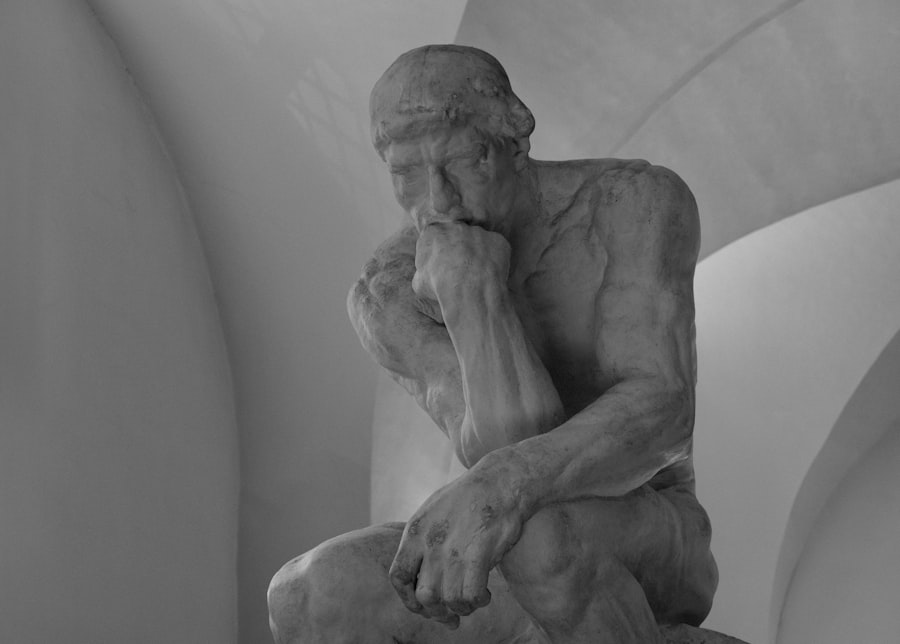
In stark contrast to the Block Universe, Presentism asserts that only the present moment is real. The past is no longer real, and the future is not yet real. Time is not a static block but a continuous process of becoming, where new moments genuinely come into existence and old ones vanish forever. For a presentist, the past exists only as memories or traces in the present, and the future exists only as possibilities or expectations.
Philosophical Origins
Presentism aligns more closely with our everyday experience of time. Philosophers like Augustine of Hippo wrestled with the nature of the present, suggesting that the past and future exist only in the mind as memories and anticipations, respectively. More recently, philosophers such as Ned Markosian have vigorously defended presentist views.
The Uniqueness of the Present
The core tenet of presentism is the absolute reality and uniqueness of the “now.” The present is the cutting edge of existence, the only point where events genuinely occur.
Arguments for Presentism
Presentists often present arguments rooted in our intuitive experience and the common understanding of change.
The Experience of Passage
Our subjective experience of time’s passage – the feeling that time “flows” or “marches on” – is a powerful intuitive argument for presentism. The sense that new moments are constantly arriving and old ones receding suggests that these moments are genuinely coming into and going out of existence.
The Efficacy of Causation
In a presentist framework, causation is a clear process where present events bring about future events. The past no longer exists to exert influence, and the future does not yet exist to determine the present. This aligns with our understanding of how actions lead to consequences in a linear progression.
The Problem of Non-Existent Objects
A challenge for eternalism, and an argument for presentism, concerns the reality of non-existent objects. If the Battle of Waterloo is just as real as today’s breakfast, then does the idea of “non-existent” objects even make sense? Presentism neatly resolves this by stating that only objects existing in the present are real.
Implications of Presentism
Presentism, like eternalism, has significant implications for how we understand reality.
Creativity and Open Future
An open future, where events are not predetermined, is a natural fit for presentism. Since the future doesn’t exist yet, it is genuinely open to being shaped by present choices and actions. This perspective strongly supports the notion of free will and human agency.
The Fragility of Existence
If only the present is real, then everything that was, is no more. This can lead to a sense of the fragility and transience of existence, where every moment is precious precisely because it is fleeting. The past is truly gone, except for its effects and memories in the present.
Reconciling the Irreconcilable?

The Block Universe and Presentism appear to be fundamentally incompatible. One posits the timeless existence of all moments, while the other insists on the sole reality of the present. Can these seemingly contradictory views be reconciled, or must one eventually prevail?
The Role of Subjective Experience
Perhaps the key lies in the distinction between objective reality and subjective experience. It is possible that objectively, a Block Universe exists, but our consciousness, being confined to a specific point within that block, experiences it as a “present” that moves. The subjective experience of time’s passage would then be an emergent property of our conscious interaction with a timeless reality.
The Challenge of Time Travel
The Block Universe theory often provides a more straightforward framework for conceptualizing theoretical possibilities like time travel. If all moments exist, then traveling to another point in time would simply mean moving to a different region of the spacetime block. Presentism, however, struggles with time travel in its classical sense, as there is no “past” or “future” to travel to – only the ever-advancing present.
Future Directions in Physics and Philosophy
The ongoing debate between these theories continues to motivate research in both physics and philosophy. New theories of quantum gravity might offer novel insights into the fundamental nature of spacetime and, by extension, time itself. Equally, philosophical arguments continue to refine the definitions and implications of each position. The search for a unified theory of everything might also shed light on the elusive nature of time.
The debate between block universe and presentism philosophy continues to intrigue scholars and enthusiasts alike, as it delves into the nature of time and existence. A fascinating article that explores these concepts in depth can be found at My Cosmic Ventures, where the implications of each perspective are examined through various philosophical lenses. Understanding these differing viewpoints can enrich our comprehension of reality and our place within it.
Conclusion: A Matter of Perspective
| Aspect | Block Universe | Presentism |
|---|---|---|
| Definition | The view that past, present, and future events all equally exist in a four-dimensional spacetime block. | The view that only the present moment is real; past and future do not exist. |
| Time Ontology | Time is tenseless; all points in time are equally real. | Time is tensed; only the present is real, past and future are unreal. |
| Philosophical Implications | Determinism is often implied; the future is fixed and already exists. | Allows for genuine change and becoming; future is open. |
| Relation to Physics | Compatible with the theory of relativity and spacetime models. | Challenges arise in reconciling with relativity due to absolute present. |
| Experience of Time | Passage of time is an illusion or subjective experience. | Passage of time is real and fundamental. |
| Key Philosophers | J.M.E. McTaggart (supporter of tenseless time), Hermann Minkowski (spacetime concept) | Aristotle (early presentist views), A.N. Prior (modern advocate) |
| Criticism | Criticized for denying the reality of change and becoming. | Criticized for difficulty in defining a universal present moment. |
Ultimately, whether the universe is a static “block” or an ever-unfolding “present” remains a profound question without a definitive answer accessible to our current understanding. Each theory offers compelling arguments and faces significant challenges. The Block Universe theory finds strong support in the mathematical framework of modern physics, particularly relativity, while Presentism aligns more closely with our intuitive, everyday experience of time.
As you ponder these theories, consider how your own perception of time influences your understanding of causality, free will, and the very structure of reality. Do you feel your choices shape an open future, or are they already written into a predetermined cosmic tapestry? The debate between the Block Universe and Presentism is not just an academic exercise; it challenges us to examine our most fundamental assumptions about existence, urging us to look beyond the immediate “now” and contemplate the deeper mysteries of time itself. The discussion forces us to confront the limitations of our perception and the vastness of what remains unknown about the universe, leaving us with a renewed appreciation for the intricate dance of moments that define our reality.
FAQs
What is the block universe theory in philosophy?
The block universe theory, also known as eternalism, is the view that past, present, and future events all coexist equally in a four-dimensional spacetime block. According to this theory, time is like a dimension similar to space, and all points in time are equally real.
How does presentism differ from the block universe theory?
Presentism is the philosophical view that only the present moment is real. Unlike the block universe theory, presentism holds that the past no longer exists and the future does not yet exist, so only the present is ontologically significant.
What are the main philosophical implications of the block universe theory?
The block universe theory implies that the flow of time is an illusion and that all events are fixed and unchangeable. This challenges common intuitions about free will and temporal becoming, suggesting a deterministic view of reality.
How does presentism address the concept of time and change?
Presentism asserts that only the present is real, so change occurs as different moments come into and go out of existence. This view aligns with the common experience of time flowing and emphasizes the dynamic nature of reality.
Are there scientific theories that support either block universe or presentism?
Modern physics, particularly the theory of relativity, tends to support the block universe view by treating time as a dimension similar to space. However, some interpretations and philosophical arguments continue to defend presentism, especially in relation to human experience and metaphysics.