
You stand at the precipice of a profound inquiry, a contemplation that has occupied humanity’s greatest minds for millennia. You are about to embark on a journey into the philosophy of time, a realm where the seemingly mundane tick-tock of your watch unravels into a complex tapestry of metaphysical debate, scientific speculation, and existential pondering. What is time, really? Is it a river flowing inexorably forward, a stage upon which events unfold, or perhaps something far more elusive, a construct of your own consciousness? To understand the philosophy of time is to grapple with the very fabric of your existence, to question the unshakeable assumptions you hold about reality, and to discover that the arrow of time might not be as straight or as absolute as you believe.
The most immediate and perhaps most visceral experience you have of time is its passage—the feeling that the present is constantly becoming the past, and the future is perpetually arriving. But is this “flow” a fundamental feature of reality, or is it a projection of your own minds? This is where one of the most persistent debates in the philosophy of time begins, a debate that questions the very dynamism you perceive.
The Presentist Predicament: Only Now Exists
For many, the intuitive understanding is that only the present moment is real. The past, in this view, is gone, and the future has not yet come into being. This perspective, known as Presentism, aligns with your lived experience. You remember the past, but you cannot interact with it. You anticipate the future, but you cannot yet touch it. From this viewpoint, time is a succession of discrete, fleeting moments, each one vanishing as the next arises.
However, this seemingly straightforward position is fraught with philosophical difficulties. If only the present is real, then what grounds your knowledge of the past? How can you have memories of events that, in a strict sense, no longer exist? Presentism struggles to account for causal connections between events, as a past cause would need to have some degree of reality to affect a present effect. Furthermore, if the present is the only reality, then how can you speak of durations—of how long something lasts? A duration implies a stretching across time, which is problematic if only a single, instantaneous moment is real.
The Growing Block Universe: The Past and Present Accumulate
As a counterpoint to the precariousness of pure Presentism, consider the “Growing Block Universe” theory. Imagine time as a structure that constantly expands, with the past and present moments being real, but the future remaining unrealized. In this model, reality is like a snowball rolling downhill, gathering more and more past and present moments as it goes. The past is fixed and real, the present is the cutting edge of this reality, and the future is yet to be determined or added to the block.
This view offers a more robust account of causality and memory than strict Presentism. Your memories are of real past events, and past causes can genuinely influence the present. However, it still maintains a special status for the present as the “edge” of reality, which some philosophers find problematic. It also raises questions about how this “growing” mechanism operates and whether it’s truly necessary to posit a constantly expanding ontological structure.
The Eternalist Block Universe: All Time is Equally Real
Perhaps the most challenging and counter-intuitive view for many is Eternalism, often referred to as the “Block Universe” theory. This perspective, widely supported by modern physics, posits that all moments in time—past, present, and future—are equally real, existing eternally within a four-dimensional spacetime manifold. Imagine time not as a flowing river, but as a vast, static landscape through which your consciousness “travels.”
In the Eternalist view, the distinction between past, present, and future is a subjective illusion, a quirk of your perception. Just as spatial locations don’t disappear when you’re not looking at them, so too do temporal moments not cease to exist when they are no longer your “present.” This idea, while difficult to reconcile with your intuitive sense of temporal flow, can be supported by certain interpretations of relativity. If the speed of light is finite, then your “present” is defined by the spacetime events that can causally influence you, and these events are relative to your frame of reference.
Adrian Bardon’s argument, as mentioned, leans towards the idea that the passage of time is a “psychological projection.” This aligns with a form of Eternalism, suggesting that the subjective experience of temporal flow is a product of your cognitive processes, your memory, and your anticipation, rather than an objective feature of the universe.
The philosophy of time is a fascinating subject that delves into the nature of time, its passage, and our perception of it. For those interested in exploring this topic further, a related article can be found at My Cosmic Ventures, which provides an insightful overview of various philosophical perspectives on time, including debates on whether time is linear or cyclical and how these views impact our understanding of existence and reality.
The Nature of Time: Container or Structure?
Beyond the question of passage, the very essence of time itself is a subject of intense philosophical scrutiny. Is time an independent entity, a sort of cosmic stage upon which events are placed, or is it merely a way of organizing and understanding the relationships between events? This dichotomy between substantivalism and relationism forms another crucial pillar of temporal philosophy.
Substantivalism: Time as an Absolute Container
Substantivalism views time as a fundamental, independent entity that exists whether or not any events occur within it. Think of it as an empty box that time fills. Isaac Newton famously conceived of time as absolute, true, and mathematical, flowing equably without relation to anything external. In this view, time is a container, a backdrop against which events unfold. If the universe were to vanish entirely, Newton argued, time would still continue to exist, a testament to its independent nature.
The appeal of substantivalism lies in its simplicity and its seeming alignment with common sense. It provides a clear and unambiguous framework for understanding duration and sequence. However, it faces significant challenges, particularly from relativistic physics. The idea of an absolute, universal time becomes untenable in Einstein’s theories, where time is intertwined with space and is relative to the observer’s motion.
Relationism: Time as a System of Events
In stark contrast, relationism contends that time is not an independent entity but is rather constituted by the relations between events. There is no time without change, no temporal duration without something happening. Time, in this view, is an intellectual structure, a way for you to order and comprehend the causal and sequential relationships between phenomena.
Think of it this way: you don’t measure a distance between two points that don’t exist. Similarly, relationists argue, you cannot have time without events to mark its passage. The ordering of events—this happening before that, this happening at the same time as that—is all that constitutes time. Early proponents like Gottfried Wilhelm Leibniz were keen advocates of this perspective, arguing that if all events were to cease, time itself would cease to exist.
Modern physicists like Carlo Rovelli and Lee Smolin, grappling with the apparent conflict between quantum mechanics and general relativity, are exploring concepts that bridge these two positions or offer new ways of thinking about time. Ideas like “thick present” or “thermal time” attempt to resolve the “problem of time” in quantum gravity. These theories suggest that time might not be a fundamental, continuous flow but rather an emergent property arising from deeper, more fundamental quantum processes. You might be living through a “thick present” where the boundaries between past, present, and future are not as sharply defined as you perceive them, or time could be a measure of entropy, a kind of “thermal time” that relates to the increase of disorder in the universe.
The Subjectivity of Time: The Human Experience

While physics and metaphysics grapple with the objective nature of time, it’s crucial to remember your subjective experience of it. Your internal clock, your perception of temporal duration, can be remarkably fluid and influenced by a myriad of psychological factors. This is the domain where philosophy of time intersects profoundly with psychology and neuroscience.
The Illusion of Duration: When Time Flies or Drags
Have you ever noticed how time seems to speed up as you age, or how a thrilling experience can feel like it lasted only moments, while a tedious lecture can feel like an eternity? These are not mere whims of fancy; they highlight the subjective nature of temporal perception. Your engagement, your emotional state, the novelty of an experience, and even your memories all play a role in shaping how you perceive the passage of time.
Caroline Toadvine, in The Memory of the World, challenges what she calls a “human obsession with ‘deep time’ and the future.” She argues for a re-connection with the past and present, suggesting that our forward-looking, future-obsessed mentality can lead us to neglect the richness and significance of what has already happened and what is happening now. This perspective underscores the idea that your relationship with time is not just about its objective measurement but also about how you engage with and value different temporal dimensions.
Memory and Anticipation: The Architects of Your Temporal World
Your understanding of time is profoundly shaped by your capacity for memory and anticipation. Memory allows you to construct a narrative of your past, giving you a sense of continuity and identity. Anticipation, on the other hand, allows you to project yourself into the future, to plan, to hope, and to fear. Together, these faculties weave the temporal fabric of your individual existence.
If time were merely a series of disconnected present moments, your sense of self would be shattered. It is the continuity provided by memory and the directionality provided by anticipation that allows you to feel like a coherent agent acting across time. Philosophers often explore how these cognitive functions are essential for any meaningful understanding of personal identity over time.
Time and the Universe: Scientific Perspectives
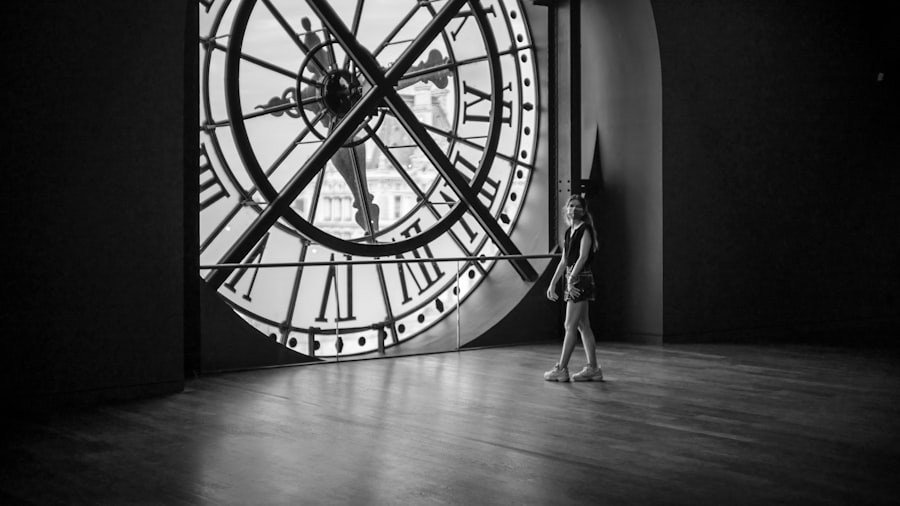
The philosophical inquiry into time cannot exist in a vacuum, divorced from the insights provided by modern science. Physics, in particular, has revolutionized our understanding of time, leading to new philosophical questions and potential ways of resolving ancient paradoxes.
Relativity and the Fabric of Spacetime
Einstein’s theories of special and general relativity fundamentally altered our conception of time. Special relativity demonstrated that time is not absolute but is relative to the observer’s frame of reference. Time can dilate (slow down) for objects moving at high speeds, and the concept of simultaneity becomes relative. General relativity further unified space and time into a single, four-dimensional continuum known as spacetime, which is curved by gravity.
This relativistic view of spacetime aligns strongly with the Eternalist “Block Universe” model. If spacetime is a unified, geometric entity, then past, present, and future points within it are all equally “real” in a geometric sense. The “flow” of time becomes your personal path through this static manifold. This has fueled much of the philosophical debate about whether the passage of time is a genuine feature of reality or a subjective illusion arising from our limited perspective.
Quantum Mechanics and the Problem of Time
The intersection of quantum mechanics and general relativity presents one of the most formidable challenges in modern physics and philosophy: the “problem of time.” In general relativity, time is a dynamic, flexible dimension that can be warped by gravity. However, in fundamental quantum mechanics, time is typically treated as an absolute, external parameter, a background against which quantum events unfold.
When physicists attempt to unify these theories into a theory of quantum gravity, they encounter a fundamental contradiction. In current formulations, the equations of quantum gravity seem to suggest that time itself might not exist at the fundamental level. This has led to speculation that time is not a fundamental feature of the universe but rather an emergent property, arising from deeper, non-temporal, entangled energy states. The very existence of “now” and the directionality of time might be phenomena that emerge at a macroscopic level from a fundamentally timeless quantum realm. Scholars like Lee Smolin are deeply engaged with these ideas, seeking to understand how our perception of time could arise from such a foundation.
The philosophy of time is a fascinating subject that delves into the nature of temporal existence and our perception of it. For those interested in exploring this topic further, a related article can be found at My Cosmic Ventures, which provides an insightful analysis of various philosophical perspectives on time. This resource offers a deeper understanding of how different thinkers have approached the complexities of time, making it a valuable read for anyone intrigued by the subject.
Engaging with Time: Social and Existential Dimensions
| Aspect | Explanation |
|---|---|
| Definition | The study of time and its philosophical implications, including questions about the nature of time, its existence, and our experience of it. |
| Key Questions | What is the nature of time? Does time have a beginning or an end? Is time an objective reality or a subjective experience? |
| Major Theories | Eternalism, Presentism, and the Growing Block Universe are some of the major theories in the philosophy of time. |
| Relevance | The philosophy of time is relevant to various fields including physics, metaphysics, and ethics, and has implications for our understanding of reality and our place in the universe. |
The philosophy of time extends beyond abstract debates and scientific models to touch upon deeply personal and societal concerns. How we conceptualize time has profound implications for how we live our lives, organize our societies, and face existential challenges.
Time and Social Justice: Moving Towards a More Equitable Future
The way different societies and movements conceptualize time can have significant implications for social justice. The Philosophy of Time Society, for instance, is actively engaging with public discourse through its “Time Will Tell” interview series, featuring scholars with a “social justice conscience.” This indicates a growing recognition that our understanding of time is not neutral but can be shaped by power dynamics and historical injustices.
For example, movements like Extinction Rebellion are grappling with time in the context of the climate crisis. Their urgency stems from the belief that there is a finite window of opportunity to avert catastrophic climate change. This highlights how our perception of temporal urgency can drive political action and social change. Conversely, ingrained societal structures can perpetuate inequalities across generations, making “time” a factor in the ongoing struggle for justice. Nina Emery’s recognition with the Anthony J. Lisska Prize for her contributions to philosophy and pedagogy suggests the importance of educating and engaging broader audiences with these complex ideas, fostering a more informed and just approach to temporal issues.
Existential Angst and the Meaning of Time
Your awareness of your own mortality is intimately tied to your experience of time. The finite nature of your lifespan can evoke existential angst: the feeling of dread or anxiety stemming from the realization of your freedom and the inevitability of death. How you choose to spend your limited time, the meaning you attribute to it, and your acceptance or resistance to its passage are all central to the human condition.
Marta Pedroni’s work on “Philosophy Beyond Standard Physics” hints at exploring dimensions of reality that might transcend our current scientific frameworks, potentially offering new perspectives on the nature of existence and, consequently, our relationship with time. Whether you believe time is a precious, fleeting resource or an eternal continuum, your engagement with its passage shapes your values, your choices, and ultimately, the meaning you find in your life.
In conclusion, you have begun to unravel the intricate philosophical landscape of time. You’ve seen that the intuitive feeling of passage is challenged by theories that suggest time might not “flow” at all, but rather that all of time exists eternally. You’ve explored whether time is an independent entity or a consequence of the events within it, and how scientific discoveries, particularly relativity and quantum mechanics, have reshaped these debates. Most importantly, you’ve touched upon how your subjective experience of time is shaped by your mind and how our collective understanding of time influences our social structures and our very sense of being. The journey to understand the philosophy of time is a lifelong one, a continuous exploration that will, undoubtedly, reveal new layers of wonder and complexity with every passing moment you perceive.

The Future Already Exists (And Physics Might Agree)
FAQs
What is the philosophy of time?
The philosophy of time is a branch of philosophy that explores the nature of time and our experience of it. It examines questions such as whether time is real, how we perceive time, and the implications of time for our understanding of the world.
What are the main theories in the philosophy of time?
There are several main theories in the philosophy of time, including presentism, eternalism, and the growing block theory. Presentism holds that only the present moment is real, while eternalism posits that past, present, and future all exist simultaneously. The growing block theory suggests that the past and present are real, but the future is not yet determined.
How does the philosophy of time relate to physics?
The philosophy of time has significant implications for physics, particularly in the areas of quantum mechanics and the theory of relativity. Philosophers and physicists alike grapple with questions about the nature of time, causality, and the relationship between time and space.
What are some key concepts in the philosophy of time?
Some key concepts in the philosophy of time include the A-theory and B-theory of time, the arrow of time, and the experience of time. The A-theory suggests that time has a direction and that the present moment is privileged, while the B-theory posits that all moments in time are equally real.
Why is the philosophy of time important?
The philosophy of time is important because it helps us to understand fundamental aspects of our existence and the nature of reality. It also has practical implications for fields such as physics, metaphysics, and ethics. By exploring the nature of time, we can gain insight into our place in the universe and the nature of change and causality.