Quantum causality, a concept that delves into the fundamental nature of cause and effect at the subatomic level, presents a profound departure from our everyday, classical understanding. In the macroscopic world, we are accustomed to a straightforward, deterministic chain of events: if you push a domino, it falls. The cause (the push) directly and predictably leads to the effect (the falling domino). However, when we shrink our focus to the realm of quantum mechanics, this intuitive picture begins to unravel, replaced by a more nuanced and, at times, bewildering reality. This article aims to demystify quantum causality, exploring its key characteristics and implications in a simple and accessible manner.
To appreciate the strangeness of quantum causality, it is essential to first establish the bedrock of our classical understanding of cause and effect. This framework, developed over centuries of scientific inquiry, is built upon principles that resonate with our direct experience of the world.
Linearity of Cause and Effect
The most fundamental aspect of classical causality is its linear nature. An event, the cause, directly influences another event, the effect, in a predictable sequence. This can be visualized as a straight line, where each point represents an event, and the arrow signifies the flow of influence from cause to effect.
The Domino Analogy
A simple yet effective illustration of linear causality is the falling of dominoes. When the first domino is toppled, it strikes the next, initiating a chain reaction. The force applied to the first domino is the cause, and the subsequent toppling of each domino is the effect. The outcome is entirely predictable if the initial conditions are known.
Newtonian Mechanics
Classical physics, epitomized by Isaac Newton’s laws of motion, operates under this deterministic framework. Given the initial position and velocity of an object, along with the forces acting upon it, one can precisely predict its future trajectory. This predictive power is a hallmark of classical causality.
The Role of Observation
In the classical world, observation is largely passive. While the act of observing might require some interaction, it is generally assumed not to fundamentally alter the state of the system being observed. We can look at a planet’s orbit or measure a car’s speed without significantly changing their behavior.
Unchanging Properties
Classical objects possess well-defined properties, such as position, momentum, and spin, independent of whether they are being observed. A ball has a definite location and speed even when no one is looking at it.
Predictability and Retrodictability
Classical causality allows for both prediction and retrodiction. We can predict what will happen in the future based on current causes, and we can retrodict what happened in the past based on observable effects.
Future Trajectories
Knowing the initial conditions of a projectile allows us to calculate its future path. This is a direct consequence of deterministic causal relationships.
Reconstructing Past Events
By examining the craters left by a meteorite impact, we can infer the trajectory and speed of the meteorite before it hit Earth. This is an example of retrodiction based on causal links.
Quantum causality is a fascinating topic that explores the intricate relationship between quantum mechanics and the concept of cause and effect. For a deeper understanding of this subject, you can refer to a related article that delves into the implications of quantum entanglement on causality. This article provides insights into how traditional notions of causality are challenged by quantum phenomena. To read more, visit this link.
The Quantum Leap: Indeterminacy and Probability
The transition to the quantum realm ushers in a paradigm shift in how we understand causality. At the subatomic level, concepts like determinism and absolute predictability begin to falter, replaced by the pervasive influence of probability and inherent uncertainty.
The Uncertainty Principle
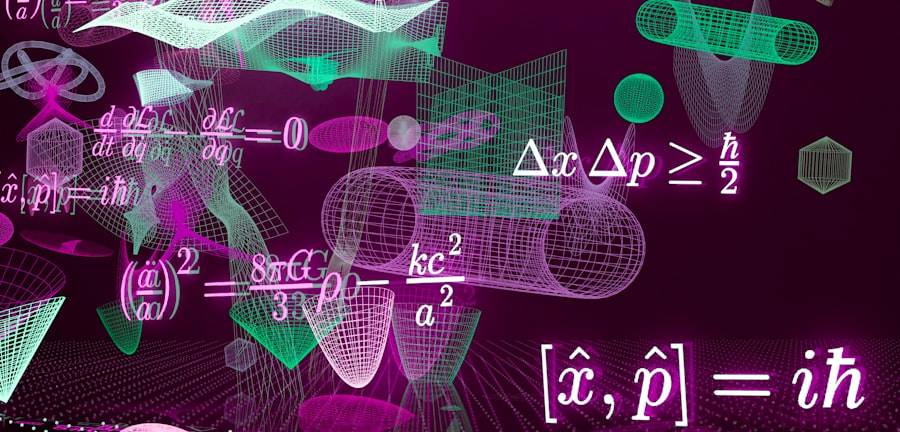
One of the most profound consequences of quantum mechanics is Heisenberg’s Uncertainty Principle. It states that certain pairs of physical properties, like position and momentum, cannot be known with perfect accuracy simultaneously. The more precisely one property is known, the less precisely the other can be determined. This inherent limitation is not a reflection of our observational capabilities but a fundamental property of quantum systems.
Complementary Variables
Position and momentum are examples of “complementary variables.” Measuring one with high precision inherently disturbs the other. This means that the very act of trying to pin down a precise cause (e.g., exact position) can obscure the precise effect (e.g., exact momentum).
Implications for Causality
If we cannot precisely know the initial state of a quantum system, we cannot precisely predict its future state through deterministic causal chains. This introduces an element of probability into the causal unfolding of events.
Probability Amplitudes and Wave Functions
In quantum mechanics, the state of a system is described by a wave function. This wave function does not tell us exactly where a particle is or what its momentum is, but rather the probability of finding it in a particular state upon measurement. Causality, therefore, becomes probabilistic.
The Born Rule
The Born Rule, formulated by Max Born, quantifies this probabilistic interpretation. It states that the probability of observing a particular outcome is proportional to the square of the magnitude of the corresponding probability amplitude.
Schrödinger’s Equation
The evolution of the wave function over time is governed by the Schrödinger equation. While the equation itself is deterministic, it describes the evolution of probabilities, not the definitive outcome of a single event.
Quantum Indeterminacy vs. Classical Ignorance
It is crucial to distinguish between quantum indeterminacy and classical ignorance. Classical ignorance implies that we simply lack knowledge about a system’s properties, and with sufficient information, we could make deterministic predictions. Quantum indeterminacy, however, suggests that these properties are not definitively determined until a measurement is made.
A Coin Toss Analogy (with a Quantum Twist)
Imagine a coin spinning in the air. Classically, we might say its final state (heads or tails) is determined by initial forces, air resistance, and gravity, even if we don’t know them precisely. In a quantum analogy, it’s as if the coin is in a superposition of both heads and tails until it lands and is observed. The act of landing and observation “collapses” the wave function, forcing it into one definite state, but the outcome was not pre-determined with certainty.
The Enigma of Measurement: Collapse and Non-Locality
The act of measurement in quantum mechanics plays a particularly peculiar role in the unfolding of causal events. Unlike in the classical world, measurement is not a passive observation but an active intervention that can fundamentally alter the state of a quantum system. This leads to concepts like wave function collapse and non-locality, which challenge our traditional understanding of causality.
Wave Function Collapse
Before a measurement, a quantum system can exist in a superposition of multiple states simultaneously. For instance, an electron might be in a superposition of being in two different locations. However, when a measurement is performed to determine its position, the wave function “collapses,” and the electron is found in only one of those locations. The act of measurement itself seems to force a definite outcome, thereby initiating a specific causal chain.
The Role of the Observer
The “observer” in quantum mechanics doesn’t necessarily have to be a conscious being. It can be any macroscopic apparatus capable of interacting with and registering the quantum system. This interaction is what triggers the collapse.
Probabilistic Outcomes of Collapse
While the collapse resolves the superposition into a definite state, the specific outcome is still governed by probabilities. We cannot predict with certainty which state the system will collapse into.
Quantum Entanglement: Spooky Action at a Distance
Quantum entanglement is perhaps the most mind-bending phenomenon related to quantum causality. When two or more particles become entangled, they become linked in such a way that their fates are intertwined, regardless of the distance separating them. Measuring a property of one entangled particle instantaneously influences the corresponding property of the other.
Bell’s Theorem and Experimental Verification
John Bell’s theorem and subsequent experiments by Alain Aspect and others have provided strong evidence against “local hidden variables” theories, which attempt to explain entanglement through classical, local causality. The results consistently support the quantum mechanical description, suggesting a non-local connection.
Implications for Causality
If measuring particle A instantaneously affects particle B, even when they are light-years apart, this implies a causal influence that transcends spatial separation and the speed of light. This “spooky action at a distance,” as Einstein famously called it, profoundly challenges our intuitive notions of local causality.
Non-Locality and the Absence of Information Transfer
Despite the instantaneous correlation between entangled particles, it is crucial to note that entanglement does not allow for faster-than-light communication. While the influence is non-local, it cannot be used to transmit information in a controllable way. This is because the outcome of any individual measurement is still probabilistic.
The No-Communication Theorem
The no-communication theorem in quantum mechanics formally proves that entanglement cannot be used to send classical information faster than light. Any attempt to do so would require additional classical communication to interpret the results.
Alternative Interpretations of Quantum Causality
The perplexing nature of quantum causality has led to a variety of interpretations of quantum mechanics, each offering a different perspective on how cause and effect operate at the quantum level. These interpretations do not necessarily contradict the mathematical formalism of quantum mechanics but seek to provide a more coherent ontological picture.
The Copenhagen Interpretation
The Copenhagen interpretation, largely developed by Niels Bohr and Werner Heisenberg, is the most widely accepted interpretation. It emphasizes the probabilistic nature of quantum events and the role of measurement in collapsing the wave function. In this view, causality is fundamentally probabilistic, and definite outcomes only arise upon observation.
Complementarity
Bohr’s principle of complementarity suggests that certain properties of quantum systems are mutually exclusive but equally necessary for a complete description. For example, a quantum particle can exhibit wave-like or particle-like behavior, but not both simultaneously in the same experiment.
Indeterminacy as a Fundamental Feature
This interpretation views indeterminacy not as a lack of knowledge but as an intrinsic feature of the quantum world.
The Many-Worlds Interpretation
The Many-Worlds Interpretation (MWI), proposed by Hugh Everett III, offers a radically different perspective. It suggests that every quantum measurement causes the universe to split into multiple parallel universes, each representing a different possible outcome. In this view, causality is preserved in a deterministic sense, but the outcomes are distributed across these parallel realities.
No Wave Function Collapse
In MWI, the wave function never collapses. Instead, all possible outcomes of a quantum event are realized in different branches of the multiverse.
Deterministic Evolution of the Multiverse
The evolution of the entire multiverse is deterministic, governed by the Schrödinger equation. Our perception of probabilistic outcomes arises from our experience within a single branch.
Bohmian Mechanics (De Broglie-Bohm Theory)
Bohmian mechanics introduces “hidden variables” in the form of guiding potentials that dictate the trajectory of quantum particles. This interpretation is deterministic and aims to restore a sense of objective reality to quantum phenomena.
Pilot Wave
In Bohmian mechanics, a “pilot wave” guides the motion of particles. The wave function itself is considered real and evolves deterministically.
Deterministic Particle Trajectories
Particles in Bohmian mechanics follow definite trajectories, guided by the pilot wave. This avoids the probabilistic nature of the Copenhagen interpretation but introduces non-local influences.
Quantum causality is a fascinating topic that explores the relationship between quantum mechanics and the nature of cause and effect. For those interested in delving deeper into this subject, a related article can be found on My Cosmic Ventures, which provides insights into how quantum phenomena challenge our traditional understanding of causality. You can read more about it in this informative piece on quantum mechanics. This exploration not only enhances our comprehension of the quantum realm but also invites us to reconsider the fundamental principles that govern our universe.
The Future of Quantum Causality: Implications and Applications
| Concept | Explanation |
|---|---|
| Quantum Causality | The principle that cause and effect relationships can be understood at the quantum level, where particles can exhibit non-deterministic behavior. |
| Quantum Entanglement | The phenomenon where particles become linked and the state of one particle can instantly affect the state of another, regardless of the distance between them. |
| Quantum Superposition | The state where a particle exists in multiple states simultaneously, allowing for the exploration of multiple causal pathways. |
| Quantum Teleportation | The transfer of quantum information from one location to another, potentially impacting causal relationships in unexpected ways. |
Understanding quantum causality is not merely an academic exercise; it has profound implications for our understanding of reality and is driving technological advancements that were once confined to science fiction.
Quantum Computing
Quantum computers leverage the principles of superposition and entanglement to perform computations that are intractable for classical computers. This is directly linked to the probabilistic and non-local nature of quantum causality.
Qubits and Superposition
Quantum bits, or qubits, can exist in a superposition of 0 and 1, allowing for the representation of vastly more information than classical bits.
Entanglement for Parallel Processing
Entangled qubits can be used to perform parallel computations, exponentially speeding up certain types of calculations.
Quantum Cryptography
Quantum cryptography utilizes the principles of quantum mechanics to secure communication channels. The inherent sensitivity of quantum states to measurement ensures that any eavesdropping attempt will inevitably alter the quantum information, thus alerting the communicating parties.
Quantum Key Distribution (QKD)
QKD protocols, such as BB84, rely on the fact that measuring an entangled photon will destroy its original state. This makes it impossible for an eavesdropper to intercept the key without being detected.
Fundamental Physics and the Search for a Unified Theory
The enigma of quantum causality continues to be a driving force in fundamental physics research. Understanding how causality operates at the quantum level is crucial for developing a unified theory of everything that can reconcile quantum mechanics with general relativity.
The Nature of Time
The non-local and probabilistic nature of quantum causality may hold clues to the fundamental nature of time and its flow.
Black Holes and Quantum Gravity
Investigating causality within extreme gravitational environments, such as black holes, is a key area of research in quantum gravity.
Philosophical Ramifications
The philosophical implications of quantum causality are vast, challenging our notions of free will, determinism, and the very nature of reality. If outcomes are not predetermined, does this imply a form of free will at the quantum level? How does non-locality affect our understanding of interconnectedness?
The Observer Effect Revisited
The role of the observer in quantum mechanics continues to be a subject of intense philosophical debate.
Determinism vs. Free Will
The probabilistic nature of quantum causality is often invoked in discussions about the age-old debate between determinism and free will.
In conclusion, understanding quantum causality is a journey into the heart of how the universe operates at its most fundamental level. While it deviates significantly from our everyday intuition, the principles of indeterminacy, probability, wave function collapse, and entanglement paint a picture of a reality that is far more intricate and interconnected than we might have initially imagined. As our understanding deepens, the implications for science, technology, and our philosophical outlook will continue to unfold.

The Quantum Experiment That Looks Like It Changed the Past
FAQs
What is quantum causality?
Quantum causality refers to the idea that in the quantum realm, cause and effect may not always follow the same rules as in classical physics. It suggests that events at the quantum level can occur without a specific cause or can be influenced by multiple potential causes simultaneously.
How does quantum causality differ from classical causality?
In classical physics, causality is based on the principle that every event has a specific cause that precedes it. However, in quantum physics, causality can be more probabilistic and non-deterministic, allowing for events to occur without a single, definite cause.
What are some examples of quantum causality in action?
One example of quantum causality is the phenomenon of quantum entanglement, where the state of one particle can instantaneously affect the state of another particle, regardless of the distance between them. Another example is the concept of quantum superposition, where a particle can exist in multiple states simultaneously until it is observed.
What are the implications of quantum causality?
The implications of quantum causality are still being explored, but they could potentially challenge our understanding of determinism and the nature of reality. It also has implications for fields such as quantum computing and quantum communication, where the probabilistic nature of quantum causality can be harnessed for practical applications.
How is quantum causality being studied and understood by scientists?
Scientists are studying quantum causality through experiments in quantum mechanics, as well as theoretical research and mathematical modeling. They are also exploring the philosophical implications of quantum causality and its potential impact on our understanding of the fundamental nature of the universe.