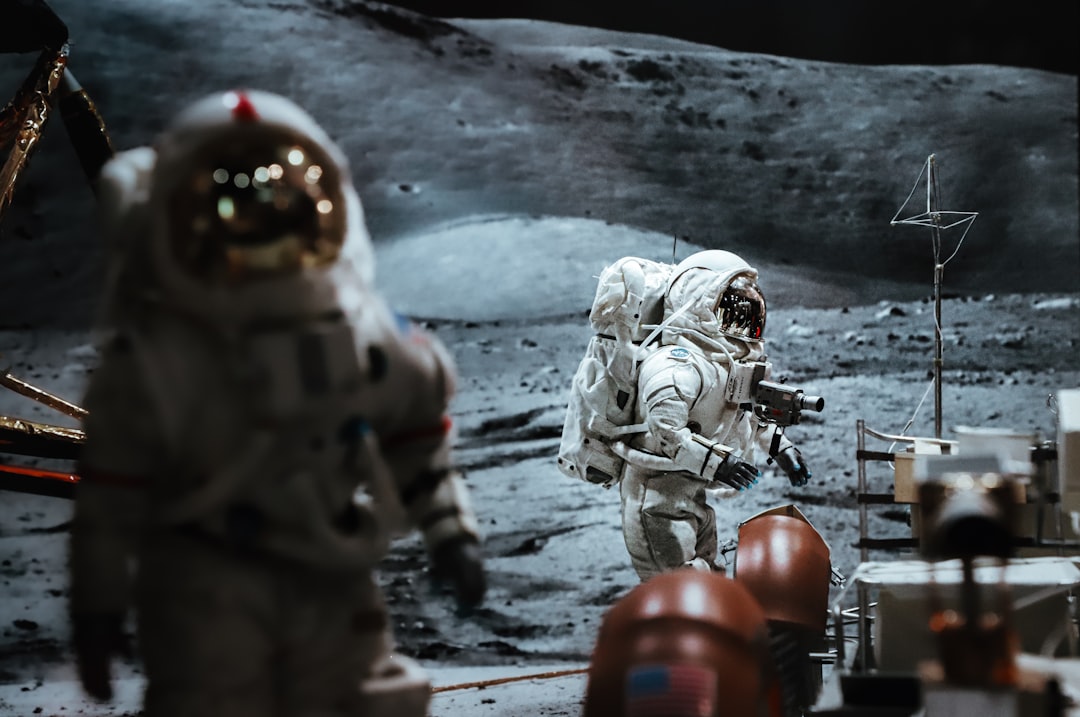
The Apollo program, a series of human spaceflight missions conducted by the United States National Aeronautics and Space Administration (NASA) between 1961 and 1972, culminated in an unprecedented achievement: the landing of humans on the Moon. This endeavor, a monumental undertaking in terms of technological innovation, financial investment, and human courage, remains a subject of intense scrutiny and occasional skepticism. This article aims to re-examine the core evidence supporting the Apollo Moon landings, addressing common misconceptions and presenting a comprehensive overview of the undeniable truth.
The drive to reach the Moon was not merely a scientific pursuit; it was deeply intertwined with the geopolitical landscape of the Cold War. In the aftermath of the Soviet Union’s successful launch of Sputnik 1 in 1957, a profound sense of urgency gripped the United States. President John F. Kennedy, in a landmark speech delivered to a joint session of Congress on May 25, 1961, declared the nation’s intention to land a man on the Moon and return him safely to Earth before the end of the decade. This ambitious goal served as a powerful catalyst, unifying scientific, engineering, and political will toward a singular objective.
The Technological Leap
Achieving the lunar landing required a monumental leap in technological capability. Engineers and scientists had to overcome challenges that were, at the time, largely theoretical. This included developing rocket engines powerful enough to escape Earth’s gravity, designing spacecraft capable of surviving the harsh environment of space, and perfecting navigation systems to pinpoint a target millions of kilometers away. The Saturn V rocket, an engineering marvel, stood as the bedrock of this ambition, its three stages generating thrust equivalent to thousands of jet engines, a veritable titan against the pull of Earth.
Precursor Missions and Preparations
Before the crewed missions, a series of robotic probes paved the way, meticulously charting the lunar surface and gathering critical data. The Ranger, Surveyor, and Lunar Orbiter programs provided invaluable insights into lunar topography, radiation levels, and potential landing sites. These missions were the eyes and ears of Apollo, mapping the uncharted waters of space to guide future astronauts. Simultaneously, NASA meticulously trained its astronauts, subjecting them to rigorous simulations and physical conditioning, preparing them for the unprecedented stresses of spaceflight and lunar exploration.
For those interested in exploring the fascinating details surrounding the Apollo moon landings, a related article can be found at My Cosmic Ventures. This piece delves into the scientific achievements and technological advancements that made the lunar missions possible, shedding light on the rigorous training of astronauts and the challenges they faced. To read more, visit My Cosmic Ventures.
Unpacking the Evidence: A Multifaceted Confirmation
The assertion that humans landed on the Moon is not based on a single piece of evidence but rather on a robust and interconnected tapestry of data, observations, and independent verifications. To dismiss a claim so thoroughly documented requires ignoring a significant body of factual information.
Lunar Samples: Tangible Proof
Perhaps the most incontrovertible evidence of the Apollo missions is the collection of lunar samples. The six Apollo missions brought back a staggering 382 kilograms (842 pounds) of rocks, core samples, pebbles, dust, and soil from six different landing sites. These samples, a cosmic treasure trove, have been extensively studied by scientists worldwide for decades. Their unique geological and chemical compositions decisively distinguish them from terrestrial rocks, exhibiting characteristics such as the absence of water, specific isotope ratios, and the presence of micro-meteorite impact pits consistent with exposure to the vacuum of space.
Geochemical Analysis
Detailed geochemical analysis of lunar samples has revealed compositions that are markedly different from any known Earth rocks. For instance, the presence of certain isotopes, such as Helium-3, in much higher concentrations than found on Earth, aligns perfectly with exposure to solar wind on an airless body. The complete absence of hydrated minerals, a ubiquitous feature in Earth rocks, further underscores their extraterrestrial origin.
Age Dating
Radiometric dating techniques, applied to lunar samples, have consistently yielded ages significantly older than any rocks found on Earth, some dating back over 4.5 billion years. This chronological fingerprint provides compelling evidence of their formation during the early stages of the solar system, long before the processes that shaped our own planet.
Third-Party Verification: An Global Consensus
The Apollo missions were not a covert operation. They were broadcast live to a global audience, observed by independent agencies and individuals across the world. The tracking of spacecraft, the communication with astronauts, and the subsequent scientific analysis were all subject to international scrutiny.
Radio Tracking and Telemetry
Throughout each Apollo mission, a global network of ground stations, operated by entities beyond just NASA, continuously tracked the spacecraft. This included stations from allied nations and even, surprisingly, from the Soviet Union, whose own tracking systems confirmed the trajectories and positions of the Apollo capsules. This independent confirmation of the spacecraft’s movements is like having multiple witnesses attest to the same journey.
Radar and Optical Observations
Astronomers and observatories around the world used radar and optical telescopes to track the Apollo missions. Their observations independently verified the trajectories of the Saturn V rockets and the presence of the command modules in lunar orbit, serving as independent eyes on the celestial stage.
Lunar Reconnaissance Orbiter (LRO) Imagery
In recent years, the Lunar Reconnaissance Orbiter (LRO), a robotic spacecraft launched by NASA in 2009, has provided undeniable visual confirmation of the Apollo landing sites. Its high-resolution cameras have captured images clearly showing the remnants of the Apollo missions: the descent stages of the Lunar Modules, the tracks left by astronauts’ boots and rovers, the scientific instruments deployed, and even the American flags. These images are like digital receipts, irrefutably marking the human imprint on the lunar surface.
The Retroreflectors: Unblinking Witnesses
One of the most elegant and enduring pieces of evidence for the Apollo Moon landings are the Lunar Laser Ranging Retroreflector (LRRR) arrays. These passive experiments were deployed at three Apollo landing sites (Apollo 11, 14, and 15) and by two Soviet Lunokhod rovers.
Mechanism of Operation
Laser beams are routinely fired from Earth-based observatories toward these reflectors. The light then bounces back, with the precise timing of the return signal allowing scientists to measure the distance to the Moon with remarkable accuracy (to within a few centimeters). The presence and consistent operation of these arrays, which are passive and require no power, unequivocally demonstrate that objects were placed on the lunar surface by human endeavors.
Continuous Verification
For over five decades, these retroreflectors have continued to function, providing a continuous stream of data. The experiment is not dependent on NASA and can be conducted by any observatory equipped with a powerful laser and sensitive detectors. This ongoing verification constitutes a powerful, independently verifiable argument against any claims of fabrication.
Addressing Common Misconceptions and Conspiracies
The Moon landing ‘hoax’ theory, while persistent in certain circles, often relies on misinterpretations of photographic evidence, a lack of understanding of orbital mechanics, or outright fabrication. Debunking these theories requires a thorough factual counterpoint.
The Waving Flag Anomaly
One frequently cited misconception concerns the appearance of a “waving flag” in photographs, suggesting the presence of wind on the airless Moon. However, the American flags deployed on the Moon were specially designed with a telescoping pole along the top edge to make them fly like flags in a breeze, even in a vacuum. This horizontal bar, visible in many photographs, creates the illusion of movement.
The Absence of Stars
Another common claim is the absence of stars in Apollo photographs. This is readily explained by the photographic conditions. The lunar surface and astronauts were brightly illuminated by the sun, requiring fast shutter speeds and small apertures on the Hasselblad cameras. In such conditions, the faint light from distant stars simply wouldn’t be bright enough to register on the film, analogous to how stars are invisible in daylight photos taken on Earth.
Van Allen Belts and Radiation
Concerns about the Van Allen radiation belts, a region of energetic charged particles trapped by Earth’s magnetic field, are often cited as an impossible barrier for astronauts. While the Van Allen belts do pose a radiation hazard, astronauts transited them relatively quickly, minimizing their exposure. The Apollo capsules provided sufficient shielding, and the trajectory through the belts was carefully calculated to exploit their thinnest points. The total radiation dose experienced by Apollo astronauts remained within acceptable limits and did not pose an insurmountable obstacle to the missions.
The Enduring Legacy of Apollo
The Apollo program was more than a series of successful missions; it was a watershed moment in human history. It demonstrated the extraordinary capacity of human ingenuity and collaboration to achieve seemingly impossible goals. The legacy of Apollo extends far beyond the dust and rocks collected from the Moon.
Technological Spin-offs
Countless technological advancements, initially developed for the Apollo program, have found their way into everyday life, improving areas such as medicine, computing, and communications. From advanced insulation materials to computer microchip miniaturization, the ripples of Apollo’s innovation continue to impact our world.
Inspiration and Exploration
Perhaps most profoundly, Apollo ignited a global passion for science and exploration. It inspired a generation of scientists, engineers, and dreamers, reminding humanity of its inherent drive to push boundaries and explore the unknown. It solidified the notion that the sky was not the limit, but merely the beginning. The truth of the Apollo Moon landings is not a matter of belief, but a matter of established fact, meticulously recorded, independently verified, and continually reaffirmed by ongoing scientific inquiry and technological advancements. The evidence, like a lighthouse, shines brightly, guiding us through any fog of doubt and firmly establishing humanity’s undeniable footsteps on the lunar surface.
FAQs
1. Did the Apollo missions actually land astronauts on the Moon?
Yes, the Apollo missions, specifically Apollo 11 in 1969, successfully landed astronauts Neil Armstrong and Buzz Aldrin on the Moon. This achievement was confirmed by multiple sources, including telemetry data, photographs, and rock samples brought back to Earth.
2. Were the Apollo Moon landings filmed on a movie set?
No, the Apollo Moon landings were not filmed on a movie set. The missions were extensively documented with photographs, videos, and live broadcasts from the lunar surface. Independent tracking stations around the world also monitored the missions, verifying their authenticity.
3. What evidence supports the reality of the Apollo Moon landings?
Evidence includes lunar rock samples analyzed worldwide, retroreflectors left on the Moon’s surface that are still used for laser ranging experiments, detailed mission telemetry data, and photographs taken by astronauts and lunar orbiters. Additionally, thousands of people were involved in the Apollo program, making a hoax highly improbable.
4. Why do some people believe the Moon landings were faked?
Some conspiracy theories arose due to misunderstandings of photographic anomalies, skepticism about the technology of the time, and mistrust of government institutions. However, these claims have been thoroughly debunked by experts and evidence.
5. Have any other countries confirmed the Apollo Moon landings?
Yes, other countries, including the Soviet Union (the USA’s space race rival), tracked the Apollo missions and acknowledged their success. More recently, lunar missions from countries like China and India have photographed Apollo landing sites, further confirming the missions’ authenticity.