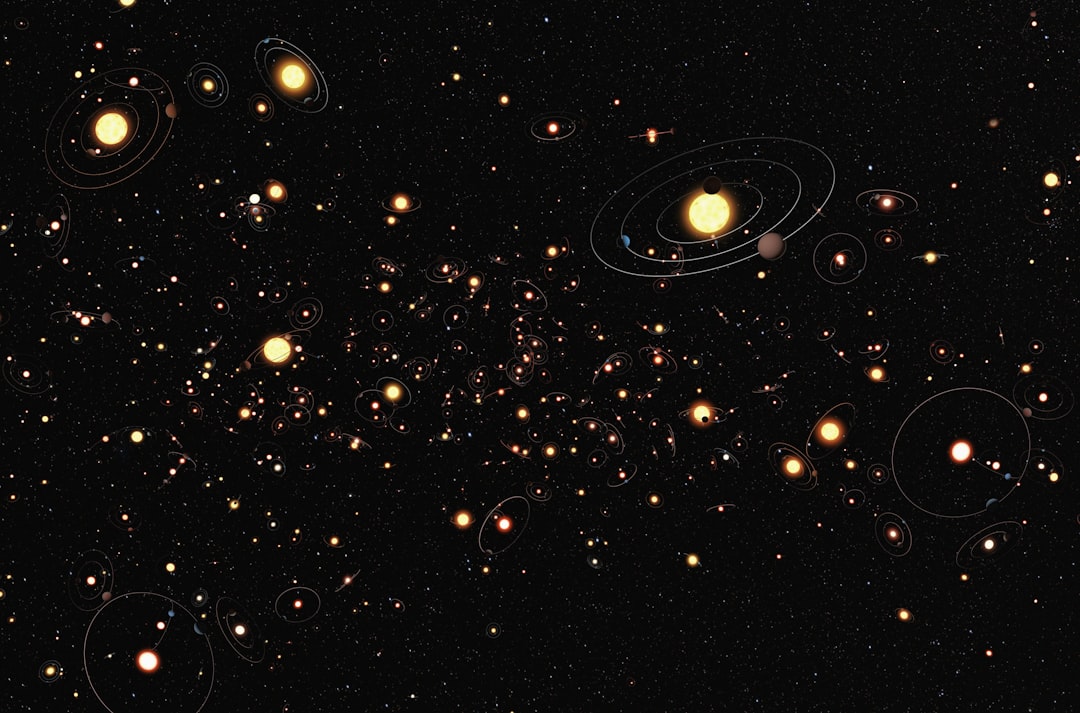
The Local Interstellar Cloud (LIC), a vast, diffuse region of gas and dust, envelops our solar system. For decades, it has been a subject of scientific inquiry, its presence understood through its subtle interactions with the heliosphere – the bubble created by the solar wind. Recent observations and theoretical models, however, are beginning to reveal a more complex and intriguing picture of the LIC, one marked by unexpected deviations from what was previously assumed. These anomalies challenge existing paradigms and prompt a re-evaluation of our understanding of this immediate cosmic environment.
The Shifting Sands of Interstellar Density
For a long time, the LIC was characterized as a relatively uniform entity, a gentle cloud of hydrogen and helium with a roughly constant density. This simplification was largely driven by early probes like Voyager 1 and 2, which, as they entered the heliosheath and then interstellar space, provided invaluable but geographically limited data. They encountered a specific density profile, which was then extrapolated to the entirety of the cloud. However, more sophisticated observations, employing a variety of techniques, are now demonstrating that this uniformity is an illusion.
Subtle Variations on the Cosmic Scale
Modern astronomical instruments, capable of exquisite sensitivity to faint interstellar signals, have begun to map the LIC with unprecedented detail. Instead of a monolithic structure, these observations hint at localized pockets of higher and lower densities. These variations are not dramatic, but their consistent appearance across multiple observational datasets suggests they are intrinsic to the LIC’s structure.
The Role of High-Resolution Spectroscopy
One of the primary tools for probing interstellar gas is high-resolution spectroscopy. By analyzing the light from distant stars that passes through the LIC, astronomers can identify the spectral signatures of its chemical constituents. Subtle shifts in the absorption lines, or variations in their intensity, can reveal variations in temperature, ionization state, and crucially, density. Recent studies utilizing advanced spectrographs on ground-based and space telescopes are beginning to resolve these fine details, uncovering regions where the density deviates from the average by several percentage points. These deviations, while small in interstellar terms, are significant enough to impact how interstellar particles interact with our heliosphere.
Radio Astronomy’s Contribution to Mapping
Radio astronomy also plays a vital role in understanding interstellar gas. The faint radio emissions from hydrogen atoms, particularly the 21-cm line, allow for a different perspective on the LIC’s distribution. By observing these emissions from various directions, astronomers can construct three-dimensional maps. These maps, particularly those with higher angular resolution, are starting to show a more mottled and less smooth appearance for the LIC than previously depicted. These radio observations complement spectroscopic data, providing a complementary view of density variations.
Recent studies have highlighted intriguing anomalies in the local interstellar cloud, shedding light on the complex interactions between solar winds and interstellar matter. For a deeper understanding of these phenomena, you can explore the article titled “Exploring the Mysteries of the Local Interstellar Cloud” available at My Cosmic Ventures. This article delves into the latest findings and theories surrounding the unique characteristics of our local cosmic neighborhood, offering insights into how these anomalies may influence our understanding of the universe.
Unexpected Chemical Compositions and Isotopic Ratios
Beyond density, the chemical makeup of the LIC is also proving to be more heterogenous than anticipated. While hydrogen and helium dominate, the trace elements and their isotopic ratios offer a unique fingerprint of the cloud’s origin and its evolutionary history. Anomalies in these compositions suggest a more complex past for the LIC than a simple, quiescent accumulation of interstellar matter.
The Mystery of Helium Abundance
Helium, the second most abundant element in the universe, serves as a crucial tracer of interstellar conditions. While the overall helium abundance in the LIC is generally consistent with cosmic averages, localized regions have shown slight but statistically significant deviations. Whether these are localized enrichments or depletions remains an area of active research, but either scenario implies a process of local enrichment or depletion that is not yet fully understood.
Dust Grains as Chemical Sentinels
Interstellar dust grains, microscopic particles of silicates and carbonaceous materials, are known to absorb and re-emit radiation, and can also act as surfaces for chemical reactions. Analyzing the composition of these dust grains within the LIC is a key avenue for uncovering chemical anomalies. When probes like Voyager passed through the heliosheath, they carried instruments designed to detect interstellar dust. While these instruments provided early insights, their limited sample size and the harsh environment of the heliosheath meant that a complete picture of dust composition within the broader LIC was not achievable. Newer techniques, observing the spectral signatures of dust from afar or analyzing minuscule samples collected by other spacecraft, are beginning to reveal variations in the ratios of heavy elements within dust grains in different parts of the LIC.
Isotopic Peculiarities in the Interstellar Medium
Isotopes – atoms of the same element with different numbers of neutrons – can provide invaluable clues about the nucleosynthetic processes that formed them and the subsequent history of the material. For instance, the ratio of deuterium to hydrogen can indicate conditions during the Big Bang and subsequent stellar evolution. Initial measurements of isotopic ratios within the LIC suggested a general consistency with solar system abundances. However, more precise measurements, particularly for elements like oxygen and carbon, are starting to reveal subtle, localized anomalies. These deviations might point to an intimate mixing with material ejected from specific types of supernovae or other stellar sources at different points in the past, suggesting that the LIC is not a pristine, ancient reservoir but a dynamic and evolving entity.
Stellar Nucleosynthesis and the Interstellar Archive
The study of isotopic anomalies is fundamentally linked to understanding stellar nucleosynthesis – the creation of elements within stars. Different types of stars, in their various stages of life and death, produce elements with distinct isotopic signatures. If the LIC has incorporated material from a specific type of star that has recently exploded as a supernova, or from the gentle shedding of outer layers by an aging giant star, these isotopic signatures would be imprinted within the cloud. Uncovering these anomalies is akin to finding remnants of specific stellar events within the interstellar archives of the LIC.
Magnetic Field Microstructure and its Implications
The interstellar medium is permeated by magnetic fields. These fields play a crucial role in shaping the behavior of plasma, influencing the formation of stars and galaxies, and affecting the flow of cosmic rays. The magnetic field of the LIC, while generally inferred from its interactions with the heliosphere, is also becoming a focus of scrutiny for its finer structure.
Non-Uniformities in Magnetic Field Strength
Previous models often assumed a relatively uniform and smooth magnetic field within the LIC. However, observations are now suggesting that the field strength is not constant. Subtle variations in the polarization of starlight passing through the LIC, or in the synchrotron emission from cosmic rays, indicate regions where the magnetic field is stronger or weaker than average. These variations are likely tied to density fluctuations and the presence of ionized gas, but their precise correlation and origin are still under investigation.
Magnetohydrodynamics and Plasma Behavior
The behavior of the interstellar medium is governed by magnetohydrodynamics (MHD), the study of how electrically conducting fluids, like plasma, interact with magnetic fields. The anomalies in the LIC’s magnetic field strength are a direct consequence of complex MHD processes occurring within the cloud. These processes can lead to the amplification of magnetic fields in certain regions and their depletion in others, resulting in a non-uniform magnetic environment.
Anomalous Field Orientations
Beyond strength, the orientation of the magnetic field can also exhibit unexpected variations. While a general alignment might be expected, observations are hinting at localized twists, turns, or even reversals in the magnetic field lines within the LIC. These finer structures can have significant implications for the propagation of cosmic rays and the dynamics of interstellar gas.
Cosmic Ray Propagation and Forbush Decreases
Cosmic rays, high-energy particles originating from outside the solar system, are deflected by magnetic fields. The structure of the magnetic field within the LIC will therefore influence the flux of cosmic rays that reach our solar system. Anomalies in the magnetic field could explain subtle variations in cosmic ray intensities or even contribute to the understanding of phenomena like Forbush decreases, which are temporary reductions in cosmic ray flux.
Energetic Particle Interactions and Unexpected Fluxes
The LIC is not a static entity; it is actively interacting with energetic particles, including solar wind particles and cosmic rays. The nature and intensity of these interactions can reveal much about the surrounding interstellar environment. Recent findings are pointing to unexpected fluxes and behaviors of these particles within the LIC.
Anomalous Cosmic Ray Signatures
While the overall flux of cosmic rays reaching the heliosphere is well-studied, the signatures of these particles – their energy spectra and composition – can reveal information about the intervening medium. Proton-to-alpha particle ratios, for instance, can be affected by interactions with interstellar gas and magnetic fields. Anomalies in these ratios observed as particles traverse the LIC could indicate localized regions of enhanced ionization or different magnetic field configurations.
Anisotropy of Interstellar Particles
The distribution of interstellar particles is not necessarily isotropic, meaning it does not come from all directions with equal intensity. Observations suggest that the LIC might be experiencing an anisotropic flux of certain energetic particles. This anisotropy could be a result of the LIC’s interaction with larger-scale interstellar structures or with outflows from nearby stars.
The Role of Interstellar Plasma in Particle Acceleration
The presence of plasma within the LIC provides the medium for potential particle acceleration processes. While the Sun is the primary source of energetic particles within our heliosphere, the LIC itself might harbor localized regions where interstellar plasma, under the influence of magnetic field fluctuations, can accelerate particles to higher energies. Detecting evidence of such processes would be a significant discovery in understanding the energetic particle environment beyond our heliosphere.
Shock Waves and Plasma Turbulence
Turbulence within the interstellar plasma, often associated with shock waves from supernova remnants or stellar winds, can create conditions conducive to particle acceleration. If the LIC contains such turbulent regions, it could be responsible for generating a low-level flux of energetic particles that are distinct from those originating from the Sun or distant astrophysical sources.
Recent studies have shed light on various astronomy anomalies within the local interstellar cloud, revealing intriguing insights about our cosmic neighborhood. These anomalies, which include unexpected variations in particle density and magnetic fields, challenge our understanding of the interstellar medium. For a deeper exploration of these fascinating phenomena, you can read more in this related article on cosmic ventures. The findings not only enhance our knowledge of the local interstellar environment but also open new avenues for research in astrophysics. To learn more, visit this article.
Implications for the Heliosphere and Future Exploration
The anomalies uncovered within the Local Interstellar Cloud have direct and significant implications for our understanding of the heliosphere and, by extension, for the future of space exploration. The heliosphere acts as a shield, protecting us from a portion of the interstellar radiation and particles. Changes in the LIC’s properties will inevitably alter the heliosphere’s structure and its effectiveness as a shield.
Reshaping Our Understanding of the Heliopause
The heliopause, the boundary where the solar wind is balanced by the interstellar medium, is a critical frontier. Variations in the density and magnetic field of the LIC will influence the shape and position of the heliopause. Understanding these anomalies is crucial for accurately modeling the heliosphere’s outer reaches and the transition zone into true interstellar space.
Voyager’s Journey and the Interstellar Boundary Explorer (IBEX)
The Voyager missions provided our first direct glimpses into the heliosheath and beyond. The Interstellar Boundary Explorer (IBEX) spacecraft has since provided global maps of the heliosphere’s interaction with the LIC, revealing unexpected energetic neutral atom (ENA) fluxes that provide indirect insights into the LIC’s properties. Anomalies detected by IBEX and future missions will continue to refine our understanding of the LIC-heliosphere interface.
Impact on Interstellar Travel and Cosmic Ray Protection
As humanity ventures further into space, understanding the interstellar radiation environment becomes paramount. The LIC, being our immediate cosmic neighborhood, plays a significant role in modulating the flux of cosmic rays that reach spacecraft and future human habitats. Anomalies in the LIC’s magnetic field or particle composition could lead to unexpected variations in radiation levels, necessitating adjustments to shielding strategies for long-duration missions.
Shielding Strategies and Radiation Hazards
The presence of certain elements or energetic particles within the LIC could pose direct radiation hazards. If the LIC contains unexpected concentrations of radioactive isotopes or regions of enhanced energetic particle flux, these would need to be carefully considered when planning crewed missions beyond the heliopause.
A Catalyst for New Theoretical Frameworks
Ultimately, the anomalies observed in the Local Interstellar Cloud serve as a powerful catalyst for scientific progress. They challenge existing assumptions, push the boundaries of observational capabilities, and necessitate the development of more sophisticated theoretical models. Uncovering these deviations from expected norms is not a sign of failure, but rather an indication of the intricate and dynamic nature of the universe, urging us to look closer and question our current understanding with persistent curiosity. The ongoing exploration of the LIC promises to deepen our comprehension of our place in the cosmos, revealing a local interstellar environment far more complex and captivating than previously imagined.
FAQs
What are some examples of astronomy anomalies in the local interstellar cloud?
Some examples of anomalies in the local interstellar cloud include unexpected variations in the density and temperature of the gas, unusual magnetic field structures, and unexplained cosmic ray observations.
How do these anomalies impact our understanding of the local interstellar cloud?
These anomalies challenge our current understanding of the physical processes at work in the local interstellar cloud and may require new theories or models to explain them. They also provide valuable insights into the complex and dynamic nature of interstellar space.
What are some potential explanations for these anomalies?
Potential explanations for these anomalies include interactions with nearby supernovae, the influence of nearby star-forming regions, and the effects of the Sun’s movement through the interstellar medium. However, none of these explanations fully account for all observed anomalies.
What tools and methods are astronomers using to study these anomalies?
Astronomers are using a variety of tools and methods to study these anomalies, including space-based telescopes, ground-based observatories, computer simulations, and theoretical modeling. They are also collaborating with researchers in other fields, such as plasma physics and particle astrophysics.
What are the implications of these anomalies for future space exploration and understanding of the universe?
Understanding these anomalies is crucial for future space exploration, as they can affect the conditions experienced by spacecraft and astronauts traveling through the local interstellar cloud. Additionally, resolving these anomalies will deepen our understanding of the universe and the processes that shape interstellar space.