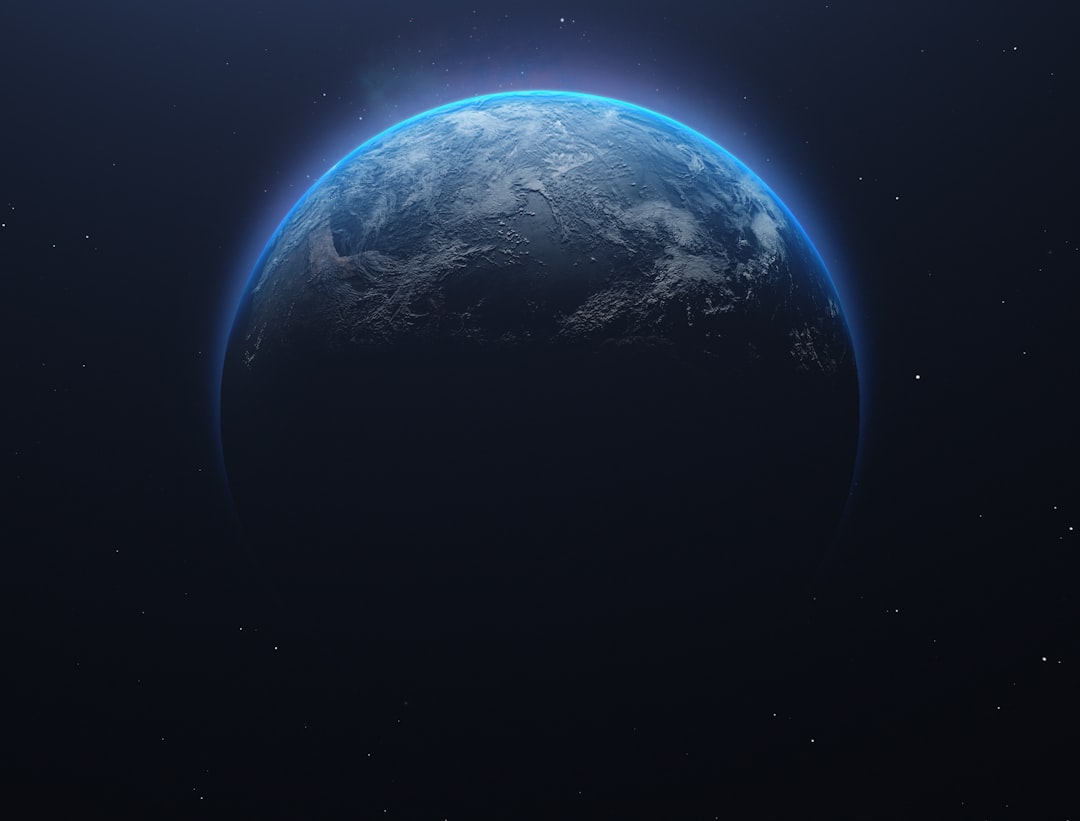
The vast expanse of space has long captivated the human imagination. Visions of starships traversing nebulae and exploring alien worlds are recurring motifs in science fiction, fueling a persistent desire to break free from our celestial cradle. Yet, the reality of interstellar travel presents formidable challenges, rooted in fundamental scientific and engineering principles. While humanity has achieved remarkable feats in space exploration within our solar system, the leap to the stars remains an aspiration far beyond our current grasp, constrained by physical laws, technological limitations, and the sheer scale of the cosmos.
The most immediate and perhaps most insurmountable obstacle to interstellar travel is the sheer, mind-boggling distance involved. Our solar system, vast as it appears from Earth, is a mere speck in the cosmic ocean. The nearest star system, Alpha Centauri, is approximately 4.37 light-years away.
Understanding the Light-Year as a Unit of Scale
A light-year is not a measure of time, but of distance. It is defined as the distance that light travels in one Earth year. Since light travels at approximately 299,792 kilometers per second, a light-year represents an almost unimaginable distance.
- The Magnitude of a Light-Year: To put it into perspective, 4.37 light-years translates to roughly 41.3 trillion kilometers (25.7 trillion miles). This is a number that defies easy comprehension. The diameter of Earth’s orbit around the Sun, the Astronomical Unit (AU), is a mere 150 million kilometers. Alpha Centauri is over 275,000 times farther away than the Sun.
The Nearest Neighbors and Beyond
Even the closest stars are exceptionally distant. Other potentially habitable exoplanets, if they exist and were detectable, would likely be tens, hundreds, or even thousands of light-years away. Traveling to the Andromeda galaxy, our nearest major galactic neighbor, would require traversing billions of light-years.
- The Sheer Emptiness of Space: The space between stars is not empty but extremely diffuse. While there are planets, asteroids, and comets within our solar system, the distances between them are relatively small compared to interstellar distances. The probability of encountering any significant celestial body during an interstellar journey is exceedingly low, but the risk, however small, cannot be entirely discounted.
- The Cumulative Nature of Distance: Each additional light-year represents an exponential increase in the difficulty of travel. A journey to a star 100 light-years away is an order of magnitude more challenging than one to a star 10 light-years away, assuming constant speed.
The concept of being trapped in our solar system is a fascinating topic that delves into the limitations imposed by gravity, distance, and the vastness of space. For a deeper understanding of this subject, you can explore the article titled “Why We Are Trapped in Our Solar System,” which discusses the various factors that confine us within our cosmic neighborhood. To read more about this intriguing subject, visit the article here: Why We Are Trapped in Our Solar System.
The Velocity Barrier: The Challenge of Reaching Near-Light Speeds
Given the immense distances, achieving interstellar travel necessitates achieving velocities that are a significant fraction of the speed of light. This is where the first major scientific hurdle, the laws of physics as we understand them, comes into play.
Einstein’s Relativity and the Speed Limit of the Universe
Albert Einstein’s theory of special relativity dictates that nothing with mass can reach the speed of light. As an object with mass accelerates, its relativistic mass increases. To reach the speed of light would require an infinite amount of energy, a physical impossibility.
- The Energy Requirement: Accelerating even a small spacecraft to a substantial fraction of the speed of light would demand an amount of energy that dwarfs humanity’s current global energy production, likely for centuries or even millennia. The propulsion systems required to achieve such speeds are beyond our current technological imagination, let alone engineering capabilities.
- The Lorentz Factor: The increase in mass is described by the Lorentz factor. As velocity approaches the speed of light, the Lorentz factor tends towards infinity, signifying the insurmountable energy barrier.
The Practical Implications of Sub-Light Speeds
Even if we could achieve a significant fraction of the speed of light, the journey would still take an extremely long time from the perspective of an observer on Earth.
- Time Dilation: Special relativity also predicts time dilation. For a traveler moving at relativistic speeds, time would pass slower than for a stationary observer. While this could theoretically allow a traveler to reach a distant star within their lifetime, centuries or millennia would have elapsed on Earth. This raises profound societal and ethical questions about leaving Earth behind.
- The “Generation Ship” Concept: To bridge these vast temporal gaps, science fiction often proposes “generation ships,” vessels where multiple generations of humans would live and die during the transit. This concept, while feasible in theory, presents immense logistical, biological, and psychological challenges. Maintaining a self-sustaining ecosystem, ensuring genetic diversity, and preserving social order over centuries are enormous undertakings.
Engineering Nightmares: The Technological Hurdles of Starship Design
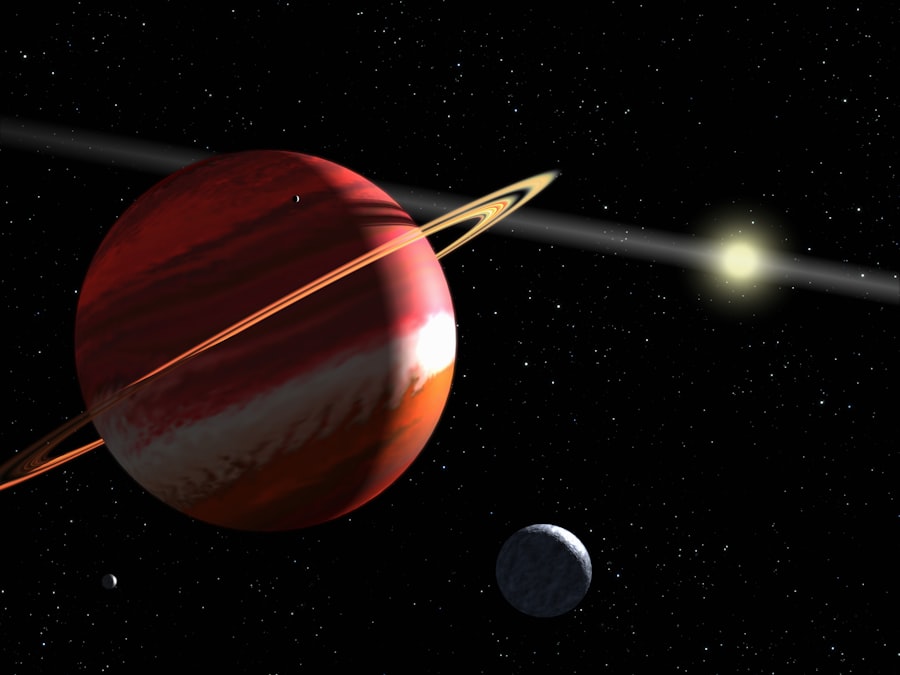
Beyond the fundamental physics, the engineering required to build and operate an interstellar spacecraft presents a daunting array of challenges.
Propulsion Systems: The Quest for an Impossible Engine
Current propulsion systems, while impressive for solar system travel, are woefully inadequate for interstellar distances.
- Chemical Rockets: These rely on expelling mass at high velocity. The sheer amount of propellant required for an interstellar journey using chemical rockets would be astronomically large, making the spacecraft prohibitively massive.
- Ion Drives: These are more efficient, using electric fields to accelerate ionized propellant. However, they produce very low thrust, meaning acceleration would be extremely slow. Achieving significant speeds would require many years of continuous operation.
- Nuclear Propulsion: Concepts like nuclear thermal rockets or nuclear pulse propulsion (using nuclear explosions) offer more power but come with significant challenges related to safety, radiation, and fuel handling.
- Exotic Propulsion Concepts: Theoretical concepts like warp drives, Alcubierre drives, or antimatter propulsion offer tantalizing possibilities but are currently firmly in the realm of speculation, requiring physics and engineering that we do not possess. The creation and containment of antimatter, for instance, is an incredibly complex and energy-intensive process.
Power Generation: Sustaining the Journey
An interstellar spacecraft would need a massive and reliable power source to sustain its propulsion, life support systems, scientific instruments, and communication.
- Fusion Power: While fusion is a promising energy source for the future, developing compact, efficient, and reliable fusion reactors for spacecraft is a significant technological leap.
- Antimatter Annihilation: This is theoretically the most energy-dense power source, but as mentioned, its production and containment are immense challenges.
- Solar Power: Completely impractical for interstellar space, as sunlight diminishes rapidly with distance from the Sun.
Life Support and Human Factors: The Long Haul
Keeping humans alive and healthy for decades or centuries in the harsh environment of space is a monumental task.
- Closed-Loop Life Support Systems: Developing fully self-sustaining systems that recycle air, water, and waste with near-perfect efficiency is crucial. Even small inefficiencies would accumulate over long durations.
- Radiation Shielding: Interstellar space is permeated by cosmic rays and solar flares, which are highly damaging to biological organisms. Protecting a crew from this radiation would require massive and heavy shielding, further increasing spacecraft mass.
- Psychological Impact: The prolonged confinement, isolation, and detachment from Earth would have profound psychological impacts on the crew. Maintaining morale, mental health, and social cohesion over multi-generational journeys is a significant concern.
- Medical Challenges: Dealing with long-term health effects of microgravity, radiation exposure, and the potential for disease outbreaks in a closed environment would be extremely difficult.
The Perils of the Void: Navigating Interstellar Hazards
The emptiness of space is not entirely benign. Interstellar journeys would expose spacecraft and their crews to a range of hazards.
Micrometeoroids and Space Debris
While interstellar space is less cluttered than orbits around planets, there are still dust particles and small objects that can cause damage at relativistic speeds.
- The Impact Velocity Problem: Even a grain of sand striking a spacecraft at near-light speed would have the kinetic energy of a significant explosion. The hull would need to be incredibly robust and potentially incorporate self-healing technologies.
- Detection and Avoidance: Detecting and avoiding these tiny but potentially devastating threats at the speeds required for interstellar travel would be extremely difficult, if not impossible.
Radiation Environment
Beyond the solar system’s protective magnetosphere, the radiation environment becomes significantly more hostile.
- Cosmic Rays: High-energy particles originating from outside our solar system, these can penetrate shielding and damage biological tissues and electronic equipment.
- Galactic Cosmic Rays (GCRs): These are a persistent and pervasive threat, requiring substantial shielding.
- Stellar Flares: While less frequent in interstellar space than near stars, energetic flares from distant stars could still pose a risk if a spacecraft were to pass through their vicinity.
Unforeseen Dangers
The vastness of space holds many unknowns. Future discoveries could reveal entirely new phenomena or hazards that we are currently not equipped to anticipate or defend against.
- Dark Matter and Dark Energy: The nature and behavior of these enigmatic components of the universe are still poorly understood. Their influence on interstellar travel at extreme scales is unknown.
- Gravitational Anomalies: While unlikely to be a constant threat, understanding and navigating any potential gravitational anomalies in intergalactic space would be important.
The mysteries of our solar system and the reasons we seem to be trapped within its confines are explored in depth in a fascinating article found on My Cosmic Ventures. This piece delves into the gravitational forces at play, the limitations of our current technology, and the vast distances that separate us from other star systems. For those interested in understanding why humanity remains bound to its celestial neighborhood, the insights provided in this article are invaluable. You can read more about it in this related article.
The Economic and Societal Cost: A Project Beyond Our Reach
| Reasons | Explanation |
|---|---|
| Gravitational pull | The gravitational pull of the sun keeps the planets and other celestial bodies within our solar system. |
| Escape velocity | The escape velocity required to leave the solar system is extremely high, making it difficult for spacecraft to break free. |
| Distance to other stars | The vast distances to other stars make interstellar travel extremely challenging with current technology. |
| Orbital dynamics | The complex interactions of gravitational forces between celestial bodies make it difficult to navigate out of the solar system. |
Beyond the scientific and engineering challenges, the economic and societal investment required for interstellar travel is immense, placing it far beyond our current capabilities.
Unprecedented Resource Allocation
The development of interstellar travel would necessitate an allocation of global resources on a scale never before imagined.
- Financial Investment: Funding the research, development, construction, and operation of an interstellar mission would likely dwarf the combined budgets of all nations for decades, if not centuries.
- Material Resources: The sheer quantity of raw materials required for such a vessel would be staggering, potentially depleting Earth’s resources or requiring entirely new methods of extraction and processing in space.
The Ethical and Philosophical Conundrum
The very undertaking of interstellar travel raises profound ethical and philosophical questions that humanity needs to address.
- The Purpose of the Mission: What would be the primary objective? Scientific exploration, colonization, or escape from a dying Earth? The answer would shape the entire endeavor.
- The Value of Human Life: If generation ships are deemed necessary, what is the ethical implication of condemning multiple generations to a life of transit?
- Interstellar Ethics: If we encounter alien life, what would be our ethical obligations? The potential for cultural contamination or conflict is a serious consideration.
- The “Great Filter” Hypothesis: Some scientists theorize about a “Great Filter” – a hurdle that most civilizations fail to overcome, preventing them from becoming interstellar. The development of interstellar travel might be that filter, and our inability to achieve it might be a sign of our continued survival.
The Opportunity Cost
Investing trillions of dollars in interstellar travel might mean diverting resources from immediate planetary needs such as climate change mitigation, poverty reduction, and disease eradication. The trade-offs are significant and require careful consideration.
Conclusion: A Long Road Ahead
The allure of the stars remains strong, a testament to humanity’s innate curiosity and drive to explore. However, the current scientific understanding and technological capabilities paint a stark picture of the immense challenges that lie in the path of interstellar travel. The tyranny of distance, the stringent limits imposed by the speed of light, the engineering complexities of starship design, and the inherent dangers of the void all combine to make journeys to other star systems a prospect for the very distant future, if at all.
While it is important to acknowledge these limitations, it is also crucial to recognize the value of continued scientific inquiry and technological advancement. Research into new propulsion systems, advanced materials, and sustainable energy sources, even if not immediately geared towards interstellar travel, has the potential to yield significant benefits for humanity within our solar system and beyond. The dream of the stars may remain a distant one, but the journey of scientific discovery, even when confined to our own celestial neighborhood, is a worthwhile endeavor in itself. For now, humanity remains a solar system-bound species, its gaze fixed on the heavens with a mixture of longing and pragmatism, acutely aware of the vast chasm that separates us from the closest stellar neighbors.
FAQs
What is the reason for our solar system trapping us?
Our solar system’s gravitational pull and the vast distances between stars make it extremely difficult for us to escape its boundaries.
Can we ever escape our solar system?
With current technology, it is not feasible for humans to escape our solar system. The distances involved are simply too vast.
What are the implications of being trapped in our solar system?
Being trapped in our solar system means that our exploration and potential colonization efforts are limited to the planets and moons within it. It also means that we are isolated from potential extraterrestrial life in other star systems.
Are there any proposed solutions for escaping our solar system?
Scientists and researchers are exploring various theoretical concepts, such as advanced propulsion systems and wormholes, that could potentially allow us to escape our solar system in the distant future.
What are the benefits of being trapped in our solar system?
Being confined to our solar system allows us to focus on understanding and exploring the unique features of our own celestial neighborhood, such as the diverse planets, moons, and asteroids within it.