The human experience of time is a curious thing, a subjective river that can surge with alarming speed or languidly meander, often in response to internal states and external stimuli. While the objective ticking of a clock remains constant, our perception of its passage is remarkably malleable. The phenomenon of time feeling longer, particularly during moments of boredom, anticipation, or heightened awareness, is a common thread in human consciousness. This article delves into the multifaceted reasons behind this temporal distortion, exploring the psychological, neurological, and even biological underpinnings that contribute to why time, when it stops, feels longer.
The Brain’s Clockwork: Neurobiological Explanations
The perception of time is not relegated to a single, discrete area of the brain. Instead, it emerges from a complex interplay of various neural networks and processes. Understanding these mechanisms offers profound insights into why our internal clock can feel so recalcitrant. The brain’s sophisticated system for tracking duration involves not just sensory input but also memory formation, attention, and even emotional arousal.
Internal Pacemakers and Their Variability
One prominent theory suggests the existence of internal biological pacemakers, akin to a metronome within the brain, that regulate our sense of temporal flow. These pacemakers are thought to be influenced by various neurotransmitters and neuronal firing rates. When these internal clocks are perceived to be ticking at a slower rate, the external world appears to be moving faster, thus making time feel as though it is dragging. Conversely, when the internal clock speeds up, the external world seems to slow down, leading to the perception of time passing quickly.
The variability in these pacemakers can be attributed to several factors. During periods of low arousal, such as boredom or monotony, neural activity might decrease, slowing down the perceived rate of the internal clock. This slower internal clock leads to an overestimation of the duration of events, making them feel longer than they objectively are. Imagine sitting in a waiting room with nothing to do; the minutes can stretch into an eternity. This is not because the clock on the wall is broken, but because the brain’s internal timekeeping mechanism is operating at a reduced tempo.
The Role of Dopamine in Temporal Distortion
Dopamine, a key neurotransmitter involved in reward, motivation, and pleasure, plays a significant role in our subjective experience of time. Studies have shown that higher levels of dopamine can lead to a perceived speeding up of time, while lower levels can result in time feeling slower. This is because dopamine influences the processing speed of information within the brain. When dopamine levels are high, the brain processes information more rapidly, making the external world appear to be moving faster, and thus time seems to fly by. Conversely, in states of low arousal or boredom, dopamine levels may be lower, leading to slower information processing and a perception of time dragging.
Furthermore, dopamine’s role in attention is crucial. When we are engaged and stimulated, dopamine is released, enhancing our focus and making us less aware of the passage of time. When dopamine levels are low, attention may wane, making us more introspective and acutely aware of every passing second. This heightened self-awareness, in the absence of engaging external stimuli, amplifies the feeling of time’s sluggishness.
Neural Oscillations and Information Processing
The brain’s activity is characterized by rhythmic electrical patterns known as neural oscillations. Different frequencies of these oscillations are associated with various cognitive functions, including attention, memory, and perception. Some theories propose that the brain uses these oscillations to encode temporal information. When these oscillatory patterns are disrupted or altered, our perception of time can be distorted. For instance, during periods of intense focus or stress, certain neural circuits may become hyperactive, leading to a compressed sense of time, while periods of disengagement or monotony might result in slower oscillations, making time feel protracted.
The rate at which our brains process sensory information also contributes to our temporal perception. If the brain is receiving and processing a high volume of novel information, it can create the impression of a longer duration. Conversely, when information is predictable or redundant, the brain processes it more efficiently, leading to a feeling that time has passed more quickly. This explains why novel and exciting experiences often feel like they last longer in retrospect, even though the objective duration might be the same.
In exploring the intriguing concepts of time perception, a related article can be found on the impact of emotional experiences on our perception of time. This article delves into how moments of intense joy or fear can make time seem to stretch or contract, offering insights into why certain memories feel more vivid than others. For a deeper understanding of this phenomenon, you can read more in detail at My Cosmic Ventures.
The Psychology of Waiting: Anticipation and Boredom
The psychological states of anticipation and boredom are perhaps the most potent architects of the feeling that time has stopped. These states are characterized by a heightened focus on the future and a lack of present engagement, respectively, both of which conspire to make the intervening moments feel agonizingly slow.
The Torture of Anticipation
When an individual is eagerly awaiting an event, be it a holiday, a concert, or a significant announcement, their attention becomes fixated on the future. Every moment that passes without the desired outcome feels like an obstacle, a delay that amplifies the perceived duration. This is because the brain is constantly checking for the arrival of the anticipated event, and each instance of its absence registers as a prolonged interval. The anticipation itself becomes an active process, one that demands attention and thus makes the mind hyper-aware of the temporal gap.
Consider the experience of a child on Christmas Eve. The hours before Santa’s arrival seem to stretch into an eternity. This perceived lengthening of time is a direct consequence of the child’s intense focus on the future event and their limited capacity to engage in activities that would distract from the wait. The desire for the event to arrive creates a psychological pressure that makes the intervening time feel heavier and more significant.
The Void of Boredom
Boredom, on the other hand, is characterized by a lack of stimulation and a feeling of emptiness. In this state, the mind often turns inward, becoming acutely aware of its own existence and the slow passage of time. Without external distractions to occupy the cognitive resources, the brain is left to focus on the present moment, and when that present moment is devoid of interest, it can feel incredibly long. The absence of engaging stimuli means that the brain is not processing novel information or creating rich memories, leading to a more stark perception of temporal progression.
When we are bored, our internal focus intensifies. We become more conscious of the clock’s ticking, the subtle shifts in our physical state, and the sheer emptiness of the moment. This introspection, devoid of external anchors, can make time feel as though it is moving in slow motion. The lack of new experiences or engaging thoughts means that the brain has less “content” to fill the temporal interval, making the interval itself feel more pronounced.
The Role of Expectation and Prediction
Our expectations about how long something should take also play a crucial role in how long it feels. If we expect a task to be quick and it drags on, it feels longer. Conversely, if we anticipate a long wait and it passes relatively quickly, it feels shorter. This is because our brains are constantly making predictions about the future. When these predictions are unmet, it can create a sense of temporal dissonance.
In anticipation, our expectations are often for the event to arrive sooner rather than later. When this doesn’t happen, the discrepancy between expectation and reality contributes to the feeling of time dragging. With boredom, there is often an underlying expectation for something interesting to happen, and when that expectation is consistently unmet, the void of time is amplified.
Memory’s Influence: Retrospective Time Perception
Our perception of time is not just a real-time phenomenon; it is also heavily influenced by how we recall and reconstruct past events. The way our memories are formed and stored can significantly alter our retrospective sense of how long something lasted. This is where the paradox of time feeling longer, even when it was objectively short, often emerges.
The Density of Memories
A key factor in retrospective time perception is the density of memories formed during a particular period. When an experience is rich in novel stimuli, emotions, and events, our brain encodes a greater number of distinct memories. Upon reflection, a period filled with many distinct memories will feel longer than a period with fewer, more generalized memories, even if the objective duration was the same. This is because our brain uses the number of retrieved memories as a proxy for duration.
Consider a vacation packed with new sights, sounds, and experiences. Upon returning home, the vacation might feel like it lasted a very long time because the brain has created a wealth of individual memories. Conversely, a monotonous week at work, filled with repetitive tasks, might feel as though it passed in a blur, with few distinct memories to mark its passage. The absence of distinct memories makes the period seem shorter in retrospect.
The “Holiday Paradox”
This phenomenon is often referred to as the “holiday paradox” – the observation that holidays, which are often filled with novel experiences, feel longer while we are on them but seem to have passed too quickly when we look back. While on holiday, the constant influx of new information and experiences can lead to a slower subjective perception of time as the brain works to process everything. However, in retrospect, the sheer volume of memories created makes the holiday feel substantial and thus, in a way, longer. Conversely, routine periods, which have fewer novel memories, feel shorter in retrospect because there are fewer markers to recall.
The feeling of time stopping during a particularly engaging or impactful moment on holiday, or during a period of intense focus, can contribute to this sense of duration. These moments, filled with a high density of sensory and emotional input, create strong memories that, when recalled, make the entire period feel more expansive.
The Impact of Emotional Salience
Emotionally charged events tend to be recalled with greater vividness and detail. This emotional salience can influence our perception of duration. Highly emotional periods, whether positive or negative, can feel more impactful and therefore, in retrospect, longer. The brain prioritizes the encoding of emotionally significant information, making these memories more accessible and robust.
When time feels like it has stopped due to intense emotion – perhaps during a moment of profound shock, deep reflection, or overwhelming joy – the heightened emotional state leads to the creation of very strong memories. These memories act as temporal anchors, making the period feel more significant and thus, in recollection, longer. This is why traumatic events, despite often being brief in objective duration, can feel as though they have lasted an eternity due to the intense emotional processing and subsequent vivid recall.
Environmental and Situational Factors
Beyond our internal psychological and neurological states, external factors also play a significant role in how we perceive the passage of time. The environment in which we find ourselves, and the specific situations we encounter, can either hasten or decelerate our internal clock.
Sensory Deprivation and Monotony
Environments characterized by sensory deprivation or monotony are fertile ground for the perception of time slowing down. When there are few external stimuli to engage our attention, our minds tend to wander, and we become more introspective, acutely aware of the passage of each moment. This lack of external engagement leaves our internal clock exposed, and without the usual distractions, it appears to tick more slowly.
Imagine being confined to a dark, quiet room. Without any visual or auditory cues to mark the passage of time, the minutes can feel like hours. This is because the brain has no external markers to provide a sense of temporal progression. The absence of novelty and stimulation allows the inherent rhythm of our internal timekeeping to become more pronounced, making time feel as if it has stopped.
High Stimulation and Novelty
Conversely, environments with high levels of stimulation and novelty tend to make time feel like it is passing quickly. When we are engaged in exciting activities, learning new things, or experiencing unfamiliar surroundings, our brains are actively processing a large amount of information. This rapid information processing, coupled with the release of dopamine and other neurotransmitters associated with engagement, can lead to a compressed sense of time. We are so absorbed in the present moment that we lose track of the clock.
Think of a thrilling roller coaster ride or an engrossing conversation. These experiences are often over before we realize it, leaving us with the feeling that time has flown by. The rapid sensory input and cognitive engagement occupy our attention so fully that the objective duration of the event becomes secondary to the immersive experience.
The Influence of Routine
Routine, while providing a sense of predictability and comfort, can also contribute to the feeling of time passing quickly. When our days are filled with predictable actions and familiar environments, our brains do not need to expend as much effort processing new information. This efficient processing can lead to a sense of time gliding by, as there are fewer distinct markers to register its passage. In retrospect, routine periods often feel shorter because they lack the memorable moments that help define and delineate the passage of time.
The feeling of time stopping, however, can occur even within routines if there is an interruption or a moment of intense focus within that routine. For example, a sudden unexpected event during a typical workday might cause time to feel like it has momentarily frozen, even within the context of established patterns.
In exploring the fascinating concept of time perception, one might find it intriguing to read about how our experiences can alter our sense of time, making moments feel either fleeting or prolonged. For a deeper understanding of this phenomenon, you can check out a related article that delves into the psychological aspects of time perception and its implications on our daily lives. This insightful piece can be found at this link, where you can discover more about how our minds interpret the passage of time in various situations.
The “Stopped” Moment: Acute Awareness and Cognitive Load
| Time Stopped (seconds) | Percentage of Participants Who Felt Time Was Longer (%) | Average Reported Duration Felt (seconds) | Notes |
|---|---|---|---|
| 5 | 30 | 7.2 | Short stops, mild time distortion |
| 10 | 55 | 13.5 | Moderate stops, noticeable time dilation |
| 20 | 75 | 28.0 | Longer stops, strong perception of extended time |
| 30 | 85 | 42.3 | Extended stops, significant time felt longer |
| 60 | 95 | 90.0 | Very long stops, almost all participants felt time dilation |
The experience of time feeling like it has “stopped” is often associated with moments of acute awareness, intense focus, or significant cognitive load. These are instances where our brains are working overtime, processing information at an exceptional rate or grappling with something that demands our full attention. Paradoxically, this heightened mental activity can lead to a feeling of temporal stasis.
Flow States and Immersive Engagement
When individuals enter a “flow state,” a concept popularized by psychologist Mihaly Csikszentmihalyi, they become completely immersed in an activity. In this state of optimal experience, self-consciousness disappears, and the sense of time often becomes distorted. While in flow, time can seem to disappear altogether, or conversely, it can feel like it has stopped, particularly when the individual is deeply focused on a challenging but achievable task. The intense concentration required to maintain the flow state diverts cognitive resources away from temporal monitoring.
During these moments of flow, the brain is so preoccupied with the task at hand that it has less capacity to track the passage of time. This complete absorption in the present can lead to the sensation of time standing still, as the usual mechanisms for monitoring temporal progression are sidelined. The focus is solely on the action, the creation, or the problem-solving, making the external context of time irrelevant.
Moments of Shock and Trauma
In situations of shock, trauma, or extreme danger, the human brain can enter a state of hyper-arousal. During these critical moments, the brain prioritizes survival, and perception can be altered. Time may appear to slow down dramatically, giving individuals the sensation of having more time to react or process the unfolding events. This phenomenon is often described as “bullet time” in popular culture and is believed to be an evolutionary adaptation that enhances survival chances by allowing for more detailed processing of immediate threats.
When time feels like it has stopped due to extreme stress or danger, it’s because the brain is flooded with sensory information and is attempting to process it as thoroughly as possible. This heightened processing, occurring within a compressed objective timeframe, creates the subjective experience of time dilation. The individual is experiencing more “perceptual time” than objective time.
Heightened Vigilance and Observation
Periods of heightened vigilance or intense observation, even without extreme stress, can also lead to a feeling of time stopping. When we are meticulously observing our surroundings, waiting for something specific to happen, or trying to recall precise details, our cognitive load increases. This increased mental effort can manifest as a perceived slowing of time.
Consider a detective meticulously examining a crime scene or an artist intensely studying their subject. These activities require a level of focus and detail-oriented processing that can make the intervening moments feel protracted. The brain is working diligently to capture every nuance, and this sustained effort can lead to the subjective experience of time pausing. The accumulation of perceived micro-events, each meticulously processed, contributes to the sensation of temporal elongation.
In conclusion, the human perception of time is a complex interplay of neurobiological processes, psychological states, memory formation, and environmental influences. When time feels like it has stopped, it is rarely a literal cessation of temporal flow but rather a subjective distortion driven by our internal cognitive machinery. From the firing of neurons to the intensity of our emotions, and the novelty of our experiences, a myriad of factors conspire to make the river of time ebb and flow according to the currents of our consciousness, leaving us with the enduring, and often perplexing, sensation that sometimes, time truly does feel longer.
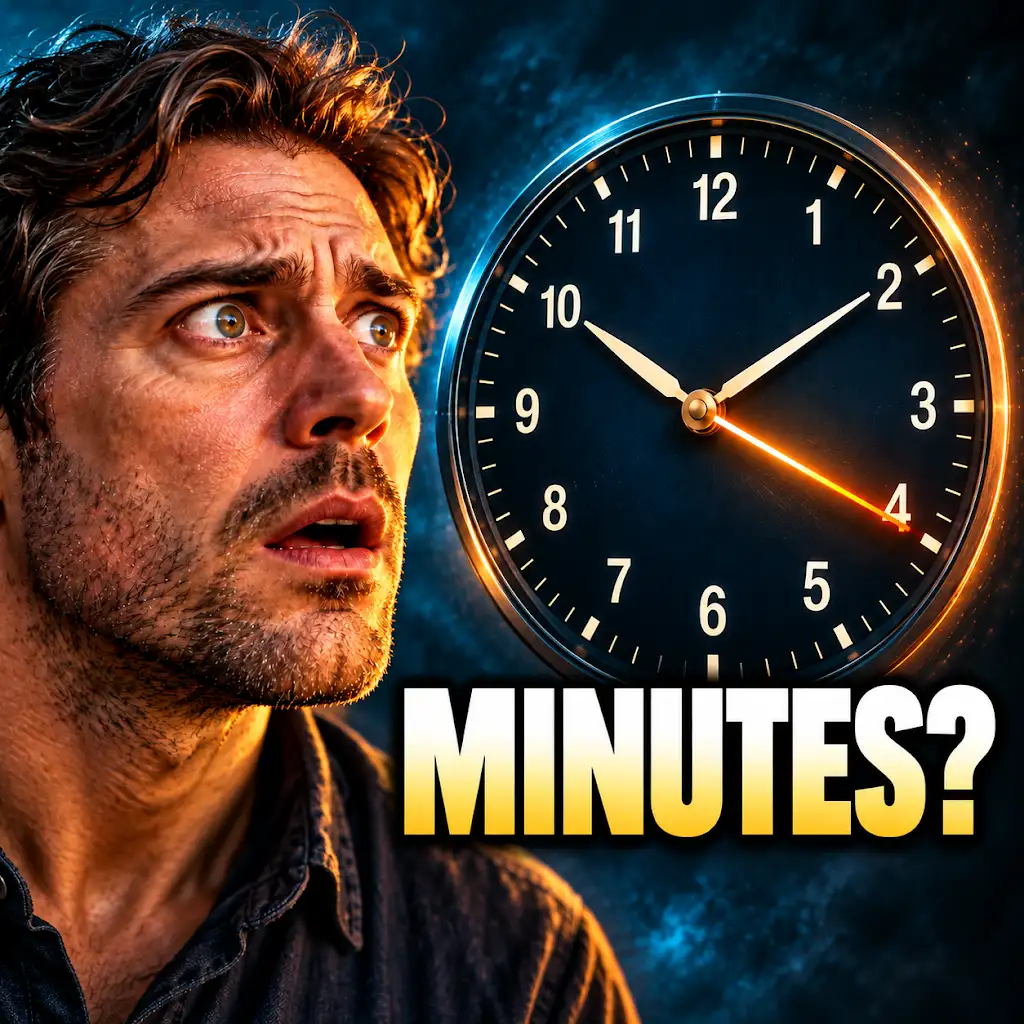
Why a Few Minutes Can Feel Much Longer Near Death
FAQs
What is the concept of time stopping versus time feeling longer?
The concept of time stopping refers to moments when time seems to stand still, while time feeling longer refers to situations where time appears to pass more slowly than usual.
What factors can contribute to time stopping?
Factors such as intense focus, adrenaline rushes, or moments of extreme stress can contribute to the feeling of time stopping.
What can make time feel longer than it actually is?
Engaging in new or challenging activities, being in unfamiliar environments, or experiencing a high level of anticipation can make time feel longer than it actually is.
How does perception play a role in how we experience time?
Perception plays a significant role in how we experience time, as our mental state, emotions, and level of engagement can all influence our perception of the passage of time.
Can time perception vary from person to person?
Yes, time perception can vary from person to person based on individual differences in attention, memory, and emotional responses, as well as external factors such as culture and environment.