The universe, a vast expanse governed by intricate laws, presents fundamental limits to our understanding and interaction with it. Among the most profound of these are black holes, cosmic enigmas that warp spacetime itself, and faster-than-light (FTL) travel, a theoretical concept that challenges the very fabric of causality. This exploration delves into the nature of these limits, examining how black holes represent an absolute boundary within the known universe and how FTL, if possible, would confront different, yet equally significant, observational and theoretical constraints.
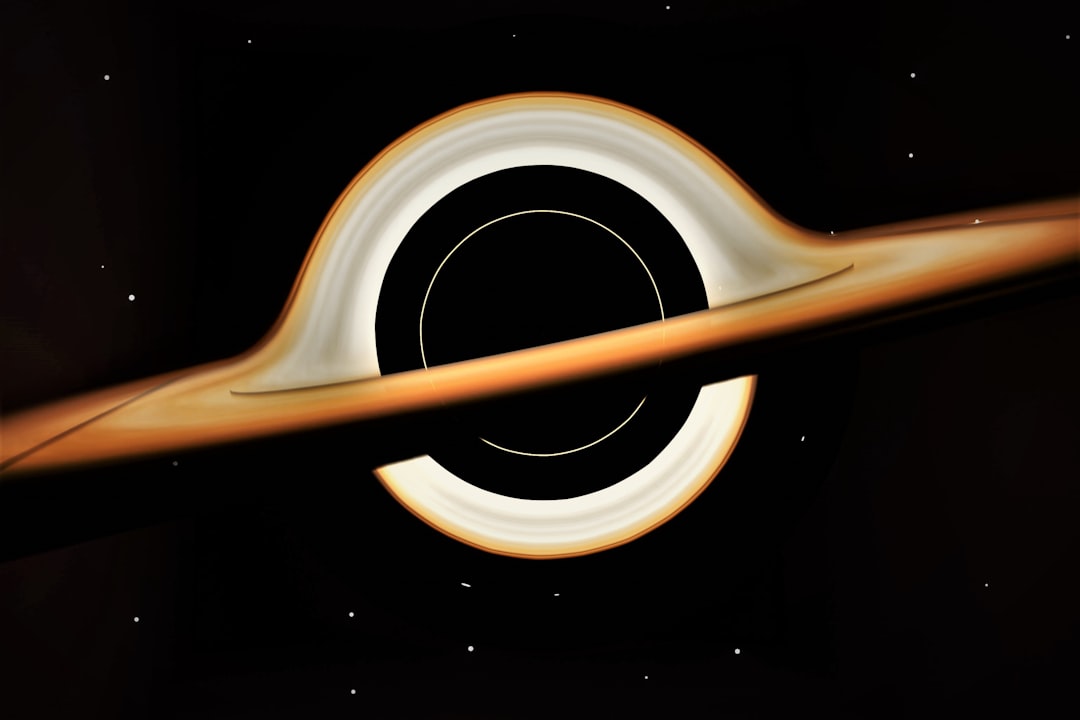
Black holes are not merely regions of intense gravity; they are points where our current models of physics break down and where the universe imposes a definitive barrier. Their singularity, a point of infinite density and zero volume, represents a singularity in spacetime itself, a place where the known laws of physics become inadequate. The event horizon, the boundary beyond which nothing, not even light, can escape, is the most tangible representation of this limit.
Defining the Singularity and its Implications
The concept of a singularity at the heart of a black hole arises from Einstein’s theory of general relativity. As mass collapses under its own gravity beyond a critical point, spacetime is distorted to such an extreme degree that it effectively folds in on itself. The mathematical equations describing this phenomenon yield infinities, indicating a breakdown of the theory and suggesting that a more complete understanding of gravity at these extreme densities requires a quantum theory of gravity, something currently lacking.
The Breakdown of Classical Physics
In classical general relativity, the singularity is a point of infinite curvature and density. This means that at the singularity, the usual rules of physics, such as the inverse square law of gravity, no longer apply in a predictable manner. Any object or information that crosses the event horizon is inevitably drawn towards this singularity. The question of what happens at the singularity remains one of the universe’s most profound mysteries.
The Search for Quantum Gravity
The singularity is a strong indicator that general relativity, while incredibly successful at describing gravity on macroscopic scales, is incomplete. Physicists hypothesize that a successful theory of quantum gravity would resolve these infinities, perhaps by describing spacetime as quantized or by introducing new fundamental principles. Theories like string theory and loop quantum gravity are attempts to bridge this gap, but direct observational evidence remains elusive.
The Event Horizon: The Point of No Return
The event horizon is the defining characteristic of a black hole from an external observer’s perspective. It is not a physical surface but rather a spherical boundary in spacetime. Once an object or any form of energy crosses this boundary, its future trajectory inevitably leads to the singularity. The speed required to escape the gravitational pull of a black hole at the event horizon is greater than the speed of light, hence the term “black” hole.
Time Dilation and the Observer’s Perspective
From the perspective of an observer falling into a black hole, time and space become dramatically distorted. As they approach the event horizon, time appears to slow down relative to an external observer. Conversely, the external observer would see the infalling object’s motion slow to a crawl as it approached the event horizon, appearing to freeze in time indefinitely. This discrepancy in observed time highlights the relativistic nature of spacetime and the profound influence of gravity.
Information Paradox: What Happens to What Falls In?
The event horizon also gives rise to the information paradox. According to quantum mechanics, information cannot be destroyed. However, if an object falls into a black hole, its unique properties, the information it contains, appear to be lost forever behind the event horizon. This apparent violation of a fundamental principle of quantum mechanics has led to intense theoretical debate and speculation about how information might be preserved or encoded in ways we do not yet understand, potentially through Hawking radiation.
The intriguing nature of the universe raises many questions, particularly regarding the existence of black holes and the prohibition of faster-than-light (FTL) travel. While black holes are a natural consequence of the laws of physics, allowing for the extreme warping of spacetime, FTL travel remains elusive due to the constraints imposed by Einstein’s theory of relativity. For a deeper exploration of these cosmic phenomena and their implications, you can read more in this related article at My Cosmic Ventures.
Faster-Than-Light Travel: Challenging Causal Limits
Faster-than-light (FTL) travel, the ability to traverse spacetime at speeds exceeding that of light, is a cornerstone of much science fiction. However, within the framework of Einstein’s theory of special relativity, it presents a fundamental barrier, not due to inescapable gravity, but due to the implications for causality.
The Speed of Light as a Universal Constant
Special relativity postulates that the speed of light in a vacuum, denoted by ‘c’, is constant for all observers, regardless of their relative motion. This principle has been rigorously tested and confirmed through numerous experiments. It is not merely a speed limit for objects with mass; it represents a fundamental property of spacetime itself, dictating the rate at which information and influence can propagate.
Mass-Energy Equivalence and Infinite Energy Requirements
A direct consequence of special relativity is the relationship between mass and energy, described by the famous equation E=mc². As an object with mass approaches the speed of light, its relativistic mass increases, and thus the energy required to further accelerate it also increases. To reach the speed of light, an object with mass would require an infinite amount of energy, which is physically unattainable.
The Light Cone: Defining Past, Present, and Future
In spacetime diagrams, the concept of a “light cone” defines what is causally connected to a given event. Events within an observer’s past light cone can influence them, and events within their future light cone can be influenced by them. Traveling at or above the speed of light would allow for the possibility of reaching events outside of one’s future light cone, leading to paradoxes.
Causality Violations and Time Travel Paradoxes
The potential for FTL travel to violate causality is one of its most significant theoretical hurdles. If an object or information could travel faster than light, it could, under certain reference frames, arrive at its destination before it departed. This opens the door to paradoxes, such as the grandfather paradox, where an action in the past could prevent the very event that enabled that action to occur.
The Grandfather Paradox: A Hypothetical Scenario
The grandfather paradox is a classic illustration of a causal loop. Imagine a traveler journeys back in time and prevents their own grandfather from meeting their grandmother. This act would mean the traveler would never have been born, thus being unable to travel back in time in the first place. Such paradoxes suggest that if FTL travel is possible, our understanding of time and causality must be significantly re-evaluated.
Tachyons: Hypothetical Particles
Some theoretical physicists have explored the concept of tachyons, hypothetical particles that always travel faster than light. If tachyons exist, they would have imaginary mass and would behave in ways that are counterintuitive to our everyday experience. However, there is no experimental evidence to support their existence, and their theoretical implications often lead to causal problems.
Theoretical Loopholes and Exotic Phenomena: Bending the Rules
While general relativity and its consequences the event horizon and the speed of light limit appear absolute, theoretical physics explores scenarios and phenomena that might, in principle, circumvent these limitations. These often involve extreme gravitational conditions or exotic states of spacetime.
Wormholes: Bridges Through Spacetime
Wormholes, also known as Einstein-Rosen bridges, are hypothetical topological features of spacetime that could connect distant points in the universe, or even different universes. They are solutions to the equations of general relativity, but their existence and stability remain highly speculative.
Traversable vs. Non-Traversable Wormholes
For a wormhole to be traversable – meaning that something could pass through it without being destroyed – it would require exotic matter with negative energy density to prop open its throat. The existence and stability of such matter are currently unproven, making traversable wormholes a concept largely confined to theoretical physics and speculative fiction.
The Stability Problem
Even if wormholes exist and are theoretically traversable, their stability is a major concern. They are predicted to be highly unstable and could collapse instantly, making any journey through them perilous, if not impossible. The energy requirements and precise conditions needed to maintain a stable wormhole are immense and poorly understood.
Warp Drives and Spacetime Manipulation
Concepts like the Alcubierre drive propose a means of achieving effective FTL travel by manipulating spacetime itself. This would involve contracting spacetime in front of a spacecraft and expanding it behind, effectively creating a “warp bubble” that carries the ship along.
The Alcubierre Drive: Contract and Expand
The Alcubierre drive, proposed by physicist Miguel Alcubierre, describes a mechanism where a region of spacetime ahead of a ship is contracted, while the region behind is expanded. This creates a localized distortion of spacetime that allows the ship to travel at apparent FTL speeds relative to distant observers, without the ship itself ever exceeding the speed of light locally.
Energy Requirements and Exotic Matter
Similar to traversable wormholes, the Alcubierre drive requires the existence of exotic matter with negative energy density to create and sustain the warp bubble. The colossal amount of negative energy needed makes this concept currently unfeasible with our understanding of physics and available technology.
Black Holes as Data Archives: Unraveling the Mystery
While black holes represent an ultimate boundary, their existence and the nature of their interiors continue to offer profound insights into the universe. The information paradox, in particular, has led to a re-examination of how information might be preserved or encoded.
Hawking Radiation and its Implications
Stephen Hawking proposed that black holes are not entirely black but emit thermal radiation, known as Hawking radiation. This process involves quantum fluctuations near the event horizon, where particle-antiparticle pairs are created. One particle may fall into the black hole, while the other escapes, carrying away some of the black hole’s mass.
The Slow Evaporation of Black Holes
Hawking radiation is extremely weak for stellar-mass and supermassive black holes, meaning they would evaporate over extraordinarily long timescales, far exceeding the current age of the universe. However, for hypothetical primordial black holes of very small mass, this evaporation could occur much faster.
Information Escape?
The theory of Hawking radiation has led to the suggestion that information might indeed escape from a black hole, albeit in a scrambled and highly degraded form. This “holographic principle” suggests that the information content of a volume of space can be encoded on its boundary, a concept that could offer a resolution to the information paradox, though it remains an active area of research.
The intriguing nature of the universe raises many questions, particularly regarding the existence of black holes and the prohibition of faster-than-light travel. A fascinating article explores the fundamental reasons behind these cosmic phenomena, shedding light on the laws of physics that govern our reality. For those interested in delving deeper into this topic, you can read more about it in this insightful piece on cosmic ventures. Understanding why black holes can form while faster-than-light travel remains elusive offers a glimpse into the complexities of our universe.
The Universe’s Unyielding Laws: Limits to Exploration
| Aspect | Black Holes | FTL Travel |
|---|---|---|
| Existence in the Universe | Allowed | Not Allowed |
| Impact on Space-Time | Distorts space-time | Violates causality |
| Energy Requirements | High gravitational energy | Exceeds speed of light |
| Observable Effects | Event horizon, Hawking radiation | Time dilation, paradoxes |
| Theoretical Basis | Supported by general relativity | Contradicts special relativity |
The universe, in its grand design, appears to enforce certain fundamental limits that constrain our exploration and understanding. Black holes represent an absolute physical boundary, a point where our current physical laws cease to apply. Faster-than-light travel, while a compelling theoretical notion, runs headlong into the equally fundamental principle of causality, threatening the very structure of an ordered universe.
The Practical vs. Theoretical
It is crucial to distinguish between theoretical possibility and practical feasibility. While theoretical physics can posit scenarios like traversable wormholes or warp drives, the energy requirements, the need for exotic matter, and the inherent instabilities present monumental challenges that may prove insurmountable within our current understanding of the universe.
The Limits of Observation
Our ability to observe and interact with phenomena at the extreme edges of the universe, such as the interiors of black holes or regions near the speed of light, is inherently limited by the speed of light itself. This fundamental constraint on information propagation means that even if FTL travel were possible, there would still be cosmic horizons beyond which our current observations could not extend, creating observational limits akin to physical ones.
The universe, in its magnificent complexity, is a testament to ordered processes. Black holes stand as cosmic monuments to the ultimate density and gravitational collapse, while the speed of light acts as a fundamental arbiter of causal relationships. While the human drive to explore and understand pushes us to consider theoretical loopholes and exotic phenomena, the universe’s fundamental laws, as we currently comprehend them, appear to impose significant and perhaps absolute boundaries on our ability to traverse its vastness and unravel its deepest secrets.
FAQs
1. What is a black hole and why does the universe allow them?
A black hole is a region in space where the gravitational pull is so strong that nothing, not even light, can escape from it. The universe allows black holes to exist because they are a natural consequence of the laws of physics, particularly the theory of general relativity proposed by Albert Einstein.
2. Why does the universe not allow faster-than-light (FTL) travel?
According to the theory of relativity, specifically the special theory of relativity, it is impossible for any object with mass to travel at the speed of light or faster. This is because as an object approaches the speed of light, its mass increases infinitely, requiring an infinite amount of energy to continue accelerating.
3. What are the consequences of allowing FTL travel in the universe?
Allowing FTL travel would violate the principles of causality, leading to paradoxes such as time travel and violations of the laws of physics as we currently understand them. It would also require the existence of exotic matter with negative mass, which has not been observed in the universe.
4. Can black holes be used for FTL travel?
There are theoretical concepts such as wormholes that involve using black holes to create shortcuts through spacetime, potentially allowing for FTL travel. However, the existence and stability of such wormholes are purely speculative and have not been observed or proven to be possible.
5. Are there any ongoing scientific efforts to study black holes and FTL travel?
Scientists are actively studying black holes using telescopes, gravitational wave detectors, and theoretical models to better understand their properties and behavior. Research into FTL travel remains largely theoretical, with ongoing efforts to explore the potential for warp drives, wormholes, and other exotic concepts in the realm of theoretical physics.