
The cosmos, an expanse of unimaginable proportions, has long captivated humanity with its intricate dance of galaxies, stars, and nebulas. Yet, beneath this observable grandeur, a profound mystery persists: the potential for a fundamental discretization of spacetime, often conceptualized as “cosmic pixels.” This concept suggests that the universe, rather than being infinitely smooth, might be composed of discrete, irreducible units, similar to the pixels that form a digital image. Such a radical departure from classical notions of continuous space and time has profound implications for physics, cosmology, and our understanding of reality itself.
For centuries, the prevailing scientific paradigm, rooted in classical physics, has described space and time as continuous quantities. Mathematically, this allows for infinite divisibility, meaning that any segment of space or interval of time can be further subdivided indefinitely. This assumption underpins much of our physical intuition and is demonstrably accurate at macroscopic scales. However, as physicists delve into the extreme regimes of the very small and the very energetic, this classical picture begins to fray.
Planck Scales: The Quantum Frontier
The concept of cosmic pixels finds its theoretical footing within the framework of quantum mechanics and general relativity. Specifically, the Planck scale – named after Max Planck, the father of quantum theory – introduces fundamental limits to measurement.
Planck Length and Time
The Planck length, approximately 1.6 x 10⁻³⁵ meters, represents the smallest meaningful unit of length. Below this scale, the very notions of space and distance lose their classical meaning, as quantum gravitational effects become dominant. Similarly, the Planck time, roughly 5.4 x 10-44 seconds, sets a theoretical minimum for the measurement of time. These scales suggest a granular structure to spacetime itself.
Gravity’s Quantum Dilemma
One of the most significant challenges in modern physics is the reconciliation of general relativity, which describes gravity as a curvature of continuous spacetime, with quantum mechanics, which governs the discrete nature of matter and energy. Many theories of quantum gravity, such as string theory and loop quantum gravity, propose a fundamental discreteness of spacetime at the Planck scale as a necessary step towards unification.
Analogies with Digital Systems
To grasp the concept of cosmic pixels, it is beneficial to consider analogies from the digital world. Just as a digital image, regardless of its apparent smoothness, is ultimately composed of individual pixels, the universe might be fundamentally digital.
The Illusion of Smoothness
When you look at a high-resolution image on a screen, the individual pixels are invisible to the naked eye. Only upon magnification does their discrete nature become apparent. Similarly, if the universe is pixilated, these “cosmic pixels” would be unimaginably tiny, far below our current observational capabilities, giving the illusion of a continuous reality.
Information as the Foundation
Some theoretical frameworks, particularly those exploring the “It from Bit” hypothesis, suggest that information itself might be the most fundamental constituent of reality, rather than continuous fields or discrete particles. In this view, cosmic pixels could represent elementary units of information, encoding the properties of spacetime and its contents.
The concept of the universe hiding its pixels from us is a fascinating topic that delves into the fundamental nature of reality and perception. For those interested in exploring this idea further, a related article can be found at My Cosmic Ventures, which discusses how our understanding of the universe may be limited by the very fabric of space and time. This article examines the implications of quantum mechanics and the nature of information, shedding light on why we may not perceive the universe in its entirety.
Theoretical Frameworks and Their Implications
The idea of cosmic pixels is not a monolithic concept but rather an emergent feature within various theoretical endeavors attempting to describe quantum gravity and the fundamental nature of reality. Each framework offers a distinct perspective on the granular structure of spacetime.
Loop Quantum Gravity: Quantized Geometry
Loop Quantum Gravity (LQG) is a prominent candidate for a theory of quantum gravity that explicitly proposes a discrete structure for spacetime.
Spin Networks and Spinfoams
In LQG, space is not a continuous background but emerges from a network of interconnected loops, known as “spin networks.” These spin networks quantize area and volume, implying that space itself is composed of fundamental, indivisible quanta. The evolution of these spin networks over time forms “spinfoams,” which represent quantized spacetime.
Minimal Units of Area and Volume
A key prediction of LQG is the existence of a minimum possible area and volume, challenging the classical notion of infinite divisibility. These minimal units could be interpreted as the universe’s inherent “pixels,” carrying fundamental geometric information.
String Theory and Brane Worlds: Higher Dimensions
While often associated with continuous strings, certain aspects of string theory and its extensions, such as M-theory, can also hint at a discrete substructure, especially in the context of extra dimensions.
Compactified Dimensions
String theory posits that fundamental particles are not point-like but rather tiny, vibrating strings. It also requires the existence of extra spatial dimensions beyond the three we perceive, which are often “compactified,” or curled up, into incredibly small manifolds. The geometry of these compactified dimensions could be discretized at very small scales.
D-branes and M-theory
D-branes, extended objects in string theory, and the larger context of M-theory, which unifies various string theories, introduce more complex geometric structures. While not directly positing pixels of spacetime, insights from these theories might suggest a fundamental granularity arising from the interactions and topologies of these higher-dimensional objects.
Causal Set Theory: Discrete Events and Causality
Causal Set Theory (CST) takes a fundamentally different approach, positing that spacetime itself is a discrete set of events with a defined causal order, rather than a continuous manifold.
Events and Causal Relations
In CST, spacetime is not a smooth fabric but a collection of discrete “events,” where each event can be thought of as a cosmic pixel. The only fundamental property linking these events is their causal relationship – which event happened before which.
Emergent Geometry
The smooth, continuous spacetime of general relativity is proposed to emerge from this underlying discrete causal structure at large scales. This approach offers a novel way to bypass the singularities predicted by general relativity, such as those at the Big Bang, by replacing them with a dense but discrete set of events.
Observational Constraints and Experimental Prospects
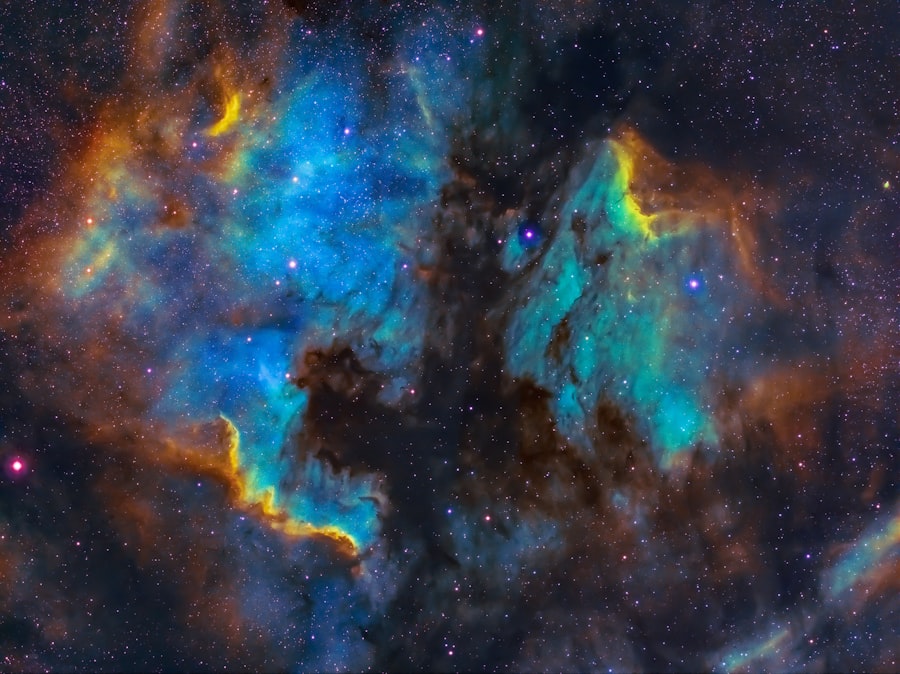
Detecting or proving the existence of cosmic pixels presents an enormous challenge due to their hypothesized minuscule size. However, indirect evidence and potential observational signatures are being actively explored.
Lorentz Invariance Violation (LIV)
One of the most promising avenues for detecting the effects of a discrete spacetime is through the violation of Lorentz invariance, a fundamental symmetry of special relativity.
Energy-Dependent Speed of Light
If spacetime has a granular structure, photons of different energies might interact slightly differently with these “pixels,” leading to a minuscule energy-dependent variation in their speed. High-energy photons from distant gamma-ray bursts (GRBs) are excellent probes for this phenomenon. Even a tiny difference in speed, accumulated over billions of light-years, could become detectable.
Cosmic Ray Anisotropies
Extremely high-energy cosmic rays, which travel vast distances, could also exhibit effects related to a pixilated spacetime. Subtle anisotropies in their arrival directions or energy spectra might provide clues.
Gravitational Wave Astronomy
The nascent field of gravitational wave astronomy offers new windows into the extreme physics of the universe, and it could potentially reveal signatures of cosmic pixelation.
“Fuzziness” in Gravitational Waves
Some theories suggest that if spacetime is discrete, gravitational waves might exhibit a slight “fuzziness” or dispersion as they propagate, analogous to how light disperses when passing through a medium. Future, more sensitive gravitational wave observatories might be able to detect such subtle effects.
Quantum Jitters
The very fabric of spacetime, if quantized, might exhibit inherent quantum fluctuations, sometimes referred to as “spacetime foam.” These fluctuations could leave an imprint on gravitational waves, acting as a form of cosmic “noise” that might be detectable with sufficiently advanced instruments.
Cosmic Microwave Background (CMB) Anomalies
The Cosmic Microwave Background (CMB), the faint afterglow of the Big Bang, is one of the most powerful probes of the early universe. Could it hold clues to cosmic pixels?
Statistical Anomalies
Precisely measured statistical anomalies in the CMB, such as unexpected correlations or non-Gaussian features, could potentially point to a fundamental discreteness of spacetime at the earliest moments of the universe’s expansion.
Non-Commutative Geometry
Some theoretical approaches, like non-commutative geometry, suggest that at the Planck scale, the very coordinates of spacetime might not commute, implying a fundamental “blurriness.” While challenging to extract concrete observational predictions, future highly precise CMB measurements could, in principle, constrain such models.
Philosophical and Epistemological Considerations

The possibility of a pixilated universe extends beyond the realm of pure physics, touching upon fundamental philosophical questions about the nature of reality, perception, and determinism.
The Nature of Reality: An Emergent Phenomenon?
If spacetime is ultimately discrete, then the smooth, continuous reality we perceive is an emergent phenomenon, much like a fluid appearing continuous despite being composed of discrete molecules. This shifts our understanding of what is “fundamental” and what is “derived.”
Limits of Perception
Our sensory apparatus and even our most sophisticated instruments are inherently limited in their resolution. The cosmic pixels, if they exist, would be far beyond direct apprehension, forcing us to infer their existence through indirect effects, much like inferring the existence of atoms before direct imaging was possible.
Information as Primary
The “It from Bit” hypothesis suggests that information is more fundamental than matter or energy. If cosmic pixels are indeed elementary units of information, then the universe itself could be viewed as a colossal information-processing system. This paradigm shift could redefine our understanding of consciousness and the observer’s role in the universe.
Determinism vs. Free Will in a Quantized Cosmos
The implications for determinism and free will are profound. Classical physics often presented a deterministic universe, albeit one too complex to fully predict. Quantum mechanics introduced inherent probabilistic elements.
Quantum Foundations of Reality
If spacetime itself is quantized, this could further entrench the probabilistic nature of reality at its most fundamental level. The “pixels” themselves could be governed by quantum rules, leading to inherent uncertainties in the very structure of the universe.
The Illusion of Choice
Conversely, if the universe is a finite, pixelated system, it might be susceptible to computation in ways we currently cannot fathom. This raises questions about whether our choices are truly free or merely the deterministic unfolding of a vast, albeit complex, cosmic algorithm. The debate between determinism and free will, already complex, takes on new dimensions in a pixilated cosmos.
The concept of the universe’s hidden pixels represents one of the most intriguing and challenging frontiers in modern physics. While currently hypothetical, it offers a compelling framework for resolving the enduring conflicts between quantum mechanics and general relativity, and for pushing the boundaries of our comprehension of reality itself. As experimental techniques advance and theoretical models become more refined, the tantalizing possibility of a fundamentally granular universe continues to drive scientific inquiry, inviting humanity to ponder the very fabric of its existence.
FAQs
What does it mean that the universe “hides its pixels” from us?
The phrase “hides its pixels” refers to the idea that the fundamental building blocks or smallest units of the universe are not directly observable. Just as a digital image is made up of tiny pixels that are usually invisible to the naked eye, the universe may have a discrete structure at a very small scale that current technology and physics cannot directly detect.
Why can’t we see the smallest units or “pixels” of the universe?
The smallest scales of the universe, such as the Planck length (about 1.6 x 10^-35 meters), are far beyond the reach of current experimental tools. Quantum effects and the limits of measurement prevent us from directly observing these fundamental units, making them effectively hidden or “pixelated” beyond our detection capabilities.
What theories suggest the universe might have a pixelated or discrete structure?
Several theoretical frameworks, including loop quantum gravity and some interpretations of string theory, propose that space-time itself may be quantized or composed of discrete units. These theories attempt to reconcile quantum mechanics with general relativity and suggest that the smooth fabric of space-time might actually be made up of tiny, indivisible “pixels.”
How does the concept of hidden pixels relate to our understanding of space and time?
If space and time are composed of discrete units, it challenges the classical view of them as continuous. This could have profound implications for physics, potentially explaining phenomena like black hole entropy and the nature of quantum gravity, and influencing how we understand the evolution and structure of the universe.
Are there any experiments or observations that could reveal these hidden pixels in the future?
Currently, no direct experiments can observe the universe’s smallest scales, but future advancements in high-energy particle physics, gravitational wave detection, and cosmological observations may provide indirect evidence. Experiments aiming to detect quantum gravitational effects or deviations from classical physics at very small scales could offer clues about the universe’s fundamental “pixels.”