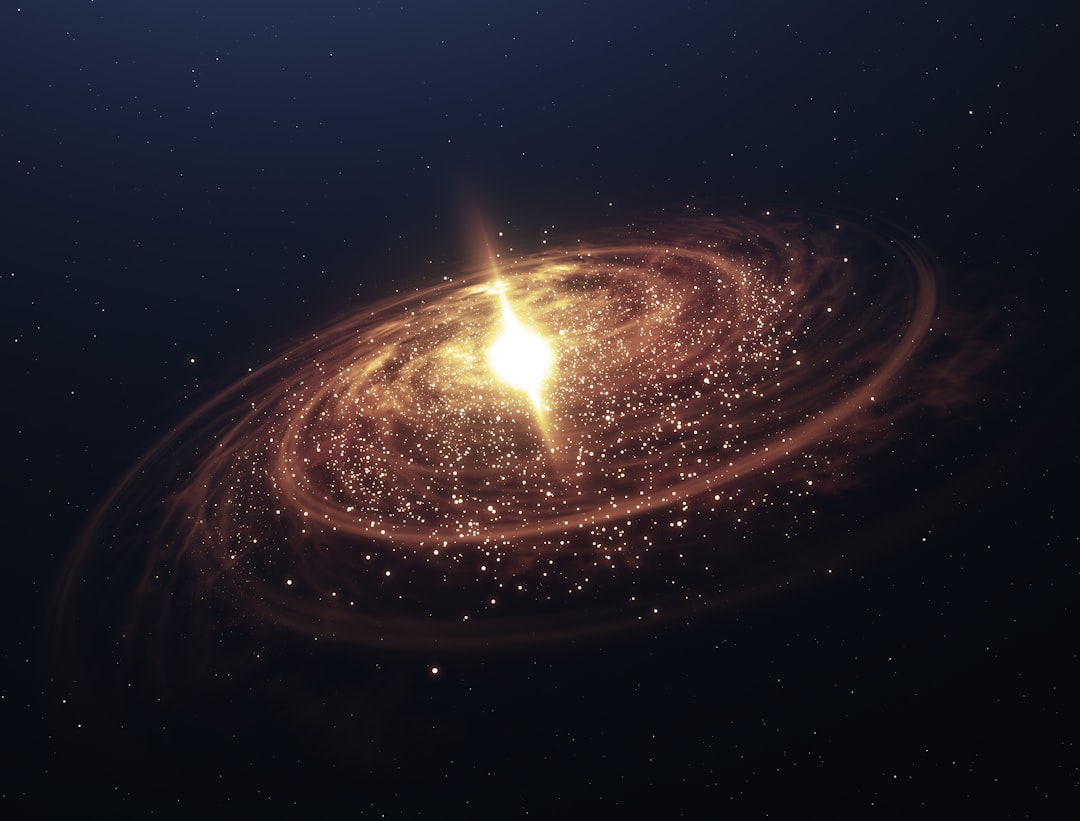
The Universe: A Constrained Canvas
The observable universe, a vast expanse of cosmic structures and phenomena, presents a compelling case for viewing it as a system operating within a defined framework. While the concept of “perfect rendering” might evoke notions of divine artistry, a more grounded interpretation focuses on the emergent order and intricate interconnectedness that characterize its existence. This order is not a gratuitous embellishment, but rather a consequence of fundamental physical laws and initial conditions, meticulously governing the evolution of matter and energy across spacetime.
At the heart of the universe’s structure lie the fundamental forces and constants that dictate interactions at all scales. These laws, seemingly immutable, provide the bedrock upon which all cosmic phenomena are built. Their consistency and universality are key to understanding the predictability and therefore the “rendered” nature of the cosmos.
Electromagnetism: The Cosmic Glue
The electromagnetic force, responsible for interactions between charged particles, is instrumental in the formation of atoms, molecules, and indeed, all chemical compounds. Its strength, described by the fine-structure constant, is precisely tuned. Slight variations in this ratio would render atomic structures unstable, preventing the assembly of matter into stars, planets, or any complex forms. The very capacity for light, a messenger of vast cosmic distances, is a direct consequence of electromagnetic interactions.
The Strong and Weak Nuclear Forces: Sculpting the Inner Nuclei
Within the atomic nucleus, the strong nuclear force binds protons and neutrons together, overcoming the electrostatic repulsion between positively charged protons. The weak nuclear force, responsible for certain types of radioactive decay, plays a crucial role in stellar nucleosynthesis. The precise balance of these forces dictates the stability of elements, from the lightest hydrogen to the heaviest uranium, and thus the very building blocks of the universe. Without their specific strengths, stars would either fail to ignite or would rapidly deplete their fuel, drastically altering the cosmic landscape.
Gravity: The Grand Navigator
Gravity, the universal force of attraction between any two objects with mass, orchestrates the grand cosmic ballet. From the formation of planets around stars to the swirling arms of galaxies and the clustering of galaxies into superclusters, gravity is the dominant force shaping large-scale structures. Its inverse square law, governing its strength based on distance, ensures a predictable and ordered distribution of matter. The precise mass of the Sun, for instance, its orbital path around the galactic center, and the stability of Earth’s orbit are all consequences of this fundamental law.
The concept of the universe as a finished render is intriguing and has been explored in various scientific discussions. A related article that delves into this idea can be found on My Cosmic Ventures, where it examines the implications of a universe that appears complete and unchanging. You can read more about this fascinating perspective by visiting this article.
The Echoes of Creation: Initial Conditions
Beyond the fundamental laws, the initial conditions of the universe at its inception are equally critical in shaping its observable characteristics. These initial conditions, though still a subject of intense research, appear to have been remarkably fine-tuned, allowing for the subsequent emergence of complexity and order.
The Universe’s Initial Expansion Rate: A Delicate Balance
The rate at which the early universe expanded, governed by the cosmological constant or dark energy, is a crucial parameter. If this expansion had been too rapid, matter would have dispersed too thinly for gravity to coalesce it into galaxies and stars. Conversely, an expansion rate that was too slow would have led to a rapid collapse of the universe back upon itself, preventing the formation of any lasting structures. The observed rate suggests a delicate balance that has allowed for the universe to grow and its structures to form.
The Primordial Density Fluctuations: Seeds of Structure
The cosmic microwave background radiation, a faint afterglow of the Big Bang, reveals subtle variations in temperature and density in the nascent universe. These primordial density fluctuations, though incredibly small, acted as seeds for the gravitational amplification of matter over eons. Without these initial imperfections, the universe would likely have remained a homogeneous and featureless expanse, devoid of the galaxies and stars we observe today.
The Baryon-to-Photon Ratio: The Scaffolding of Matter
The ratio of baryonic matter (protons and neutrons) to photons in the early universe is another finely tuned parameter. This ratio influences the abundance of light elements formed during Big Bang nucleosynthesis. The observed ratios of hydrogen, helium, and lithium are consistent with this delicate balance, providing the raw materials for stellar formation and subsequent chemical evolution.
The Stellar Forge: Cosmic Factories of Complexity
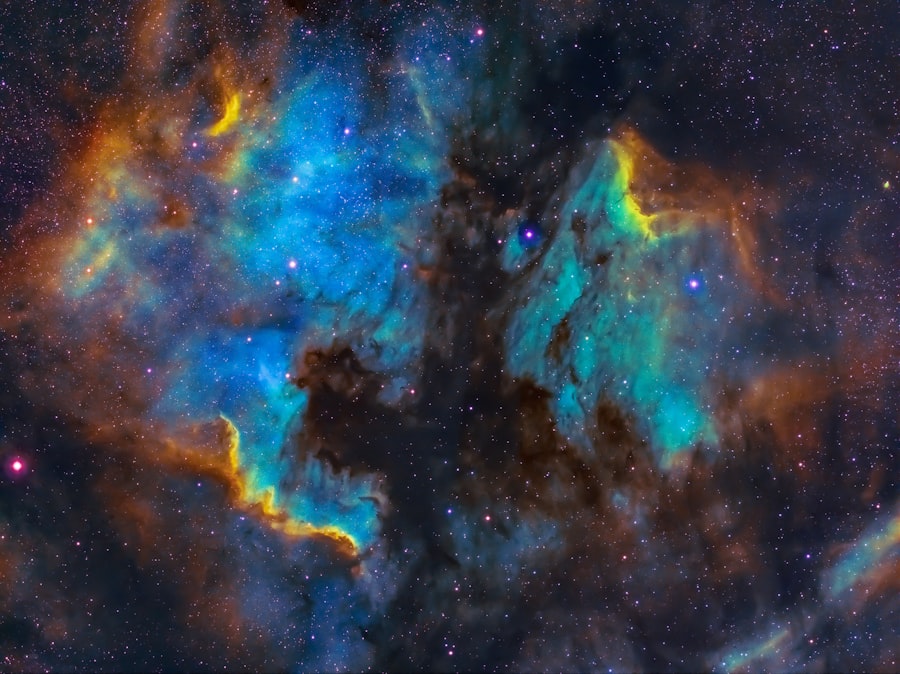
Stars, the incandescent engines of the cosmos, are not merely points of light but active participants in the ongoing construction of cosmic complexity. Their life cycles, governed by nuclear physics and gravity, are responsible for the creation of heavier elements, essential for the formation of planets and life.
Stellar Nucleosynthesis: Forging the Elements
Within the core of stars, through a process known as stellar nucleosynthesis, lighter elements are fused into heavier ones. Hydrogen fuses into helium, helium into carbon and oxygen, and in more massive stars, progressively heavier elements up to iron are created. This process is not a free-for-all; specific nuclear reaction pathways and energy balances dictate which elements are produced and in what quantities, leading to a predictable cosmic elemental abundance.
Supernovae and Neutron Star Mergers: Distributing the Rarities
The death of massive stars in supernovae explosions, and the catastrophic mergers of neutron stars, are crucial events for the creation and distribution of the heaviest elements. Elements like gold, platinum, and uranium are synthesized in these extreme environments and then dispersed throughout the galaxy, seeding future generations of stars and planetary systems. The observed abundance of these heavy elements in the universe is a testament to the specific energetic conditions and nuclear processes involved.
The Dance of Galaxies: Organized Celestial Collections

Galaxies, vast collections of stars, gas, dust, and dark matter, exhibit a remarkable range of forms and behaviors. Their formation, evolution, and interactions are governed by gravity and the interplay of their constituent components.
Galaxy Formation and Evolution: From Protogalaxies to Diverse Forms
The formation of galaxies is understood to involve the gravitational collapse of massive clouds of gas and dark matter. Over billions of years, these structures grow and evolve, influenced by mergers with smaller galaxies and interactions with their galactic neighbors. The observed diversity of galaxy types – spirals, ellipticals, and irregulars – is a consequence of these varied evolutionary pathways and the initial conditions of their formation.
Dark Matter and Dark Energy: Unseen Architects of Cosmic Architecture
While not directly observable, dark matter and dark energy play pivotal roles in galactic dynamics and the expansion of the universe. Dark matter, through its gravitational influence, provides the scaffolding for galaxy formation and holds galaxies together. Dark energy, on the other hand, is driving the accelerated expansion of the universe. Their precise proportions, inferred from cosmological observations, appear to be critical for the current structure and evolution of the cosmos.
The concept of the universe as a finished render has sparked intriguing discussions among scientists and philosophers alike. This idea suggests that the universe exists in a state of completion, much like a digital image that has been fully processed and finalized. For a deeper exploration of this fascinating topic, you can read more in the article found here, which delves into the implications of viewing our cosmos through this lens and how it affects our understanding of time and existence.
The Emergence of Complexity: Life’s Canvas
| Reasons | Explanations |
|---|---|
| Uniformity of Cosmic Microwave Background Radiation | The consistent temperature of the CMBR suggests that the universe has reached a state of equilibrium, like a finished render. |
| Observable Universe | The observable universe appears to have a defined boundary, similar to the edges of a rendered image. |
| Conservation of Energy | The conservation of energy within the universe implies a closed system, akin to a completed rendering process. |
| Stable Laws of Physics | The stable and unchanging laws of physics suggest a finalized state, similar to a completed render. |
While the universe’s “rendering” can be understood through physical laws and initial conditions, the emergence of life represents a profound level of complexity. This emergence, while seemingly extraordinary, is a natural outcome of the universe’s finely tuned properties and the vast timescales involved.
The Habitable Zone: A Cosmic Sweet Spot
The concept of a habitable zone around a star, a region where liquid water could exist on a planet’s surface, is a direct consequence of stellar physics and planetary orbital mechanics. The precise size and temperature of a star, coupled with the distance of a planet from that star, create these regions of potential habitability.
Planetary Composition and Atmospheric Evolution: Building Blocks for Life
The availability of essential elements, forged in stars and dispersed through supernovae, is a prerequisite for planetary formation and the potential for life. Furthermore, the atmospheric composition of planets, shaped by geological processes, volcanic activity, and incoming solar radiation, plays a crucial role in regulating temperature and providing necessary chemical ingredients. The Earth’s atmosphere, with its abundant free oxygen, is a product of biological activity, highlighting a complex feedback loop.
The Unfolding Tapestry of Evolution: From Simplicity to Sophistication
The process of biological evolution, guided by natural selection acting on random genetic mutations, is the mechanism by which complex life forms arise. This process, operating over immense geological timescales, requires a stable environment with sufficient resources and energy. The universe’s ability to sustain such stable environments for billions of years is a critical factor in the emergence of this complexity. The universe, in its vastness and duration, provides the canvas upon which the intricate story of life has unfolded, a story contingent on the precise physical conditions that have been present.
FAQs
1. What is the concept of the universe being a finished render?
The concept of the universe being a finished render suggests that the universe is a complete and fully formed entity, much like a computer-generated image or simulation.
2. What evidence supports the idea of the universe being a finished render?
There is no scientific evidence to support the idea of the universe being a finished render. This concept is more of a philosophical or speculative idea rather than a scientifically proven theory.
3. How does the concept of the universe being a finished render relate to theories of the universe’s origin and development?
The concept of the universe being a finished render does not align with current scientific theories about the origin and development of the universe, such as the Big Bang theory and the theory of cosmic inflation.
4. What are some criticisms of the idea that the universe is a finished render?
Critics argue that the concept of the universe being a finished render is purely speculative and lacks empirical evidence. It also does not provide a satisfactory explanation for the complexities and ongoing changes observed in the universe.
5. How does the concept of the universe being a finished render impact our understanding of the universe and our place in it?
The concept of the universe being a finished render does not significantly impact our understanding of the universe or our place in it, as it is not supported by scientific evidence or widely accepted within the scientific community. It is more of a philosophical or speculative idea that does not have practical implications for our understanding of the universe.