
The Universal Force: How Gravity Rules All
The universe, a vast and intricate tapestry of celestial bodies, energetic phenomena, and the very fabric of spacetime, is governed by a force so fundamental, so pervasive, that its influence touches every atom and every galaxy. This force is gravity, the silent conductor of cosmic symphonies, the sculptor of stellar nurseries, and the invisible hand that anchors everything from a falling apple to the grandest spiral galaxies. While other forces operate with specific ranges and specialized interactions, gravity is the great unifier, a constant presence that dictates the dance of the cosmos and shapes the very reality we inhabit. Its ubiquity is astounding, a testament to its power and the elegance of the physical laws it embodies.
At its core, gravity is an attractive force that exists between any two objects possessing mass. This simple, yet profound, realization is the bedrock of our understanding of the universe. It’s a force that, unlike electromagnetism or the nuclear forces, has an infinite range and never repels. This omnipresent attraction is the reason why the moon orbits the Earth, why planets encircle the sun, and why stars are not scattered randomly across the void but instead congregate into galaxies. The strength of this gravitational pull is directly proportional to the masses of the objects involved and inversely proportional to the square of the distance between them. This means that a larger mass exerts a stronger gravitational pull, and the further apart two objects are, the weaker the attraction becomes, but it never truly disappears.
Newton’s Celestial Ballet: The Birth of Gravitational Law
Sir Isaac Newton, in the 17th century, revolutionized our understanding of gravity with his formulation of the Law of Universal Gravitation. Legend has it that an apple falling from a tree sparked this revolutionary thought. Newton realized that the same force pulling the apple to the ground was responsible for keeping the moon in its orbit around the Earth. This uncanny insight bridged the gap between terrestrial mechanics and celestial phenomena, demonstrating that the laws of physics were indeed universal. His mathematical expression, F = G(m1m2)/r², elegantly captured the relationship between gravitational force (F), the masses of two objects (m1 and m2), the distance between their centers (r), and the gravitational constant (G). This law provided a predictive framework that allowed astronomers to accurately map planetary movements and predict the paths of comets, solidifying gravity’s role as a fundamental force.
Beyond Newton:Einstein’s Spacetime Revolution
While Newton’s laws were remarkably successful, they presented certain limitations, particularly when dealing with very strong gravitational fields or objects moving at speeds close to that of light. It was Albert Einstein, in the early 20th century, who unveiled a more profound and comprehensive picture of gravity with his theory of General Relativity. Einstein proposed that gravity is not a force in the traditional sense, but rather a curvature of spacetime caused by the presence of mass and energy. Imagine a stretched rubber sheet; placing a heavy ball on it creates a dip or curve. This curvature dictates how other objects, like smaller marbles, move across the sheet. Similarly, massive objects warp the fabric of spacetime around them, and what we perceive as gravity is simply objects following the paths of least resistance, or geodesics, within this curved spacetime.
The Fabric of Reality: Spacetime as a Dynamic Entity
Einstein’s revolutionary concept transformed our understanding of the universe from a static stage for events to a dynamic, interwoven entity where space and time are not independent but are intrinsically linked. Mass and energy tell spacetime how to curve, and spacetime tells mass and energy how to move. This intricate interplay is the essence of gravity according to General Relativity. This theory not only explained phenomena that Newton’s laws couldn’t, such as the anomalous precession of Mercury’s orbit, but also predicted new ones, like the bending of starlight by massive objects and the existence of gravitational waves.
Gravity plays a fundamental role in shaping the universe, influencing everything from the formation of galaxies to the orbits of planets. For a deeper understanding of how gravity governs cosmic structures and interactions, you can explore a related article on this topic at My Cosmic Ventures. This resource delves into the intricate ways gravity affects celestial bodies and the overall dynamics of the cosmos, providing valuable insights into the forces that control our universe.
Gravity’s Cosmic Influence: Shaping Structures from Dust to Galaxies
The pervasive nature of gravity is evident in its profound influence on the formation and evolution of cosmic structures. From the initial clumping of dust and gas in the early universe to the majestic spiral arms of galaxies, gravity is the ultimate architect, drawing matter together and orchestrating its arrangement. Without its constant pull, the universe would be a homogeneous, featureless expanse, devoid of planets, stars, and the intricate cosmic architecture we observe today.
The Birth of Stars: Stellar Nurseries and Gravitational Collapse
Stars, the luminous beacons of the cosmos, are born from the gravitational collapse of immense clouds of gas and dust, primarily hydrogen and helium. Within these stellar nurseries, tiny fluctuations in density, amplified by gravity, cause regions of the cloud to begin pulling in more matter. As more material accumulates, the gravitational attraction intensifies, leading to a runaway process of collapse. The infalling gas spins faster, flattening into a disk, and at the center, the pressure and temperature rise dramatically. Eventually, when the core reaches a critical threshold, nuclear fusion ignites, marking the birth of a star. This entire process, from the initial diffuse cloud to the radiant star, is a direct consequence of gravity’s relentless pull.
Galactic Orchestration: The Dance of Stars and Dark Matter
Galaxies, the grand edifices of the universe, are also products of gravity’s organizing power. Billions of stars, gas, and dust are bound together by their collective gravitational attraction. The majestic spiral arms, the elliptical shapes, the colossal clusters – all are sculpted and maintained by gravity. Furthermore, observations of galactic rotation have revealed a conundrum: the outer regions of galaxies spin much faster than can be explained by the visible matter alone. This discrepancy led to the postulation of dark matter, an invisible substance that interacts gravitationally but does not emit, absorb, or reflect light, and which makes up a significant portion of a galaxy’s mass. Gravity, in conjunction with this elusive dark matter, dictates the dynamics and structure of these cosmic islands.
Cosmic Webs and Large-Scale Structures: The Universe’s Blueprint
On the grandest scales, gravity is responsible for the formation of the cosmic web, a vast, filamentary network of galaxies, galaxy clusters, and superclusters, separated by immense voids. This intricate structure is not a random distribution but rather a direct consequence of the gravitational collapse of initial density fluctuations in the early universe. Regions with slightly higher densities attracted more matter, forming the dense filaments and nodes of the cosmic web, while underdense regions expanded into the vast voids. Gravity, acting over billions of years, has systematically organized the universe into this breathtaking cosmic blueprint.
Gravity and the Mysteries of Black Holes: Where Spacetime Breaks Down
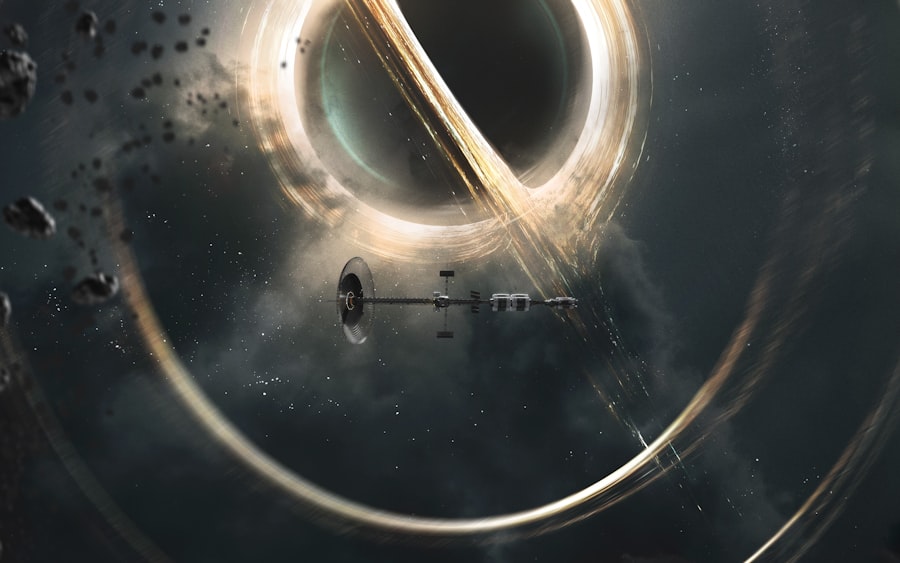
Perhaps nowhere is gravity’s power more dramatically illustrated than at the heart of black holes. These enigmatic celestial objects represent regions of spacetime where gravity is so intensely strong that nothing, not even light, can escape its grasp. They are the ultimate manifestation of gravitational collapse, where a massive star has exhausted its nuclear fuel and imploded under its own weight.
The Event Horizon: The Point of No Return
The defining feature of a black hole is its event horizon, a boundary in spacetime beyond which escape is impossible. Once an object crosses this invisible threshold, it is irrevocably drawn towards the singularity at the center. The concept of an event horizon is a direct prediction of General Relativity, highlighting how extreme gravitational conditions can fundamentally alter the nature of spacetime.
Singularities: The Ultimate Cosmic Enigma
At the heart of every black hole lies a singularity, a point of infinite density and zero volume where the known laws of physics break down. What happens at the singularity remains one of the greatest unsolved mysteries in physics. Current theories suggest that spacetime itself ceases to exist in its familiar form, and new physics may be required to fully comprehend this ultimate gravitational extreme.
Gravitational Lensing: Bending Light, Revealing the Invisible
The intense gravity of black holes, and indeed any massive object, has the remarkable ability to bend the path of light. This phenomenon, known as gravitational lensing, can distort, magnify, or even create multiple images of distant objects. By studying these distorted images, astronomers can infer the presence and mass of intervening objects, even if they are invisible, such as dark matter or the black hole itself. This provides a powerful tool for probing the universe and testing the predictions of General Relativity.
Gravitational Waves: Ripples in the Cosmic Ocean

Einstein’s theory of General Relativity predicted the existence of gravitational waves – disturbances in the fabric of spacetime that propagate at the speed of light. These ripples are generated by catastrophic cosmic events, such as the collision of black holes or neutron stars. For decades, these waves remained purely theoretical, undetectable with the technology of the time. However, in 2015, the LIGO (Laser Interferometer Gravitational-Wave Observatory) experiment made a groundbreaking discovery, detecting the first direct evidence of gravitational waves. This marked a new era in astronomy, opening up a novel way to observe the universe.
Cosmic Cataclysms: Sources of Gravitational Waves
The most powerful sources of gravitational waves are typically the most violent and energetic events in the universe. The merger of two black holes, for instance, releases an immense amount of energy in the form of these spacetime ripples. Similarly, the collision of two neutron stars, incredibly dense remnants of exploded stars, can create gravitational waves and also produce heavy elements, such as gold and platinum. These cosmic cataclysms, once only observable through electromagnetic radiation, can now be studied through the subtle distortions they impart to spacetime.
A New Window on the Universe: The Dawn of Multi-Messenger Astronomy
The detection of gravitational waves has ushered in the era of multi-messenger astronomy. Now, scientists can observe cosmic events through both light (electromagnetic waves) and gravitational waves, providing a much more comprehensive understanding of these phenomena. For example, the detection of gravitational waves from the merger of two neutron stars was accompanied by observations of electromagnetic signals across the spectrum, allowing astronomers to study the physics of these mergers in unprecedented detail. This synergy of observational methods promises to unlock further secrets of the cosmos.
Gravity plays a crucial role in shaping the universe, influencing everything from the formation of galaxies to the orbits of planets. For a deeper understanding of how this fundamental force governs cosmic structures, you can explore a related article that delves into the intricate relationship between gravity and the universe’s evolution. This insightful piece highlights the significance of gravitational interactions in maintaining the balance of celestial bodies. To read more about this fascinating topic, visit this article and discover how gravity truly controls the cosmos.
Gravity’s Future: Unanswered Questions and the Quest for Unification
| Reason | Explanation |
|---|---|
| Universal Force | Gravity is the force that attracts objects with mass towards each other. It is the most dominant force at large scales, controlling the motion of planets, stars, and galaxies. |
| Massive Bodies | Objects with larger mass have a stronger gravitational pull. This is why massive celestial bodies like the sun have a significant influence on the motion of other objects in the universe. |
| Curvature of Space-Time | According to Einstein’s theory of general relativity, gravity is the result of the curvature of space-time caused by the presence of mass and energy. This curvature dictates the motion of objects in the universe. |
| Long-Range Force | Gravity is a long-range force, meaning it acts over vast distances. This allows it to control the dynamics of the entire universe, shaping the structure and behavior of cosmic objects. |
Despite our profound understanding of gravity, particularly through Einstein’s General Relativity, many mysteries persist. The enigmatic nature of dark matter and dark energy, which together constitute the vast majority of the universe’s mass-energy content, hints at the limitations of our current gravitational theories. Furthermore, the quest to reconcile gravity with quantum mechanics, the theory that governs the subatomic world, remains one of the foremost challenges in theoretical physics.
The Dark Universe: Unraveling the Mysteries of Dark Matter and Dark Energy
The existence of dark matter, inferred from its gravitational effects on galactic rotation and the structure of the universe, and dark energy, the mysterious force driving the accelerated expansion of the universe, point towards a significant gap in our knowledge. While gravity dictates how visible matter behaves, the dominant components of the universe seem to operate under rules that are not fully understood by our current gravitational models. Future research aims to directly detect dark matter particles and better understand the nature of dark energy.
The Quantum Conundrum: Unifying Gravity and Quantum Mechanics
One of the greatest challenges in modern physics is the unification of General Relativity and quantum mechanics. These two cornerstones of physics, while incredibly successful in their respective domains, are fundamentally incompatible. Physicists are actively exploring various theoretical frameworks, such as string theory and loop quantum gravity, in an attempt to develop a quantum theory of gravity that can describe phenomena at both the cosmic and subatomic scales. Achieving this unification would represent a monumental leap in our understanding of reality.
The Ever-Expanding Frontier: Gravity’s Role in the Future of Cosmology
As we continue to explore the universe, guided by the invisible hand of gravity, new questions and discoveries undoubtedly await. From the potential for life on exoplanets, orbiting distant stars due to gravitational influence, to the ultimate fate of the universe, governed by the balance of gravitational forces and cosmic expansion, gravity will remain at the forefront of our cosmic inquiries. The study of gravity is not merely an academic pursuit; it is a fundamental exploration of the forces that shape our existence and the vast, awe-inspiring cosmos we inhabit. The universal force, gravity, continues to rule all, beckoning us to unravel its deepest secrets and to appreciate its profound and enduring dominion.

Physics Can’t Explain Gravity (And That’s a Problem)
FAQs
What is gravity?
Gravity is a force of attraction that exists between any two masses, any two bodies, any two particles. It is the force that pulls objects towards each other.
How does gravity control the universe?
Gravity controls the universe by influencing the motion of celestial bodies such as planets, stars, and galaxies. It keeps planets in orbit around the sun, holds galaxies together, and determines the structure of the universe.
What are the effects of gravity on the universe?
The effects of gravity on the universe include the formation of galaxies, the shaping of planetary systems, and the influence on the expansion of the universe. Gravity also plays a role in the formation of stars and the motion of celestial bodies.
How does gravity affect light and time in the universe?
Gravity can bend light, a phenomenon known as gravitational lensing. It can also affect the passage of time, as predicted by Einstein’s theory of general relativity, causing time dilation in strong gravitational fields.
What would happen if gravity did not exist in the universe?
If gravity did not exist in the universe, celestial bodies would not be held in orbit, stars would not form, and the structure of the universe would be vastly different. The absence of gravity would have a profound impact on the evolution and dynamics of the universe.