
The Unexplained Force: Gravity Beyond Physics
For centuries, gravity has been the invisible hand that shapes our universe, from the gentle pull of a falling apple to the majestic dance of galaxies. We understand its mechanics with exquisite precision, marveling at Newton’s universal law and Einstein’s elegant curvature of spacetime. Yet, beneath this profound understanding, whispers of the unexplained persist, hinting at a reality where gravity might transcend the boundaries of conventional physics. This article ventures into these enigmatic territories, exploring the frontiers where our current scientific paradigms bend, and perhaps, break, to accommodate the truly baffling aspects of this fundamental force.
In the realm of the infinitesimally small, where quantum mechanics reigns supreme, gravity presents a persistent and profound challenge. The Standard Model, the bedrock of particle physics, beautifully describes three of the four fundamental forces – electromagnetism, the strong nuclear force, and the weak nuclear force – through the exchange of force-carrying particles called bosons. However, gravity, the most ubiquitous of them all, remains stubbornly outside this framework. Physicists have hypothesized a quantum of gravity, the graviton, but its direct detection has proven elusive, a ghost in the quantum machine.
The Missing Quantum Force Carrier
The Standard Model’s success lies in its quantum field theory (QFT) foundations. Each fundamental force is mediated by a specific type of boson. Photons carry the electromagnetic force, gluons the strong force, and W and Z bosons the weak force. The theoretical prediction for gravity’s messenger particle is the graviton, a massless boson with a spin of 2. Analogous to how photons mediate the interaction between charged particles, gravitons would mediate the interaction between objects with mass and energy, the very essence of gravitational attraction. However, the graviton’s predicted properties make it incredibly difficult to detect. Unlike charged particles that interact readily with photons and other electromagnetic forces, gravitons interact extraordinarily weakly with matter. The energies required to produce a detectable graviton in laboratory settings are astronomical, far beyond the capabilities of current particle accelerators. This has led to the frustrating paradox where gravity, the force that dominates the cosmos on large scales, is the weakest and most elusive at the quantum level.
The Incompatibility of General Relativity and Quantum Mechanics
The fundamental conflict arises from the very nature of these two pillars of modern physics. General Relativity (GR), Einstein’s masterpiece, describes gravity as the curvature of spacetime caused by mass and energy. It is a classical, deterministic theory that excels on macroscopic scales. Quantum Mechanics (QM), on the other hand, governs the behavior of matter and energy at atomic and subatomic levels, characterized by probabilities, wave-particle duality, and quantization. When physicists attempt to apply quantum principles to GR, applying quantum field theory techniques to gravity, the equations break down, yielding infinities that cannot be renormalized away, a sign of a fundamental inconsistency. This incompatibility is a major hurdle in developing a unified theory of everything. The quest to reconcile these two theories has led to speculative frameworks like string theory and loop quantum gravity, which attempt to quantize gravity by proposing new fundamental entities and structures in spacetime. One of the profound implications of this incompatibility is the question of what happens at singularities, like those found at the heart of black holes or the Big Bang. Here, both GR and QM should, in principle, apply, but our current understanding fails catastrophically. The singularity represents a point where the physics we know breaks down, hinting at the need for a theory that can seamlessly bridge the quantum and the gravitational.
Gravitons and Exotic Phenomena
The hypothetical graviton, if it exists, could also be responsible for some exotic phenomena proposed by theoretical physics. For instance, the concept of “gravitational waves” predicted by GR, and now experimentally confirmed by LIGO and Virgo, are ripples in spacetime caused by the acceleration of massive objects. These waves are fundamentally mediated by gravitons, albeit in a way that can be understood classically, at least for their initial detection. However, more speculative theories suggest that gravitons themselves might exhibit quantum properties that could lead to phenomena like “gravitational entanglement” or even contribute to the mysterious nature of dark matter. The minuscule interaction strength of gravitons means that any observable effects arising from their quantum nature would likely be extremely subtle and difficult to disentangle from other quantum processes or observational noise. Nevertheless, the search for these subtle signatures continues, fueled by the hope that understanding gravitons will unlock the secrets of quantum gravity.
In the ongoing quest to understand the fundamental forces of the universe, many physicists grapple with the enigma of gravity, which remains one of the most perplexing phenomena in modern science. An intriguing article that delves into the limitations of current physics in explaining gravity can be found at My Cosmic Ventures. This piece explores various theories and perspectives that highlight the gaps in our understanding, prompting readers to consider the deeper implications of gravity’s elusive nature.
The Enigma of Dark Matter and Dark Energy: The Unseen Gravitational Architects
The vast majority of the universe’s mass-energy content is invisible. Dark matter and dark energy, as they are known, do not interact with light, rendering them undetectable through traditional astronomical observations. Yet, their gravitational influence is undeniable, shaping the cosmic landscape on the grandest scales. Their existence is inferred from gravitational lensing, the rotation curves of galaxies, and the expansion rate of the universe, suggesting that our current understanding of gravity itself, or the matter it acts upon, is incomplete.
The Gravitational Footprint of the Invisible
The evidence for dark matter is compelling and comes from multiple observational lines. Galaxies rotate much faster than the visible matter within them can account for under the laws of gravity as we understand them. Without additional, unseen mass providing extra gravitational pull, these galaxies should fly apart. Similarly, the motion of galaxies within clusters and the large-scale structure of the universe are better explained if there is significantly more mass present than can be seen. Gravitational lensing, the bending of light from distant objects by the gravity of intervening mass, provides another powerful confirmation. The degree to which light is bent often indicates a far greater mass concentration than is visible, pointing to the presence of dark matter. The uniformity of the cosmic microwave background radiation, the afterglow of the Big Bang, also bears the imprint of dark matter’s gravitational influence in its early formation. The statistical fluctuations in this radiation, the seeds of future galaxies and cosmic structures, are directly affected by the gravitational clumping of dark matter.
The Accelerating Universe and the Mystery of Dark Energy
Even more perplexing is dark energy. Observations of distant supernovae reveal that the expansion of the universe is not slowing down, as one might expect due to the gravitational pull of all matter, but is instead accelerating. This implies the existence of a repulsive force, a cosmic “anti-gravity,” that is pushing spacetime apart. This mysterious entity, dubbed dark energy, is thought to constitute about 70% of the universe’s total mass-energy. While its existence is well-established by observational data, its fundamental nature remains one of the greatest unsolved puzzles in cosmology. Theories range from a cosmological constant, representing the energy density of the vacuum of space, to more exotic scalar fields that permeate the universe. The precise mechanism by which dark energy exerts its repulsive gravitational effect is a subject of intense theoretical and observational investigation. Understanding dark energy is crucial for predicting the ultimate fate of the universe and for refining our models of cosmic evolution.
The Gravitational Equivalence of Dark Matter and Dark Energy?
A fascinating, albeit speculative, line of inquiry considers whether dark matter and dark energy are fundamentally different phenomena or perhaps manifestations of a deeper, unified gravitational theory. Some theories propose modifications to gravity itself on cosmic scales, suggesting that the observed effects attributed to dark matter and dark energy are not due to new forms of matter or energy, but rather to a failure of general relativity in the weak gravitational fields of the cosmos. These “modified gravity” theories attempt to explain galactic rotation curves and the accelerating expansion without recourse to the unseen components. However, these theories are often complex and face their own set of observational and theoretical challenges. The possibility that our understanding of gravity needs revision, rather than solely postulating new entities, remains an open and compelling avenue of research.
Gravity on Extreme Scales: Black Holes and the Singularity
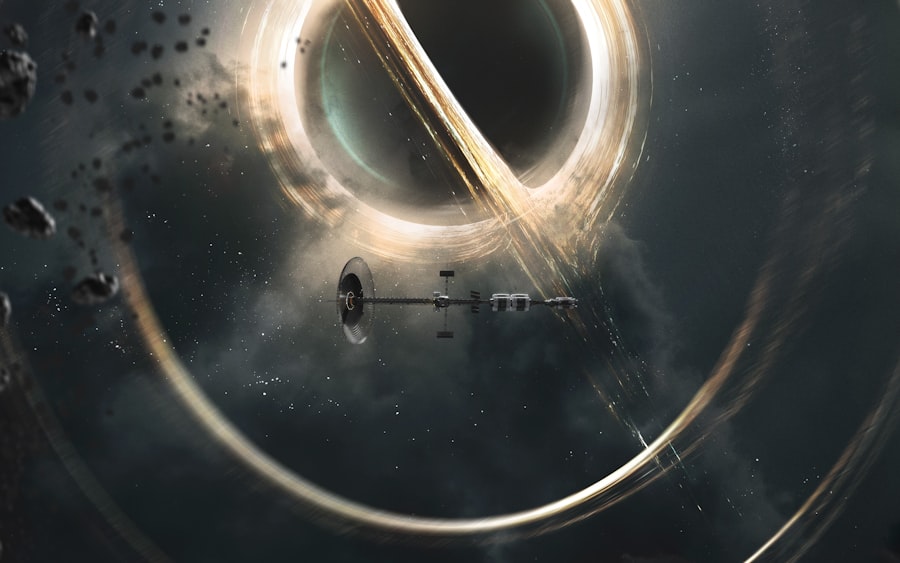
Black holes represent the ultimate triumph and the ultimate failure of our understanding of gravity. Predicted by Einstein’s equations, these cosmic behemoths possess gravitational pulls so immense that nothing, not even light, can escape. At their heart lies a singularity, a point of infinite density and curvature where the laws of physics as we know them cease to apply.
The Event Horizon: A Point of No Return
The event horizon of a black hole is not a physical barrier but rather a boundary in spacetime. Once an object crosses this threshold, its future inevitably leads towards the singularity. The sheer warping of spacetime by the black hole’s immense mass means that all paths, regardless of direction and speed, lead inwards. The concept of an event horizon challenges our notions of causality and information. What happens to information that falls into a black hole? This is the crux of the “black hole information paradox,” a major theoretical puzzle. According to quantum mechanics, information cannot be destroyed. However, if information falls into a black hole and is lost forever beyond the event horizon, this would violate a fundamental principle of quantum physics. Stephen Hawking’s work on Hawking radiation, the theoretical emission of thermal radiation by black holes due to quantum effects near the event horizon, offered a potential mechanism for black holes to eventually evaporate, but the fate of the information during this process remains a subject of intense debate.
The Singularity: A Breakdown of Physics
The singularity at the center of a black hole is a place where the equations of general relativity break down. They predict infinite density and curvature, which are physically untenable. This suggests that our current theories are incomplete and that a more fundamental theory, likely one that unifies quantum mechanics and gravity, is needed to describe what happens at such extreme points. The singularity is not merely a theoretical construct; it represents a fundamental limitation of our current physical understanding. It signals that the universe, under conditions of extreme gravity, behaves in ways that our current mathematical frameworks cannot fully capture. The existence of singularities in black holes is a strong indicator that there is a deeper layer of reality to gravity that we have yet to uncover, a layer where the classical and quantum realms merge.
The Gravitational Wake: Ripples in Spacetime
The “gravitational wake” refers to the phenomenon of gravitational waves, disturbances in the curvature of spacetime that propagate outwards from cataclysmic events like the merging of black holes or neutron stars. The direct detection of these waves by observatories like LIGO and Virgo has opened a new window onto the universe, allowing us to “hear” gravitational events rather than just “see” them. These detections are a powerful confirmation of Einstein’s theory of general relativity and provide a unique tool for studying extreme cosmic phenomena. However, the precise mechanism of gravitational wave generation and propagation, especially in the quantum regime, still holds mysteries. Analyzing these waves could potentially reveal subtle quantum gravitational effects that are not apparent in classical descriptions. The study of gravitational waves offers a direct avenue to probe the behavior of gravity in its most dynamic and violent manifestations.
Consciousness and Gravity: A Speculative Nexus

Perhaps the most tantalizing and speculative area where gravity might extend beyond current physics is its potential connection to consciousness. While science fiction often explores telekinesis and other mind-over-matter phenomena, a more nuanced and scientifically grounded inquiry considers whether consciousness itself might interact with, or even be influenced by, gravitational fields in ways we don’t yet understand. This is a realm of fringe science, but one that sparks imagination and pushes the boundaries of our thinking.
The “Gravity of Thought” Hypothesis
This hypothesis, though not mainstream, suggests that thought processes, as energetic events occurring within the brain, might generate subtle gravitational fields. These hypothetical fields, while incredibly weak, could potentially interact with other gravitational fields, including the ambient gravitational field of the Earth, or even with the gravitational fields of other conscious beings. The idea is not that thoughts directly cause macroscopic gravitational effects, but rather that there might be a subtle, interconnected web of gravitational influence at play. This could, in theory, lead to phenomena like shared emotional states or a subconscious awareness of the gravitational environment. However, the scientific challenge here lies in the extreme weakness of such potential gravitational emissions from neurological activity. Detecting such subtle effects would require incredibly sensitive instruments and sophisticated methodologies capable of isolating them from other environmental influences.
Quantum Entanglement and Consciousness
Another area of speculation connects consciousness to quantum phenomena, which in turn could potentially intersect with quantum gravity. Some researchers explore the possibility of quantum entanglement playing a role in consciousness, suggesting that the complex interconnectedness of neurons might exhibit quantum coherence. If consciousness is indeed rooted in quantum processes, and if gravity has a quantum nature that we are still trying to understand, then there is a theoretical bridge, however tenuous, between consciousness and gravity. This bridge hinges on the eventual discovery and understanding of quantum gravity and its potential implications for all fundamental forces. The search for definitive evidence of quantum effects in biological systems, particularly in the brain, is a burgeoning field that could shed light on such speculative connections.
The “Sentient Universe” and Gravity
On a grander cosmological scale, some philosophers and scientists have posited that the universe itself might possess a form of consciousness or sentience. In such a framework, gravity could be viewed not merely as a physical force, but as an integral part of this cosmic awareness. This is a highly philosophical perspective that ventures far beyond empirical scientific verification, but it highlights how deeply ingrained gravity is in our perception of reality. If the universe is, in some sense, alive, then gravity, as the force that binds it together, might be construed as a fundamental aspect of its being. This perspective, while not directly testable by current scientific methods, encourages us to consider gravity not just as a mathematical equation, but as a profound mystery that underpins existence itself.
The mystery of gravity continues to baffle scientists, leading to intriguing discussions about its fundamental nature. While many theories attempt to explain this force, some argue that physics alone cannot fully account for its complexities. For those interested in exploring this topic further, a related article delves into the limitations of our current understanding of gravity and its implications for the universe. You can read more about this fascinating subject in the article here.
Gravity as a Manifestation of Deeper Universal Principles
| Data/Metric | Description |
|---|---|
| Gravitational Constant (G) | A fundamental constant that appears in Newton’s law of universal gravitation and Einstein’s theory of general relativity. |
| Gravitational Force | The force of attraction between two objects with mass. It is responsible for the acceleration of objects towards each other. |
| Curvature of Spacetime | According to general relativity, gravity is the result of the curvature of spacetime caused by the presence of mass and energy. |
| Dark Matter | A form of matter that does not emit or interact with electromagnetic radiation, but is inferred to exist from gravitational effects on visible matter. |
| Dark Energy | A hypothetical form of energy that permeates all of space and accelerates the expansion of the universe. Its nature is not well understood. |
The persistent anomalies and theoretical challenges surrounding gravity suggest that it may not be a fundamental force in the way we currently conceive it. Instead, it might be an emergent phenomenon, a consequence of more fundamental underlying principles that govern reality. This perspective shifts the focus from trying to quantize gravity as a standalone force to understanding its place within a larger, more unified framework.
Emergent Gravity Theories
The concept of emergent gravity proposes that gravity is not a fundamental force but rather arises from the collective behavior of more fundamental entities, much like pressure in a gas is an emergent property of the motion of its constituent molecules. Theories exploring this idea often draw inspiration from condensed matter physics, where collective quantum phenomena can lead to behaviors that are not apparent at the level of individual components. One prominent example is the idea of “entanglement entropy” in quantum mechanics, where the geometry of spacetime itself might be encoded in the quantum entanglement of underlying degrees of freedom. In this view, gravitational attraction would not be a direct force but a consequence of the way these underlying quantum systems arrange themselves. These theories offer a radical departure from traditional approaches, suggesting that spacetime and gravity are not fundamental but rather arise from a deeper quantum substrate.
The Holographic Principle and Gravity
The holographic principle, originating from black hole thermodynamics and string theory, suggests that the information content of a volume of spacetime can be described by a theory living on its boundary, much like a hologram projects a 3D image from a 2D surface. If this principle is correct, it implies that gravity in our 3D universe might be a manifestation of a quantum field theory operating in a lower-dimensional space. This would mean gravity, as we perceive it, is a projection, an effect of a more fundamental reality that does not directly involve spatial dimensions as we understand them. This has profound implications for our understanding of spacetime and gravity, suggesting that the familiar fabric of reality might be an illusion, a projection from a more fundamental, holographic realm.
Unifying Gravity with Other Forces: The Quest for the Grand Unified Theory
The ultimate goal of theoretical physics is a “theory of everything” that unifies all fundamental forces, including gravity, under a single, consistent framework. Such a theory would provide a complete description of the universe from its most fundamental constituents to its largest structures. While string theory and loop quantum gravity are leading candidates, they are still under development and face significant challenges in making verifiable predictions. The successful unification of gravity would likely reveal gravity not as an isolated force, but as an integral part of a grander tapestry of physical laws, potentially explaining its peculiar behavior at quantum scales and its role in phenomena like dark matter and dark energy. This unification represents the pinnacle of our quest to understand the fundamental nature of reality.
Beyond the Horizon: Where Future Discoveries Lie
The exploration of gravity beyond physics is not confined to theoretical speculation. It is an active and vibrant area of scientific inquiry, driven by new observational tools and innovative theoretical frameworks. The future promises discoveries that could fundamentally alter our perception of this most familiar yet enigmatic force.
Next-Generation Observatories and Experiments
Future observatories, both ground-based and space-borne, are being designed to probe the universe with unprecedented sensitivity. The next generation of gravitational wave detectors, such as the Laser Interferometer Space Antenna (LISA), will be sensitive to lower-frequency gravitational waves, allowing us to observe the mergers of supermassive black holes and potentially the early universe. Advanced particle accelerators might push the energy frontiers even further, offering the possibility of indirectly detecting signatures of quantum gravity. Furthermore, increasingly precise measurements of cosmological parameters, coupled with highly detailed cosmic surveys, will provide more stringent tests for theories of dark matter, dark energy, and modified gravity. The continued development of advanced telescopic capabilities, from radio telescopes to X-ray observatories, will also allow us to observe the universe in more detail than ever before, potentially revealing subtle gravitational phenomena that have eluded us thus far.
The Role of Artificial Intelligence in Unraveling Gravitational Mysteries
Artificial intelligence (AI) and machine learning are rapidly becoming indispensable tools in scientific research. In the study of gravity, AI can analyze vast datasets generated by astronomical observations, identify subtle patterns that human minds might miss, and accelerate the process of theoretical model building and testing. AI algorithms can be trained to search for elusive signals in gravitational wave data, classify complex astrophysical objects based on their gravitational interactions, and even generate novel hypotheses for the nature of dark matter and dark energy. The ability of AI to process and find meaning in enormous quantities of data will be crucial in extracting the subtle clues needed to unravel these profound gravitational mysteries.
The Philosophical Implications of a New Gravitational Paradigm
Should future discoveries reveal gravity to be an emergent phenomenon, deeply intertwined with quantum mechanics and consciousness, the philosophical implications would be transformative. Our understanding of space, time, and existence itself would be profoundly reshaped. The reductionist view of the universe might give way to a more holistic perspective, where the interconnectedness of all things, mediated by gravity, plays a central role. Such a paradigm shift would challenge deeply ingrained assumptions about the nature of reality, perhaps leading to new philosophical frameworks that better accommodate a universe where consciousness and fundamental forces are more intimately linked than we currently imagine. The very definition of what it means to be a part of the cosmos would be reimagined, placing gravity at the center of a profound cosmic awakening.

Physics Can’t Explain Gravity (And That’s a Problem)
FAQs
What is gravity?
Gravity is a force of attraction that exists between any two masses, any two bodies, any two particles. It is the force that pulls objects towards each other.
How does physics currently explain gravity?
Physics currently explains gravity through Albert Einstein’s theory of general relativity, which describes gravity as the curvature of spacetime caused by the presence of mass and energy.
What are the limitations of physics in explaining gravity?
Physics faces limitations in explaining gravity at the quantum level, where the effects of gravity are not well understood and do not align with the principles of quantum mechanics.
Are there any alternative theories to explain gravity?
Yes, there are alternative theories such as string theory and loop quantum gravity that attempt to reconcile the principles of general relativity with those of quantum mechanics to provide a more complete explanation of gravity.
What are the implications of not fully understanding gravity?
The implications of not fully understanding gravity include limitations in our ability to explain phenomena at the quantum level, as well as hindering our ability to develop a unified theory of physics that can encompass all fundamental forces in the universe.