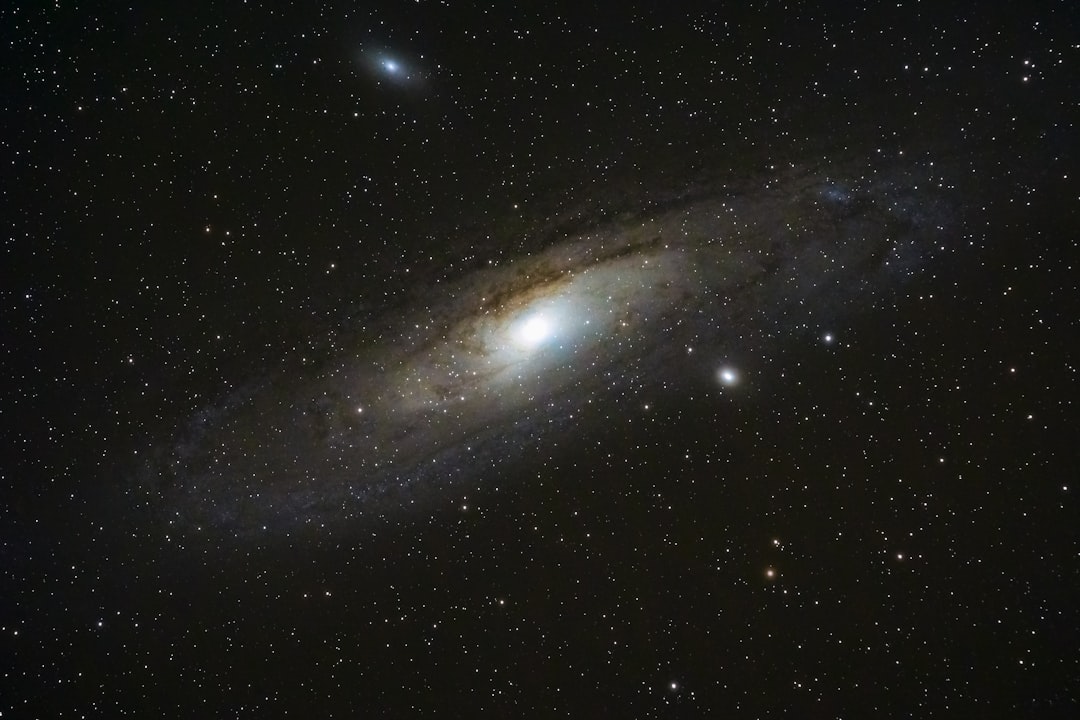
The ultimate fate of the universe has long been a subject of intense scientific fascination and philosophical contemplation. For decades, cosmologists have grappled with the question of what cosmic drama will unfold at the very end of time, and two prominent, yet starkly different, scenarios have emerged: the Big Freeze, or Heat Death, and the Big Rip. These are not mere theoretical curiosities; they are direct consequences of our current understanding of cosmology, particularly the accelerating expansion of the universe driven by dark energy. The universe’s destiny, it seems, is intricately tied to the nature and behavior of this enigmatic force.
The journey to understanding the universe’s ultimate fate begins with a pivotal discovery made in the late 1990s: the universe is not just expanding, but its expansion is accelerating. This groundbreaking revelation, for which the Nobel Prize in Physics was awarded, fundamentally altered our cosmological models. Before this, the prevailing thought was that gravity, the omnipresent force pulling matter together, would eventually slow down the expansion, leading to a potential collapse (the Big Crunch) or a gradual slowing to a halt. However, observations of distant supernovae revealed that galaxies are moving away from each other at an ever-increasing speed. This acceleration implies the existence of a mysterious force counteracting gravity on cosmic scales – dark energy.
Understanding Dark Energy
Dark energy is one of the most profound enigmas in modern physics. It is estimated to constitute about 68% of the total energy density of the universe, yet its nature remains elusive. The most widely accepted explanation for dark energy is the cosmological constant, first proposed by Albert Einstein. This concept posits that empty space itself possesses inherent energy, a form of intrinsic pressure that drives expansion. Another possibility is a dynamic field, often referred to as “quintessence,” whose energy density can change over time and space. The precise properties of dark energy are crucial in determining which of the ultimate fate scenarios will prevail.
The Role of Dark Matter
While dark energy drives expansion, dark matter plays a significant role in the gravitational interactions within galaxies and clusters. It accounts for approximately 27% of the universe’s energy density and, unlike dark energy, interacts gravitationally, holding structures together. Understanding the interplay between dark matter and dark energy is essential for building accurate cosmological models that can predict the universe’s long-term evolution.
The ultimate fate of the universe is a topic that has fascinated scientists and enthusiasts alike for centuries. For those interested in exploring this subject further, a related article can be found on My Cosmic Ventures, which delves into various theories about how the universe may end, including the Big Freeze, Big Crunch, and Big Rip scenarios. To read more about these intriguing possibilities, visit My Cosmic Ventures.
The Big Freeze: A Universe Slowly Fading Away
The Big Freeze, also known as Heat Death, is the more widely accepted scenario for the universe’s ultimate fate, assuming the cosmological constant model for dark energy holds true. This scenario paints a picture of a universe that, while continuing to expand indefinitely, becomes increasingly cold, dilute, and lifeless. It is a slow, gradual decline, a cosmic twilight that stretches over unimaginable timescales.
The Ever-Expanding Cosmos
In the Big Freeze scenario, the accelerating expansion of the universe continues unabated. Galaxies, already moving away from each other at an increasing rate, will eventually recede so far and so fast that they will disappear beyond each other’s observable horizons. Light from distant galaxies will be stretched to such long wavelengths (redshifted) that it will become undetectable. The universe will become a collection of isolated, increasingly barren galaxies, their light fading into the darkness.
The Isolation of Galaxies
As the expansion accelerates, the distances between galaxies will grow exponentially. Eventually, even light will not be able to traverse the ever-increasing gulfs separating these cosmic islands. Galaxies will become effectively causally disconnected from one another, rendering any form of intergalactic communication or travel impossible. Each galaxy will be an island universe, drifting in an ever-expanding void.
The Fate of Stars
Within these isolated galaxies, the process of star formation will eventually cease. The gas and dust clouds necessary for stellar birth will be gradually depleted. Existing stars will continue to burn their fuel, but their numbers will dwindle over billions and trillions of years. Red dwarfs, the smallest and longest-lived stars, will be the last to extinguish their light, leaving behind stellar remnants like white dwarfs, neutron stars, and black holes.
The End of Activity
As stars die out, the universe will become increasingly dark and cold. The temperature will approach absolute zero, a state of maximum entropy where no further work can be done. This is the essence of “Heat Death.” Even the stellar remnants will eventually fade or undergo processes that further dilute their energy. White dwarfs will cool down to become black dwarfs, theoretically, although the universe may not live long enough for this to occur. Black holes, over incomprehensibly vast timescales, are predicted to evaporate through Hawking radiation.
The Dissipation of Energy
The fundamental principle behind Heat Death is the second law of thermodynamics, which states that entropy, or disorder, in a closed system tends to increase over time. In the context of the universe, this means that energy will become more spread out and less concentrated, eventually reaching a uniform, low-energy state where no meaningful processes can occur.
The Ultimate Silence
The universe will be a vast, cold, and silent expanse, devoid of light, heat, and activity. The grand cosmic structures that we observe today – nebulae, galaxies, clusters – will be long gone, or reduced to faint, cold remnants. It will be an era of ultimate entropy, where the universe has effectively “died” in terms of its capacity for change and complexity.
The Big Rip: A Violent Cosmic Cataclysm
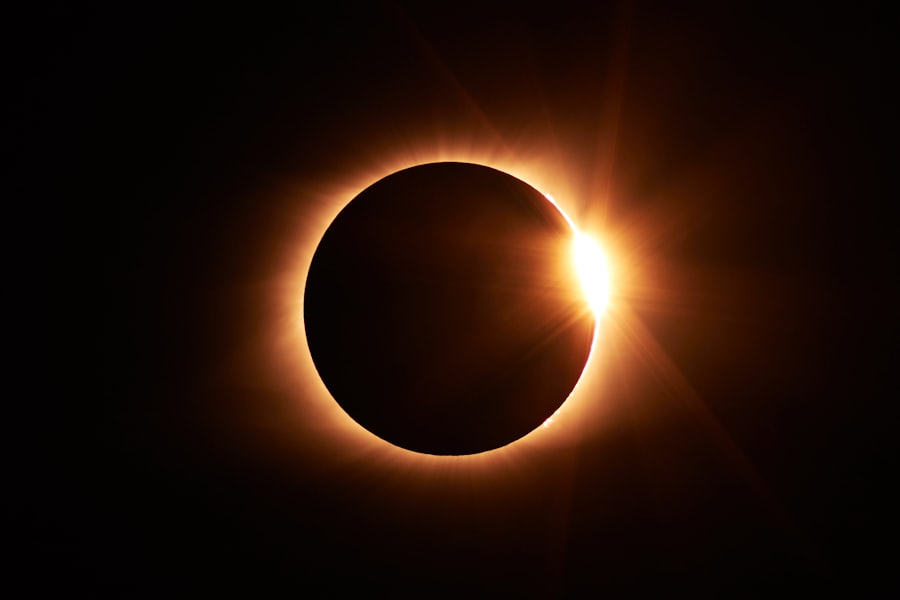
In stark contrast to the slow, peaceful fade of the Big Freeze, the Big Rip proposes a violent and dramatic end to the universe. This scenario hinges on the possibility that dark energy is not a constant but rather a form of “phantom energy” with a negative equation of state parameter, meaning its density actually increases as the universe expands. If this is the case, the accelerating expansion would not just push galaxies apart; it would eventually overcome all fundamental forces, tearing apart even the fabric of spacetime itself.
Phantom Energy and Its Implications
The concept of phantom energy is a theoretical extension of our understanding of dark energy. If dark energy possesses properties that cause its density to grow with expansion, its repulsive force would become increasingly dominant. This would lead to an acceleration that is not merely exponential but super-exponential, a runaway process with catastrophic consequences.
The Equation of State Parameter
In cosmology, the equation of state parameter, denoted by ‘w,’ describes the ratio of pressure to energy density for a given substance. For ordinary matter and radiation, ‘w’ is positive. For the cosmological constant, ‘w’ is exactly -1. However, for phantom energy, ‘w’ is less than -1. This seemingly small difference has profound implications for the future evolution of the universe.
The Unraveling of Structures
If the Big Rip is the universe’s destiny, the process would begin subtly and escalate rapidly. The accelerating expansion driven by phantom energy would first overcome the gravitational pull holding galaxy clusters together. Then, it would tear apart individual galaxies. The forces of expansion would grow so strong that they would eventually overcome the electromagnetic and strong nuclear forces, ripping apart stars, planets, atoms, and even subatomic particles.
The Breakdown of Gravity
As the phantom energy’s influence grows, it would exert a stronger and stronger repulsive force. This force would eventually overwhelm the gravitational binding of even the smallest structures. Galaxies would be the first to experience this tearing apart, their stars flung out into the void.
The Dismantling of Atoms
The ultimate consequence of the Big Rip would be the complete disintegration of matter. As the expansion intensifies, the electromagnetic forces holding atoms together would be overcome. Electrons would be ripped away from their nuclei, and then the nuclei themselves would be torn apart. Even the fundamental forces that bind quarks together within protons and neutrons would eventually succumb.
The Final Moments
In the final moments of a Big Rip scenario, the universe would be torn asunder at every level. Spacetime itself would stretch and rip, leading to a complete and utter destruction of all structures. The end would be swift and violent, a cosmic implosion of expansion.
The Unfolding Cataclysm
The Big Rip is not a gradual fade but a progressive dismantling. Each stage would be more destructive than the last, leading to a point where the very fabric of reality is torn apart. The end would be a singularity of infinite expansion.
The End of Everything
Unlike the Big Freeze, which leaves behind a cold, dark universe, the Big Rip results in the complete annihilation of all physical reality. No stars, no planets, no atoms, and perhaps not even space and time as we understand them would remain.
The Cosmic Tug-of-War: Dark Energy vs. Gravity

The ultimate fate of the universe, whether it succumbs to the gentle decline of Heat Death or the violent end of a Big Rip, hinges on the precise nature of dark energy. This enigmatic force is locked in a cosmic tug-of-war with gravity, the force that binds the universe together. The outcome of this battle will determine the universe’s ultimate destiny.
Measuring the Universe’s Expansion
Cosmologists employ various observational techniques to measure the universe’s expansion rate and its acceleration. These include studying Type Ia supernovae, which act as “standard candles” due to their consistent brightness, and analyzing the cosmic microwave background radiation, the afterglow of the Big Bang. These observations help scientists to constrain the properties of dark energy and, by extension, predict the universe’s future.
Supernovae as Cosmic Rulers
Type Ia supernovae are crucial tools for measuring cosmological distances. By comparing their observed brightness to their known intrinsic brightness, astronomers can determine how far away they are. This allows them to map the expansion history of the universe and detect any acceleration.
The Cosmic Microwave Background Fingerprint
The cosmic microwave background (CMB) is a relic of the early universe. Its temperature fluctuations provide a snapshot of the universe’s state shortly after the Big Bang. Analyzing these fluctuations allows cosmologists to determine the universe’s composition, including the proportions of dark matter, dark energy, and ordinary matter, which in turn informs models of its future evolution.
The Importance of Dark Energy’s Equation of State
The value of the equation of state parameter ‘w’ for dark energy is the key differentiator between the Big Freeze and the Big Rip. If ‘w’ is precisely -1, we are likely headed for the Big Freeze. If ‘w’ is less than -1, then the Big Rip becomes a distinct possibility. Current observational data suggests ‘w’ is very close to -1, leaning towards the Big Freeze, but uncertainties remain.
The ultimate fate of the universe has been a topic of fascination for scientists and enthusiasts alike, as it raises profound questions about the nature of existence. For those interested in exploring this subject further, a related article discusses various theories and predictions regarding the universe’s end, shedding light on concepts such as the Big Freeze and the Big Crunch. You can read more about these intriguing possibilities in the article found here. Understanding these theories not only deepens our knowledge of cosmic evolution but also invites us to ponder our place in the vast expanse of space.
The Race Against Time: Current Evidence and Future Predictions
| Topic | Information |
|---|---|
| Expansion | The universe is currently expanding at an accelerating rate. |
| Big Freeze | One possible fate is the “Big Freeze” where the universe continues to expand and eventually all stars burn out, leaving only black holes and remnants. |
| Big Crunch | Another possibility is the “Big Crunch” where the universe stops expanding and collapses back in on itself. |
| Heat Death | The “Heat Death” scenario involves the universe reaching a state of maximum entropy, where all energy is evenly distributed and no more work can be done. |
| Timeline | These events are projected to occur billions of years in the future, and the ultimate fate of the universe is still a topic of active research and debate among scientists. |
Current cosmological observations, particularly those from the Planck satellite and various ground-based telescopes, strongly favor the Big Freeze scenario. The measured value of dark energy’s equation of state parameter is very close to -1, suggesting that dark energy behaves like a cosmological constant. However, scientific understanding is constantly evolving, and future, more precise measurements could always reveal surprises.
The Precision of Cosmological Measurements
The ongoing quest to refine our understanding of dark energy involves increasingly sophisticated observational techniques and advanced data analysis. Experiments like the Dark Energy Survey (DES) and future projects like the Vera C. Rubin Observatory and the Euclid space telescope are designed to make unprecedentedly precise measurements of cosmological parameters.
The Dark Energy Survey (DES)
The Dark Energy Survey has been instrumental in mapping the distribution of dark matter and dark energy across vast cosmic scales. Its observations provide crucial constraints on the properties of dark energy and help to distinguish between different cosmological models.
Future Observatories
Upcoming observatories like the Vera C. Rubin Observatory and the Euclid space telescope are poised to revolutionize our understanding of dark energy. Their wide-field imaging capabilities and spectroscopic surveys will provide even more precise measurements of the universe’s expansion history and the growth of cosmic structures, allowing scientists to test theoretical models with greater accuracy.
The Ongoing Debate and Uncertainty
Despite the current evidence pointing towards the Big Freeze, the possibility of the Big Rip, or even other exotic scenarios, cannot be entirely ruled out. The nature of dark energy is still poorly understood, and as our observational capabilities improve, we may uncover new aspects of its behavior that necessitate a revision of our current predictions. The universe’s ultimate fate remains a subject of active research and exciting scientific inquiry.
Philosophical and Existential Implications
Contemplating the ultimate fate of the universe, whether it be the silent fading of the Big Freeze or the violent annihilation of the Big Rip, carries profound philosophical and existential implications for humanity. It forces us to confront our place in the cosmos, the ephemeral nature of existence, and the ultimate limits of scientific understanding.
The Meaning of Existence in a Finite Universe
If the universe is destined to end, what does that mean for the meaning of our existence? Are our endeavors, our discoveries, and our lives ultimately rendered meaningless by the inevitable conclusion? Or does the very finiteness of our cosmic home imbue our experiences with a unique preciousness, urging us to make the most of our limited time?
The Value of the Present Moment
The knowledge that the universe will eventually cease to be can serve as a powerful reminder of the value of the present moment. It encourages us to appreciate the beauty and complexity of the universe as it is, and to find meaning and purpose in our individual and collective actions.
The Legacy of Humanity
Even if the universe eventually succumbs to Heat Death or a Big Rip, the scientific knowledge and cultural achievements of humanity could potentially persist in some form, perhaps encoded in surviving artifacts or even in the fundamental laws of physics themselves, for an unimaginably long time. The legacy of our existence might echo in ways we cannot yet comprehend.
The Limits of Human Knowledge
The ultimate fate of the universe also highlights the limitations of human knowledge. While science has made incredible strides in understanding the cosmos, there remain profound mysteries, such as the true nature of dark energy. These unanswered questions remind us of the vastness of the unknown and the humility required in our scientific pursuits.
The Ongoing Quest for Understanding
The pursuit of knowledge about the universe’s destiny is not merely an academic exercise; it is a fundamental aspect of human curiosity. It drives innovation, inspires wonder, and pushes the boundaries of our understanding, even if the ultimate answers remain tantalizingly out of reach.
The Enduring Spirit of Inquiry
Regardless of the universe’s ultimate fate, the human spirit of inquiry and the relentless pursuit of understanding will likely endure, continuing to unravel the cosmos’s secrets, one discovery at a time. The quest to comprehend our cosmic home is an intrinsic part of the human experience.

Dark Energy May Be Changing—So What Happens to the Universe?
FAQs
What is the ultimate fate of the universe?
The ultimate fate of the universe is currently theorized to be one of three possibilities: the Big Freeze, the Big Crunch, or the Big Rip. These theories are based on the current understanding of the expansion of the universe and the forces at play.
What is the Big Freeze?
The Big Freeze, also known as the Heat Death, is a theory that suggests the universe will continue to expand at an accelerating rate until all matter and energy is spread out so thinly that the universe becomes cold and dark. This would result in a state of maximum entropy, where no more energy can be extracted from the universe.
What is the Big Crunch?
The Big Crunch is a theory that suggests the expansion of the universe will eventually reverse, causing all matter and energy to collapse back into a hot, dense state. This would lead to a cataclysmic event similar to the Big Bang, resulting in the end of the current universe.
What is the Big Rip?
The Big Rip is a theory that suggests the expansion of the universe will continue to accelerate to the point where it tears apart all matter, including galaxies, stars, and even atoms. This would result in the complete destruction of the universe.
How do scientists study the ultimate fate of the universe?
Scientists study the ultimate fate of the universe by observing the rate of expansion, the distribution of matter and energy, and the behavior of dark energy. They use telescopes and other instruments to gather data from distant galaxies and cosmic microwave background radiation to better understand the forces at play in the universe.