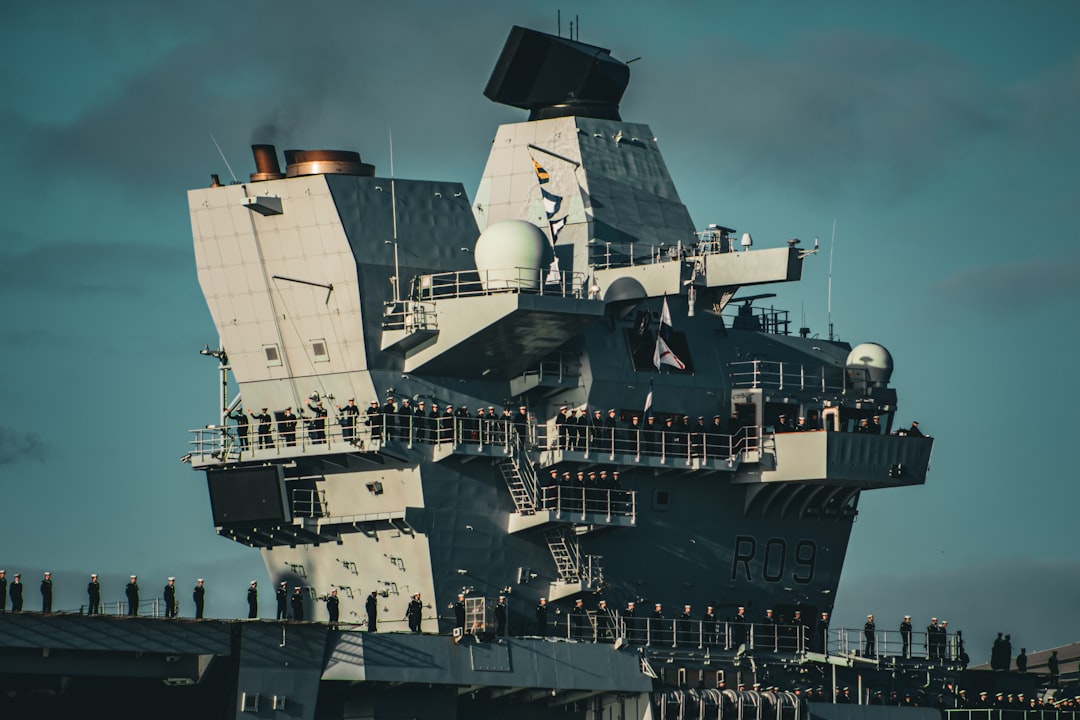
The concept of generation ships, colossal vessels designed to carry humanity across interstellar distances over centuries or millennia, often evokes visions of technological triumph and the boundless expansion of our species. However, a sober examination of their feasibility necessitates confronting a fundamental and inescapable reality: entropy. This thermodynamic principle, the relentless march towards disorder and the inevitable degradation of energy, presents a formidable, if not insurmountable, challenge to the very notion of sustained, closed-system existence for generations.
Entropy, often described as the universe’s tendency to move from order to disorder, is not merely an abstract scientific principle. It is a pervasive force that dictates the fundamental processes of the cosmos. For a generation ship, a self-contained biome carrying thousands of individuals for the duration of a journey that dwarfs human lifespans, entropy manifests in a multitude of insidious ways, demanding constant vigilance and an unprecedented level of resource management.
Thermodynamics and the Closed System
Generation ships are intrinsically closed systems, or at least, perpetually strive to be. The goal is to replicate Earth’s biosphere within the confines of a manufactured environment, providing air, water, food, and energy for multiple generations. However, no real-world system is perfectly closed. Energy must be expended to maintain any semblance of order, and with every expenditure, entropy increases. Heat, a ubiquitous byproduct of all energy transformations, inevitably dissipates outwards, representing a loss of usable energy. This constant loss, even if minuscule, accumulates over vast time scales.
The Inevitable Degradation of Matter
The materials that constitute a generation ship, from its hull to its internal components and life support systems, are subject to the laws of physics. Over centuries, even the most robust alloys will experience wear and tear, corrosion, and fatigue. The complex machinery required for life support – air scrubbers, water recyclers, food synthesizers, and power generation – will inevitably break down. Spare parts themselves are finite. The ability to manufacture replacements for aging or damaged components, especially those requiring highly specialized materials or intricate fabrication processes, becomes a critical bottleneck. Each repair, each replacement, consumes energy and generates waste, adding to the entropic burden.
In exploring the complexities of generation ships and the implications of entropy on long-term space travel, it is essential to consider the insights presented in a related article. This article delves into the challenges faced by generation ships, including the management of resources and the effects of entropy on closed systems. For a deeper understanding of these concepts, you can read more in the article available at My Cosmic Ventures.
Resource Management Under an Entropic Shadow
The long-term viability of a generation ship hinges on its ability to meticulously manage its finite resources. This is not merely about efficient recycling; it’s about combating the relentless erosion of usefulness driven by entropy.
The Closed-Loop Ecosystem: An Idealized Construct
While the concept of a perfectly closed-loop ecosystem is appealing, the reality is far more complicated. On Earth, the planet’s immense size and its continuous interaction with external energy sources (the sun) allow for a dynamic equilibrium that can absorb and process waste. A generation ship, by contrast, has a fixed volume and limited energy input relative to its internal processes. Achieving true self-sufficiency, where waste products are perfectly converted back into usable resources without net loss, is an immense engineering and biological challenge.
Food Production and Nutrient Cycling
Sustaining a population requires continuous food production. This involves the cycling of nutrients. Even with the most advanced hydroponic or aeroponic systems, there will be losses in the conversion of raw materials to edible biomass and in the digestion and excretion of waste. Maintaining the precise balance of minerals, vitamins, and other essential elements for plant and human health over generations requires constant monitoring and intervention, each intervention consuming energy and generating entropy.
Water and Air Reclamation
Water and air are fundamental to survival. While recycling technologies have advanced significantly, they are not perfect. Some water is lost to evaporation, to chemical binding in waste products, or to biological processes. Similarly, air purification systems may not remove all trace contaminants, and the generation of new, undesirable compounds from metabolic processes is unavoidable. The energy required to filter, purify, and recondition these vital resources will only increase as the systems age and degrade.
Energy: The Ultimate Entropic Constraint
The most significant hurdle posed by entropy for generation ships is the sourcing and management of energy. Power is the lifeblood of any advanced civilization, and for a closed system traveling through the void, it is a particularly precious commodity.
The Finite Nature of Onboard Power Sources
Onboard power sources, such as nuclear reactors or advanced batteries, have a finite lifespan and fuel supply. Even if a vessel were equipped with a fusion reactor, the process of fusion itself is not perfectly efficient and generates radioactive waste, requiring long-term storage and management. Relying on stored energy is essentially delaying the inevitable depletion.
The Infeasibility of Interstellar Energy Harvesting
The vast distances between stars mean that harvesting energy from other celestial bodies is largely impractical. Solar radiation intensity decreases dramatically with distance, making it an unreliable and insufficient power source for most of the journey. While theoretical concepts like Dyson spheres aim to capture starlight, their construction and maintenance over interstellar distances are beyond current or even foreseeable technological capabilities, and they would still be subject to the entropic losses associated with energy conversion.
The Erosion of Complexity and Knowledge

Beyond the physical degradation of systems, entropy also poses a threat to the intricate social and intellectual structures necessary for a generation ship to succeed.
The Challenge of Information Transmission
Knowledge and skills must be continually passed down through generations. This involves education, training, and the preservation of vast amounts of technical and scientific information. As the journey progresses, the original context and understanding of certain technologies may be lost. The sheer volume of data to be maintained and accessed reliably over centuries, without corruption, is significant.
Maintaining Technological Expertise
Imagine a critical system on the ship begins to fail. The knowledge of how to repair it, the schematics, the diagnostic procedures – all of this must be available and understood by the current generation. As individuals with direct experience of the initial design and construction pass away, the reliance on written, digital, or simulated knowledge increases. This knowledge itself can degrade, become inaccessible, or be misinterpreted. Specialization, while necessary for efficiency, can also lead to a situation where no single individual or group fully understands the entirety of the ship’s complex workings.
The Risk of Knowledge Decay
Human memory is fallible. Cultural knowledge, even when recorded, can be subject to interpretation, loss, or the emergence of new societal priorities that de-emphasize certain technical disciplines. If the original engineers and scientists left behind perfect, immutable digital records, the problem might be mitigated. However, the long-term stability of digital storage over millennia is itself an open question, vulnerable to bit rot, format obsolescence, and the potential for societal collapse that might render the data uninterpretable.
Social and Psychological Strains
The psychological and social pressures on a closed community isolated for generations are immense. Entropy can manifest here as well, through the breakdown of societal order and the erosion of collective purpose.
Generational Drift and Cultural Schism
As generations are born and die on the ship, their experiences and perspectives will inevitably diverge from those of their ancestors. The original mission, the reasons for undertaking such a perilous journey, might fade in importance or be reinterpreted in ways that lead to conflict. Social stratification, resource competition, and the psychological toll of confinement can all contribute to a gradual decay of social cohesion.
The Loss of Purpose and the Weight of History
The sheer length of the journey can become an unbearable burden. Each generation inherits the immense task of perpetuating a voyage whose completion they will not witness. This can lead to apathy, nihilism, or a desperate yearning for a shorter, more immediate existence. The weight of history, the knowledge of all the lives lived and lost on the ship, can become a psychological anchor, a constant reminder of the sacrifices made with no guarantee of success.
Addressing the Entropic Tide: Technological and Societal Mitigations

While entropy is a fundamental law, humanity’s ingenuity has always sought to mitigate its effects. For generation ships, these mitigations would need to be extraordinary.
Advanced Recycling and Material Science
The cornerstone of any attempt to combat entropy on a generation ship would be hyper-efficient recycling and breakthroughs in material science.
Molecular Assembly and Nanotechnology
Future generations might possess the ability to disassemble and reassemble matter at a molecular level. This would allow for the perfect recycling of almost all waste products, converting them back into usable raw materials. Nanotechnology could be employed for self-repairing materials and intricate internal systems, reducing the need for human intervention and increasing longevity.
Biomimicry and Self-Sufficiency
Learning from Earth’s biological systems, which have evolved to be remarkably efficient at resource cycling and adaptation, could provide crucial insights. Developing robust, self-sustaining bio-regenerative life support systems, potentially incorporating extremophile organisms capable of thriving in harsh conditions or engineered microorganisms to break down complex waste, would be paramount.
Energy Solutions: Innovation and Containment
The energy problem remains the most significant, but perhaps not entirely insurmountable, challenge.
Fusion Power and Beyond
While current fusion technology is still in its nascent stages, future advancements could lead to highly efficient and long-lasting fusion reactors. Beyond fusion, speculative concepts like zero-point energy extraction, if proven viable and controllable, could offer a theoretically inexhaustible power source. However, even these advanced systems would still produce waste heat, representing an entropic loss.
Energy Storage and Distribution Mastery
Even with a powerful energy source, efficient storage and distribution are vital. Advanced battery technologies, capable of holding immense amounts of energy for protracted periods, would be necessary. Moreover, the infrastructure for distributing this energy throughout the ship must be incredibly robust and resistant to degradation.
The concept of generation ships, which are self-sustaining spacecraft designed for long-duration space travel, often raises questions about the implications of entropy and resource management over time. A fascinating exploration of these themes can be found in a related article that delves into the challenges faced by such vessels as they navigate the complexities of maintaining life and technology across generations. For a deeper understanding of the intricate balance between sustainability and the inevitable march of entropy, you can read more about it in this insightful piece on my cosmic ventures.
The Unseen Costs and Unacknowledged Realities
| Aspect | Details |
|---|---|
| Generation Ships | Spacecraft designed for long interstellar journeys, carrying multiple generations of inhabitants |
| Entropy | A measure of the amount of energy in a physical system that is not available to do work |
| Entropy in Generation Ships | Entropy poses a challenge for generation ships as it can lead to the degradation of systems and resources over time |
| Sustainability | Efforts to maintain a sustainable environment within generation ships are crucial to combat entropy |
The romanticized vision of generation ships often overlooks the profound costs and the stark realities of such an endeavor, all amplified by the relentless pressure of entropy.
The Moral and Ethical Quandaries
The decision to launch a generation ship is inherently intergenerational. It is a choice made by one generation for the benefit (or perhaps burden) of many to come. This raises significant ethical questions about consent and the right to inflict such a fate upon future individuals.
The Burden of an Unchosen Fate
Individuals born on a generation ship have no say in their environment or their destiny. They are born into a closed system, with limited horizons and an inherited mission that might be viewed as a curse rather than a blessing. The psychological weight of this predetermined existence, with a destination so far in the future that it feels almost mythological, must be immense.
The Potential for Human Extinction Within the Ship
The risks are not solely external. A catastrophic system failure, a devastating plague, or a profound societal breakdown could lead to the extinction of humanity long before the ship reaches its destination. Entropy, in its various forms, contributes to the probability of such failures. It is a testament to human resilience that we even contemplate such ventures, but it is also a reflection of our capacity for both grand ambition and profound self-delusion.
The Inevitable Sacrifice of Potential
The resources, energy, and human capital required to construct and launch a generation ship are astronomical. These resources could demonstrably be used to improve life on Earth, to address immediate global challenges, or to pursue less ambitious but perhaps more achievable interstellar exploration goals. The choice to embark on a generation ship represents a singular, all-or-nothing gamble.
The Opportunity Cost of Interstellar Voyages
The development of technologies required for generation ships, such as advanced life support, propulsion, and material science, would undoubtedly have spin-off benefits for Earth. However, the direct expenditure of resources on a single, multi-generational vessel diverts focus and funding from other potential scientific and societal advancements. The problem of entropy would need to be solved for the ship, but those same solutions could potentially alleviate environmental and resource challenges on Earth.
The Long Wait and the Risk of Obsolescence
A journey that spans centuries or millennia means that by the time the ship reaches its destination, if it ever does, humanity on Earth might have progressed significantly beyond the technological and philosophical baseline of the ship’s creators. The knowledge and technology on board might be obsolete, rendering the voyage itself a quaint artifact of an earlier era rather than a bold step into the future. The very environment the ship seeks to reach might have changed, or humanity might have found other, more practical means of interstellar travel or even established a presence beyond Earth through different methods. The entropic decay of the ship’s relevance, mirroring the physical decay of its systems, becomes a distinct possibility.
The reality of generation ships, viewed through the lens of entropy, is not one of unalloyed triumph. It is a sobering contemplation of the immense forces that govern our universe and the profound challenges inherent in transcending them. While human ambition may continue to explore such possibilities, a clear-eyed understanding of entropy’s pervasive and persistent influence is essential, lest we launch ourselves and our dreams into the void on a vessel ultimately destined to succumb to the universe’s inexorable march towards disorder.
FAQs
What is a generation ship?
A generation ship is a hypothetical spacecraft designed for long-duration interstellar travel. It is meant to sustain a crew for multiple generations as they travel to distant star systems.
How does entropy affect generation ships?
Entropy, the measure of disorder in a system, poses a significant challenge for generation ships. Over time, the ship’s systems will degrade and the crew will have to continuously work to maintain and repair them.
What are the potential solutions to entropy on generation ships?
Potential solutions to entropy on generation ships include advanced self-repairing materials, closed-loop life support systems, and efficient recycling technologies. These would help mitigate the effects of entropy and prolong the ship’s lifespan.
What are the psychological challenges of living on a generation ship?
Living on a generation ship presents unique psychological challenges, such as the prospect of never reaching the destination, the confinement of living in a closed environment, and the social dynamics of a society that spans multiple generations.
What are the ethical considerations of sending people on a generation ship?
Ethical considerations of sending people on a generation ship include issues of consent for future generations, the potential for social inequality and conflict, and the responsibility of the initial crew to ensure the well-being of their descendants.