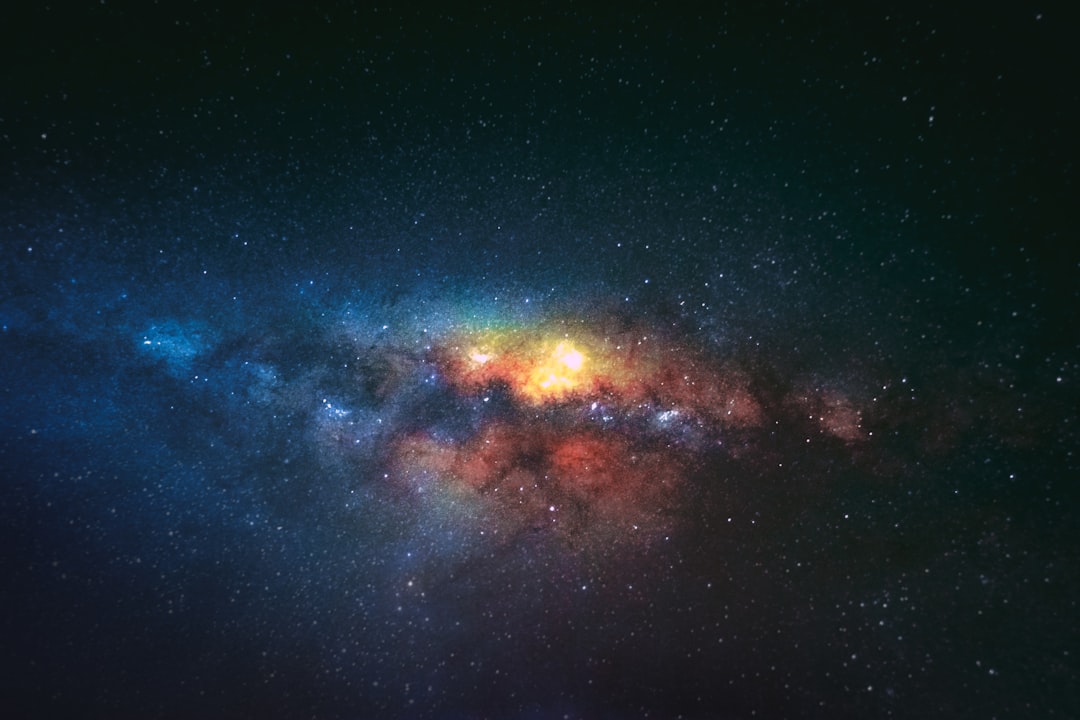
The popular conception of interstellar space often conjures images of vast, featureless voids, an almost perfect vacuum stretching endlessly between the sparse points of light that are stars. This perception, while understandable given the immense scales involved, fundamentally misrepresents the reality of the universe, particularly when objects are in motion. At high speeds, the seemingly empty expanse of space becomes a dynamic and surprisingly crowded environment, populated by a diverse range of particles, fields, and even macroscopic structures. Understanding why space is never truly empty, especially under conditions of rapid transit, requires a deeper dive into the principles of relativistic physics and the ubiquitous nature of quantum fields.
The Relativistic Perspective: More Than Just Empty Space
When we consider objects moving at speeds approaching that of light, the classical, Newtonian view of physics breaks down. Albert Einstein’s theory of special relativity fundamentally alters our understanding of space and time. It is not merely a passive backdrop but an active participant in the dynamics of the universe. At high velocities, familiar concepts like mass, length, and the passage of time undergo significant transformations, and these transformations have profound implications for what we perceive as “empty” space.
Time Dilation and Length Contraction: Warping Perceptions
One of the cornerstone predictions of special relativity is time dilation. For an observer moving at a significant fraction of the speed of light relative to a stationary observer, time appears to pass more slowly. This means that the duration of an event, as measured by the moving observer, will be shorter than when measured by the stationary one. This is not a trick of perception or a malfunctioning clock; it is a fundamental property of spacetime itself.
Complementary to time dilation is length contraction. An object moving at relativistic speeds will appear shorter in its direction of motion when measured by a stationary observer. This foreshortening is directly linked to the frame of reference from which observations are made. For the traveler at high speed, their own vessel and surroundings appear normal, but the external universe would seem compressed along their trajectory.
These kinematic effects, while not directly causing particles to spontaneously appear, alter the observed density and distribution of matter and energy. What appears as a vast, empty region to a slow-moving observer might, to a relativistic traveler, appear considerably more compressed, with the inherent sparsity of cosmic matter becoming more noticeable due to the foreshortening of distances between objects. More importantly, these relativistic effects predispose us to consider the inherent dynamics of the medium through which such travel occurs.
The Relativistic Mass Increase: A New Kind of “Stuff”
Another crucial consequence of special relativity is the increase in relativistic mass with velocity. As an object approaches the speed of light, its inertia increases, meaning it requires progressively more energy to accelerate it further. This “relativistic mass” is not a separate type of matter but a manifestation of the energy-momentum relationship inherent in spacetime. This increasing inertia suggests that an object traveling at high speeds is interacting with something more than just a passive void.
This effect hints at the energy density of spacetime itself. While not directly implying a physical substance in the classical sense, it points towards the underlying fabric of reality possessing a dynamic quality. The universe at high speeds is not simply a vacuum through which something moves; the very act of moving at such speeds suggests a deeper interaction with the fabric of spacetime, which itself is not devoid of properties.
As scientists delve deeper into the mysteries of the universe, they have uncovered fascinating insights into why space ceases to be empty at high speeds. This phenomenon is intricately linked to the principles of quantum mechanics and the behavior of particles at relativistic speeds. For a more detailed exploration of this topic, you can read the related article that discusses the implications of high-speed travel in space and its effects on the fabric of the cosmos. To learn more, visit this article.
Quantum Fields: The Ubiquitous Underlying Fabric
The notion of “empty” space is further challenged by the principles of quantum field theory. This theoretical framework posits that the universe is not made of discrete particles but of fundamental fields that permeate all of spacetime. Particles, like electrons or photons, are understood as excitations or quanta of these fields.
The Vacuum as a Sea of Fluctuations
In classical physics, a vacuum is defined as a region devoid of matter. However, in quantum field theory, the vacuum is far from empty. It is a dynamic, energetic state containing constant quantum fluctuations. These fluctuations involve the spontaneous creation and annihilation of particle-antiparticle pairs, which exist for incredibly short durations before recombining and disappearing. This phenomenon is known as vacuum polarization.
Virtual Particles: Transient Visitors in the Void
These fleeting particle-antiparticle pairs are often referred to as “virtual particles.” They are not directly observable in the same way as stable particles, but their existence has measurable consequences. For instance, the Casimir effect, where two uncharged conductive plates placed close together experience an attractive force, is a direct consequence of vacuum fluctuations. The exclusion of certain wavelengths of virtual photons between the plates creates a pressure difference, pushing them together.
At high speeds, the interaction with these virtual particle fluctuations becomes more significant. While still transient, their presence contributes to the energy density of spacetime and can influence the trajectory and interactions of high-speed objects. It’s akin to navigating through a turbulent, energetic medium, even in the absence of macroscopic debris.
The Higgs Field: Imparting Mass to Particles
Another fundamental quantum field is the Higgs field. This field permeates the entire universe and interacts with fundamental particles, such as electrons and quarks, to give them mass. Particles that interact strongly with the Higgs field are massive, while those that interact weakly are less massive. The Higgs boson is the quantum excitation of this field.
Mass as an Interaction, Not an Intrinsic Property
The discovery of the Higgs boson provided strong evidence for the existence of the Higgs field and its role in imparting mass. This concept fundamentally alters our understanding of mass. Instead of being an intrinsic property of a particle, mass is an emergent property arising from its interaction with the Higgs field. This implies that even in the absence of other matter, the universe is filled with the Higgs field, which has a profound influence on the fundamental constituents of reality.
At high speeds, the interaction with the Higgs field, and consequently the relativistic mass of particles, is a direct consequence of the underlying field. The increased inertia experienced by a high-speed object is, in a sense, a measure of its interaction with this pervasive field.
Electromagnetic Fields: The Invisible Network
The universe is permeated by electromagnetic fields, which are fundamental to many physical phenomena, from the light we see to the forces that bind atoms. These fields are not confined to specific sources but can extend vast distances and vary in strength and direction.
Stellar Winds and Radiation: Not Just Light
Stars constantly emit streams of charged particles known as stellar winds, and intense radiation. While these are most concentrated around stars, they can extend for enormous distances, creating vast bubbles of plasma in the interstellar medium. Even in relatively “empty” regions of space, the influence of distant stars and galaxies can be detected through residual stellar winds and cosmic radiation.
The Interstellar Medium: A Thin Gas of Charged Particles
The interstellar medium (ISM) itself, while incredibly tenuous compared to terrestrial densities, is composed of gas and dust. This gas is largely ionized, meaning it consists of charged particles. These charged particles are influenced by magnetic fields, creating complex structures and flows within the ISM. Traveling at high speeds through the ISM means interacting with this plasma, which can lead to energetic collisions and altered trajectories.
Interstellar Magnetic Fields: Guiding the Plasma
Interstellar magnetic fields are another pervasive component of space. These fields are generated by the motion of charged particles within stars and galaxies and can extend across vast distances. They play a crucial role in shaping the structure of the ISM, guiding the flow of stellar winds, and even influencing the formation of new stars.
Charged Particles in Motion: Amplifying Interactions
When a high-speed object travels through a region with interstellar magnetic fields, its charged components will interact with these fields. This interaction can lead to charged particles being accelerated or deflected, contributing to the energetic environment surrounding the object. This is not simply passing through empty space; it is traversing a medium influenced by invisible forces.
Cosmic Rays: High-Energy Travelers
Cosmic rays are high-energy particles, primarily protons and atomic nuclei, that originate from outside Earth’s atmosphere. They are accelerated to extremely high speeds by energetic astrophysical phenomena, such as supernovae and active galactic nuclei.
Origin and Acceleration of Cosmic Rays
The precise mechanisms by which cosmic rays are accelerated to such extreme energies are still areas of active research. However, it is understood that powerful astrophysical events involving strong magnetic fields and shock waves are responsible. These events impart immense kinetic energy to the particles, propelling them across vast interstellar distances.
High-Speed Particles Interacting with the Medium
Upon entering the interstellar medium, these high-energy cosmic rays continue to travel at near-light speeds. While the interstellar medium is diffuse, the sheer energy of cosmic rays means they can still interact with the atoms and molecules they encounter. These interactions can lead to the production of secondary particles and radiation, further populating the cosmic environment.
For a high-speed traveler, navigating through regions rich in cosmic rays presents a direct challenge. These particles, traveling at nearly the speed of light, can impact the traveler’s hull and internal systems, posing a radiation hazard. Their presence confirms that even seemingly empty interstellar space is populated by highly energetic entities.
As scientists delve deeper into the mysteries of the universe, they have uncovered fascinating insights about how space behaves at high speeds. One intriguing aspect is that space ceases to be empty when objects approach relativistic speeds, leading to the emergence of phenomena such as vacuum fluctuations and particle creation. For a more detailed exploration of this topic, you can read the related article on My Cosmic Ventures, which discusses the implications of these findings for our understanding of physics and the nature of the cosmos.
Macroscopic Structures and Phenomena: Not Just Tiny Particles
Beyond the quantum fields and individual particles, space at high speeds can also involve encounters with larger, more macroscopic structures and phenomena. These are not necessarily dense matter but can still significantly impact a fast-moving object.
Dust and Gas Clouds: Dilute but Present
While vast stretches of space are relatively devoid of matter, there are still significant clouds of interstellar gas and dust. These can range from diffuse nebulae to denser molecular clouds where stars are born. Traveling at high speeds through such regions, even if they appear transparent, means encountering millions of individual particles per cubic centimeter.
The Impact of Even Dilute Matter at Velocity
The cumulative effect of these seemingly dilute collisions can be significant at relativistic speeds. Even a single dust grain, when impacting at a substantial fraction of the speed of light, can carry immense kinetic energy, equivalent to a high-energy particle collision. This necessitates robust shielding and careful navigation to avoid damage.
Gravitational Fields: Reshaping Spacetime
Gravity, as described by Einstein’s theory of general relativity, is not a force acting at a distance but a curvature of spacetime. Massive objects like stars and planets warp the fabric of spacetime around them, influencing the paths of objects that pass nearby.
The Influence of Gravity on High-Speed Trajectories
At high speeds, the effects of gravitational fields become even more pronounced. Objects moving at relativistic velocities are subject to the same spacetime distortions as slower objects, but their trajectories can be significantly altered due to their high momentum. Understanding and predicting these gravitational influences is critical for interstellar navigation.
Dark Matter and Dark Energy: The Unknown Occupants
The universe is also known to be dominated by constituents that we cannot directly observe: dark matter and dark energy. While their exact nature remains a mystery, their gravitational influence is undeniable. Dark matter is thought to make up a significant portion of the universe’s mass, forming halos around galaxies and influencing their rotation. Dark energy is believed to be responsible for the accelerating expansion of the universe.
Gravitational Effects of Unseen Matter
While these entities may not be composed of particles in the traditional sense, their collective gravitational effects are manifest in the large-scale structure and dynamics of the cosmos. A high-speed traveler would still be subject to the spacetime curvature caused by these unseen components, even if they cannot be directly detected through traditional means.
In conclusion, the idea of interstellar space being a true vacuum is a simplification that breaks down when we consider the relativistic speeds of travel and the fundamental nature of quantum mechanics. The universe, even in its most seemingly empty regions, is a vibrant and dynamic arena filled with fluctuating quantum fields, pervasive electromagnetic fields, energetic particles, and the subtle yet significant influence of gravity. For any object to traverse this arena at high speeds is to engage with a complex and active environment, far from the quiescent void often imagined. The physics of space at high speeds reveals a universe that is consistently, and perhaps surprisingly, never truly empty.
FAQs
What is the concept of space being empty at high speeds?
The concept of space being empty at high speeds refers to the idea that as an object travels at high speeds through space, the space around it is not actually empty. Instead, it is filled with various particles and radiation that can have significant effects on the object and its surroundings.
What causes space to stop being empty at high speeds?
At high speeds, objects moving through space can interact with particles and radiation that are present in the space. These interactions can lead to effects such as increased resistance, energy loss, and even the creation of new particles through processes like pair production.
How does the non-empty nature of space at high speeds impact space travel?
The non-empty nature of space at high speeds can impact space travel in several ways. It can lead to increased energy requirements for propulsion, potential damage to spacecraft from collisions with particles, and the need for advanced shielding and protection for astronauts and equipment.
What are some examples of particles and radiation present in space at high speeds?
Particles and radiation present in space at high speeds can include cosmic rays, solar wind, interstellar dust, and various forms of electromagnetic radiation such as gamma rays and x-rays.
What are the implications of the non-empty nature of space at high speeds for our understanding of the universe?
The non-empty nature of space at high speeds challenges the traditional idea of space as a vacuum and has implications for our understanding of fundamental physics, the behavior of matter and energy in extreme environments, and the development of advanced space travel technologies.