
Imagine, for a moment, the absolute absence of everything. No matter, no energy, no space, no time. This conceptual void, often referred to as a “true vacuum,” is not merely empty in the way a room devoid of furniture appears empty. It is a state of fundamental non-existence, a canvas upon which reality has yet to be painted. Yet, within the realm of theoretical physics, the concept of a “true vacuum bubble” emerges as a fascinating, if entirely speculative, departure from this absolute emptiness. This article will delve into the phenomenon of a true vacuum bubble, exploring its theoretical origins, its potential implications, and the profound shift in our understanding of the cosmos it would represent.
Quantum Fluctuations and False Vacua
Our universe, as we perceive it, is not in a state of absolute thermodynamic equilibrium. Even in the deepest reaches of intergalactic space, a pervasive field permeates all of existence: the quantum vacuum. This vacuum is far from inert. It is a roiling sea of virtual particles, constantly popping into and out of existence, borrowing energy from the vacuum itself for fleeting moments before annihilating each other. This phenomenon, known as quantum fluctuation, is a fundamental consequence of the Heisenberg Uncertainty Principle.
Within the framework of quantum field theory, different states of a field can exist, each with a distinct energy level. A true vacuum represents the lowest possible energy state for a given field. It is the ultimate ground state, the deepest potential well. However, a field can become trapped in a false vacuum, a metastable state with a higher energy than the true vacuum. Imagine a ball resting in a shallow dip on a hillside, rather than at the very bottom of the valley. This ball is in a false vacuum. It possesses a certain stability, but a sufficient perturbation could cause it to roll down to the lower, more stable state.
Energy Landscapes and Field Potentials
The concept of energy landscapes is crucial for understanding vacuum states. Physicists visualize the possible energy states of a field as a topographical map. The “valleys” on this map represent the minima of the potential energy function, where the field is most stable. The deepest valley corresponds to the true vacuum. Other, shallower valleys represent false vacua. The “hills” and “ridges” represent energy barriers that a field must surmount to transition between different minima.
Cosmological models, particularly those related to the early universe and inflation, heavily rely on the behavior of scalar fields and their associated potential energy functions. The Higgs field, for instance, is understood to exist in a false vacuum state at very high energies, giving rise to the mass of elementary particles. The transition from this early, high-energy state to our current lower-energy state is thought to have played a critical role in the evolution of the universe.
The Cosmological Constant and Dark Energy
The existence of a vacuum energy is not merely a theoretical construct; it has observable consequences. The cosmological constant, denoted by the Greek letter lambda ($\Lambda$), represents a constant energy density associated with empty space. While early theoretical calculations predicted a vacuum energy vastly larger than observed, modern cosmology incorporates a small, positive value for the cosmological constant. This value is currently attributed to dark energy, the mysterious force driving the accelerated expansion of the universe. The nature of dark energy remains one of the most significant puzzles in physics, and understanding the vacuum energy is central to its resolution.
In exploring the fascinating concept of a true vacuum bubble, one can gain deeper insights into the implications of such phenomena on our understanding of the universe. A related article that delves into the theoretical aspects and potential consequences of vacuum bubbles can be found at My Cosmic Ventures. This resource provides a comprehensive overview of how true vacuum bubbles could affect the fabric of spacetime and the fundamental forces of nature, offering a thought-provoking perspective on the nature of reality itself.
The Genesis of a True Vacuum Bubble
Metastability and Quantum Tunneling
The idea of a true vacuum bubble arises from the possibility that our current vacuum state might be a false vacuum. If this is the case, then an event could trigger a phase transition, causing a small region of space to spontaneously jump to the lower energy state of the true vacuum. This transition would not require the field to overcome an energy barrier in a classical sense; instead, it could occur through quantum tunneling.
Quantum tunneling is a bizarre quantum mechanical phenomenon where a particle can pass through an energy barrier even if it does not possess enough energy to do so classically. Think of a billiard ball hitting a wall; classically, it would bounce back. Quantum mechanically, there’s a non-zero probability that the ball could simply appear on the other side of the wall. In the context of vacuum states, a region of false vacuum could, through quantum tunneling, transition to the true vacuum.
The Nucleation Event
The spontaneous inception of a true vacuum bubble is theorized to occur through a “nucleation event.” This is the initial, exceedingly rare tunneling from the false vacuum to the true vacuum. It is analogous to a single water molecule in a supercooled liquid spontaneously freezing, initiating the crystallization of the entire volume. Once this critical nucleation occurs, a tiny region of true vacuum emerges.
The probability of such a nucleation event is estimated to be incredibly low. This implies that if our universe is indeed in a false vacuum, such transitions are exceedingly rare on cosmological timescales. However, given the vastness of the universe, it is not entirely impossible for such an event to have occurred or to occur in the future.
The Expanding Bubble Wall
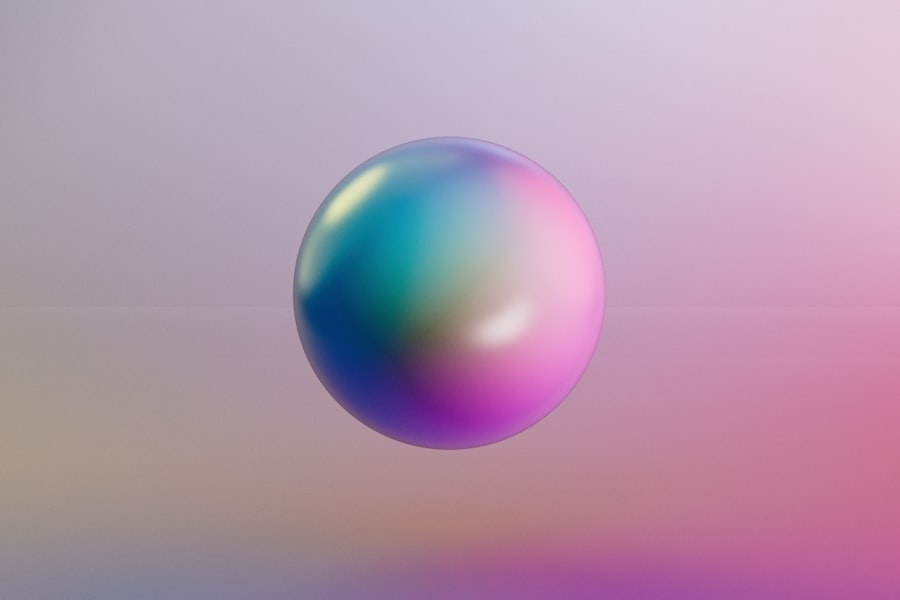
Upon its formation, the true vacuum bubble would not remain static. It would immediately begin to expand outwards at an incredibly rapid rate. The boundary between the false vacuum and the true vacuum would be a “bubble wall” or “domain wall” separating regions of different vacuum energy densities. This wall would propagate outwards, converting the surrounding false vacuum into the true vacuum. The speed of this expansion is a subject of theoretical debate, with some models suggesting it could approach the speed of light.
The energy released by this transition would be considerable. The difference in energy density between the false and true vacuum would be converted into kinetic energy of the expanding bubble wall and potentially other forms of radiation. This rapid expansion would represent a fundamental alteration of the fabric of spacetime within and behind the bubble.
The Phenomenological Characteristics of a True Vacuum Bubble
Spacetime Distortion and Altered Physics
If a true vacuum bubble were to expand through our universe, the implications for observable physics would be profound and catastrophic. As the bubble wall sweeps over a region of spacetime, the fundamental properties of that region would be instantaneously and irrevocably changed. The constants of nature, the laws of physics, and even the dimensionality of spacetime could be different within the true vacuum.
Imagine a ripple pond. A drop creates a disturbance that expands outwards. The true vacuum bubble is akin to a metaphysical ripple, but instead of changing the surface of the water, it changes the very rules of existence. The vacuum energy density is intrinsically linked to the expansion of space and the strength of fundamental forces. A change in vacuum energy would thus imply a fundamental rewiring of these cosmic parameters.
The Fate of Matter and Structures
Within a true vacuum bubble, matter as we know it would likely cease to exist in its current form. The physical constants that govern the interactions of elementary particles – such as the fine-structure constant, the electron mass, and the strengths of the electromagnetic, weak, and strong nuclear forces – are all thought to be tied to the vacuum state of fields like the Higgs field. If these fields settle into a new, lower energy minimum, these constants would likely change.
This would render all existing atomic and molecular structures unstable. Atoms might fly apart, nuclei could disintegrate, and the very notion of chemical bonding would become obsolete. Any complex structures, such as stars, galaxies, and life itself, would be obliterated. The universe within the bubble would be a fundamentally different, and likely inhospitable, place.
The Bubble Wall as a Horizon
The advancing bubble wall of a true vacuum transition could be considered a type of causal horizon. Anything that lies behind the wall – which is to say, everything that had been converted to the true vacuum – would be causally disconnected from the region of spacetime that still exists in the false vacuum. Information could not travel from the true vacuum region back to the false vacuum region.
This is akin to the event horizon of a black hole, where causality is similarly severed. However, instead of a localized singularity, the true vacuum bubble represents a cosmic phase transition that alters the fundamental properties of spacetime itself. For an observer still within the false vacuum, the bubble wall would represent an inexorable boundary advancing towards them, erasing everything in its path.
Observational Signatures and Detection Strategies
The Absence of Detectable Precursors
The most unsettling aspect of a true vacuum bubble, from an observational standpoint, is the apparent lack of warning. If our universe is indeed in a false vacuum, the nucleation event is a spontaneous quantum phenomenon. There would be no observable precursor, no subtle shifts in cosmic parameters, that could herald its arrival. It would be a sudden, incomprehensible transformation.
Imagine the silence before a deafening explosion. The true vacuum bubble transition would be such an event, devoid of any “listening” period for our universe. The fundamental nature of quantum tunneling, which is probabilistic and non-local, means that the event that triggers the bubble might occur anywhere, at any time, without any local observable consequence beforehand.
Indirect Evidence and Cosmological Constraints
While direct detection of a true vacuum bubble is unlikely for those still in the false vacuum, indirect evidence might exist from cosmological observations. Scientists look for subtle anomalies in the cosmic microwave background (CMB) radiation, for instance, or irregularities in the distribution of large-scale structures in the universe. Some theories suggest that remnants of past vacuum transitions, or even other bubble universes that have collided with ours, might leave detectable imprints.
Furthermore, theoretical models of inflation and particle physics place constraints on the possible energy levels of vacuum states. By studying these constraints, physicists can estimate the likelihood of our universe being in a metastable false vacuum. If calculations consistently point to a high probability of metastability, then the concept of a true vacuum bubble becomes a more pressing, albeit still speculative, concern.
The Challenge of Distinguishing from Other Cosmological Events
The challenge in detecting evidence of a true vacuum bubble lies in distinguishing its hypothetical signatures from those of other, more well-understood, cosmological phenomena. For example, the rapid expansion of space attributed to dark energy could, in principle, be mimicked by certain vacuum transition models. Similarly, anomalies in the CMB could be explained by various mechanisms related to inflation or early universe physics.
Therefore, any potential evidence needs to be extremely robust and unique to a vacuum transition scenario. This requires meticulous theoretical work to predict precise signatures and equally rigorous observational efforts to search for them against the backdrop of a complex and dynamic cosmos.
The concept of a true vacuum bubble is fascinating and raises intriguing questions about the nature of our universe. In a true vacuum bubble, the laws of physics as we know them could be dramatically altered, potentially leading to catastrophic consequences for our reality. For a deeper understanding of this phenomenon and its implications, you can explore a related article on the topic at My Cosmic Ventures, which delves into the theoretical aspects and the potential effects of such bubbles on spacetime and matter.
The Philosophical and Existential Implications
| Metric | Description | Typical Values / Notes |
|---|---|---|
| Energy Density | Energy per unit volume inside the true vacuum bubble | Lower than false vacuum; often considered zero or negative relative to false vacuum |
| Bubble Wall Tension | Surface tension of the interface between true and false vacuum | Depends on the scalar field potential; typically very high, on the order of particle physics scales |
| Expansion Velocity | Speed at which the true vacuum bubble expands into the false vacuum | Approaches speed of light |
| Scalar Field Configuration | Field value inside the bubble corresponding to the true vacuum minimum | Stable minimum of the potential energy function |
| Pressure Difference | Difference in vacuum energy pressure between false and true vacuum | Drives bubble expansion; positive value favoring true vacuum growth |
| Bubble Radius | Size of the true vacuum bubble at a given time | Starts at critical radius; grows over time as bubble expands |
| Critical Radius | Minimum radius for bubble to grow rather than collapse | Determined by balance of surface tension and pressure difference |
| Energy Released | Energy difference released as false vacuum converts to true vacuum | Converted into kinetic energy of bubble wall and radiation |
The Transience of Existence
The concept of a true vacuum bubble forces a confrontation with the ultimate transience of existence. If our universe is not in its lowest possible energy state, then everything we observe and experience is, in a fundamental sense, temporary. The laws of physics, the structures of matter, and the very fabric of spacetime are all subject to change.
This raises profound existential questions. What is the meaning of life, of consciousness, of knowledge, if the fundamental reality that underpins them could, at any moment, be utterly transformed by a cosmic phase transition? It highlights the contingency of our existence, reminding us that our universe is not a fixed entity but a dynamic, and potentially unstable, configuration of fundamental forces and fields.
The Problem of the “Other Side”
If a true vacuum bubble were to engulf our observable universe, what would lie beyond it? The theory suggests a fundamentally different reality, governed by new physical laws and potentially existing in a different spacetime. Whether this “other side” is merely a lower energy state of our existing fields, or something entirely alien, remains a subject of speculation.
It is a concept that stretches the limits of human comprehension. We are inherently bound by our current physical reality; trying to conceptualize a universe with different fundamental constants or dimensions is like trying to describe a new color to someone who has only ever seen in black and white. The true vacuum bubble represents a cosmic unknown, a frontier of what might be.
The Anthropic Principle and Fine-Tuning
The possibility of a false vacuum and subsequent true vacuum transition also touches upon the anthropic principle. This principle suggests that the universe’s fundamental constants appear to be “fine-tuned” to allow for the existence of life. If our vacuum were just slightly different, life as we know it might be impossible.
The existence of multiple vacuum states, or the possibility of transitions between them, offers one explanation for this fine-tuning. Perhaps our universe exists in a false vacuum that happens to be conducive to life. Other regions of the multiverse might exist in different vacuum states, where life is impossible. Alternatively, if the universe is a landscape of many vacuum states, and if all possible transitions can occur, then it is not surprising that we find ourselves in a vacuum state compatible with our existence. However, this does not diminish the potential peril of a transition to a less hospitable vacuum.
A Hypothetical Cataclysm, Not an Immediate Threat
It is crucial to emphasize that the concept of a true vacuum bubble is, at present, theoretical. While it is a valid and intriguing possibility within the framework of modern physics, there is no current evidence to suggest that our universe is on the verge of such a transition. The probability of a nucleation event is estimated to be exceedingly low.
Therefore, while the phenomenon of a true vacuum bubble presents a thought-provoking exploration of cosmic possibilities and the ultimate nature of reality, it should be understood as a hypothetical cataclysm rather than an immediate threat. It serves as a reminder of the vast unknowns that still exist in our understanding of the universe and the profound implications that fundamental physics can have for our perception of existence. It is a testament to the power of theoretical physics to imagine scenarios that, while perhaps unsettling, push the boundaries of our knowledge and understanding.
WATCH NOW ▶️ WARNING: The Universe Is Deleting Itself
FAQs
What is a true vacuum bubble?
A true vacuum bubble is a theoretical region in space where the vacuum state has lower energy than the surrounding false vacuum. It represents a more stable state of the vacuum according to quantum field theory.
How does a true vacuum bubble form?
A true vacuum bubble can form through a process called quantum tunneling, where a small region of space transitions from a higher-energy false vacuum to a lower-energy true vacuum, creating a bubble that can expand.
What happens inside a true vacuum bubble?
Inside a true vacuum bubble, the vacuum energy is lower, and the physical constants and particle properties may differ from those outside the bubble. This can lead to different physical laws or the breakdown of known structures.
Can a true vacuum bubble expand and affect our universe?
Yes, if a true vacuum bubble forms and expands, it could theoretically grow at the speed of light, converting the false vacuum outside into the true vacuum state, potentially altering or destroying existing matter and structures.
Is there any experimental evidence for true vacuum bubbles?
Currently, there is no direct experimental evidence for true vacuum bubbles. Their existence remains a theoretical prediction based on quantum field theory and cosmology, and their implications are still being studied.