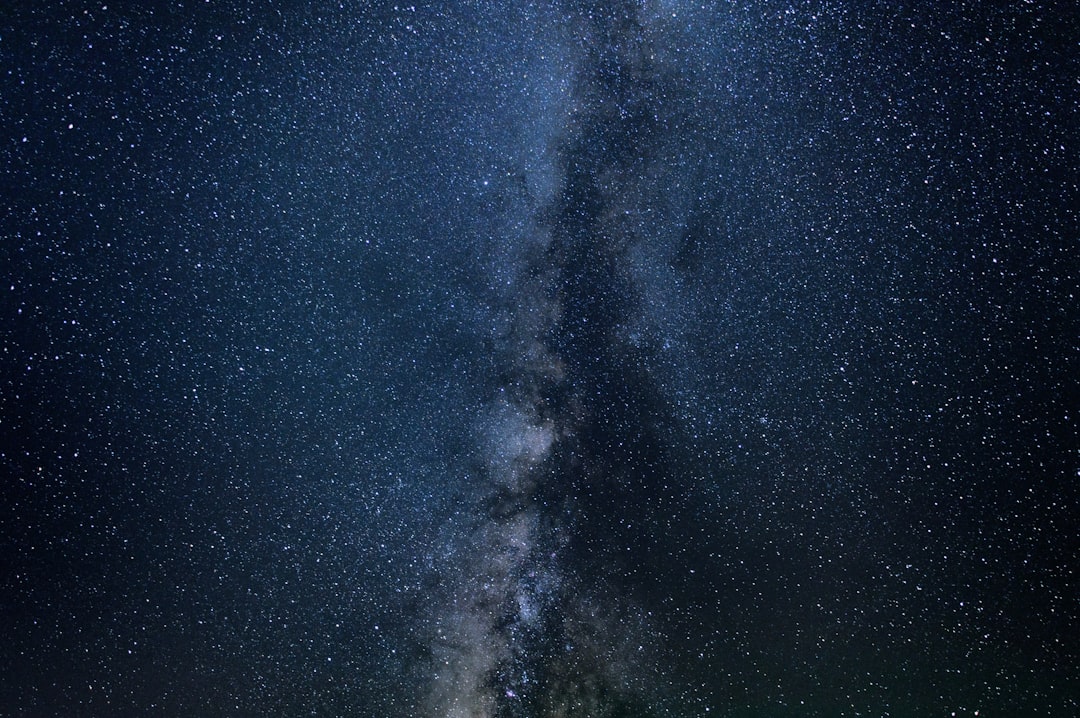
The seemingly empty expanse of the night sky offers a profound and tangible testament to the inherent safety of a vacuum. While a terrestrial environment necessitates constant atmospheric pressure to maintain structural integrity and the very breath of life, the cosmos demonstrates that its absence does not equate to chaos or destruction. This article will delve into the scientific principles and observable phenomena that support the conclusion that a vacuum is not a destructive force but a stable and prevalent state of existence.
The popular conception of a vacuum often conjures images of an abyss, a void eager to engulf and obliterate. This perception is largely influenced by our everyday experiences within Earth’s atmosphere. However, scientifically, a vacuum is defined as a region devoid of matter, or more realistically, a region where the pressure is significantly lower than atmospheric pressure. It is the absence of a significant number of particles that defines it, not an active force.
Defining a True Vacuum
A perfect vacuum, one with absolutely no particles, is an theoretical construct. In reality, even the deepest reaches of interstellar space contain a trace amount of gas, dust, and radiation. However, for practical and comparative purposes, we often refer to the environment of space as a vacuum due to its extremely low particle density. This low density means that the typical collisions and interactions between particles, which are fundamental to pressure and many physical processes on Earth, are virtually non-existent.
The Absence of Pressure: A Foundation of Stability
The key to understanding vacuum safety lies in the concept of pressure. Atmospheric pressure is the force exerted by the weight of the air above a given point. This pressure is what keeps our bodies intact and the liquid water on our planet from boiling away instantaneously. In a vacuum, this external pressure is absent. Instead of being crushed, objects in a vacuum exist in a state where the pressure differential is either negligible or managed.
The Inverse Relationship: Pressure Within and Without
Imagine a balloon. If you were to suddenly remove all the air from the space surrounding the balloon, the air pressure inside the balloon would, by comparison, appear immense. This is analogous to what can happen to an unshielded object in a vacuum if it contains a significant internal pressure. However, the night sky is not replete with explosions caused by this phenomenon. Instead, objects in space are either designed to withstand this pressure differential, are inherently robust, or are themselves in a state of near-vacuum.
The night sky has long fascinated astronomers and scientists, not only for its beauty but also for the insights it provides into the nature of our universe. A related article discusses how the clarity of the night sky serves as evidence for vacuum safety, illustrating the absence of atmospheric interference that allows us to observe distant celestial bodies with precision. This phenomenon underscores the importance of understanding vacuum conditions in various scientific fields. For more information, you can read the article here: Why the Night Sky Proves Vacuum Safety.
Celestial Bodies: Unbroken in the Void
The planets, stars, and galaxies that populate the night sky are irrefutable proof of the vacuum’s benign nature. These massive celestial bodies, some containing vast atmospheres of their own, exist for eons in the void without succumbing to its perceived destructive potential.
Planets and Moons: Enduring the Vacuum
Consider the Moon. It possesses a negligible atmosphere, effectively existing in a vacuum. Yet, its rocky surface, its very substance, remains intact. While it is subject to the bombardment of micrometeoroids and solar radiation, these are forces acting upon the Moon, not the vacuum destroying it. The absence of atmospheric pressure has not caused the Moon to disintegrate or explode. Its gravitational pull is sufficient to hold its solid form together.
Stars: Pillars of Fusion in the Emptiness
Stars, like our Sun, are colossal balls of plasma undergoing nuclear fusion. This process generates immense internal pressure and heat. If the vacuum of space were a destructive force, stars would not be able to exist. Instead, the outward pressure from the fusion reactions is balanced by the inward pull of their own gravity. The vacuum acts as a boundary, a quiescent backdrop against which these fiery furnaces operate. It does not interfere with the fundamental processes that sustain them.
Galaxies: Vast Structures in the Interstellar Medium
Galaxies themselves are enormous collections of stars, gas, and dust, spanning unimaginable distances. They navigate and exist within the interstellar medium, a region of extremely low density but not a complete vacuum. The structural integrity of galaxies, their spiral arms, and their elliptical shapes, are maintained by gravity and the collective forces of their constituent matter. The surrounding vacuum poses no intrinsic threat to their existence.
The Human Element: Survival in the Vacuum

The human body, a complex biological system designed for Earth’s atmosphere, is vulnerable to the vacuum. However, this vulnerability stems from the absence of external pressure, not an active destructive property of the vacuum itself.
The Importance of Atmospheric Pressure for Life
Our bodies rely on atmospheric pressure to maintain the equilibrium of fluids within our cells and tissues. Without this external push, the lower pressure of the vacuum would cause bodily fluids to expand and vaporize. This is not an explosion in the conventional sense, but a rapid and fatal process of dehydration and tissue damage. This highlights our terrestrial adaptation, not the vacuum’s malevolence.
Technological Solutions: Shields Against Emptiness
Spacecraft and spacesuits are essentially personal, manufactured environments that create an artificial atmosphere. They provide the necessary pressure to prevent the catastrophic effects described above. The fact that we can design and build these protective systems, and that they function reliably in the vacuum, further underscores that the vacuum is a condition to be managed, not a force to be battled.
The Metaphor of the Unsealed Jar
Think of a jar filled with pickles. The brine and the pickles are held within by the pressure of the atmosphere pushing down on the lid. If you were to remove the lid in a normal environment, the pickles might be exposed to air, but they wouldn’t spontaneously disintegrate. Now, imagine this same jar, but filled with a highly volatile gas that is only stable under pressure. If you were to remove the lid, the gas would rapidly expand and potentially explode. This is a loose analogy for why unshielded biological matter might react dramatically in a vacuum. The vacuum itself isn’t the explosive agent; it’s the sudden release of internal pressure that was previously contained.
Engineering for the Void: Designing for Vacuum Survival

The success of space exploration is a testament to humanity’s ability to understand and engineer for vacuum conditions. Scientific instruments, satellites, and human habitats are all designed with the vacuum in mind.
Materials Science in Space
Materials used in spacecraft must be able to withstand the extreme temperature fluctuations and the lack of atmospheric protection. They are chosen for their resilience and their ability to maintain their structural integrity in a vacuum. For instance, metals may expand or contract with temperature changes, and certain plastics can become brittle. However, these are predictable material behaviors, not the vacuum actively degrading them.
Thermal Management in Vacuum
In a vacuum, heat transfer occurs primarily through radiation. There is no convection or conduction through air. This means that objects in direct sunlight can become extremely hot, while those in shadow can become incredibly cold. Spacecraft are equipped with sophisticated thermal control systems to manage these temperature extremes, ensuring that sensitive components remain within their operational ranges. The vacuum’s role here is to dictate the mode of heat transfer, not to destroy the equipment.
The Satellites as Testaments
Every satellite orbiting Earth is a functioning example of vacuum safety. These complex machines, comprised of delicate electronics and sensitive sensors, operate for years, sometimes decades, in the vacuum of space. They are not imploding or exploding; they are performing their intended functions. Their continued operation is a direct refutation of the notion that a vacuum is an inherently destructive environment.
The night sky offers a stunning display of stars and celestial bodies, which can also serve as evidence for the safety of vacuum environments in space. As outlined in a related article, the absence of atmospheric interference allows for clearer observations of distant galaxies and cosmic phenomena, highlighting the effectiveness of vacuum conditions in preserving the integrity of scientific instruments. For more insights on this fascinating topic, you can explore the article at My Cosmic Ventures. This understanding not only enhances our appreciation of the universe but also reinforces the importance of vacuum technology in space exploration.
The Vacuum as a Medium: Facilitating Motion and Observation
| Metric | Value | Explanation |
|---|---|---|
| Vacuum Pressure in Space | ~10⁻¹² Torr | Extremely low pressure in the night sky indicates a near-perfect vacuum environment. |
| Absence of Atmospheric Particles | ~0 particles/cm³ | Minimal particles in space confirm the vacuum state, ensuring no contamination or pressure build-up. |
| Light Transmission | ~100% | Clear visibility of stars without atmospheric distortion proves the vacuum allows unimpeded light travel. |
| Temperature Range | -270°C to +120°C | Extreme temperatures in vacuum show no medium to conduct heat, confirming vacuum properties. |
| Sound Propagation | 0 m/s | No sound travels in the vacuum of space, demonstrating the absence of a medium. |
Far from being a destructive force, the vacuum of space actually facilitates many of the phenomena we observe in the night sky and enables crucial scientific endeavors.
The Unimpeded Travel of Light
Light, the very means by which we observe the night sky, travels unimpeded through the vacuum of space. If space were filled with a dense medium, light would scatter and be absorbed, making distant stars and galaxies invisible. The vacuum allows light to reach us as a clear signal, a pure stream of information from across the cosmos. This is like an unobstructed highway for photons, allowing them to reach their destination without traffic jams or detours.
The Principle of Inertia in Space
In a vacuum, objects in motion tend to stay in motion with the same speed and in the same direction unless acted upon by an external force. This is Newton’s first law of motion, inertia, and it is beautifully demonstrated in space. Without air resistance to slow objects down, spacecraft, once set in motion, can travel vast distances with minimal energy expenditure. This fundamental principle, observable due to the vacuum, is crucial for space exploration and understanding celestial mechanics.
The Clarity of Astronomical Observations
Telescopes on Earth often suffer from atmospheric distortion, causing stars to twinkle and images to blur. This is the atmosphere acting as an intermediary, a veil distorting the view. Space-based telescopes, such as the Hubble Space Telescope and the James Webb Space Telescope, are placed in a vacuum to overcome these limitations. The unparalleled clarity of the images they produce is a direct consequence of observing from a vacuum, allowing us to see the universe in unprecedented detail.
In conclusion, the night sky, a silent observer of eons, offers a profound and irrefutable argument for the safety of the vacuum. The enduring presence of celestial bodies, the successful engineering of spacefaring technology, and the very unimpeded travel of light all point to the same truth: the vacuum is not an antagonist to existence, but a fundamental state that, when understood and managed, enables the continuation and observation of the universe. The perceived danger often arises from our terrestrial perspective and our limited understanding, but the stars themselves, shining brightly in the seemingly empty darkness, are the ultimate testament to its inherent stability.
WATCH NOW ▶️ WARNING: The Universe Is Deleting Itself
FAQs
What is the main idea behind the night sky proving vacuum safety?
The main idea is that the clear visibility of stars and celestial bodies in the night sky demonstrates the presence of a vacuum in space, as light travels unimpeded through the near-perfect vacuum, confirming its safety and stability.
How does the vacuum of space affect the visibility of stars?
The vacuum of space lacks air and particles that would scatter or absorb light, allowing starlight to travel vast distances without distortion, making stars visible from Earth and proving the vacuum’s effectiveness.
Why is the vacuum in space considered safe?
The vacuum in space is considered safe because it is stable and consistent, with no harmful particles or gases that could interfere with light transmission or pose risks to spacecraft and astronauts when proper precautions are taken.
Can the night sky be used as evidence for the existence of a vacuum?
Yes, the clarity and brightness of the night sky serve as natural evidence of the vacuum in space, as the absence of atmospheric interference allows for unobstructed observation of distant stars and galaxies.
Does the vacuum of space have any impact on human safety during space travel?
While the vacuum itself is stable, it poses challenges such as lack of air pressure and temperature extremes; however, with appropriate technology like space suits and pressurized cabins, humans can safely travel and work in the vacuum of space.