
The invisible threads that bind us to the Earth, that keep stars in their celestial dance, and yet remain one of science’s most profound enigmas – gravity. It is a force so pervasive, so fundamental to our existence, that we often take it for granted. Yet, its true nature, its origin, and its ultimate purpose continue to elude the most brilliant minds. The mystery of gravity is a testament to the vastness of our ignorance and the relentless human drive to understand the universe.
The story of our understanding of gravity often begins with an orchard and a falling apple. Legend has it that Sir Isaac Newton, while contemplating under a tree, witnessed an apple descend to the ground. This seemingly commonplace event ignited a profound inquiry into the nature of this downward pull. Before Newton, celestial mechanics and terrestrial physics were largely considered separate realms. The heavens, it was believed, operated under a different set of rules than the world we inhabited.
The Pre-Newtonian View of the Cosmos
For centuries, the dominant cosmological model was the geocentric one, championed by thinkers like Aristotle and Ptolemy. In this view, Earth was the unmoving center of the universe, with the Sun, Moon, planets, and stars revolving around it in perfect, crystalline spheres. Explanations for motion on Earth were rooted in the concept of natural place; objects naturally sought their designated positions, hence the downward motion of heavy objects.
Newton’s Universal Law of Gravitation
Newton’s revolutionary insight was to propose that the same force that pulled the apple to the ground was responsible for keeping the Moon in orbit around Earth and the planets in orbit around the Sun. This was a paradigm shift of immense proportions. He formulated his Law of Universal Gravitation, elegantly stating that every particle in the universe attracts every other particle with a force that is directly proportional to the product of their masses and inversely proportional to the square of the distance between their centers.
The Mathematical Framework
Newton’s genius lay not only in conceptualizing this universal force but also in providing a precise mathematical description of it. His law of gravitation, F = G(m₁m₂)/r², where F is the force of gravity, G is the gravitational constant, m₁ and m₂ are the masses of the two objects, and r is the distance between their centers, allowed for accurate predictions of planetary motion and tidal forces. This mathematical elegance provided a powerful tool for understanding the mechanics of the cosmos on a grand scale.
Implications for Celestial Mechanics
The implications of Newton’s law were staggering. It unified the study of the heavens and the Earth, providing a single, coherent framework for understanding cosmic phenomena. It explained the elliptical orbits of planets, the presence of tides, and the trajectory of projectiles. For centuries, Newton’s theory stood as the cornerstone of physics, a testament to the power of observation, deduction, and mathematical reasoning.
The Limits of Classical Gravity
Despite its immense success, Newton’s theory of gravity, while incredibly accurate for everyday phenomena and most astronomical calculations, had its limitations. There were certain observations that it could not perfectly explain.
Anomalies in Mercury’s Orbit
One such anomaly was the perihelion precession of Mercury. The orbit of Mercury, the planet closest to the Sun, showed a slight deviation from what Newtonian physics predicted. While most of this discrepancy could be accounted for by the gravitational influence of other planets, a small but persistent difference remained, a tiny crack in the otherwise perfect edifice of Newtonian mechanics.
The Nature of Force Itself
Newton described what gravity did, but not how or why it exerted its influence across vast distances. The concept of “action at a distance,” where objects could exert a force on each other without any physical connection, was a philosophical puzzle that troubled even Newton himself.
The mysteries of gravity continue to perplex scientists, as its fundamental nature remains elusive despite centuries of study. For an in-depth exploration of the ongoing challenges in understanding gravity, you can refer to a related article on this topic at My Cosmic Ventures. This article delves into the current theories and debates surrounding gravity, highlighting why it is often considered one of the most enigmatic forces in the universe.
Einstein’s Revolution: Gravity as Geometry
The 20th century ushered in another monumental shift in our understanding of gravity, this time through the mind of Albert Einstein. His theory of General Relativity, published in 1915, fundamentally re-envisioned gravity not as a force acting between objects, but as a manifestation of the curvature of spacetime.
The Equivalence Principle
A key stepping stone for Einstein was the equivalence principle. He realized that the effects of gravity are indistinguishable from the effects of acceleration. Imagine being in a closed box; if you feel a downward pull, you cannot tell if you are on Earth experiencing gravity or if the box is accelerating upwards in empty space. This seemingly simple observation held profound implications.
Gravity and Acceleration
This equivalence suggested that gravity wasn’t a pull in the traditional sense. Instead, it implied that mass itself somehow influenced the fabric of the universe. If acceleration and gravity were equivalent, then perhaps the presence of mass warped the very space and time that objects moved through.
Spacetime: A Fabric of Reality
Einstein’s theory posits that space and time are not separate, immutable entities but are interwoven into a single, dynamic continuum called spacetime. Massive objects, according to General Relativity, warp and bend this spacetime fabric around them.
The Geometry of the Universe
Instead of objects being pulled towards each other, they are, in essence, following the curves and contours of this warped spacetime. Imagine placing a heavy ball on a stretched rubber sheet; the sheet will sag around the ball. If you then roll a smaller marble across the sheet, it will curve towards the heavier ball, not because of a direct pull, but because it is following the curvature of the sheet. This is the essence of Einstein’s gravitational model.
Geodesics: The Paths of Least Resistance
Objects in motion, under the influence of gravity, are described as following geodesics – the shortest or longest paths between two points in curved spacetime. This elegantly explains why planets orbit stars: they are simply following the paths of least resistance in the warped spacetime created by the star’s mass.
Experimental Verification of General Relativity
Einstein’s theory, while conceptually radical, made several testable predictions that distinguished it from Newtonian gravity. These predictions have been rigorously confirmed by observations and experiments, cementing General Relativity as our most accurate description of gravity to date.
The Bending of Starlight
One of the most famous predictions was that light, despite having no mass, would be affected by gravity. According to General Relativity, light passing by a massive object, such as the Sun, would have its path bent due to the curvature of spacetime. This was dramatically confirmed by Arthur Eddington during a solar eclipse in 1919, propelling Einstein to global fame.
Gravitational Lensing
This bending of light by massive objects is now known as gravitational lensing. It has become a powerful tool in astronomy, allowing scientists to observe distant galaxies whose light has been magnified and distorted by intervening massive structures like galaxy clusters.
Gravitational Waves
Another groundbreaking prediction was the existence of gravitational waves – ripples in spacetime that propagate at the speed of light, generated by the cataclysmic acceleration of massive objects, such as colliding black holes or neutron stars. The direct detection of gravitational waves by the LIGO observatory in 2015 was a monumental achievement, opening a new window into the universe.
Black Holes and Singularities
General Relativity also predicts the existence of black holes, regions of spacetime where gravity is so strong that nothing, not even light, can escape. At the heart of a black hole lies a singularity, a point of infinite density and zero volume, where our current understanding of physics breaks down.
The Quantum Conundrum: Gravity’s Missing Piece

While General Relativity reigns supreme in describing gravity on macroscopic scales, it clashes with the principles of quantum mechanics, the theory that governs the subatomic world. This incompatibility presents one of the most significant challenges in modern physics – the quest for a unified theory of quantum gravity.
The Incompatibility of Theories
Quantum mechanics describes the universe in terms of discrete packets of energy called quanta, and forces are mediated by exchange particles. Gravity, however, as described by General Relativity, is a continuous curvature of spacetime. Attempts to quantize gravity by treating it like other fundamental forces, involving a hypothetical force-carrying particle called the “graviton,” have run into significant mathematical hurdles, leading to infinities that cannot be resolved.
The Problem of Renormalization
Unlike other quantum field theories, gravity cannot be “renormalized” in a straightforward way. This means that calculations involving gravitons often result in infinite probabilities, indicating that the theory is incomplete or fundamentally flawed at very small scales.
The Search for a Quantum Theory of Gravity
Physicists are actively pursuing various theoretical frameworks to reconcile gravity with quantum mechanics, hoping to unravel the mysteries of gravity at its most fundamental level.
String Theory
String theory proposes that fundamental particles are not point-like but are actually tiny, vibrating strings. Different vibration modes of these strings correspond to different particles, including the graviton. String theory offers a way to unify all fundamental forces, including gravity, by inherently incorporating a gravitational interaction.
Loop Quantum Gravity
Another prominent approach is Loop Quantum Gravity (LQG). LQG attempts to quantize spacetime itself, suggesting that space is not continuous but granular, composed of fundamental “loops.” This discreteness of spacetime could potentially resolve the infinities that plague other quantum gravity theories.
Other Approaches
Beyond string theory and LQG, there are other promising avenues of research, including asymptotically safe gravity, causal dynamical triangulation, and emergent gravity theories, each offering unique perspectives on how gravity might behave at the quantum level.
Unanswered Questions and Future Frontiers
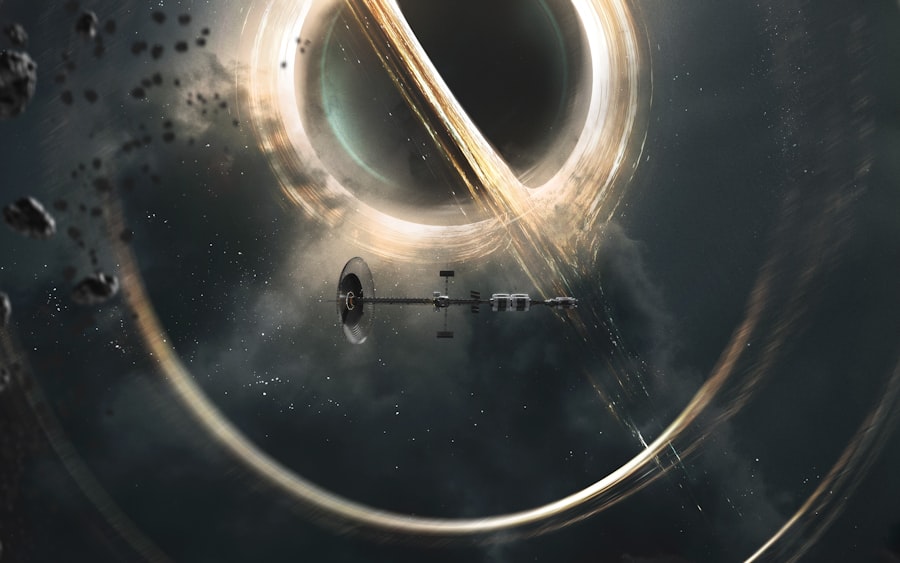
Despite the breathtaking progress made by Newton and Einstein, the mystery of gravity is far from solved. Numerous profound questions remain, pushing the boundaries of our knowledge and inspiring new avenues of research.
The Origin of Mass
While gravity is directly related to mass, the origin of mass itself remains a fundamental question. The Higgs boson, discovered in 2012, explains how fundamental particles acquire mass through interaction with the Higgs field, but the ultimate source and distribution of all mass in the universe, including dark matter and dark energy, are still areas of active investigation.
Dark Matter and Dark Energy
The existence of dark matter, an invisible substance that interacts gravitationally but not electromagnetically, and dark energy, a mysterious force driving the accelerated expansion of the universe, pose significant challenges to our current understanding of gravity and cosmology. Explaining these phenomena may require modifications to Einstein’s theory or the discovery of new physics.
The Nature of Singularities
As mentioned earlier, General Relativity predicts singularities at the center of black holes and at the Big Bang. These points of infinite density and curvature represent a breakdown of our current physical laws. A complete theory of quantum gravity is expected to resolve these singularities.
The Information Paradox
A related puzzle is the black hole information paradox. According to quantum mechanics, information can never be destroyed. However, if matter falls into a black hole, evaporates via Hawking radiation, and the black hole disappears, it seems that the information contained within that matter is lost forever. This paradox highlights a deep conflict between General Relativity and quantum mechanics.
Gravity and the Early Universe
Understanding gravity’s role in the very first moments after the Big Bang is crucial for comprehending the formation of the universe as we know it. The extreme conditions of the early universe, with immense densities and energies, likely required a quantum description of gravity.
Inflationary Cosmology
The theory of cosmic inflation, a period of rapid expansion in the very early universe, suggests that quantum fluctuations in the gravitational field played a significant role in seeding the large-scale structures we observe today.
The Unification of Forces
A long-standing dream of physics is the unification of all fundamental forces – gravity, electromagnetism, and the strong and weak nuclear forces – into a single, all-encompassing theory. Many of the quantum gravity approaches, such as string theory, aim to achieve this grand unification.
Despite being a fundamental force that governs the motion of celestial bodies, gravity remains one of the least understood phenomena in physics. Researchers continue to explore its mysteries, leading to intriguing discussions about its nature and implications. For those interested in delving deeper into this topic, a related article can be found at this link, which offers insights into the ongoing debates and theories surrounding gravity’s elusive characteristics. Understanding gravity could unlock new dimensions in our comprehension of the universe, making it a captivating subject for both scientists and enthusiasts alike.
The Enduring Allure of the Enigmatic Force
| Reasons | Explanation |
|---|---|
| Complexity | Gravity is a fundamental force that is difficult to understand due to its complex interactions with matter and energy. |
| Quantum Mechanics | Current theories of gravity do not fully align with the principles of quantum mechanics, leading to a lack of complete understanding. |
| Unification | Efforts to unify gravity with other fundamental forces, such as electromagnetism and the strong and weak nuclear forces, have not yet been successful. |
| Experimental Limitations | Testing gravity under extreme conditions, such as at the quantum level or in the presence of black holes, is challenging and limits our understanding. |
The mystery of gravity, from Newton’s falling apple to the enigmatic echoes of gravitational waves, continues to captivate our collective imagination. It is a force that shapes our every moment, from the simple act of standing on solid ground to the grand ballet of galaxies across the cosmos.
The Human Drive for Understanding
The persistent quest to unravel gravity’s secrets is a testament to the indomitable human spirit of inquiry and our insatiable desire to comprehend our place in the universe. Each answered question opens up new vistas of the unknown, reminding us of the vastness of what we do not yet know.
Future Generations of Exploration
The exploration of gravity’s mysteries is a journey that will undoubtedly continue for generations to come. New telescopes will peer deeper into the cosmos, sophisticated experiments will probe the quantum realm, and theoretical physicists will continue to forge new pathways of understanding.
The Profound Impact on Our Lives
While its deepest secrets may remain elusive for now, our evolving understanding of gravity has already profoundly impacted our lives, from enabling satellite communication and space exploration to providing the very framework for comprehending the universe itself. The enigmatic force of gravity, in its silent and universal embrace, continues to be a profound source of wonder and a driving force for scientific discovery.

Physics Can’t Explain Gravity (And That’s a Problem)
FAQs
1. What is gravity and why is it not fully understood?
Gravity is the force that attracts two bodies toward each other. It is not fully understood because it is one of the four fundamental forces of nature, and its behavior at very small scales and high energies is not well explained by current theories.
2. What are some of the challenges in understanding gravity?
One of the main challenges in understanding gravity is reconciling it with the other three fundamental forces (electromagnetic, weak nuclear, and strong nuclear forces) in a unified theory. Additionally, understanding gravity at the quantum level and its behavior in extreme conditions such as black holes and the early universe presents significant challenges.
3. What are some current theories about gravity?
The most well-known theory of gravity is Albert Einstein’s general theory of relativity, which describes gravity as the curvature of spacetime caused by the presence of mass and energy. Other theories, such as string theory and loop quantum gravity, attempt to unify gravity with the other fundamental forces.
4. How is gravity currently studied and researched?
Gravity is studied through a combination of theoretical research, experimental observations, and astrophysical measurements. Scientists use tools such as gravitational wave detectors, particle accelerators, and astronomical observations to study the behavior of gravity in different contexts.
5. What are the potential implications of a better understanding of gravity?
A better understanding of gravity could lead to advancements in fundamental physics, cosmology, and technology. It could also have practical applications in fields such as space exploration, gravitational wave astronomy, and the development of new energy sources.